The contemporary corporate landscape is increasingly defined by paradoxes, none more pronounced than the chasm between organizational investment in human resources and talent acquisition expertise, and the subsequent disregard for that expertise when critical decisions arise. This pervasive issue, where data-driven insights from HR professionals often yield to the "gut feelings" of hiring managers or the unexamined pushback from executive leadership, forms a recurring cycle that ultimately erodes trust, stifles innovation, and drives away top talent. This systemic challenge, identified as a core problem by veteran HR executive and social media phenomenon Leigh Elena Henderson, underscores a profound crisis of confidence in the strategic value of HR within the modern enterprise.
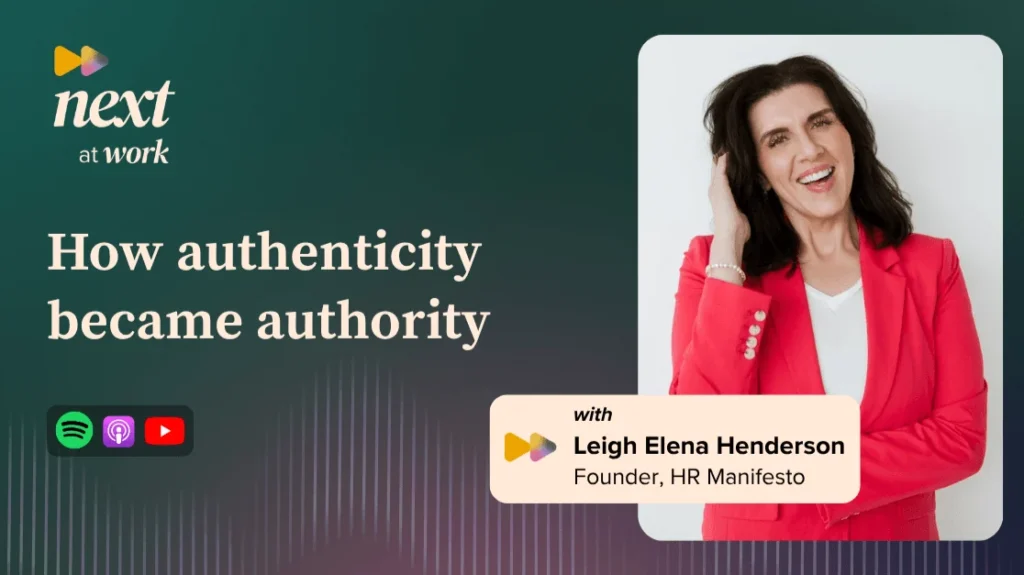
Leigh Elena Henderson, the influential creator behind HR Manifesto, a digital platform boasting over 2 million followers, has spent two decades observing this debilitating dynamic unfold across some of the world’s largest corporations. Her insights, recently shared on the Workable "Next at Work" podcast with host Brendan Jeannetti, delve into the root causes of this trust deficit and propose actionable strategies for its remediation. Henderson’s journey from a seasoned Fortune 100 HR executive to an unfiltered social media voice highlights a growing demand for candor and practical guidance in navigating the complexities of corporate environments.
The Trust Deficit in HR: A Deep Dive into Expertise Without Authority
At the heart of the current challenges facing human resources and talent acquisition lies a fundamental absence of trust. This isn’t a scarcity of qualified HR professionals; rather, it’s a pervasive lack of confidence from executive leadership regarding HR’s strategic capabilities. Henderson’s experience across companies like GE Aviation and Lockheed Martin reveals a consistent pattern: many C-suite decision-makers fail to recognize HR and talent acquisition as fields demanding scientific rigor, advanced degrees, and data-driven methodologies. Instead, HR is often relegated to a purely administrative or reactive function, perceived as orchestrating "pizza parties and paperwork" rather than driving critical business outcomes.
This perception gap grants leaders implicit permission to override expert judgment across various domains, from talent sourcing strategies and budget allocations to the design of critical processes. For instance, a recruiter might present robust analytics demonstrating the efficacy of a particular sourcing approach, only to see it dismissed in favor of an untested, intuition-based alternative. Similarly, a talent leader could propose an evidence-backed interview framework, developed through extensive research and pilot programs, only to encounter uninformed resistance from executives who were not involved in its creation and cannot articulate valid objections. Such patterns, Henderson argues, are not merely minor operational inefficiencies; they actively undermine strategic thinking, impede organizational progress, and lead to significant, quantifiable costs.
The true cost of this eroded trust is multifaceted. When HR and TA teams are not trusted, they are denied the necessary resources, budget, autonomy, and executive support to fulfill their mandates effectively. This creates a dual problem: firstly, well-conceived initiatives, designed to improve employee experience, retention, or hiring quality, fail to be implemented or are severely hampered. Secondly, the most competent and driven HR and TA professionals experience rapid burnout. They spend an inordinate amount of their energy and expertise fighting for credibility and validation, rather than focusing on the high-impact work they were hired to do. Over time, these valuable individuals either disengage or depart, leaving behind a function that increasingly defaults to compliance rather than strategic partnership. The inevitable consequence is a decline in hiring quality, increased attrition, and a negative impact on overall business performance. Studies consistently show that organizations with low employee engagement, often a symptom of underlying trust issues and poor HR integration, experience 18% lower productivity and 16% lower profitability compared to their highly engaged counterparts. Furthermore, high turnover rates, which can stem from unaddressed toxic environments or a lack of investment in talent development, can cost companies anywhere from tens of thousands to 1.5-2 times an employee’s annual salary, depending on the role.
To counteract this, Henderson advocates for a proactive approach focused on making HR’s impact explicitly visible and building cross-functional alliances. By clearly articulating the connection between HR initiatives and tangible business outcomes—such as reduced attrition, improved hire quality, or accelerated time-to-hire—HR leaders can begin to shift executive perceptions. Equally crucial is clarifying decision-making authority: distinguishing between HR’s role in guiding and advising, and leadership’s ultimate accountability for actions. Finally, building coalitions with partners from other departments like product, finance, or operations can amplify HR’s voice. When strategic needs are articulated by non-HR stakeholders, executive leaders are often more receptive, effectively bypassing the inherent trust barrier HR might face alone.
Leigh Elena Henderson’s Journey: From Corporate Executive to Social Media Phenomenon
Leigh Elena Henderson’s trajectory from a corporate HR executive to a leading voice on social media is a testament to the power of authenticity and the unmet need for candid dialogue in the professional world. With nearly two decades of experience navigating the intricate HR landscapes of Fortune 100 giants, including General Electric Aviation and Lockheed Martin, Henderson developed an intimate understanding of the systemic issues plaguing corporate culture and HR’s often-marginalized role. A graduate of Texas A&M University’s Mays Business School, Henderson, based in San Antonio, Texas, self-identifies as a "toxic workplace survivor," a label that resonates deeply with her expansive online audience.
Her corporate career, marked by significant achievements and exposure to high-level strategic decision-making, came to an unexpected halt in 2020. Terminated from a startup role, Henderson candidly attributes her dismissal to being "smarter than the founder"—a blunt assessment that encapsulates the frustration many experienced professionals feel when their expertise is undervalued or perceived as a threat. Rather than retreating or succumbing to professional setback, Henderson channeled her experiences into a new endeavor. In June 2021, she downloaded TikTok, initially as a creative outlet to test content ideas for a book she was contemplating. What began as a personal experiment quickly transcended its original purpose, transforming into a viral phenomenon.
HR Manifesto, Henderson’s digital platform, rapidly amassed a following, growing to nearly 2 million across various social media channels. Her content stands out for its unfiltered takes on corporate toxicity, leadership deficiencies, and the unspoken truths of professional life. Unlike mainstream HR discourse, which often adheres to carefully curated narratives, Henderson’s approach embraces candid storytelling, humor, and a direct engagement with the darker realities of corporate environments. Her mission, deeply rooted in her own experiences, is to foster a community where individuals can navigate their careers without feeling isolated, providing solidarity and practical advice for those confronting similar challenges.
This digital success paved the way for a major publishing deal. Henderson’s forthcoming book, "Workable: Leave Toxicity Behind and Build a Career That Works for You," is slated for publication through HarperCollins on January 19, 2027. Positioned as a direct response to the thousands of direct messages she receives—questions like, "Okay, this toxic place is resonating. Now how do I get out?"—the book promises to offer concrete strategies for identifying, addressing, and ultimately escaping detrimental work environments, empowering individuals to forge career paths that genuinely serve their well-being.
AI in HR: Navigating Innovation and Efficiency
The advent of Artificial Intelligence (AI) presents both immense promise and significant peril for the HR domain. Henderson astutely observes that AI is currently both "overhyped and most misunderstood" within the profession. She identifies two critical traps organizations are falling into: first, the misguided belief that AI can entirely replace human HR functions—a strategy she cautions will lead to regret. Second, the prevalent tendency to integrate new AI tools without a corresponding effort to streamline or eliminate existing, redundant processes. This results in HR professionals managing an AI tool alongside outdated manual processes, effectively "doubling down on busy" rather than achieving true innovation.
Henderson’s framework for effective AI adoption is centered on "adoption plus removal." This principle demands a ruthless audit of existing workflows: when a new AI tool is introduced, what processes are simultaneously eliminated? What manual tasks are definitively retired? This approach, she argues, is critical for unlocking AI’s true potential, particularly for lean HR teams or individuals managing disproportionate workloads. AI, when strategically implemented, can significantly enhance capacity, allowing HR professionals to focus on higher-value, human-centric tasks. However, this only materializes if organizations are disciplined in shedding legacy inefficiencies.
The implications of this "adoption plus removal" strategy extend beyond mere operational efficiency. AI tools only yield a return on investment if they genuinely create capacity, rather than simply adding to the existing workload. Many organizations skip the crucial audit phase, failing to critically evaluate which existing practices are truly worth retaining. This presents a unique opportunity for HR leaders to act as agents of change. By visibly demonstrating how new technologies can lead to the elimination of redundant tasks and processes, HR can model effective innovation for the entire organization. This proactive approach can inspire other departments to adopt similar strategies, fostering a culture of continuous improvement and strategic resource allocation.
In terms of practical application, Henderson suggests leveraging AI for specific, high-impact tasks. This includes ideation—using AI to identify trending topics or common concerns within the workforce; analytics—processing vast datasets to uncover insights into talent trends, retention, or engagement; and administrative support, such as travel planning or scheduling. Crucially, she emphasizes that AI should augment human judgment, not replace it, particularly in decisions that require empathy, ethical consideration, or nuanced understanding of human behavior. The objective is to free up human capacity for strategic thinking and meaningful interpersonal interactions, not to automate the human element out of HR.
Combating Burnout: The Imperative for Sustainable Leadership
The concept of sustainable leadership, particularly in an era of constant connectivity and heightened professional demands, is a central tenet of Henderson’s philosophy. For her, personal sustainability is not about achieving external milestones but about rigorously maintaining the boundaries she has painstakingly established. Her two decades in corporate HR often involved sacrificing personal well-being for organizational demands—relinquishing hobbies like playing the violin and choir, and foregoing creative time. Her forced exit from corporate life, though initially traumatic, became a catalyst for discovering the transformative power of boundaries and, subsequently, genuine recovery.
Henderson is unreserved about her non-negotiable needs: dedicated time for rest and relaxation, consistent self-care practices, adequate sleep, and a focus on "eustress" (positive, growth-inducing challenges) rather than chronic, debilitating stress. These essentials, she asserts, are impossible to maintain if one consistently capitulates to every demand and takes every call. Her observations reveal a stark irony: the most effective leaders she has encountered are not those who endlessly say "yes," but rather those who deliberately protect their own time and, crucially, safeguard their teams’ capacity for recovery and creative thought.
Ignoring the imperative for recovery carries significant long-term costs. Recovery is not a luxury; it is a fundamental biological and psychological necessity. This is particularly true for neurodivergent individuals, like Henderson who lives with ADHD, who require dedicated time and space for regulation and resetting. However, even neurotypical leaders are not immune. When leaders fail to model and protect healthy boundaries, they implicitly communicate that such boundaries are illegitimate or secondary to productivity. This cultural signal permeates the team, leading to a pervasive "always-on" mentality. Over time, an unsustainable pace results in the attrition of top performers, leaving behind a workforce that may feel trapped or unaware of healthier alternatives. The opportunity for leaders, therefore, is to embody sustainable practices, demonstrating that excellence does not necessitate sacrificing one’s well-being. This models a powerful message: it is possible to be both highly effective and genuinely alive.
To cultivate this sustainable approach, Henderson advises leaders to first explicitly define what recovery entails for them personally. This might involve solitude, creative pursuits, family time, or a complete digital detox. The key is to be specific about genuine needs, rather than perceived obligations, and to integrate these recovery periods into one’s schedule with the same commitment as a client meeting. Secondly, leaders must make their boundary-setting visible. When team members observe their leader actively upholding the boundaries they advocate, it normalizes and legitimizes similar practices for the entire team. Finally, Henderson challenges the prevailing corporate glorification of "busy-ness." She argues that constant stress, as opposed to manageable challenge, is a warning sign that requires a systemic change in approach. This could involve re-evaluating workload, delegating more effectively, or redefining scope, but critically, something must give to prevent burnout and ensure long-term effectiveness.
The Power of Authenticity: Reshaping Professional Discourse
The corporate world has historically fostered a culture of self-censorship, where individuals are implicitly trained to filter their genuine voice, personality, and thoughts to conform to prescribed professional roles. Leigh Elena Henderson acknowledges spending two decades operating within this paradigm. Her transition to social media, however, marked a radical departure from this filtered existence. She embraced an unscripted, ad-libbed communication style, replete with the colorful language and expressive facial cues that had been muted in her corporate persona. The outcome was nothing short of revolutionary: she connected with an audience of nearly 2 million individuals who were weary of polished, sanitized LinkedIn posts and craved authentic, relatable insights.
Henderson’s unfiltered approach resonates because it addresses a deep-seated desire for honesty and transparency in professional discourse. Her take is unequivocal: the leaders and HR professionals who will exert the most influence in the coming era are those courageous enough to embrace authenticity, even when it entails risk. While "filtered leadership" might appear safe and predictable, "authentic leadership," by its very nature, possesses the power to instigate genuine change. It builds deeper connections, fosters greater trust, and cultivates an environment where genuine challenges can be addressed without pretense. In an increasingly interconnected and transparent world, the ability to communicate genuinely, flaws and all, is no longer a liability but a strategic imperative.
Broader Implications and the Future of HR
Leigh Elena Henderson’s insights, grounded in extensive corporate experience and amplified by her social media reach, carry profound implications for the future of human resources, leadership development, and organizational culture. Her critique of the "trust deficit" forces a critical re-evaluation of HR’s strategic positioning within organizations. If HR is to move beyond a purely administrative role, it must demonstrate its strategic value through data, align its initiatives with core business objectives, and proactively build alliances across departments. This necessitates a shift in both HR’s self-perception and how it communicates its contributions to executive leadership.
The discussion around AI integration is equally vital. As technology continues to reshape the workplace, HR leaders are tasked with the delicate balance of leveraging automation for efficiency while preserving the essential human element. Henderson’s "adoption plus removal" framework provides a pragmatic roadmap for this transition, emphasizing that true innovation lies not just in acquiring new tools, but in strategically shedding old, inefficient practices. This approach can transform HR into a model for organizational agility and continuous improvement.
Perhaps most critically, Henderson’s emphasis on sustainable leadership and the importance of personal boundaries addresses a widespread crisis of burnout. In a global economy where employee well-being is increasingly recognized as a key driver of productivity and retention, leaders who actively model and protect recovery time for themselves and their teams will be the ones who cultivate resilient, high-performing workforces. This moves beyond performative wellness initiatives to embed a genuine culture of respect for individual capacity and holistic well-being.
Ultimately, Henderson’s meteoric rise on social media and her forthcoming book underscore a powerful societal shift: a growing intolerance for corporate facades and a profound yearning for authenticity. Her unfiltered voice provides not only a critique of existing corporate dysfunctions but also a blueprint for a more humane and effective approach to work. For HR professionals and leaders navigating the complexities of the 21st-century workplace, her message serves as a timely reminder that genuine impact often emerges not from conforming to tradition, but from daring to be real.
LISTEN & CONNECT
The full "Next at Work" episode featuring Leigh Elena Henderson can be accessed on Apple Podcasts, Spotify, or YouTube. The podcast is produced by Workable, a comprehensive talent platform designed to empower teams with clarity, speed, and confidence in hiring and people management. Workable’s all-in-one solution integrates recruiting (ATS, sourcing, HRIS, and interview tools), employee management, time-off tracking, and payroll preparation, all enhanced by AI, serving over 30,000 companies across more than 100 countries.
Connect with Leigh Elena Henderson on TikTok, Instagram, and LinkedIn via @hrmanifesto, where she continues to build the vibrant community she once sought but could not find. Her highly anticipated book, "Workable: Leave Toxicity Behind and Build a Career That Works for You," will be released by HarperCollins on January 19, 2027.