
The primary challenge for large enterprises in today’s competitive talent market is not the scarcity of candidates, but the overwhelming volume of applications that strain traditional recruiting processes to their breaking point. Organizations routinely receive tens of thousands of applications monthly across a multitude of open positions, diverse business units, and global markets. Even the most robust recruitment teams, regardless of size, struggle to manually screen this influx without succumbing to bottlenecks, inconsistencies, and a significant risk of candidate disengagement. The daily toll of unfilled critical roles translates directly into delayed projects, overburdened existing teams, and ultimately, tangible revenue losses. The compelling business case for investing in Artificial Intelligence (AI) for enterprise-scale interviewing is clear; the critical question now is whether current recruitment infrastructures are adequately designed to harness its potential.
The Enterprise Recruiting Capacity Crisis: A Structural Mismatch
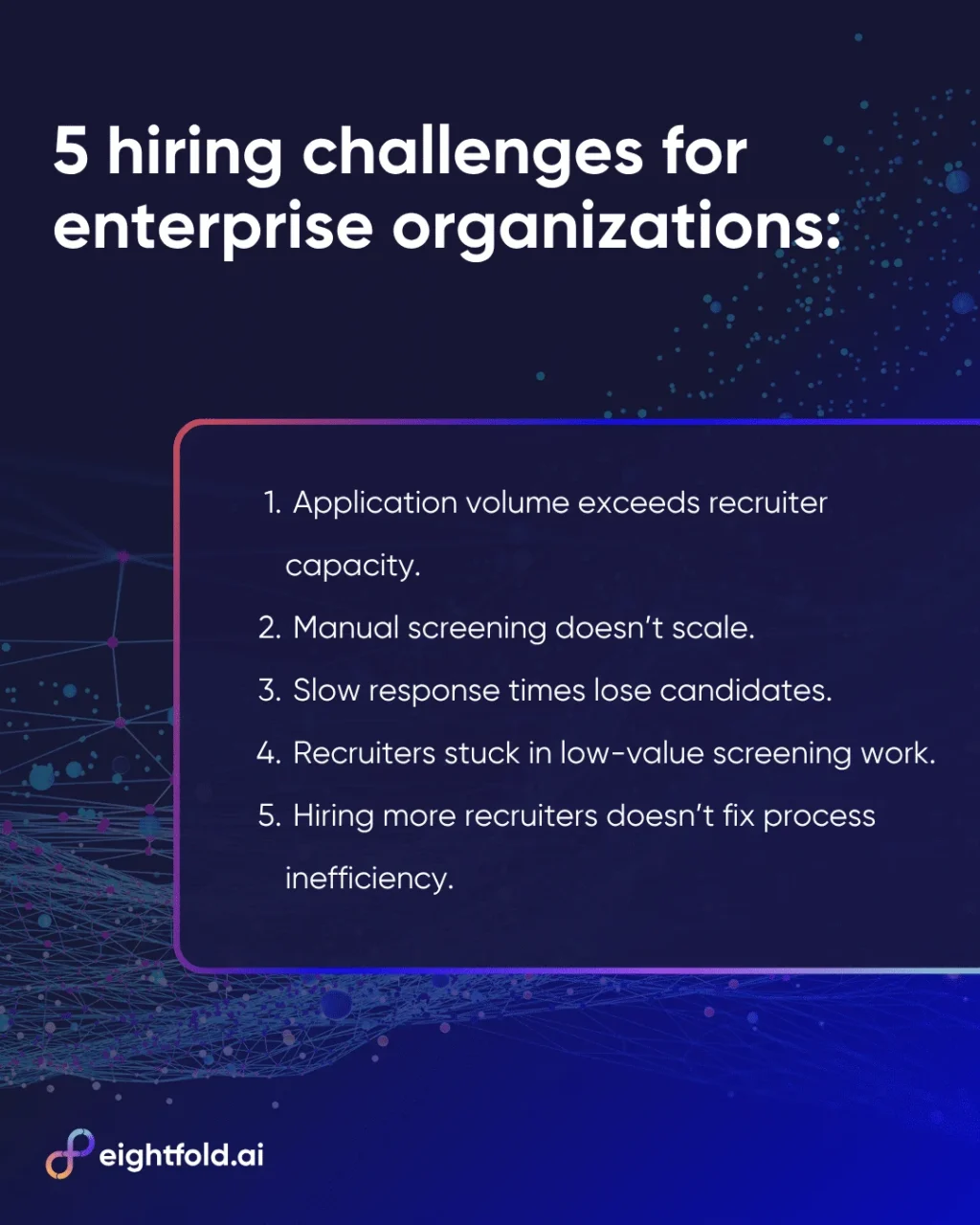
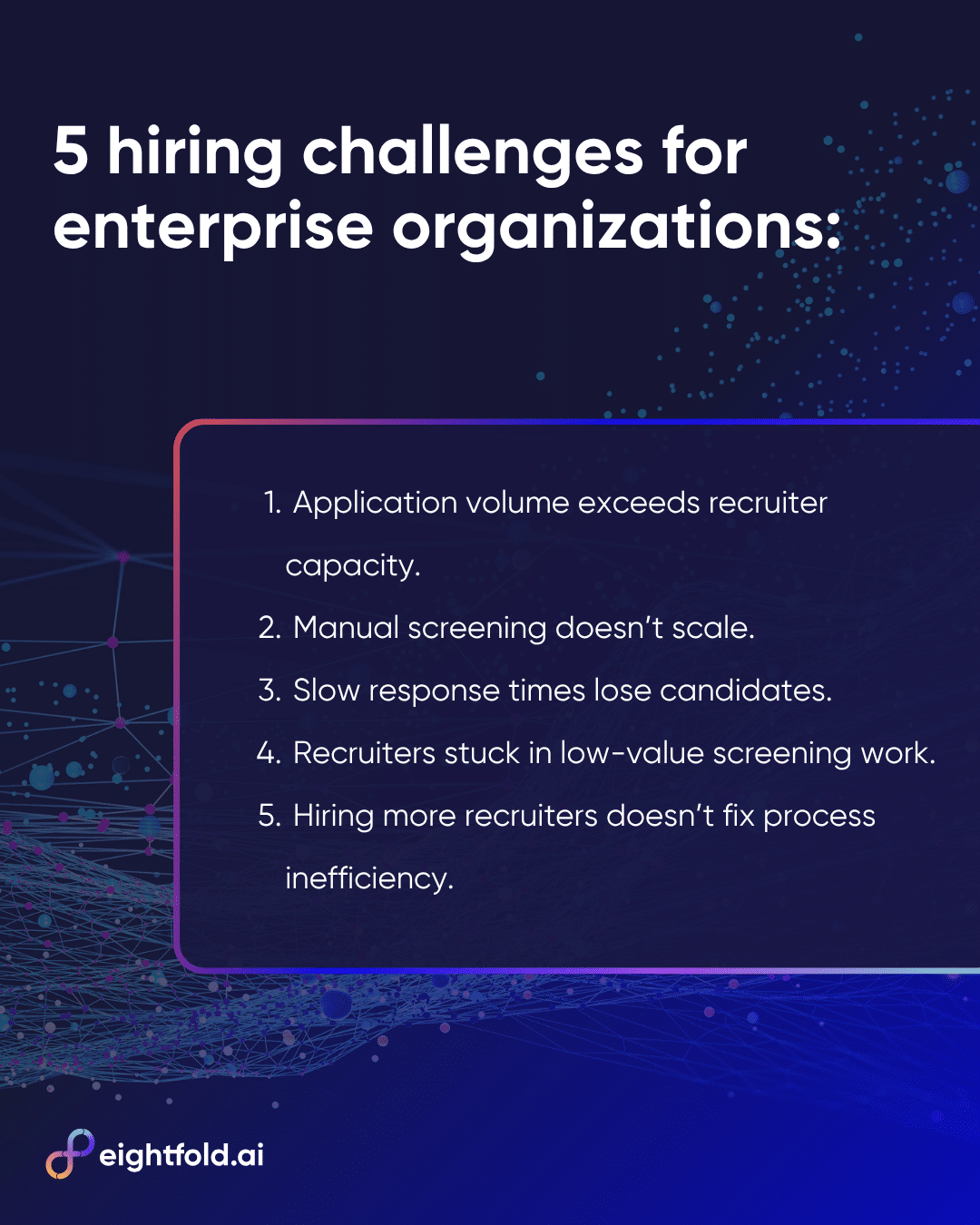
Even well-resourced talent acquisition departments within major corporations grapple with a fundamental imbalance between the sheer volume of incoming applications and the finite capacity of their human recruiters. A single high-volume position at a large organization can attract anywhere from 500 to over 1,000 applications within the first 72 hours of its posting. For a recruiter to meticulously review each application, even dedicating a conservative five minutes per submission, the workload for just one role quickly escalates to over 40 hours of screening. When this is multiplied across a portfolio of 300 or more open requisitions, the mathematical equation becomes untenable through manual effort alone.
The predictable fallout from this capacity crisis is a cascade of negative consequences. Response times to candidates stretch from days to weeks, eroding candidate experience. Highly qualified individuals, facing extended delays, may disengage from the process or accept competing offers from more agile organizations. Recruiters, overwhelmed by the sheer volume of triage work, find their capacity for crucial relationship-building and strategic partnership—activities that truly drive business objectives—severely diminished. Hiring managers become increasingly frustrated by inconsistent candidate pipeline quality and prolonged turnaround times. This creates a self-perpetuating cycle of inefficiency.
The most common solution organizations turn to—simply increasing recruiter headcount—is an expensive, slow-to-scale approach that fails to address the root process problem. What enterprise talent teams genuinely require is an automated screening layer capable of operating at the speed and volume characteristic of the modern application funnel.
AI Interviewer: Scaling Recruitment Operations for the Enterprise
Eightfold AI’s AI Interviewer, built upon the Eightfold Agentic Talent Operating System and currently utilized by a third of Fortune 500 companies, offers enterprises a consistent, automated screening layer. This solution activates the moment a candidate applies, simultaneously across all roles, regions, and business units. This capability is crucial for organizations operating on a global scale with complex organizational structures.
Reclaiming Recruiter Capacity for Strategic Impact
The AI Interviewer automates the initial screening stages, including candidate invitations, the asking of role-specific questions, the evaluation of candidate responses, and the generation of structured summaries. Recruiters are then presented with concise candidate summaries and AI-generated interview scores, enabling them to prioritize their applicant pipelines in minutes rather than days. Early adoption data indicates that organizations have achieved reductions in time-to-first-interview by as much as 90%.
This recovered capacity has a direct and measurable impact on the business. When recruiters dedicate less time to administrative screening and more time to engaging with qualified candidates, hiring manager satisfaction demonstrably improves. Offer acceptance rates tend to rise, and the talent acquisition function can deliver greater strategic value per dollar invested. This shift allows recruiters to move from being transactional processors to strategic talent advisors.
Standardized Evaluation Across Global Markets and Business Units
A persistent challenge in enterprise hiring is the lack of consistency. When hundreds of recruiters, spread across dozens of geographic locations and business units, conduct initial screenings, evaluation criteria can inadvertently diverge. The questions asked may vary, and what constitutes a strong candidate in one region or department might differ significantly from another, not due to differing role requirements, but due to an unstandardized evaluation process.
The AI Interviewer ensures that every candidate is asked the same role-specific questions. It then evaluates responses based on demonstrable skills, experience, and capabilities, rather than factors such as resume formatting, interviewer subjectivity, or the time of day the screening occurred. This guarantees a rigorous and equitable assessment for every applicant. Consequently, hiring managers receive summaries built upon a uniform set of criteria, making cross-market and cross-team comparisons genuinely meaningful.
The AI Interviewer utilizes bias-audited models and supports over 22 languages, with validation across 155 countries, ensuring its effectiveness from corporate headquarters in Chicago to regional operations in Singapore. Furthermore, candidates with accessibility needs are seamlessly routed to a human-led process at every stage, upholding principles of inclusivity.
A Demonstrable Return on Investment for Leadership
For Chief Human Resources Officers (CHROs) and Chief People Officers (CPOs) tasked with justifying AI investments, the financial implications are compelling. A reduction in time-to-fill by even a single week across hundreds of annual hires can translate into significant recovered productivity and reduced operational costs. Minimizing mis-hires through more consistent, skills-based evaluations directly reduces the costly impact of employee turnover. Releasing senior recruiters from administrative screening duties ensures that the highest-cost talent resources are allocated to decisions that truly demand human expertise and strategic insight.
The AI Interviewer integrates seamlessly with leading Applicant Tracking Systems (ATS), meaning implementation is typically measured in hours, not months. This rapid deployment eliminates the need for extensive technical resources or complex change management programs to initiate its use. The system’s ability to provide immediate, actionable data allows leadership to quickly see and quantify the benefits.
Human Judgment Remains Central to the Hiring Process
While the AI Interviewer expertly handles initial screening and delivers structured insights, the ultimate hiring decision always rests with the human team. Recruiters and hiring managers retain the ability to review any interview, access full transcripts, add their own contextual notes, and override AI recommendations whenever their professional judgment dictates. The AI interview score serves as a valuable signal, not a definitive verdict.
Crucially, as an integral part of the broader Eightfold Agentic Talent Operating System, the insights generated during the screening process do not disappear after a hire is made. These data points contribute to a richer, longitudinal understanding of the workforce. This enriched data informs critical internal mobility decisions, skills gap analyses, succession planning, and enterprise-wide retention strategies. This holistic approach transforms the talent function from a reactive hiring machine to a proactive, strategic workforce planning engine.
Case Study: Quality Automotive Services Transforms High-Volume Hiring
Quality Automotive Services, the second-largest and fastest-growing Valvoline Instant Oil Change franchise, has successfully implemented Eightfold AI Interviewer to address its high-volume hiring needs. By automating initial screening for a large number of service technician roles, the company has significantly reduced time-to-hire and improved the quality of its candidate pipeline. This allows their recruiting team to focus on engaging with the most promising candidates and building relationships, rather than being bogged down by manual application review.
The Escalating Cost of the Status Quo
Within enterprise organizations, the financial and operational costs associated with slow or inconsistent hiring processes extend far beyond individual roles; they compound across the entire business. Talent gaps can directly impact project timelines, delay product roadmaps, compromise customer commitments, and negatively affect employee morale. For CHROs and CPOs accountable to the board for overall workforce performance, the risk associated with inaction on hiring efficiency is substantial and continues to grow.
The AI Interviewer is built on an enterprise-grade platform recognized as one of the Top HR Products of 2025 by HR Executive Magazine. This same technology is trusted by a significant portion of the Fortune 500 to power their large-scale talent decisions. It delivers the consistency, speed, and analytical depth that enterprise hiring demands, without the implementation complexity that often hinders adoption.
The talent teams that are succeeding in the competitive enterprise landscape are not necessarily those with the largest recruiter headcount. Instead, they are the organizations that have implemented the smartest processes—those that move with agility, evaluate candidates fairly and consistently, and strategically deploy their human capital on the tasks that genuinely require human judgment and expertise. The future of enterprise recruiting lies in leveraging intelligent automation to augment, not replace, the critical role of human decision-making.
Organizations are now exploring how AI interviewing can redefine their talent acquisition strategies. By embracing these advanced solutions, enterprises can move beyond the limitations of manual processing and unlock new levels of efficiency, fairness, and strategic impact in their hiring endeavors.
Enterprise Talent Leaders Report Significant Gains
Organizations that have adopted AI Interviewer at scale consistently report several standout outcomes:
- Reduced Time-to-Fill: Significant decreases in the time it takes to move a candidate from application to hire, often by weeks.
- Improved Candidate Quality: A more consistently qualified pool of candidates presented to hiring managers, leading to better hires.
- Enhanced Recruiter Productivity: Recruiters spend less time on administrative tasks and more time on strategic engagement.
- Standardized and Equitable Screening: Consistent evaluation criteria applied to all candidates, regardless of location or business unit.
- Increased Hiring Manager Satisfaction: Faster pipelines and better candidate quality lead to greater satisfaction among internal stakeholders.
The journey towards more efficient and effective enterprise hiring is ongoing, but the integration of AI is proving to be a transformative step. By addressing the fundamental capacity challenge, organizations can unlock their full talent potential and gain a significant competitive advantage.







