
In the contemporary global economy, the transition from a conceptual business idea to a viable commercial enterprise requires more than just innovation; it demands a rigorous, structured approach to organization and strategy. While the initial phase of entrepreneurship is often characterized by high levels of enthusiasm, the long-term survival of a startup is frequently determined by the quality of its foundational planning. Experts and researchers agree that a meticulously crafted business plan serves as the primary instrument for navigating the complexities of the market, securing capital, and aligning internal teams toward a common objective.
A business plan is not merely a static document required for bank loans or venture capital pitches; it is a dynamic roadmap that tests the validity of a founder’s assumptions before significant capital is deployed. Research published by the Harvard Business Review indicates that entrepreneurs who formalize their strategy through a written business plan are significantly more likely to see their ventures reach the operational stage. However, the study also highlights a critical nuance: planning is most effective when it is iterative and conducted in tandem with other startup activities, such as product development and initial market testing.
The Foundational Role of Strategic Planning
For founders in high-growth sectors such as Artificial Intelligence (AI), Software as a Service (SaaS), Educational Technology (EdTech), and Human Resources Technology (HR Tech), the business plan acts as a diagnostic tool. It forces leadership to address fundamental questions that are often overlooked in the excitement of product creation. These include identifying the specific problem the product solves, understanding the competitive landscape, and defining the precise mechanisms through which the company will generate revenue.
In the current venture capital climate, which has shifted toward a preference for "path to profitability" over "growth at all costs," the ability to demonstrate a clear business model is paramount. A well-structured plan connects the dots between a brand’s positioning and its go-to-market strategy, ensuring that marketing efforts are not just generating noise but are contributing to measurable business growth.
Core Principles for Constructing a Robust Plan
Before drafting the specific sections of a business plan, industry veterans suggest adhering to four fundamental rules to ensure the document remains effective and credible.

First, clarity and simplicity are essential. Founders often fall into the trap of using excessive industry jargon or overcomplicating their technical descriptions to sound impressive. In a journalistic and professional context, the goal is to ensure that any stakeholder—whether an employee, a partner, or an investor—can quickly grasp the company’s value proposition and operational logic.
Second, the plan must be rooted in realism rather than unbridled optimism. Financial projections and growth targets should be based on evidence and relevant industry benchmarks. For instance, B2B companies should align their customer acquisition cost (CAC) expectations with current market standards for lead generation and funnel conversion rates. Realistic assumptions build trust with external observers and provide a more accurate baseline for internal performance reviews.
Third, the narrative must prioritize the problem over the product. A common cause of startup failure is "a solution in search of a problem." By documenting the specific pain points of the target audience first, the business plan establishes a clear justification for the product’s existence.
Finally, the revenue logic must be transparent. The plan should explicitly detail how the business intends to achieve financial sustainability, outlining pricing tiers, billing cycles, and the necessary scale required to reach a break-even point.
The Anatomy of a Comprehensive Business Plan
The structure of a professional business plan typically follows a logical progression, beginning with the Executive Summary and concluding with financial projections and risk assessments.
The Executive Summary
Though it appears first, the Executive Summary is often the final section to be written. It serves as a high-level overview of the entire business, capturing the essence of the market opportunity, the unique solution, and the team’s capability to execute. A strong summary avoids generic mission statements, focusing instead on the specific facts that define the business opportunity.

Company Description and Market Opportunity
This section defines the "why" behind the organization. It details the company’s mission and the broader market shifts—such as technological advancements or changes in consumer behavior—that have created a window of opportunity. In sectors like AI, this might involve explaining how new Large Language Models (LLMs) allow for efficiencies that were previously impossible, thereby creating a new market niche.
Target Audience and the Ideal Customer Profile (ICP)
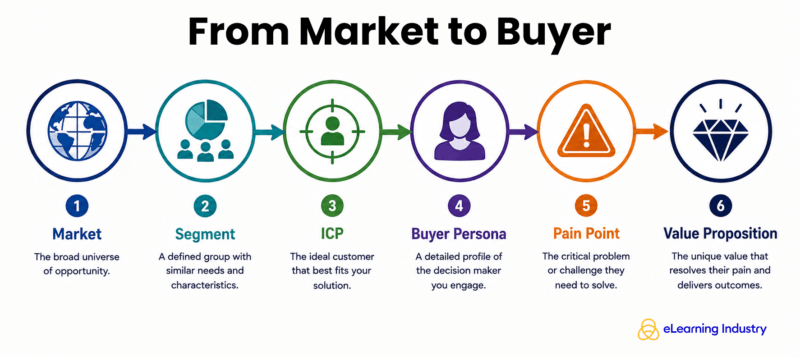
Effective market segmentation is a cornerstone of modern business planning. Rather than targeting "all businesses," a sophisticated plan identifies an Ideal Customer Profile. For a B2B SaaS company, this includes firmographic data (company size, industry, geography), technographic data (what other tools they use), and psychographic data (the specific challenges faced by decision-makers). Understanding the distinction between the "user" and the "buyer" is particularly critical in enterprise sales, where procurement and IT departments often have different priorities than the end-user.
Competitive Advantage and Product Value
Founders must articulate their "moat"—the unique advantage that prevents competitors from easily duplicating their success. This could be proprietary technology, exclusive partnerships, or a superior pricing model. When discussing AI products, for example, companies must explain their pricing strategy—whether it is seat-based, usage-based, or outcome-based—and how this aligns with the value delivered to the customer.
Market Context and Historical Data
The necessity of a business plan is underscored by historical performance data across the startup ecosystem. According to the U.S. Small Business Administration (SBA), approximately 20% of new businesses fail during the first two years of being open, and 45% during the first five years. Lack of market need and running out of cash are consistently cited as top reasons for failure—both of which are issues that the business planning process is designed to identify and mitigate.
Furthermore, the evolution of the "Lean Startup" methodology has changed how plans are written. Modern plans are no longer 100-page static documents but are "living" files that incorporate real-time data from Minimum Viable Product (MVP) testing. This shift reflects a broader trend toward data-driven decision-making, where analytics and search engine visibility (SEO/GEO) play a central role in validating market interest.
Financial Projections and Funding Strategies
The financial section is perhaps the most scrutinized part of any business plan. It must answer critical questions regarding the capital required to reach the next milestone and the anticipated return on investment.
Key financial components include:
- Income Statements: Projecting revenue, cost of goods sold (COGS), and gross margins.
- Cash Flow Forecasts: Ensuring the business maintains enough liquidity to cover operational expenses.
- Balance Sheets: Detailing the company’s assets and liabilities at a specific point in time.
- Break-even Analysis: Identifying the exact point where total revenue equals total costs.
For startups seeking external funding, the plan must also outline the intended use of proceeds. Investors look for "capital efficiency"—the ability of a team to turn a dollar of investment into a significant increase in enterprise value.
Risk Management and Strategic Milestones
A professional business plan concludes by addressing the inherent risks of the venture. This includes market risks (changes in demand), execution risks (hiring difficulties), and regulatory risks (new laws regarding data privacy or AI ethics). By identifying these risks upfront and proposing mitigation strategies, founders demonstrate a level of maturity and preparedness that is highly valued by stakeholders.
Setting measurable milestones for the first 12 to 24 months—such as reaching a specific Annual Recurring Revenue (ARR) target or completing a beta test with a set number of enterprise clients—transforms the business plan from a theoretical exercise into a practical management tool.
Broader Impact and Conclusion
The process of creating a business plan is an essential rite of passage for any serious entrepreneur. Beyond its utility in fundraising, it serves as a foundational document that aligns the entire organization. When every team member understands the target audience, the competitive landscape, and the financial goals, the company can move with greater speed and precision.
In an era defined by rapid technological disruption, the discipline of planning provides a stable anchor. Whether a founder is launching a local service or a global AI platform, the requirement for clear logic, evidence-based assumptions, and a structured path to revenue remains constant. By utilizing professional templates and adhering to established planning frameworks, entrepreneurs can significantly improve their odds of building a resilient and profitable business in an increasingly competitive global marketplace.