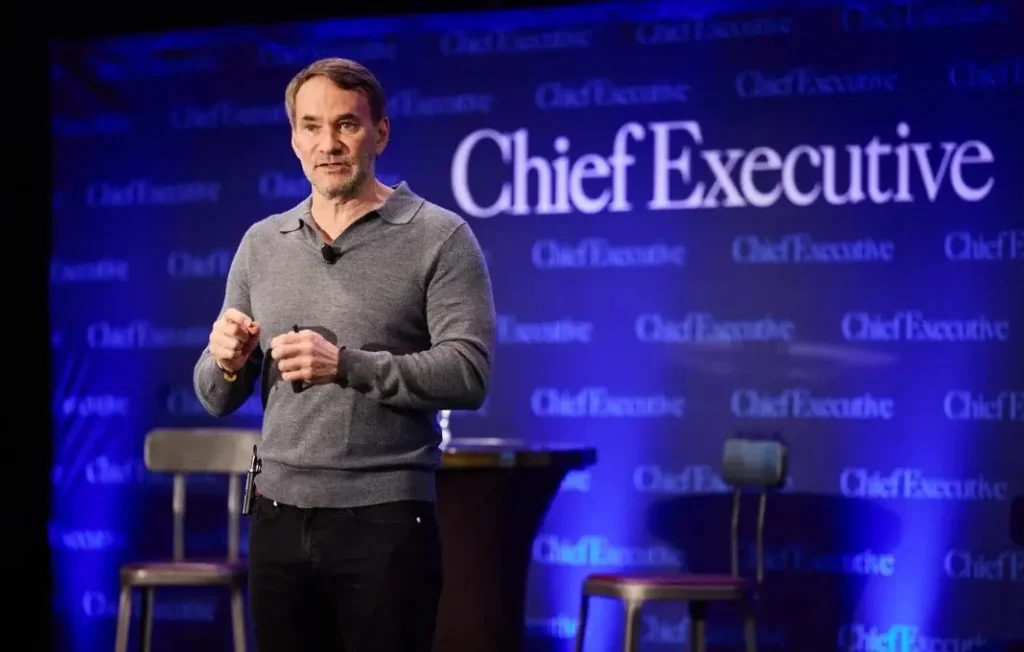
Keith Ferrazzi, the renowned author of "Never Eat Alone" and "Never Lead Alone," is offering a starkly different perspective on the current corporate embrace of artificial intelligence. From his vantage point in the innovation hub of the Bay Area, Ferrazzi observes the landscape of both established industry giants and agile startups, identifying a critical disconnect in how businesses are approaching AI integration. His core message to CEOs grappling with sluggish adoption and elusive ROI is clear: the focus on simply counting the number of employees using AI tools is a fundamental miscalculation, diverting attention from the true drivers of value and transformation.
Ferrazzi’s insights are particularly timely as businesses worldwide invest heavily in AI technologies, often under pressure from boards seeking demonstrable returns. In a recent conversation, he elaborated on his observations, stressing that the current "old ways of working" are insufficient for navigating the complexities of AI-driven change. His latest book, "Never Lead Alone: 10 Shifts from Leadership to Teamship," serves as a foundational text for understanding his proposed paradigm shift, moving beyond traditional organizational structures to embrace more dynamic and collaborative team models.
The AI ROI Conundrum: Beyond Token Counts
The prevailing sentiment among CEOs Ferrazzi engages with is one of mounting frustration. After significant investments in AI "tokens" and implementation, the anticipated surge in productivity and profitability remains largely aspirational. This pressure is amplified by board expectations for concrete outcomes, leading many leaders to feel they are falling behind in a rapidly evolving technological landscape.
"Getting real returns from AI is still more elusive than they’re comfortable with," Ferrazzi stated. "They’re getting a lot of pressure from boards to be cracking the code and at the same time swinging for the fences. There’s an expectation that by now we would have gotten to figure it out and gotten some real returns."
His diagnosis pinpoints a fundamental flaw in the current approach: a misdirected focus on superficial metrics. "A lot of big companies, they’re defining AI by how many people are using the tools. Bad idea. It’s not about how many people are using tools. All that will do is make the LLMs happy by running up a big token usage."
Ferrazzi argues that AI adoption conversations need to be segmented into three distinct, yet interconnected, areas:
- Productivity Improvements: Enhancing the efficiency of existing tasks and individual output.
- Zero-Based Workflow Redesign: A more radical reimagining of how work is done, starting from a blank slate to identify optimal processes. This is where Ferrazzi sees the most significant potential for ROI.
- Product Re-engineering: Utilizing AI to fundamentally alter or create new products and services, a domain where AI has been integrated for longer, predating the generative AI boom.
The misstep, according to Ferrazzi, lies in conflating these three areas and, more critically, in failing to properly measure progress within the second category.
Redefining Success: From Adoption to Impact
Instead of simply encouraging employees to "get on their journey to use AI," Ferrazzi advocates for a shift in focus to "getting results from AI." He proposes a tiered system for recognizing and fostering AI proficiency, moving beyond mere tool utilization:
- Yellow Belts: Individuals who express interest and raise their hand to explore AI.
- Brown Belts: Those who can demonstrate tangible results from their AI applications. This involves sharing concise, five-minute presentations or videos showcasing a specific application, the achieved results, lessons learned, and challenges overcome. The emphasis is on outcomes, not just the process.
- Black Belts: Individuals who not only achieve ROI through AI but also actively re-engineer their own individual workflows. Furthermore, Black Belts are capable of mentoring Brown Belts, creating a cascading effect of expertise throughout the organization.
This framework encourages a culture where individuals are celebrated for their impact, fostering a bottom-up approach to AI innovation that can drive significant productivity gains and re-engineer processes at the individual level.
The Power of Teamship in AI Transformation
The challenge of organizational inertia is a recurring theme for many CEOs. Ferrazzi addresses this directly with his concept of "Teamship," a core tenet of his book. He argues that effective AI transformation requires re-engineering workflows not at an individual or departmental level, but across entire functions and divisions. This necessitates a competency that often resides outside traditional organizational silos.
"The big problem you have is that you do not have that competency in-house," Ferrazzi explained. "More importantly, if you did, you’re too bound to org charts. The reality of re-engineering workflows is across the org charts. That’s where that book comes in."
Chapter one of "Never Lead Alone" directly tackles this by asserting that "the team has nothing to do with your org chart." Ferrazzi stresses the need for companies to organize around transformation initiatives rather than rigid departmental structures. This involves identifying critical objectives – the "four big rocks" – and assembling cross-functional teams dedicated to achieving them, breaking down silos and fostering collaboration.
Cultivating a New Social Contract for Collaboration
Within these newly formed, cross-functional teams, a fundamental shift in the social contract is required. Ferrazzi emphasizes the need for:
- Egoless Collaboration: A willingness to prioritize the collective goal over individual ego or departmental turf.
- Bold Ambition: Aiming for transformative change rather than incremental improvements.
- Candor and Challenge Culture: Creating an environment where open dialogue, constructive criticism, and the honest identification of challenges are encouraged.
"The bullshit that we have to get rid of is ‘Who’s the leader?’" Ferrazzi asserted, referring to the dynamics within these matrixed teams. "The reality is this is a group of individuals that need to learn how to have a social contract with each other, that can challenge each other, that can point out where there’s a need for each other to level up, that can be willing to be egoless and take my entire piece of this thing out of the process and identify it."
This new contract actively combats conflict avoidance, siloed thinking, and a focus on maximizing individual departmental gains at the expense of broader transformation.
Strategic Implementation: Getting It Right Somewhere, Then Everywhere
For CEOs struggling with widespread AI adoption, Ferrazzi’s advice is to adopt a focused, iterative approach: "Get it right somewhere before you try to get it right everywhere." He encourages leaders to identify the area where AI integration can yield the most significant impact, such as go-to-market strategies.
"Last night I had a group of CEOs in the Bay Area, and people were bemoaning the lack of advancement that they were getting," Ferrazzi recounted. "And I was talking to one guy, and I said, ‘Listen, where do you need the most lift?’ He’s like, ‘Go to market.’ I said, ‘Great. You now run go-to-market transformation.’"
This focused approach requires setting audacious goals. Instead of aiming for a modest 50% increase in sales productivity, Ferrazzi challenges leaders to target a 2x to 5x improvement. This ambitious target necessitates the formation of a dedicated, cross-functional team comprising individuals from sales, marketing, product, and technology, empowered to fundamentally re-engineer the go-to-market process.
The CEO’s Role: Driving Transformation, Not Delegating It
For mid-market companies, where resources may be more constrained, the imperative for a CEO to be directly involved is even greater. Ferrazzi emphasizes that leaders must "own the landing of successful AI re-engineering in a particular area." This means actively participating in monthly reviews, stress-testing results, identifying roadblocks, and ensuring that no one is exempt from accountability.
"You’ve got to be 10x bolder. Zero-based workflow redesign. You’ve got to be the driver of the critical change," Ferrazzi advised. "If you just step back and say, ‘I’m asking all of you to raise the water levels,’ you’re going to get nowhere."
Learning from the AI-Native Generation
Ferrazzi highlights a crucial learning opportunity from the younger, AI-native generation. These individuals, often referred to as "kids" in his discourse, exhibit a nimbleness and agility rooted in their collaborative processes. Unlike traditional corporate environments that rely heavily on meetings, these younger professionals leverage asynchronous collaboration, ensuring that all perspectives are shared and understood before group discussions commence. This allows for more efficient meetings, where disagreements can be addressed directly and decisions can be made within a single session, drastically reducing cycle times compared to larger, more established organizations.
"What I’m learning from the kids is their nimbleness, their agility, is defined by the process of how they collaborate," Ferrazzi observed. "They don’t use meetings as their primary form of collaboration. They use asynchronous collaboration. Everybody’s point of view is known before you show up in a meeting, so that you show up in a meeting and you can wrestle the clear disagreements and land the plane in one meeting."
The Rise of AI-Native Interns as Strategic Assets
Perhaps one of the most striking revelations from Ferrazzi’s recent observations is the transformative impact of AI-native interns. These are not the employees of traditional consultancies attempting to rebrand, but rather young individuals with a deep, intuitive understanding of AI’s potential.
"The biggest breakthroughs that these CEOs last night were reporting were from AI native interns that they were bringing into the company. It was shocking," Ferrazzi shared. "Like, they were bringing in these AI native, swashbuckling kids into the company, and creating these digital services groups that were swarming in, working with the business unit leaders. And really bringing an entirely different way of thinking."
These interns are proving invaluable in areas like call centers, where they are tasked with re-engineering processes to enhance customer satisfaction metrics like Net Promoter Score, often with significantly reduced staffing. Their ability to rapidly conceptualize and implement AI-driven solutions makes them a secret weapon for companies looking to gain a competitive edge.
The Belt System: A Supportive Framework for Growth
While the tiered belt system (Yellow, Brown, Black) is a valuable tool for fostering AI proficiency and recognizing achievements, Ferrazzi positions it as a supportive initiative rather than the core driver of transformation. He suggests that heads of HR, training, and CIOs should lead these efforts, focusing on elevating everyone’s productivity.
"You invite the world in to do that. You see who gets to be a yellow belt. You see who gets to be brown belt. You see who gets to be black belt," Ferrazzi stated. He advocates for ample opportunities for all employees to witness tangible benefits from AI through peer-to-peer learning and encouragement to join the journey.
However, Ferrazzi doesn’t shy away from the hard truths of organizational evolution. "Those who after six months, maybe after a year, those who have not gotten on that journey – fire them. They’re yesterday’s employees." This stark pronouncement underscores his belief that embracing AI is not optional but a fundamental requirement for future relevance in the business world.
The insights from Keith Ferrazzi offer a compelling roadmap for leaders navigating the complexities of AI integration. By shifting focus from superficial adoption metrics to tangible results, embracing teamship, cultivating a new collaborative culture, and strategically leveraging both internal talent and external expertise – particularly from the younger generation – businesses can unlock the true transformative power of artificial intelligence and position themselves for sustained success in the years to come. The upcoming Leadership Conference in San Antonio, where Ferrazzi will be a keynote speaker, promises to delve deeper into these themes, providing CEOs with actionable strategies for accelerating their organizational execution in an increasingly complex global economy.