For decades, employee service awards have been a familiar fixture in the corporate landscape, often epitomized by the presentation of a gold watch, a firm handshake, and polite applause. This traditional approach, deeply rooted in an era of long-term, stable employment, served its purpose by acknowledging tenure. However, the modern workforce, characterized by evolving expectations, diverse generational values, and a dynamic job market, is increasingly seeking a more profound and personalized form of appreciation. Today’s professionals desire to feel genuinely seen, heard, and valued for their unique contributions, not merely for the passage of time. This fundamental shift in employee sentiment is not anecdotal; it is unequivocally supported by compelling data that underscores a critical disconnect in many organizations.
According to research from the Achievers Workforce Institute (AWI), a staggering statistic reveals that only one in four employees currently feel genuinely appreciated at their workplace. This lack of perceived value has tangible consequences, with more than half of all employees actively considering departing from their current employer. This scenario, often misdiagnosed as solely a retention challenge, is fundamentally a recognition crisis. When executed thoughtfully and strategically, employee service awards transcend mere celebrations of tenure; they transform into potent levers capable of significantly boosting engagement, fostering loyalty, and reinforcing a positive organizational culture. Understanding how to harness this potential is paramount for businesses aiming to thrive in the contemporary talent landscape.
A Historical Perspective: The Evolution of Workplace Recognition
The concept of recognizing employee tenure is not new, tracing its roots back to the late 19th and early 20th centuries during the rise of industrial capitalism. Early recognition often took the form of long-service awards tied to a paternalistic corporate culture, where employees were expected to dedicate their entire careers to a single company. Companies like IBM famously awarded gold watches and rings, symbolizing unwavering loyalty and a lifetime of dedication. These were tangible symbols of commitment, often accompanied by pension plans and job security, which were highly valued in an era marked by less social mobility and fewer career opportunities.
Through the mid-20th century, as the post-World War II economic boom solidified, employee recognition continued to be largely transactional and focused on longevity. Plaques, pins, and certificates became commonplace, marking milestones like 5, 10, 20, or even 25 years of service. While these gestures were appreciated within their historical context, they often lacked personalization and rarely acknowledged the specific impact an individual made. The underlying message was often one of endurance rather than significant contribution or growth.
The late 20th and early 21st centuries ushered in a new paradigm. The rise of the knowledge economy, globalization, and rapid technological advancements transformed the nature of work. Employees became more mobile, career paths less linear, and expectations shifted from security to personal growth, purpose, and impact. The "gold watch" model began to feel increasingly anachronistic. Companies started to realize that simply acknowledging time served was insufficient to motivate or retain a workforce that valued agility, innovation, and a sense of belonging. The focus began to shift towards recognizing performance, values, and individual contributions, leading to the development of broader recognition programs that supplemented traditional service awards.
The Modern Imperative: Beyond Just a Date on the Calendar
In today’s dynamic work environment, an employee service award must be more than a ceremonial acknowledgment of a date on a calendar. It represents a crucial opportunity to create a meaningful recognition experience that resonates deeply with the individual. Modern workplaces recognize that the award should not merely mark how long someone has stayed, but profoundly celebrate the impact they have made, the skills they have developed, and how their contributions intrinsically connect to the organization’s overarching purpose and values.
High-impact organizations are actively redefining service awards as an integral component of a comprehensive recognition strategy. This revised approach aims to reinforce company culture, strengthen employee connection, and celebrate the unique individual behind each milestone. This necessitates a decisive move beyond generic gestures towards designing truly memorable and impactful moments that employees will cherish and, importantly, discuss positively within their networks.
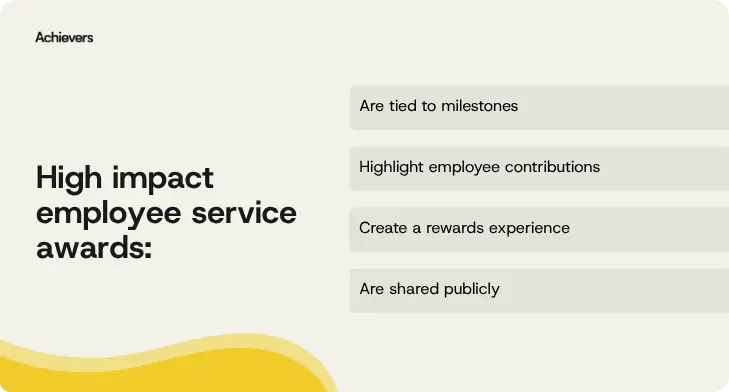
Key elements defining a high-impact employee service award program today typically include:
- Personalized Recognition: Tailoring the award and its presentation to the individual’s preferences, achievements, and career journey.
- Meaningful Rewards: Offering choices that resonate, such as experiential gifts, professional development opportunities, charitable donations, or flexible time off.
- Timely Delivery: Ensuring awards are presented promptly and consistently at the exact milestone, avoiding delays that diminish impact.
- Public Acknowledgment: Celebrating achievements visibly across the organization, often involving peers and leadership.
- Leadership Involvement: Direct participation from managers and senior leaders in the recognition process, lending authenticity and weight.
- Integration with Broader Recognition: Linking service awards to a continuous recognition platform to reinforce appreciation throughout the year.
When these elements are cohesively integrated, service awards transcend being a one-time, perfunctory gesture. They transform into powerful moments of connection, where employees feel genuinely seen, heard, and appreciated. These pivotal moments are what ultimately drive lasting engagement, cultivate a sense of belonging, and significantly improve retention rates.
Why Service Awards Are Critical for Retention and Engagement
Service awards occupy a distinctive and vital position within a modern recognition strategy. While day-to-day recognition programs serve to reinforce desired behaviors and efforts in real-time, service awards create unique milestone moments. These moments provide invaluable opportunities for employees to pause, reflect on their journey, and reconnect with the cumulative impact they have generated over their tenure. In a global workforce grappling with declining feelings of appreciation and widespread disengagement, such moments are more critical than ever.
Service awards are instrumental in helping organizations build continuity, preserve institutional knowledge, and significantly enhance the overall employee experience. They serve as tangible proof that recognition within the company is not arbitrary or reactive, but rather an intentional, consistent, and deeply ingrained aspect of the organizational culture. At their most effective, service awards do more than merely mark time served; they:
- Reinforce Organizational Values: By celebrating contributions that align with the company’s core principles.
- Boost Morale and Motivation: Creating a positive environment where effort and dedication are valued.
- Strengthen Employee-Company Bonds: Fostering a deeper sense of loyalty and belonging.
- Improve Employee Experience: Making employees feel valued throughout their career journey.
- Reduce Turnover: By affirming commitment and showing employees their long-term future is appreciated.
- Attract Top Talent: A robust recognition program enhances employer brand and reputation.
The Tangible Impact on the Employee Experience
Recognition stands as one of the most consistent and powerful drivers of employee engagement. However, the efficacy of recognition is not uniform; its weight and impact vary significantly based on timing, meaning, and visibility. The Achievers Workforce Institute (AWI) data emphatically demonstrates that when employees feel genuinely appreciated, the positive repercussions extend far beyond the immediate moment of recognition.
Employees who report feeling genuinely appreciated are:
- Significantly more engaged in their work.
- More likely to recommend their organization as a great place to work.
- More inclined to see a long-term future with their current employer.
- More productive and committed to achieving company goals.
This foundational appreciation is crucial, but service awards introduce a distinct layer of value. They anchor recognition to significant milestones, thereby creating moments that feel earned, profoundly memorable, and truly worthy of celebration. Unlike day-to-day appreciation, which can sometimes blend into the regular flow of work, service awards stand out as irrefutable proof that the organization profoundly values and acknowledges long-term contributions.
High-impact service awards specifically help create:
- A Sense of Personal Value: Employees feel their individual journey and dedication are recognized.
- Reinforced Loyalty: Deepening commitment to the organization over time.
- Celebration of Growth and Development: Acknowledging not just tenure, but professional evolution.
- A Culture of Gratitude: Encouraging a workplace environment where appreciation is explicit and shared.
Furthermore, the positive effects of recognition extend beyond mere sentiment; they directly influence behavior. AWI data reveals that 85% of employees state they will repeat an action when they are recognized for it. This insight means that every service award serves as a strategic opportunity to reinforce the values, behaviors, and contributions that an organization wishes to cultivate and see more of within its workforce.
Impact on Retention and Engagement Metrics: A Data-Driven Analysis
To truly grasp the strategic value of service awards, it is imperative to examine the broader contemporary employee experience. Across diverse industries, organizations are confronting escalating disengagement rates, rapidly shifting employee expectations, and an increasing risk of employee turnover. At the heart of many of these challenges lies a singular factor: whether employees feel adequately appreciated. When recognition is sporadic, delayed, or entirely absent, employees inevitably begin to disconnect from their work and their organization. This disconnection manifests rapidly and overtly in critical retention and engagement data.
According to the AWI, the current workforce is sending an unambiguous signal:
- Only 1 in 4 employees feel appreciated at work.
- More than half of employees are considering leaving their current employer.
- A significant portion of employees report feeling undervalued and overlooked.
This is not merely a risk of turnover; it signifies a profound breakdown in connection, purpose, and fundamental appreciation. Recognition emerges as one of the most effective strategies to bridge this critical gap. Employees who consistently feel appreciated are an astonishing 17 times more likely to envision a long-term future at their organization. This represents a powerful and measurable shift, directly impacting retention rates, overall engagement levels, and ultimately, organizational performance.
The frequency of recognition also plays an indispensable role. AWI research further demonstrates that employees who receive regular recognition are:
- More engaged in their roles.
- More productive and efficient.
- More likely to feel a strong sense of belonging.
- Less likely to seek employment elsewhere.
While service awards alone cannot bear the entire burden of fostering continuous appreciation, they powerfully amplify its effects. When integrated into a broader, holistic recognition strategy, service awards serve as crucial milestone anchors, reinforcing deep appreciation at pivotal moments. This is complemented by continuous, day-to-day recognition that sustains a culture of appreciation in the interim periods. Together, they cultivate a workplace where employees feel consistently valued, not just at specific anniversaries, but throughout their entire journey with the company. The overarching takeaway is clear: recognition is not a discretionary "nice-to-have"; it is a measurable, strategic driver of retention and engagement. Service awards, when executed thoughtfully, represent one of the most powerful and visible means to make this appreciation meaningful and enduring.
Key Elements for an Effective Service Award Program
The creation of a truly impactful service award program is not an accidental outcome; it is the result of deliberate design, informed by data, and centered squarely on the employee experience. Several core elements must be prioritized for success.
Service Milestones and Recognition Timing:
Traditional service award programs often feature significant gaps between recognition milestones—for example, moving from 5 years directly to 10, then 20. In today’s fast-paced employee experience, such extended waits for meaningful recognition can be detrimental. Modern programs actively close these gaps, acknowledging that frequent and early milestones are critical for building engagement and retaining talent from the outset.
Modern programs celebrate not just major anniversaries, but also:
- First-year anniversary: Crucial for new employee retention and validation.
- Second and third-year anniversaries: Reinforcing commitment during critical growth phases.
- Five, ten, fifteen, twenty, and twenty-five-year anniversaries: Celebrating significant career contributions.
Critically, the most effective programs also celebrate every year in between. The rationale is simple: retention is worth celebrating at any stage. A second year of service is as important for an individual’s journey and the company’s investment as a fifth or tenth year. Recognition gaps are known to erode engagement; data indicates that more than half of employees report being recognized only a few times a year or less.
Best practices for timing include:
- Annual Recognition: Acknowledging every year of service, even if with a smaller gesture.
- Consistent Delivery: Ensuring awards are presented on or very close to the actual anniversary date.
- Proactive Planning: Automating reminders and processes to prevent delays.
Personalization and Alignment with Company Values:
A generic, one-size-fits-all approach to service awards no longer aligns with contemporary employee expectations. Today’s workforce actively seeks recognition that feels relevant, authentic, and directly connected to their daily work and the broader organizational mission. Generic plaques and impersonal gifts do not build culture; meaning does. To truly resonate, recognition must reflect both the individual’s unique contributions and the organization’s overarching purpose.

Employees desire recognition that reflects:
- Their individual achievements and impact.
- Their personal preferences and interests.
- Their alignment with company values and mission.
- Their professional growth and development.
Yet, many existing programs fall short. A small percentage of employees report being regularly recognized in ways that feel genuinely meaningful.
What high-impact programs do differently:
- Offer Choice: Providing a curated selection of meaningful rewards, allowing employees to choose what resonates most.
- Integrate Storytelling: Encouraging managers and peers to share specific examples of the employee’s contributions and impact.
- Align with Values: Highlighting how the employee’s actions embody the company’s core values during the recognition moment.
- Personalized Messaging: Crafting unique messages that speak to the individual’s journey, growth, and specific achievements.
When recognition feels authentic and personalized, employees are not only more likely to connect their daily work to a larger purpose but also to remain with the organization for a longer duration.
Approaches: Modern vs. Traditional Employee Service Awards:
Service awards have undergone a profound transformation to meet evolving employee expectations. What once felt significant, such as a standard plaque or a corporate pin, can now feel impersonal and irrelevant if it lacks choice or a personal connection. The era of the "trophy case" as the ultimate symbol of achievement has waned. Today’s employees are seeking recognition that mirrors their work styles, reflects their personal values, and aligns with how they genuinely wish to be celebrated.
Traditional Awards typically include:
- Standardized plaques, trophies, or pins.
- Generic gifts with company logos.
- Limited or no choice in rewards.
- Formal, often impersonal ceremonies.
- Focus primarily on tenure.
Modern Awards, in contrast, feature:
- Experiential rewards (e.g., travel vouchers, unique workshops).
- Flexible monetary awards or gift cards with broad choice.
- Opportunities for professional development or education.
- Charitable donation options in the employee’s name.
- Personalized communication and public acknowledgment.
- Integration with digital recognition platforms.
- Emphasis on individual impact, growth, and values.
The divergence between these approaches extends beyond mere aesthetics; it fundamentally impacts engagement and participation. Contemporary employees value experiences, flexibility, and genuine choice, and programs that reflect these preferences consistently drive stronger engagement and greater employee satisfaction.
Quick Checklist: Is Your Service Award Program Working?
To audit the efficacy of a current service award program, consider the following questions:
- Do employees frequently talk positively about the service awards they receive?
- Do managers consistently deliver awards on time and with personalized messages?
- Are the rewards offered genuinely desirable and reflective of employee preferences?
- Does the program align with and reinforce your company’s core values?
- Is leadership actively involved in celebrating service milestones?
- Do employees feel seen and appreciated through the program?
If the answer to more than one of these questions is "no," it signals a clear need for a strategic refresh and modernization of the program.
Creative Employee Service Award Ideas and Examples
To inspire a fresh and meaningful approach to service awards, consider tailoring recognition to the significance of the milestone and the individuality of the employee.
Award ideas by years of service:
5 Years:
- Personalized Experience Voucher: A weekend getaway, a cooking class, or a wellness retreat.
- Significant Professional Development: A course, certification, or conference attendance related to their career path.
- Technology Upgrade: A new laptop, tablet, or premium headphones for personal use.
- Enhanced PTO: An extra day or two of paid time off to recharge.
10 Years:
- Sabbatical Leave: A paid extended break (e.g., 2-4 weeks) to pursue personal interests, travel, or volunteer.
- Significant Charitable Donation: A substantial donation made in the employee’s name to a cause they care deeply about.
- Personalized Luxury Item: A high-quality watch, a custom piece of art, or a piece of premium home equipment.
- Family Experience Package: A family vacation, theme park passes, or a significant family photo session.
25 Years:
- Custom Legacy Project: Funding for a project or initiative the employee is passionate about within the company, leaving a lasting mark.
- Significant Financial Award: A substantial bonus or investment contribution.
- Lifetime Learning Stipend: An annual budget for continuous learning or personal enrichment for a set number of years.
- Exclusive Retreat/Experience: An all-expenses-paid trip to a unique destination or a high-level executive development program.
The overarching goal is to match the reward not only to the milestone but crucially to the individual’s preferences and aspirations.
Example Recognition Moments:
- Personalized Video Message: A compilation of congratulatory messages from colleagues, managers, and senior leaders, highlighting specific contributions.
- Feature in Company Newsletter/Intranet: A dedicated story detailing the employee’s journey, achievements, and impact.
- Team Celebration: A catered lunch or dinner, acknowledging the employee’s contributions within their immediate team.
- Mentorship Opportunity: Offering the long-serving employee a chance to mentor new talent or lead a special project.
- Leadership Presentation: A senior leader personally presenting the award and sharing anecdotes of the employee’s positive influence.
These carefully crafted moments are profoundly impactful. Employees who receive meaningful recognition are demonstrably more likely to feel connected, highly productive, and deeply committed to their organization’s long-term success.
How to Choose an Employee Service Award Vendor
Even the most innovative service award concepts require a robust infrastructure to bring them to fruition effectively. The choice of vendor extends beyond merely delivering rewards; it fundamentally shapes the entire recognition experience. This encompasses everything from the emotional impact of receiving recognition to the seamlessness of its delivery. When the system operates flawlessly, employees perceive the recognition as authentic and valued. Conversely, when the system is fraught with friction, employees primarily notice the procedural hurdles.
Selecting the right partner begins with a clear understanding of what is required to create a consistent, meaningful experience at scale. Organizations should seek vendors that offer not only extensive flexibility in reward options but also simplify the process of delivering personalization without imposing undue complexity on internal teams.
Strong vendors typically provide:
- Global Capabilities: Ability to deliver diverse rewards across different countries and currencies, accommodating a global workforce.
- Extensive Reward Catalog: A wide array of meaningful choices, including experiential, merchandise, gift cards, and charitable options.
- User-Friendly Platform: An intuitive interface for both administrators and employees, ensuring ease of use.
- Personalization Tools: Features that allow for custom messaging, manager input, and peer recognition integration.
- Robust Reporting and Analytics: Data insights into program engagement, reward redemption, and overall impact.
- Seamless Integrations: Compatibility with existing HRIS, payroll, and communication systems.
- Dedicated Support: Responsive customer service to assist with implementation and ongoing management.
Behind the scenes, simplicity in management is paramount. If a recognition platform is challenging to administer or confusing to navigate for HR or managers, that internal friction will inevitably trickle down and negatively impact the employee experience. The easier and more streamlined the process is for delivering recognition, the more consistently and effectively it will occur.
Implementation Tips for Lasting Impact
The selection of an appropriate vendor is merely the initial phase; the long-term success of a service award program hinges critically on its implementation strategy. A well-executed launch can generate significant awareness and excitement, but it is consistent application and continuous reinforcement over time that yield genuine, measurable results.
To position a service award program for enduring success:
Do:
- Communicate Clearly and Broadly: Announce the new program or refresh with enthusiasm, explaining its purpose, how it works, and the types of recognition employees can expect.
- Train Managers Effectively: Equip managers with the tools, knowledge, and confidence to deliver meaningful and personalized recognition, emphasizing their critical role.
- Integrate with Your Culture: Weave the service award program into existing company rituals, values, and communication channels to make it feel organic and authentic.
- Involve Leadership Actively: Encourage senior leaders to personally participate in celebrating milestones, whether through public acknowledgments, personalized messages, or event attendance.
- Measure and Adapt: Regularly collect feedback, track engagement metrics (e.g., award redemption rates, employee sentiment surveys), and be prepared to iterate and improve the program based on data.
- Celebrate Publicly: Leverage internal communication channels (intranet, company meetings, social media) to highlight milestones and share success stories, creating positive visibility.
Don’t:
- Make it Generic: Avoid impersonal, one-size-fits-all awards or templated messages that lack genuine sentiment.
- Delay Recognition: Ensure awards are delivered promptly on or very near the actual anniversary date; delays diminish impact and sincerity.
- Underestimate Communication: A lack of clear, consistent communication can lead to confusion, apathy, and a perceived lack of value for the program.
- Treat it as a One-Time Event: Service awards should be part of a continuous recognition strategy, not an isolated gesture.
- Forget the "Why": Continuously remind employees and managers of the program’s purpose – to recognize valuable contributions and foster a culture of appreciation.
Ultimately, service awards achieve their maximum effectiveness when they are embedded within a broader, continuous recognition culture. When appreciation is consistently and visibly demonstrated throughout the year, not just at specific milestones, employees feel perpetually seen, heard, and genuinely valued.
Making Service Awards a Driver of Retention, Not a Mere Checkbox
Employee service awards represent a profound strategic opportunity to transform recognition from a perfunctory task into a catalyst for tangible business results. In a globalized landscape where employee engagement levels are often low and retention remains a persistent challenge, organizations that distinguish themselves are those that prioritize and visibly demonstrate consistent, meaningful appreciation.
Through a thoughtfully designed and meticulously implemented service award program, organizations can move beyond simply acknowledging tenure. They can create powerful moments that deeply connect individuals to their purpose, powerfully reinforce the desired organizational culture, and cultivate a robust, long-term commitment from their most valuable asset: their people. With platforms like Achievers, employee service awards evolve from simple milestones into enduring moments that foster connection, loyalty, and a thriving workplace environment. This strategic investment in recognition is not merely a cost; it is an imperative for sustainable success in the modern economy.