
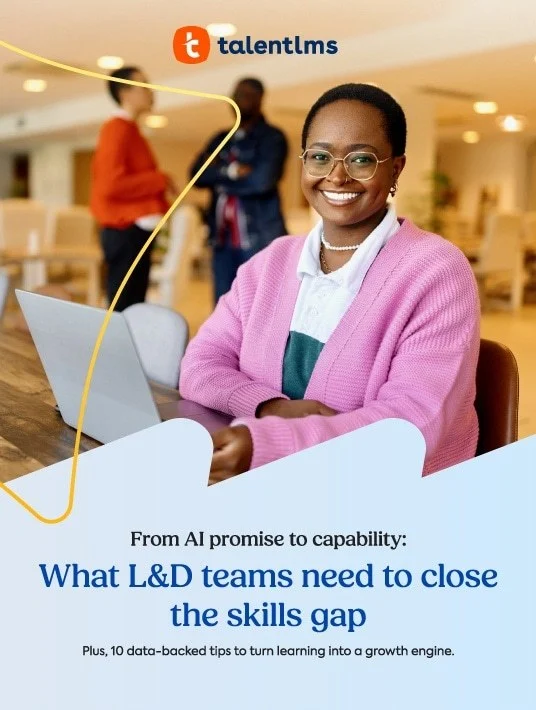
The rapid integration of artificial intelligence into the corporate ecosystem has created a significant paradox: while organizations are deploying AI tools and training programs at an unprecedented pace, the actual development of measurable employee capability is lagging behind. To address this widening chasm, TalentLMS has announced the release of a comprehensive new guide titled From AI Promise To Capability: What L&D Teams Need To Close The Skills Gap. The publication aims to provide Learning and Development (L&D) professionals with a data-driven roadmap to transform theoretical AI potential into practical organizational growth, drawing on extensive research conducted among more than 1,100 professionals in the United States.
The Emergence of the AI Perception Gap
As the global economy enters the mid-2020s, the initial novelty of generative AI has transitioned into a mandatory operational requirement. However, TalentLMS’s 2026 Annual L&D Benchmark Report reveals a stark disconnect between management and the workforce. While executive leadership often perceives AI training initiatives as successful based on the volume of content delivered, employees frequently report a lack of the "necessary conditions" for deep learning.
The research indicates that the primary barriers to effective AI adoption are not necessarily a lack of interest or access to tools, but rather a lack of dedicated time, structured guidance, and cognitive focus. Organizations are frequently guilty of "content dumping"—providing employees with vast libraries of AI tutorials without the corresponding bandwidth to practice these skills in a real-world context. This "perception gap" suggests that while the supply of AI training is high, the quality of engagement and the resulting capability building remain insufficient to meet the demands of a high-tech economy.
Chronology of the AI Skills Crisis (2023–2026)
To understand the current state of AI learning, it is essential to trace the trajectory of workplace technology over the past three years. The evolution of the skills gap can be categorized into three distinct phases:
- The Experimental Phase (2023–2024): Following the mass adoption of Large Language Models (LLMs), organizations focused on rapid experimentation. Training was largely ad-hoc, with early adopters teaching themselves how to use prompts. L&D teams struggled to keep pace with the weekly release of new features.
- The Integration Phase (2024–2025): Companies began formalizing AI policies and purchasing enterprise licenses for AI assistants. Training shifted toward compliance and basic literacy. However, this period saw the first signs of "AI fatigue" as employees were expected to maintain their regular workloads while simultaneously mastering new digital workflows.
- The Capability Phase (2026–Present): The current era marks a shift from literacy to mastery. Organizations have realized that knowing how to use an AI tool is different from knowing how to use it to drive business value. The focus has moved toward building "capabilities"—the intersection of technical skill, critical thinking, and domain expertise.
Supporting Data: The 2026 Benchmark Findings
The TalentLMS eBook is rooted in findings from a survey of 1,100 U.S. professionals, which highlights the structural flaws in current L&D strategies. Key data points from the research suggest that:
- Time Constraints: Nearly 60% of employees cite a lack of time as the single greatest obstacle to completing AI training.
- Misalignment of Goals: While 75% of leaders believe their AI training programs are aligned with business objectives, only 45% of employees feel the training is relevant to their daily tasks.
- The Guidance Deficit: A significant portion of the workforce feels "rudderless" when navigating AI tools, expressing a desire for more mentorship-based learning rather than self-paced video modules.
- Retention Concerns: Professionals who feel their AI skills are stagnating are 30% more likely to seek new employment opportunities at organizations that offer more robust developmental support.
These statistics underscore the urgency for L&D teams to move beyond "check-the-box" training and toward a more holistic talent management strategy.
![From AI Promise To Capability: What L&D Teams Need To Close The Skills Gap [eBook Launch]](https://cdn.elearningindustry.com/wp-content/uploads/2026/05/From-AI-Promise-To-Capability_-What-LD-Teams-Need-To-Close-The-Skills-Gap-eBook-Launch.jpg)
Designing AI Training That Works: Strategic Interventions
The TalentLMS guide outlines several critical interventions designed to bridge the gap between AI promise and actual capability. The eBook advocates for a shift in how learning is designed and delivered, focusing on three core pillars:
1. Contextualized Learning Design
Rather than generic AI training, the guide suggests that L&D teams must tailor content to specific job roles. For example, the AI skills required for a marketing professional (generative content and sentiment analysis) differ vastly from those required for a data analyst (automated cleaning and predictive modeling). By contextualizing the training, organizations can ensure immediate applicability and higher engagement.
2. The "Time-to-Learn" Allowance
One of the most radical recommendations in the playbook is the formal allocation of "learning hours" during the workweek. Recognizing that AI mastery requires experimentation and failure, the guide encourages leaders to treat learning as a core job responsibility rather than an extracurricular activity. This reduces the cognitive load on employees and demonstrates a top-down commitment to skill building.
3. Human-AI Collaboration Frameworks
The research highlights that the most effective training programs focus on the "human in the loop" aspect. This involves teaching employees how to critically evaluate AI outputs, manage algorithmic bias, and maintain creative oversight. The goal is not to replace human intelligence but to augment it, ensuring that the workforce remains the ultimate decision-maker.
Official Responses and Industry Reactions
While TalentLMS has led the charge with this research, other industry observers have echoed these sentiments. Analysts in the learning technology sector suggest that the "honeymoon phase" of AI is over, and the pressure is now on L&D leaders to prove Return on Investment (ROI).
"We are seeing a shift in the market where ‘learning’ is being redefined as ‘performance enablement,’" says one industry analyst. "The TalentLMS report confirms what many have suspected: that access to technology does not equal proficiency. The organizations that will win in the next five years are those that treat AI as a cultural shift, not just a software update."
Furthermore, HR tech consultants note that the persistent skill gaps identified in the report are a "wake-up call" for the C-suite. The disconnect between executive perception and employee reality is a risk factor for organizational agility.
![From AI Promise To Capability: What L&D Teams Need To Close The Skills Gap [eBook Launch]](https://cdn.elearningindustry.com/wp-content/uploads/2026/05/From-AI-Promise-To-Capability_-What-LD-Teams-Need-To-Close-The-Skills-Gap-eBook-Launch-768x431.jpg)
Broader Impact and Implications for the Future Workforce
The implications of the AI skills gap extend beyond individual company performance; they have significant consequences for the broader labor market and the future of work.
Economic Competitiveness: On a macro level, the inability to close the AI skills gap could lead to a "digital divide" between organizations. Companies that successfully bridge the gap will see exponential gains in productivity, while those that fail will struggle with legacy processes and declining talent retention.
Employee Wellbeing: The report hints at the psychological impact of the AI transition. When employees feel pressured to use tools they don’t fully understand, it leads to "tech-stress" and burnout. Conversely, a well-supported workforce feels empowered by AI, leading to higher job satisfaction and a sense of future-proofing their careers.
The Evolving Role of L&D: Perhaps the most significant implication is the transformation of the L&D function itself. No longer just "content curators," L&D teams are becoming "capability architects." Their role is increasingly strategic, involving talent gap analysis, workflow redesign, and change management.
Conclusion: Moving From Promise to Capability
The launch of From AI Promise To Capability: What L&D Teams Need To Close The Skills Gap marks a pivotal moment for workplace learning. It serves as a reminder that technology is only as effective as the people who operate it. As organizations continue to invest billions in AI infrastructure, the TalentLMS guide argues that a commensurate investment must be made in the human infrastructure.
To turn AI learning into measurable growth, organizations must move away from a "more is better" approach to training and embrace a "better is better" philosophy. This requires a deep understanding of the workforce’s needs, a commitment to providing the necessary time and resources for growth, and a clear vision for how AI and human intelligence will coexist. The new eBook from TalentLMS provides the necessary blueprint for this transition, offering practical insights and real research to guide organizations through the complexities of the AI-driven era.






