
Perth house prices have experienced a remarkable surge, climbing nearly 13 percent this year, a figure that significantly outpaces many national averages. Brisbane and Darwin are also showing robust growth, registering substantial gains that place them firmly among the nation’s top performers. This upward trajectory, however, stands in stark contrast to the persistent, often alarmist, headlines that continue to warn of an impending market correction. The widening chasm between the palpable market activity and the prevailing pessimistic commentary is precisely where the true narrative of Australia’s current property landscape resides. For individuals contemplating crucial decisions about buying, building, or holding onto their assets within this dynamic cycle, a deluge of conflicting signals – from speculative interest rate forecasts to unprecedented price appreciation – creates a landscape of uncertainty. This analysis aims to cut through that noise, illuminating the areas of genuine strength within the property market and underscoring why the underlying fundamentals are far more resilient than the prevailing headlines suggest.
The National Property Landscape: A Picture of Underlying Strength
A closer examination of the numerical data, rather than succumbing to market sentiment, reveals a national property market that is performing more strongly than the widespread commentary might suggest. KPMG’s latest residential outlook report, a widely respected analysis of market trends, forecasts a national house price increase of 7.7 percent for 2026, with unit prices closely following at 7.1 percent. This projection is not an isolated assessment; several major banks and prominent research houses have arrived at similar conclusions, even after tempering their earlier, more optimistic forecasts.
This sustained growth is not being driven by speculative fervor. Instead, three fundamental forces are providing the bedrock of support for the market:

Driving Forces Behind Market Resilience
- Robust Population Growth: Australia continues to experience significant population growth, driven by both natural increase and, crucially, immigration. This influx of new residents directly translates into increased demand for housing, a fundamental economic principle that underpins property values. As of the latest available data, net overseas migration has been a significant contributor to population increases, placing sustained pressure on housing supply, particularly in key urban centers. This demographic shift ensures a consistent base of potential homebuyers and renters, acting as a buffer against significant price declines.
- Persistent Housing Undersupply: Despite ongoing construction efforts, the nation faces a persistent deficit in housing supply. This imbalance is particularly acute in desirable urban and suburban areas. Factors contributing to this undersupply include lengthy planning and approval processes, the rising cost of construction materials and labor, and the inherent limitations of developing in established, desirable locations. The gap between the number of new homes being built and the demand from a growing population means that existing housing stock remains in high demand, supporting price levels. Recent reports from the Reserve Bank of Australia have consistently highlighted the ongoing structural undersupply as a key factor in the property market’s resilience.
- Rising Household Wealth: While interest rate concerns can create short-term volatility, many Australian households have seen their wealth increase over the medium to long term. This wealth, often held in superannuation funds, investments, and accumulated home equity, provides a financial cushion and the capacity for property acquisition or investment. Even with increased borrowing costs, a solid foundation of household wealth allows a segment of the market to continue participating, albeit perhaps with adjusted purchasing power or strategies. This underlying financial strength is a critical, often overlooked, factor in maintaining market stability.
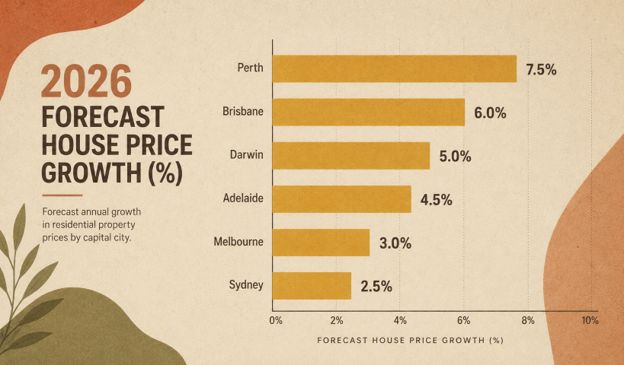
It is important to acknowledge that this national picture does not imply a uniform boom across all cities. Sydney and Melbourne, for instance, are exhibiting more moderate growth patterns in the current cycle. However, Perth, Brisbane, Adelaide, and Darwin are shouldering a significant portion of the national growth, a pattern that is arguably healthier than a single-city bubble. This dispersion of capital into markets with greater capacity to absorb it suggests a more sustainable and widespread expansion rather than a localized inflation of asset values.
Growth Corridors: The Engine Room of Property Development
Examining the property market at the state and regional levels reveals a more nuanced and often more compelling story. Western Australia and Queensland are currently leading composite growth forecasts for the upcoming year. This trend is not confined to capital cities but is also evident in the outer growth corridors of the larger metropolitan areas. These are precisely the regions where new land supply is being strategically released to meet the burgeoning demand that established suburbs, often constrained by existing infrastructure and zoning, simply cannot accommodate.
A prime example of this phenomenon can be observed in Sydney’s northwest. The Hills Shire, for instance, has spent the past several years actively addressing the very undersupply pressures that national analyses from entities like KPMG and major banks have consistently flagged. This region has seen the concurrent development of essential infrastructure, new educational facilities, and vibrant retail precincts, all integrated with new housing developments. Master-planned communities, such as the Box Hill master plan, exemplify the practical implementation of this growth strategy. These projects typically involve phased land releases, the creation of a central town center designed to foster community, and the integration of transport links from the outset, rather than as an afterthought. Buyers who entered these growth corridors in their earlier stages have, in many instances, experienced capital growth that reflects genuine, structural demand rather than fleeting speculative interest. This deliberate approach to development, focusing on creating self-sufficient and well-connected communities, is a key indicator of sustainable long-term value. This underscores the argument for a "positive view" on specific market segments: it is not about every postcode being a guaranteed investment, but rather identifying undersupplied growth corridors that benefit from confirmed infrastructure investment, where the fundamental drivers of value are most robust.
Rental Yields: A Resurgence for Investors
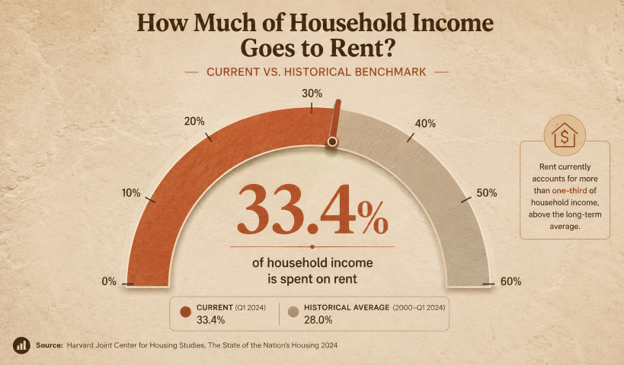
The rental sector of the property market is also presenting a compelling narrative, one that has not been seen in years. While annual rental inflation has eased from its peak in 2023, it continues to run above the long-term average. Cotality’s analysis highlights that the average Australian household’s proportion of pre-tax income allocated to rent has reached a record high of 33.4 percent. While this presents a significant challenge for tenants, it is fundamentally reshaping the investment calculus for landlords. Rental yields have firmed considerably, reaching levels not consistently observed for much of the 2010s. This improvement in rental returns serves to partially offset the impact of higher borrowing costs, making property investment a more attractive proposition once again.
For investors comparing property against other asset classes, this dual proposition – moderate yet broad-based capital growth coupled with enhanced rental returns – represents a significantly different and more favorable scenario than what was available even three years ago. This resurgence in rental yields is a critical factor in sustaining investment in the property market, ensuring a steady flow of capital and supporting property values.
Navigating Skepticism: A Balanced Perspective
It would be disingenuous to dismiss all concerns about the property market. Several headwinds are indeed present, and acknowledging them is crucial for a balanced understanding. The Reserve Bank of Australia’s future interest rate path remains the most significant wildcard influencing the market in 2026. Sydney and Melbourne, in particular, are more sensitive to interest rate fluctuations than their smaller capital city counterparts. Consequently, some forecasters are now predicting outright price softness specifically in these two major urban centers. Furthermore, construction costs remain elevated, and housing affordability at the higher end of the market is genuinely stretched for many prospective buyers.
However, a deceleration in growth in two specific cities does not equate to a nationwide structural downturn. The fundamental drivers underpinning the market – sustained population growth, the persistent issue of housing undersupply, and the steady accumulation of household wealth – remain firmly in place. These are the factors that dictate property values over a five- or ten-year horizon, rather than the immediate impact of a single quarterly interest rate decision. The resilience of these underlying forces suggests that while localized corrections or slower growth periods may occur, a widespread collapse in property values is not the most probable outcome, provided these fundamental drivers remain intact.
Implications of Market Dynamics
The current market dynamics have several important implications:
- Investor Strategy: The improved rental yields, coupled with moderate capital growth, make property a more attractive investment compared to other asset classes that may offer lower or more volatile returns. Investors with a longer-term perspective are likely to find opportunities, particularly in areas with strong underlying demand.
- Homebuyer Decisions: For prospective homebuyers, the current environment necessitates a strategic approach. Understanding the difference between markets driven by sentiment and those underpinned by structural demand is crucial. Focusing on growth corridors with planned infrastructure and genuine population influx can offer better long-term prospects.
- Government Policy: The persistent undersupply issue highlights the ongoing need for government intervention in planning, zoning, and infrastructure development to facilitate more efficient housing delivery. Addressing these bottlenecks is critical for long-term market stability and affordability.
- Economic Stability: The property market remains a significant component of the Australian economy. Sustained, moderate growth in the sector contributes to consumer confidence, construction activity, and wealth creation, all of which have broader positive economic ripple effects. Conversely, a severe downturn could have significant negative consequences.
The Takeaway: Cautious Optimism in Targeted Corridors
In conclusion, the Australian property market is not a monolith experiencing a uniform surge. Anyone presenting it as such has likely failed to look beyond national averages. However, the case for cautious optimism is undeniably real. The fundamental issue of undersupply has not been resolved; population growth continues unabated; and the growth corridors that are absorbing this pressure – particularly the master-planned communities in Sydney’s expansion zones and their counterparts in Perth and Brisbane – are where the fundamentals align most clearly.
For those considering a property purchase in 2026, the pertinent question is not a blanket "Is now a good time to buy in Australia?" Instead, the more insightful inquiry is: "Which corridors are effectively absorbing genuine, structural demand rather than merely riding short-term sentiment?" This reframed question leads to a much more answerable and actionable investigation. The choice often boils down to assessing the long-term growth prospects: do established capital cities, with their inherent constraints, offer the best returns, or do the new corridors being meticulously developed to alleviate pressure present a more compelling case for growth over the next five years? The answer, for many discerning investors and homebuyers, lies in understanding the nuanced regional dynamics and the fundamental drivers of demand and supply that are shaping Australia’s property future.