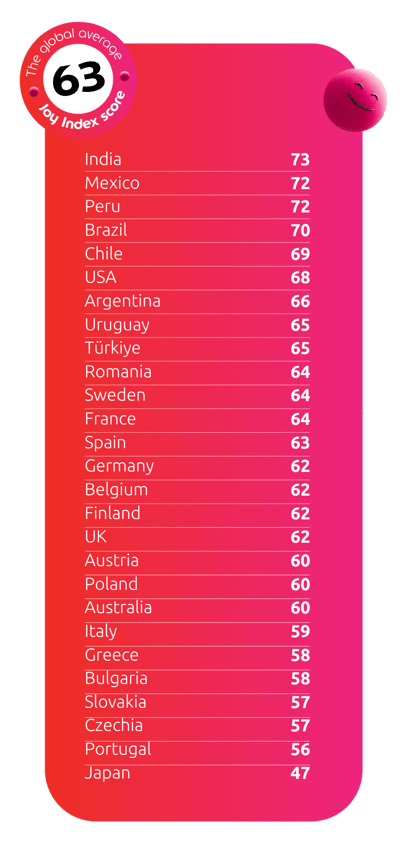
A comprehensive new report, the Global Workplace Joy Index, released by Edenred in partnership with Reward Gateway, is shedding new light on the tangible impact of workplace joy on critical business outcomes. The research, which surveyed a significant global cohort of 26,000 individuals across 27 markets, aims to demystify the concept of "workplace joy" and explore its multifaceted influence on the employee experience, ultimately connecting it to crucial metrics such as employee retention, productivity levels, and overall engagement.
This extensive global study is complemented by a U.S.-focused report, which delves deeper into the specific dynamics within the American workforce. This localized analysis is based on the responses of 1,000 U.S. employees and 1,000 HR leaders, offering a granular perspective on how joy manifests in the workplace, its return on investment for businesses, the discrepancies between employee and HR perceptions, and the pivotal role that benefits and recognition play in shaping the overall employee experience.
The Strategic Imperative of Workplace Joy in a Shifting Economic Landscape
While the concept of "joy" in a professional setting might initially appear abstract or purely aspirational, the Global Workplace Joy Index Report underscores its profound strategic importance for modern organizations. In an era marked by economic uncertainties, an evolving job market, and a discernible shift in corporate priorities, the report highlights a growing tension. Many workplaces are increasingly pivoting from a strong emphasis on a positive employee experience to a more business-centric focus, driven by initiatives like return-to-work mandates, cost-cutting through layoffs, and the persistent pressure to achieve more with fewer resources.
In this context, the introduction of human-centric and uplifting elements, such as fostering workplace joy, emerges as a powerful strategy. It offers a potent avenue for organizations to meaningfully engage with both current employees and potential candidates, thereby establishing a distinct competitive advantage in a crowded talent market. The report implicitly suggests that infusing a sense of shared enthusiasm and positivity, akin to the vibrant energy often seen in successful sports teams or dynamic cultural movements, can significantly invigorate workplace dynamics and meetings.
Key Findings: The Tangible ROI of Employee Happiness
The Global Workplace Joy Index Report uncovers several standout findings that illuminate the direct correlation between employee well-being and organizational success. These insights provide actionable data for leaders seeking to cultivate a more positive and productive work environment.
Joy as a Powerful Predictor of Employee Retention
One of the most compelling revelations from the U.S. findings is the strong link between an employee’s level of workplace joy and their intention to remain with their current employer. The report indicates that a staggering 96% of employees who experience high levels of joy at work anticipate staying with their organization over the next 12 months. This figure stands in stark contrast to the 58% of employees reporting low levels of workplace joy. This substantial 38-point differential underscores the critical role of fostering joy as a proactive strategy in discussions and initiatives aimed at improving employee retention. In a competitive labor market, where turnover can incur significant recruitment and training costs, retaining valuable talent is paramount, and workplace joy appears to be a key lever in achieving this goal.
The Productivity Paradox: How Joy Fuels Performance
Beyond retention, the report also establishes a clear connection between employee joy and perceived productivity. A significant majority of high-joy workers, 75%, reported feeling more productive compared to the previous year. Conversely, only 28% of low-joy employees shared this sentiment. This disparity suggests that employees who experience greater happiness and satisfaction in their roles are more likely to feel a heightened sense of accomplishment and efficiency. The report encourages a deeper exploration into the factors that drive both employee interest in staying and day-to-day productivity, implying that these elements are not mutually exclusive but rather interconnected, with joy acting as a significant catalyst.
The Undeniable Value of Benefits in the Employee Experience
The research further highlights the substantial importance employees place on benefits, positioning them as a critical component of the overall employee experience, often rivaling or even surpassing salary in significance. For a considerable 74% of U.S. workers, benefits are considered as important as, or more important than, their salary. This figure escalates to an impressive 85% among hybrid workers, indicating a particular appreciation for comprehensive benefits packages within flexible work arrangements.
When employees were surveyed on what organizations can do to foster joy, the provision of good benefits was consistently ranked as the top priority. The report also draws a direct correlation between the number of benefits an employee receives and their level of workplace joy. High-joy employees, on average, receive five benefits, whereas low-joy employees typically receive three. This data suggests that a well-rounded and competitive benefits package is not merely an optional perk but a fundamental driver of employee satisfaction and, consequently, workplace joy.
Recognition: A Crucial Element with Inconsistent Application
The findings also underscore the profound impact of recognition and appreciation on employee morale and their association with workplace joy. However, the report reveals a concerning inconsistency in the application of recognition practices. A notable 18% of U.S. workers reported receiving no formal or informal recognition from their manager in a typical month. This lack of acknowledgment can have a detrimental effect on employee engagement and their perception of their contributions.
Crucially, the study found that employees who receive even one additional instance of manager recognition per month report higher levels of engagement and express a greater likelihood of feeling productive. This granular insight suggests that even small, consistent efforts in acknowledging employee contributions can yield significant positive outcomes. It points to a missed opportunity for many organizations to leverage a relatively simple yet highly effective tool for boosting morale and performance.
A Divergent View: HR Leaders vs. Employees on Workplace Joy
A notable discrepancy emerged in the perceptions of workplace joy between HR leaders and employees themselves. U.S. HR leaders rated workplace joy at an average of 8.1 out of 10, while employees self-assessed their own joy at a lower average of 7.0. This 1.1-point gap serves as a critical reminder of the importance of direct employee feedback. It highlights the potential for organizations to operate under assumptions about employee sentiment that may not accurately reflect the lived experiences of their workforce. Bridging this perception gap requires active listening and a commitment to understanding the nuances of how different employee groups experience their work environment.

Implications for the Modern Workplace
The Global Workplace Joy Index Report offers a compelling case for organizations to prioritize the cultivation of workplace joy not as a tangential initiative, but as a core strategic imperative. The evidence presented suggests that investing in employee well-being, recognizing contributions, and providing robust benefits are not merely altruistic endeavors but sound business practices that directly impact the bottom line.
The U.S. report, in particular, provides HR and benefits leaders with concrete data to inform discussions around employee experience, benefits strategies, and recognition programs. The overarching message is not that a singular formula guarantees workplace joy. Instead, it emphasizes the critical need for leaders to remain attuned to the emotional landscape of their workforce, to actively solicit and understand employee feedback, and to recognize the unique needs and experiences of different employee segments. By doing so, organizations can ask more pertinent questions, refine their strategies, and focus their efforts on initiatives that genuinely resonate with their employees, ultimately fostering a more engaged, productive, and loyal workforce.
The research implicitly advocates for a proactive and empathetic approach to leadership, one that acknowledges the human element at the heart of every organization. In an environment where economic pressures can sometimes overshadow employee well-being, the Global Workplace Joy Index Report serves as a timely and essential reminder that a happy workforce is a high-performing workforce. By understanding and actively nurturing workplace joy, companies can build a more resilient, innovative, and successful future.