For nearly three decades, the landscape of work, organizations, and human resources has been in constant flux, marked by a series of prominent themes. From the digital transformation and employee wellbeing initiatives of the early 2000s to the more recent focus on hybrid work, diversity and inclusion, and women’s rights, the corporate world has continually sought to redefine its relationship with its workforce. Today, the ascendance of Artificial Intelligence (AI) has introduced a new, and perhaps the most profound, chapter in this ongoing narrative. However, beneath the surface of these evolving trends lies a more fundamental and deeply rooted shift: the "great decoupling" of workers from their employers, a trend that predates the current AI revolution and has been steadily eroding trust and stability in the labor market for decades.
The Illusion of a "More Human" Workplace
Contrary to the notion that employment is becoming "more human," the reality for many workers paints a starkly different picture. Companies are increasingly resorting to swift, impersonal layoffs, often communicated via email with minimal notice. The initial enthusiasm for Diversity, Equity, and Inclusion (DEI) initiatives appears to be waning, with discussions around pay equity often met with cynicism, especially when juxtaposed with the astronomical salaries, exceeding $500,000 annually, commanded by newly hired AI engineers. This stark disparity fuels a growing sense of unease among employees, who now find themselves increasingly anxious about their job security as CEOs tout AI as a means to boost "productivity."
This anxiety is not unfounded. A persistent, multi-decade decline in trust between employees and their employers has been meticulously documented by numerous studies. Research from institutions like Pew and Edelman consistently points to this erosion of confidence. In 2024, a PwC report revealed that only 67% of employees generally trust their employers. This figure plummets to less than half for frontline workers, who constitute a significant 72% of the workforce.
The decline in trust extends to leadership as well. In 2019, approximately 25% of workers expressed trust in their company’s leaders. This figure has dwindled to around 19% and continues to fall. While trust saw a temporary surge during the initial phases of the COVID-19 pandemic, the current discourse surrounding AI-driven layoffs is causing this trust to plummet once again.
The Ascendance of the "Ownership Economy" and the Rise of the Gig Worker
The most significant trend, however, is the profound "decoupling" of workers from their employers. This phenomenon is characterized by a soaring rate of layoffs and job transitions. Current data indicates that over 65% of workers engage in side hustles, a clear indication of a diversifying income strategy and a reduced reliance on a single employer. My own research suggests that the average U.S. worker can expect to be laid off 2.5 times in their career, a figure that has more than doubled in the last three decades.
This trend is underpinned by a broader economic philosophy that has been evolving since the late 20th century. Coined as the "ownership economy" by former President George W. Bush, this model emphasizes individual responsibility for financial well-being. Instead of traditional employer-provided pensions, workers now manage their own retirement plans through 401(k)s. Benefits like family leave and health savings accounts have also shifted the burden of financial management onto the individual. Furthermore, globalization efforts, including trade agreements like NAFTA, have led to the outsourcing of many historically stable jobs.
This economic shift is reflected in the lifespan of companies themselves. In the 1970s and 1980s, companies on the S&P 500 typically remained listed for an average of 12-13 years. Today, that average has shrunk to a mere 4-5 years, a consequence of rapid technological advancements and intense global competition. While some view this dynamism as positive, it fundamentally alters the nature of career paths and job security.

The current anxieties surrounding AI, while significant, are arguably a catalyst amplifying an existing trend toward "self-career management." The narrative suggests that individuals can now easily leverage AI tools to build websites, become influencers, or develop expertise in niche software fields. However, this vision of entrepreneurial freedom is not universally accessible. In the United States, over half of the working population lacks more than three weeks of savings, making the treadmill of precarious work a stark reality. The U.S. Economic Sentiment Index, a measure of consumer confidence, has fallen to a 60-year low, exacerbated by rising gas prices and inflation.
What once felt like liberating opportunities, such as driving for Uber or delivering for DoorDash, now often feel like survival tactics. As these platform companies consolidate their market power, they exert downward pressure on labor costs. A pervasive sentiment among professionals, including HR executives, is the feeling of being "labor" on the brink of automation, a perception that, while not entirely accurate, deeply impacts worker morale.
A Historical Trajectory of Decoupling
The "decoupling" of workers from employers is not a recent development but a gradual process that began gaining momentum decades ago. A comprehensive analysis of economic indicators, including U.S. GDP growth, interest rates, presidential administrations, recessions, and major regulatory events, reveals a consistent trend away from labor unions, collective bargaining, and legislative protections for workers.
This shift can be traced back to the policies and economic philosophies that gained traction in the late 20th century. The emphasis moved from a model where employers held significant responsibility for their workforce’s long-term well-being to one where individual initiative and market forces were prioritized. This is evident in the increasing reliance on individual retirement accounts (401(k)s) over traditional pensions, the shift of healthcare costs to employees through health savings accounts, and the broader trend of globalization which facilitated the relocation of manufacturing and service jobs to regions with lower labor costs.
The decline in the stability of corporations is also a key factor. The average tenure of companies on the S&P 500 has dramatically decreased, indicating a faster pace of disruption and a shorter strategic horizon for businesses. This environment necessitates agility and adaptability but also contributes to the perception that individual roles within these companies are increasingly transient.
The Impact on Worker Compensation and Living Standards
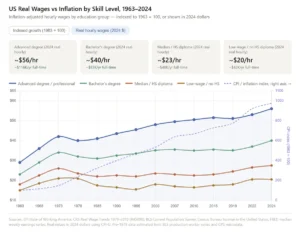
The consequences of this decoupling are starkly visible in wage stagnation relative to inflation. Even as discussions about AI and future job markets dominate headlines, the reality for most American workers is that their earnings have not kept pace with the rising cost of living.
Historical data from the 1960s and 1970s, prior to the onset of significant decoupling, shows wages consistently outpacing inflation. However, the inflationary shock of the 1970s marked a turning point, after which wages began to lag behind. The impact has been uneven across different educational and socioeconomic groups.
- Low-wage workers and high school graduates experienced the most significant decline in their standard of living starting in the early 1980s.
- College graduates began to see their wage growth plateau in the late 1990s, with their earnings failing to keep pace with inflation for nearly two decades.
- Even individuals with advanced degrees, who had previously seen consistent gains, have experienced a slippage in their economic standing since the pandemic year of 2020.
This trend has profound implications for social mobility and economic security. The notion that a college degree guarantees financial prosperity has been significantly eroded, a reality that has been unfolding for nearly 20 years.
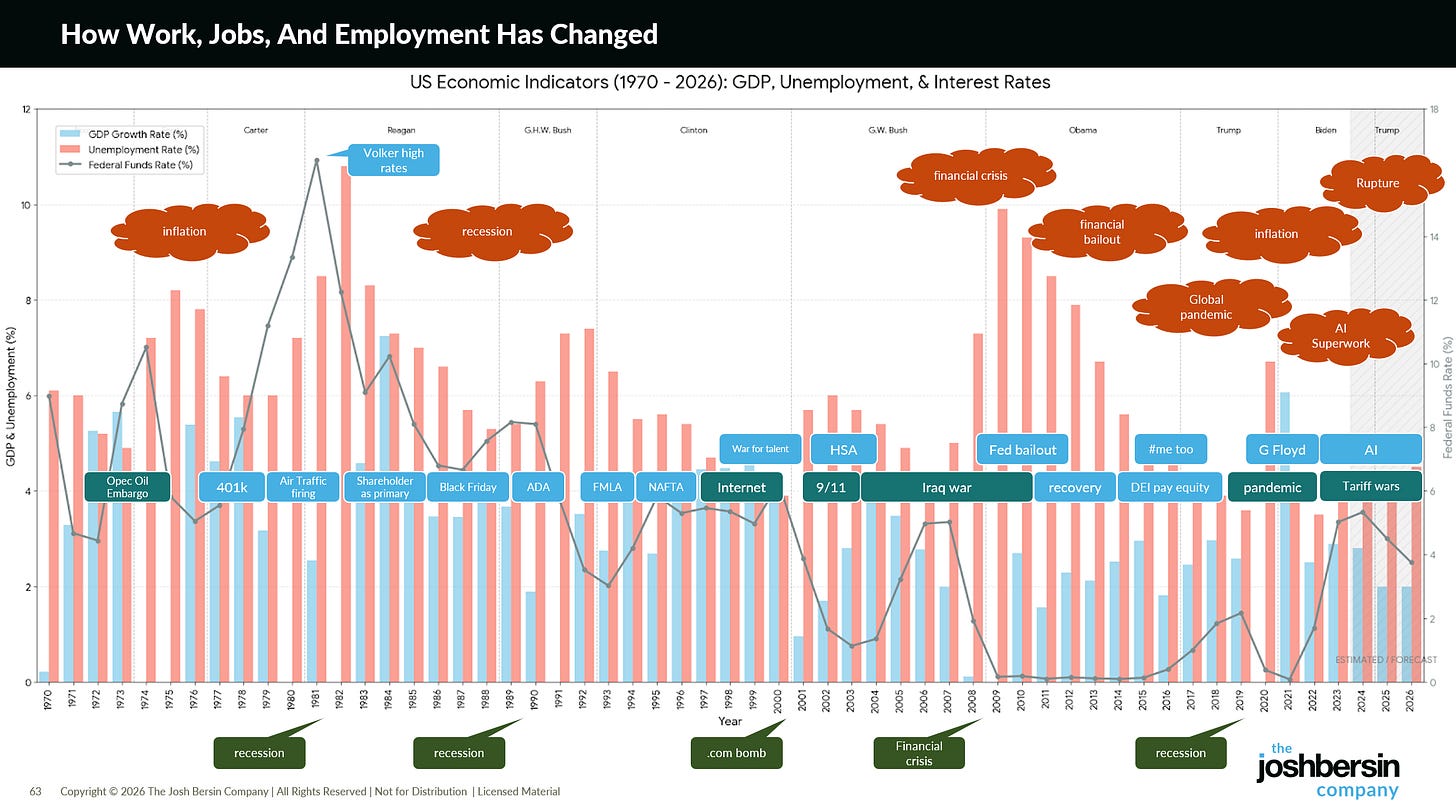
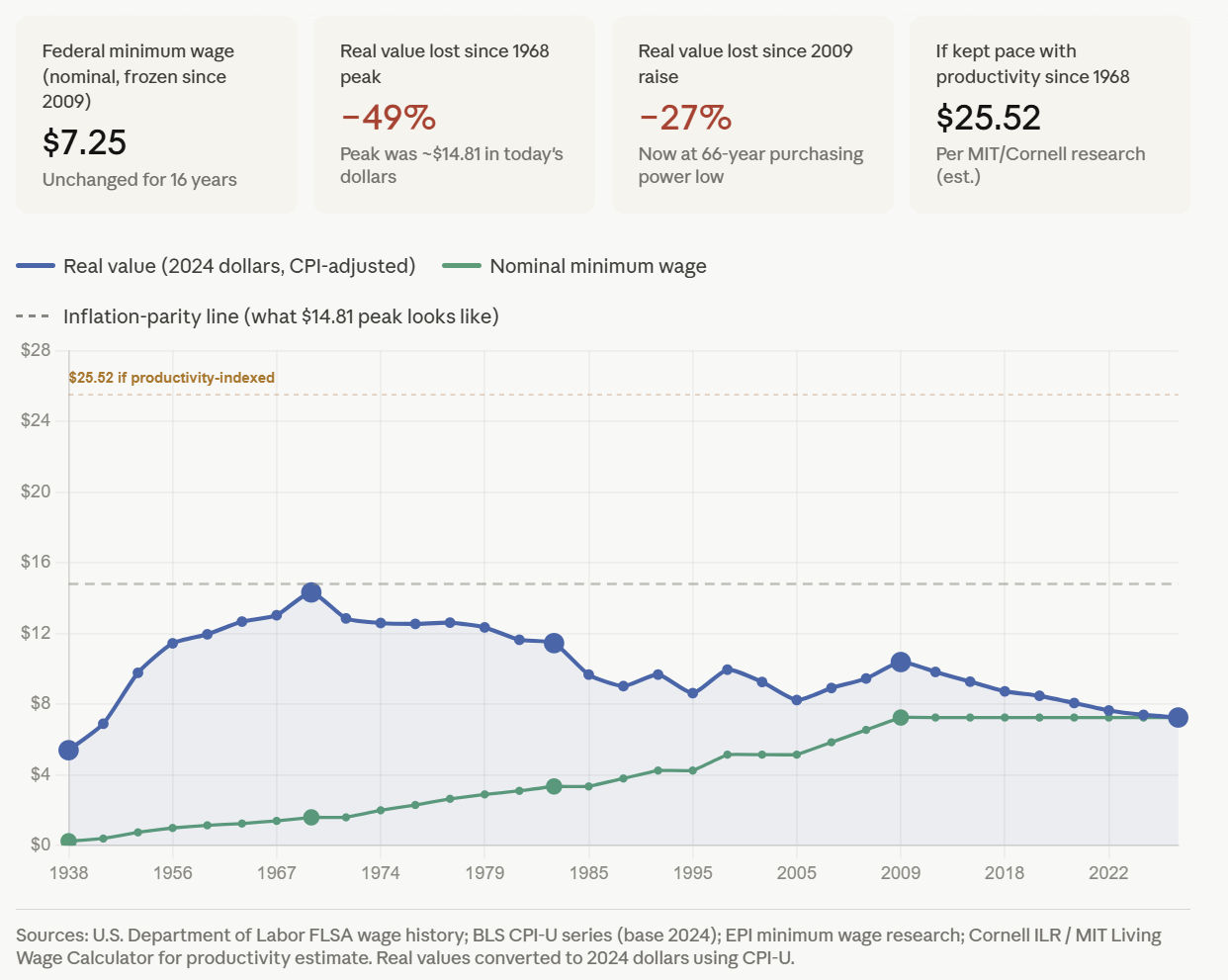
Furthermore, the federal minimum wage in the United States has remained stagnant at $7.25 per hour since July 2009. This represents the longest period in U.S. history without a federal increase, during which its purchasing power has declined by 49%. While many workers do not earn minimum wage, this policy underscores a broader governmental stance that places the onus of economic well-being largely on the individual rather than through robust social safety nets or wage floor protections.
Adapting to the New Realities: Challenges and Strategies
The "great decoupling" has forced workers to adapt in various ways, often leading to a sense of precariousness. While the political discourse surrounding these issues can be charged, the underlying economic data points to a more nuanced reality. The core of the problem, as highlighted by experts, is not solely about wages versus inflation but about how employers perceive and treat their workforce. There is a discernible shift away from employers feeling obligated to ensure the long-term financial health of their employees. In return, employees are exhibiting a greater propensity to change jobs, a trend that has accelerated significantly compared to previous decades.
This mutual disengagement means that employers feel empowered to terminate employment with minimal notice, while employees are perpetually seeking better opportunities. This dynamic is often tacitly accepted by the stock market and governmental policies. Companies frequently experience a rise in stock prices following layoff announcements, as financial analysts often view labor as a "cost" rather than a strategic "investment." This accounting perspective, rooted in historical agricultural economies where labor was a variable expense, perpetuates a cycle of prioritizing short-term financial gains over long-term human capital development.
Addressing the Decoupling: Potential Avenues for Change
Navigating this complex landscape requires a multi-faceted approach. While massive income redistribution or guaranteed income programs have historically proven ineffective and created social friction, there are more targeted and constructive solutions.
1. Enhancing Reskilling and Upskilling Initiatives:
The U.S. education system has faced significant challenges over the past six decades. The current educational attainment of a substantial portion of the adult population is a concern, particularly with the rapid integration of AI into the workplace. Reports indicate that approximately 45-55% of U.S. adults do not read at a 12th-grade proficiency level, hindering their ability to engage with complex documents, policy language, and multi-step instructions – skills that are increasingly crucial in an AI-driven environment.
There is a pressing need to invest in foundational literacy, critical thinking, and "power skills." While AI proficiency is important, it should not overshadow the development of core competencies in reading, history, and analytical reasoning. Companies can play a crucial role by supporting broader educational initiatives, similar to those championed by organizations like Guild, and by advocating for policies that prioritize human capital development.
2. Rethinking Workforce and Talent Management:
From an HR perspective, many organizations exhibit a deficit in effective workforce optimization. A common paradox observed is the simultaneous occurrence of layoffs, team downsizing, and company transformations alongside aggressive hiring. This approach stems from a management mindset that views people and skills as perpetually available commodities. The assumption that employees can be easily rehired if needed overlooks the detrimental impact of layoffs on company culture, the loss of institutional knowledge, and the long-term erosion of trust.
A more strategic approach would involve a deliberate slowdown in hiring, a more rigorous selection process, and a focus on designing businesses for sustainable growth rather than headcount churn. Viewing each employee as a potential leader and investing in their long-term development and retention can foster a more resilient and innovative workforce.
3. The Inevitability and Choices of Corporate Strategy:
The "great decoupling" is not an immutable law of nature but a consequence of strategic choices. Companies that operate with a short-term, venture-backed startup mentality, driven by rapid growth and immediate scalability, are more likely to embrace this trend. In such environments, employee turnover is often high, with individuals leaving after their stock options vest.
Conversely, established, long-term players across various industries – from technology giants like Nvidia and Microsoft to hospitality leaders like Marriott and energy firms like Chevron – demonstrate a different approach. These companies prioritize human capital, viewing their employees as a critical, long-term asset. They strive to avoid layoffs, manage hiring strategically, and invest in their workforce’s growth and development.
As AI presents opportunities for unprecedented reinvention, leaders have a critical choice: either perpetuate the cycle of decoupling and treat talent as a disposable cost, or lean into the potential of their existing workforce. Empowering employees to participate in the company’s reinvention is a hallmark of true leadership.
Conclusion: Investing in Enduring Value
The enduring lesson from decades of economic shifts is that people are the only truly appreciating asset in a business. Long-term investment in employee development, retention, and growth yields sustained dividends. In an era characterized by rapid decisions and knee-jerk reactions to market fluctuations, a commitment to long-term thinking is paramount.
For leaders and job seekers alike, prioritizing the care and development of people is not merely an ethical consideration but a strategic imperative. It is the workforce that drives growth, creates value, and generates innovative ideas. As the narrative of AI reshapes the future of work, the companies that thrive will be those that recognize and invest in the enduring strength and potential of their human capital, moving beyond the transient gains of a decoupled economy towards a future of shared prosperity and sustained success.
For More Information:
- The New World of Work in An Inflationary, AI-Impacted Economy (video)
- Post-AI Labor Market Appears, How To Prioritize AI Investments, More (podcast)
- The Global HR Excellence Program: Join the Inaugural Cohort Now!
- All our research in Galileo