
Technology is no longer HR’s competitive advantage. In the rapidly approaching landscape of 2026, the widespread adoption of artificial intelligence (AI), advanced predictive analytics, and integrated digital HR platforms will render these tools universally accessible across most organizations. The true differentiator, therefore, will not lie in the possession of these technologies, but rather in the intelligence, foresight, and ethical framework applied to their utilization. This pivotal shift prompts critical questions: Will AI evolve into yet another mechanism for employee surveillance, or will it empower managers to become more effective coaches and mentors? Will the insights gleaned from predictive analytics serve to replace seasoned judgment, or will they fundamentally strengthen it? Will the ever-expanding web of compliance regulations merely create stifling bureaucracy, or can it be designed to facilitate faster, more confident decision-making? As human capital solidifies its position as the paramount determinant of business performance, a fundamental query arises for the HR function itself: will it finally transcend its traditional role as a support entity and emerge as a genuine business leader, steering organizational strategy with a people-first approach?
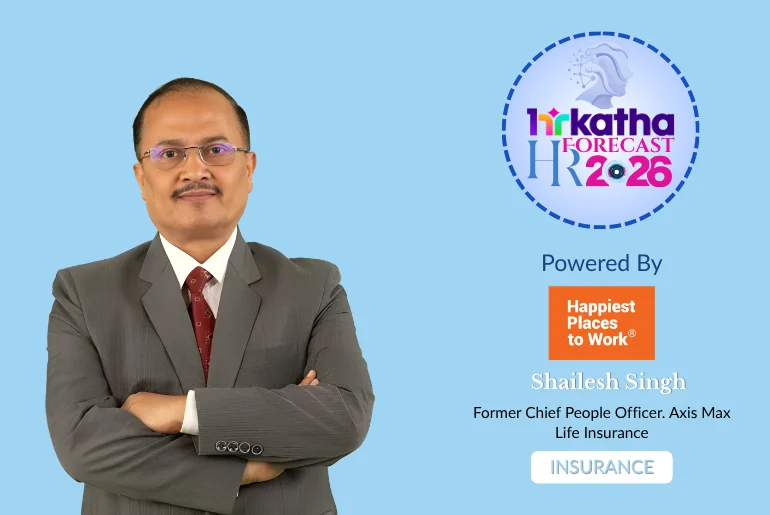
For Shailesh Singh, former Chief People Officer at Axis Max Life Insurance, the definitive answer to these pressing questions resides in meticulously calibrating the intricate balance between technological prowess and inherent human values. His guiding philosophy, succinctly articulated as "AI in everything, but not everything in AI," encapsulates a nuanced perspective that permeates every facet of his vision for HR’s evolution by 2026. This principle underscores a future where technology is a powerful enabler, augmenting human capabilities, rather than an autonomous force dictating organizational dynamics.
The Evolving Landscape of HR Technology: From Utility to Strategic Imperative
The journey of HR technology has been one of continuous transformation, from rudimentary payroll systems and basic human resources information systems (HRIS) in the late 20th century to the sophisticated, cloud-based platforms of today. Early iterations focused primarily on automating administrative tasks, bringing efficiency to record-keeping, benefits administration, and basic compliance. The 2000s saw the rise of enterprise resource planning (ERP) systems integrating HR with other business functions, followed by the proliferation of specialized talent management suites for recruitment, performance, learning, and compensation.
Today, the HR technology market is a robust and rapidly expanding sector, with global valuations projected to reach hundreds of billions of dollars in the coming years. According to reports by analysts like Statista and Grand View Research, the global HR technology market size was valued at over $24 billion in 2022 and is expected to grow at a compound annual growth rate (CAGR) exceeding 10% through 2030, driven largely by the increasing adoption of AI, machine learning (ML), and cloud-based solutions. This growth signifies a widespread recognition of technology’s potential within HR. However, as Singh astutely points out, this proliferation also marks a turning point. The mere presence of these technologies is no longer a unique selling proposition. Instead, the focus shifts to how intelligently these tools are integrated and utilized to foster a more human-centric, high-performing workplace. The challenge for organizations is not merely to acquire the latest HR tech, but to strategically deploy it in ways that amplify human potential and align with core business objectives, moving beyond simple automation to genuine augmentation.
Signal 1: AI as an Enabler, Not an Overseer – Fostering Human-Centric Management
The debate surrounding the role of AI in employee monitoring has been a contentious one, fueling concerns about privacy, autonomy, and potential for algorithmic bias. However, Singh suggests that many organizations are grappling with the wrong fundamental question. "The conversation shouldn’t be about whether AI tracks performance or not. That is already a reality," he states. "The real question is whether we use this data as a monitor or a mentor." This reframing is crucial, shifting the narrative from surveillance to empowerment.
Data from various studies highlights the dual nature of AI in the workplace. Research from Accenture and PwC indicates that while many employees express concerns about AI monitoring, a significant portion also welcomes AI tools that reduce administrative burden and provide actionable feedback. For instance, AI can analyze hiring patterns across thousands of annual applications, as demonstrated at Axis Max Life, to improve the speed, consistency, and fairness of recruitment processes by identifying optimal candidate profiles and reducing unconscious bias in initial screening. This application leverages AI’s strengths in pattern recognition and data processing.
Yet, Singh emphasizes a critical boundary: algorithms must never dictate or define organizational culture. AI can meticulously measure quantifiable metrics like productivity, task completion rates, or project timelines. What it inherently cannot measure, however, are the qualitative yet profoundly impactful human attributes: judgment, empathy, emotional intelligence, or the nuanced emotional labor that often defines a customer’s experience with a service. "If an employee feels like a mere data point in an Excel sheet, then we have failed them. Dignity is non-negotiable," Singh asserts, underscoring the ethical imperative to preserve human value in an increasingly data-driven environment.
The optimal application of AI, therefore, involves its strategic deployment to automate and streamline routine reporting, administrative tasks, and data aggregation. This liberation from mundane tasks is not an end in itself, but a means to a greater purpose: affording managers more precious time to engage in meaningful coaching, active listening, and dedicated people development. Data should serve as a catalyst for constructive conversations and growth opportunities, rather than a trigger for punitive reprimands. When technology expands human capability and frees up cognitive resources for higher-order thinking and empathetic interaction, rather than simply replacing human functions, it truly achieves its highest potential. This approach aligns with a growing body of research advocating for "human-in-the-loop" AI systems that enhance, rather than diminish, human decision-making and interaction.
Signal 2: HR Ascends to Business Leadership – The CHRO as Strategic Co-Pilot
The journey of Human Resources from a purely administrative "personnel department" to a strategic business partner has been gradual but accelerating. Historically, HR’s presence at the executive table was often symbolic, focused primarily on compliance and employee welfare. However, in an era where talent scarcity, cultural alignment, and employee engagement directly impact market share, innovation, and profitability, the question is no longer whether HR deserves a seat at the leadership table, but rather the depth and breadth of its influence on core business decisions.
Singh unequivocally states, "Today, the CHRO is a strategic co-pilot to the CEO." This assertion reflects a paradigm shift where human capital is recognized as a primary asset, and its management is intertwined with commercial success. In organizations built on intellectual capital, trust, and innovation, culture and talent are not abstract concepts but tangible drivers of financial performance. Consequently, leadership capability, robust succession planning, and optimized workforce productivity have transitioned from being mere HR processes to critical business conversations. Global consulting firms like Deloitte and Gartner consistently highlight in their annual HR trend reports that CEOs now rank talent and leadership as top strategic priorities, directly linking them to organizational resilience and growth.
At Axis Max Life, this philosophy translates into treating Organization and Talent Reviews with the same rigor and strategic importance as financial business reviews. This practice underscores the profound belief that human capital metrics serve as a leading indicator of future financial performance, making the CHRO’s insights indispensable to the overarching business strategy. This elevated role explains Singh’s expectation that more CHROs will transition into CEO and COO roles in the coming years. HR leaders possess a uniquely holistic, enterprise-wide perspective, connecting the intricate threads of people, culture, and business strategy in ways that few other functional heads can. Their understanding of organizational dynamics, change management, and human motivation provides a distinct advantage in leading complex organizations.
"We are no longer just people managers. We are architects of business sustainability," Singh declares, encapsulating the expanded mandate. Boards of directors increasingly expect HR leaders not only to speak fluently about employee engagement, capability development, and talent retention but also to articulate these in terms of investment returns, market competitiveness, and long-term shareholder value. The future CHRO will be evaluated not solely on the health of the organizational culture, but critically, on the quantifiable business outcomes that culture enables and sustains. This demands a new breed of HR professional, one who is equally adept at human psychology and financial acumen.
Signal 3: Invisible, Yet Indispensable Compliance – ‘Compliance by Design’
The regulatory landscape governing data privacy, employment law, and corporate governance continues to expand globally, presenting an ever-growing burden on HR teams. Regulations such as the General Data Protection Regulation (GDPR) in Europe, the California Consumer Privacy Act (CCPA) in the United States, and numerous other national and regional labor laws have dramatically increased the complexity and volume of compliance requirements. The natural inclination might be to respond with more stringent controls, manual checks, and layers of bureaucracy. However, Singh posits that the true answer lies not in additional friction, but in superior design. "The compliance burden will certainly be heavier, but it should never make us slower," he contends.
His proposed solution is "Compliance by Design," an approach that integrates regulatory adherence seamlessly into everyday operations and technological infrastructure. This concept moves compliance from a reactive, policing function to a proactive, enabling one. At Axis Max Life, for example, employees can access instant policy guidance through "Ely," an intelligent chatbot embedded within the organization’s employee app. Instead of navigating dense policy manuals or enduring wait times for HR support, employees receive real-time, context-specific guidance directly within their workflow. This not only reduces uncertainty and the risk of non-compliance but crucially, accelerates decision-making without compromising adherence to rules.
Singh employs an apt analogy, comparing compliance to the braking system of a car. "We treat compliance as hygiene, like the brakes on a car that allow it to go faster safely," he explains. Just as effective brakes provide the confidence to drive at higher speeds, robust and intelligently designed compliance mechanisms empower employees and managers to act with greater agility and confidence, knowing they are operating within established boundaries. The most effective organizations will be those that engineer systems where the correct decision is also the easiest and most intuitive decision to make. Compliance, in this model, shifts its focus from merely policing undesirable behavior to actively enabling and guiding appropriate actions.
Ultimately, for Singh, regulation should be a force for strengthening trust, not for generating bureaucratic inertia. "The most successful organizations will view regulation not as a hurdle, but as a framework for building deeper trust with customers," he asserts. This perspective suggests that transparent and effective compliance, particularly in areas like data privacy and ethical labor practices, enhances an organization’s reputation and fosters stronger relationships with both its internal workforce and external stakeholders. It transforms compliance from a cost center into a trust accelerator.
Signal 4: Predictive Analytics – Sharpening, Not Supplanting, Human Judgment
For years, people analytics largely served as a rearview mirror, explaining past events and trends within the workforce. However, Singh believes its profound value now lies in its capacity to illuminate the path forward, enabling organizations to proactively prepare for future challenges and opportunities. "We are moving from ‘What happened?’ to ‘What will happen?’," he states, highlighting the critical shift from descriptive to predictive analytics.
The application of predictive models in HR is becoming increasingly sophisticated. At Axis Max Life, these models are instrumental in identifying "Best Bets"—employees who exhibit the potential for cross-functional mobility and readiness to assume greater responsibilities. By analyzing a multitude of data points, including performance history, learning agility, project experiences, and skill adjacencies, these models can pinpoint high-potential individuals who might otherwise be overlooked. Furthermore, analytics plays a crucial role in strategic workforce planning by accurately identifying attrition risks before they materialize into critical talent gaps and by forecasting future capability requirements, allowing for proactive upskilling or recruitment efforts. Industry reports from companies like Gartner and McKinsey underscore the growing adoption of predictive analytics, with a significant percentage of large organizations now using it for talent retention, recruitment, and succession planning.
Despite the power of these tools, Singh advocates for a cautious and balanced approach, warning against an uncritical reliance on data. "I always caution against the skills-first delusion," he advises. While analytics can predict who might be at risk of leaving, who demonstrates the fastest learning curve, or where emerging capabilities might reside within the organization, it cannot quantify the intangible yet vital human qualities. It cannot measure the nuanced judgment honed by years of experience, the resilience demonstrated in the face of adversity, or the intuitive insights that differentiate truly exceptional leaders.
"Predictive analytics is our compass, but the heart and mind of the leader is the captain," Singh articulates, providing a powerful metaphor for the symbiotic relationship between data and leadership. Analytics should serve to sharpen and inform judgment, providing richer context and deeper insights, rather than replacing it entirely. Data can guide decisions by highlighting patterns and probabilities, but effective leadership still demands the application of contextual understanding, emotional intelligence, ethical considerations, and the invaluable intuition developed through lived experience. Therefore, HR must embrace being data-driven, yet simultaneously remain data-informed and, critically, human-led. This balance ensures that technological advancements empower, rather than diminish, the indispensable role of human discernment in strategic people decisions.
The Overarching Human Shift: Technology as an Amplifier of Human Potential
Taken collectively, these four signals—AI as a coach, HR as a business leader, compliance by design, and analytics as a judgment enhancer—point towards a profound and overarching transformation within the human resources domain. AI will undoubtedly become more capable and ubiquitous, seamlessly integrated into various HR processes. Analytics will continue its evolution towards increasingly predictive and even prescriptive capabilities, offering unprecedented foresight into workforce dynamics. Compliance, while growing in complexity, will become more automated and embedded, reducing friction rather than increasing it. Concurrently, the HR function will continue its trajectory, moving ever closer to the strategic core of business operations.
Yet, none of these technological advancements diminish the fundamental importance of human leadership; on the contrary, they elevate its value. While technology can process vast quantities of information with unparalleled speed and accuracy, it remains incapable of replicating the intrinsic human qualities that define effective leadership: empathy, nuanced judgment, and the profound trust that leaders cultivate through authentic, everyday interactions. These human elements are the bedrock of resilient organizational cultures and high-performing teams.
This enduring truth leads to Shailesh Singh’s ultimate vision for the profession, perhaps his most significant prediction: "I want HR to be perceived as a belief system owned by every supervisor, not just the people in the HR wing." This aspiration underscores a future where the principles of effective human management—coaching, development, empathy, and strategic people-thinking—are not confined to a specialist department but are ingrained as core competencies and values across all levels of leadership within an organization. The future success of HR, therefore, will not be measured by the sheer volume of technology it adopts or implements. Rather, it will be defined by the effectiveness with which that technology serves to empower and enable people to lead more intelligently, empathetically, and strategically.
Strategic Imperatives for the Future-Ready Organization
To navigate this transformative landscape successfully, organizations must adopt clear strategic imperatives that bridge the gap between technological potential and human-centric outcomes:
-
Use AI to Enable Better Leadership: The strategic deployment of AI should prioritize the automation of routine, repetitive administrative tasks and the generation of actionable, data-driven insights. By offloading these functions to AI, managers are freed from mundane data entry and reporting, allowing them to redirect their time and energy towards higher-value activities: coaching and mentoring their teams, actively listening to employee feedback, and investing in the holistic development of their people. This approach ensures AI augments human leadership, rather than diminishing it, fostering a culture of growth and empowerment.
-
Position HR as a Business Driver: The HR function must solidify its role as a central pillar of business strategy. This involves seamlessly integrating decisions related to talent acquisition and development, organizational culture, and leadership capability directly into the overarching business objectives. By demonstrating a clear and measurable contribution to long-term organizational performance, such as improved productivity, enhanced innovation, and sustained profitability, HR transcends its traditional support role to become an indispensable driver of strategic success. CHROs must speak the language of business, linking human capital metrics directly to financial outcomes.
-
Balance Analytics with Judgment: While predictive intelligence offers invaluable tools for foresight in workforce planning and the identification of emerging talent, it must always be balanced with the irreplaceable depth of human judgment. Analytics should serve as a sophisticated compass, providing direction and informing decisions with data-driven probabilities. However, the ultimate responsibility for critical people decisions—those requiring empathy, ethical considerations, contextual understanding, and intuitive wisdom—must remain firmly with human leaders. This ensures that organizations are data-informed but not data-controlled, preserving the human element at the heart of their most impactful choices.
Conclusion: The Human Test of Innovation
In 2026, the question of whether an organization possesses cutting-edge AI platforms or sophisticated predictive analytics will largely be moot. Most will. The true, enduring differentiator will be far more nuanced and profound: does technology genuinely make work more human, or does it merely make it more measurable?
Does the implementation of AI lead to more effective coaching relationships between managers and their teams, fostering growth and development? Or does it primarily serve as a tool for enhanced surveillance, eroding trust and autonomy? Does predictive analytics empower leaders with sharper insights, enriching their judgment and decision-making capabilities? Or does it inadvertently encourage them to outsource their critical thinking, fostering a reliance on algorithms over experience and intuition? Does compliance, through its design and implementation, empower employees to act confidently and autonomously within established guidelines, or does it merely burden them with additional processes and bureaucratic hurdles?
The organizations poised to surge ahead in this new era are those that master the delicate art of leveraging technology without sacrificing humanity. These will be the companies where AI intelligently removes routine administrative work, thereby freeing up human potential, without ever diminishing the essential human connection. They will be the organizations where analytics provides invaluable information to inform and enhance human judgment, rather than seeking to replace it. And crucially, they will be the workplaces where compliance is so effortlessly integrated and intuitively designed that it becomes an invisible enabler, built directly into the fabric of how people work, fostering trust and efficiency.
As Shailesh Singh profoundly articulates, HR must evolve into "a belief system owned by every supervisor, not just the people in the HR wing." Technology, in and of itself, will never be the ultimate competitive advantage. The organizations that truly succeed will be those led by individuals who possess the wisdom and foresight to harness technology’s immense power, all while steadfastly retaining their focus on the irreplaceable value, dignity, and potential of the people behind the data.







