The burgeoning era of artificial intelligence, characterized by rapid innovation and widespread adoption, is poised to usher in a significant economic shift, with AI tool prices expected to escalate dramatically. This projected surge in costs, driven by the immense infrastructure and operational expenditures associated with developing and deploying sophisticated AI models, is anticipated to have far-reaching and potentially disruptive consequences for businesses across all sectors and, ultimately, for consumers. Recent financial reports and industry analyses paint a stark picture of escalating investment in AI data centers, suggesting that the current pricing models for AI services may be unsustainable in the long term.
Escalating Infrastructure Investments: The Engine of AI Costs
The fundamental driver behind the anticipated price hikes is the sheer financial scale of building and maintaining the infrastructure required for advanced AI. This includes the construction and operation of massive data centers, the procurement of high-performance computing hardware, and the continuous research and development necessary to advance AI capabilities.
Industry giants are making unprecedented investments. The "Big Four" hyperscalers – Amazon, Alphabet (Google), Microsoft, and Meta – collectively invested an estimated $370 billion to $410 billion in 2025 alone, according to some financial analyses. Projections indicate this figure could climb to approximately $650 billion in 2026. This aggressive capital expenditure extends beyond these major players, with companies like Oracle, CoreWeave, and Elon Musk’s xAI/SpaceX also significantly contributing to the "AI data-center builder" universe. This broader ecosystem is experiencing annualized investment approaching $500 billion, with projections indicating a run-rate of $700 billion to $750 billion or more by 2026.
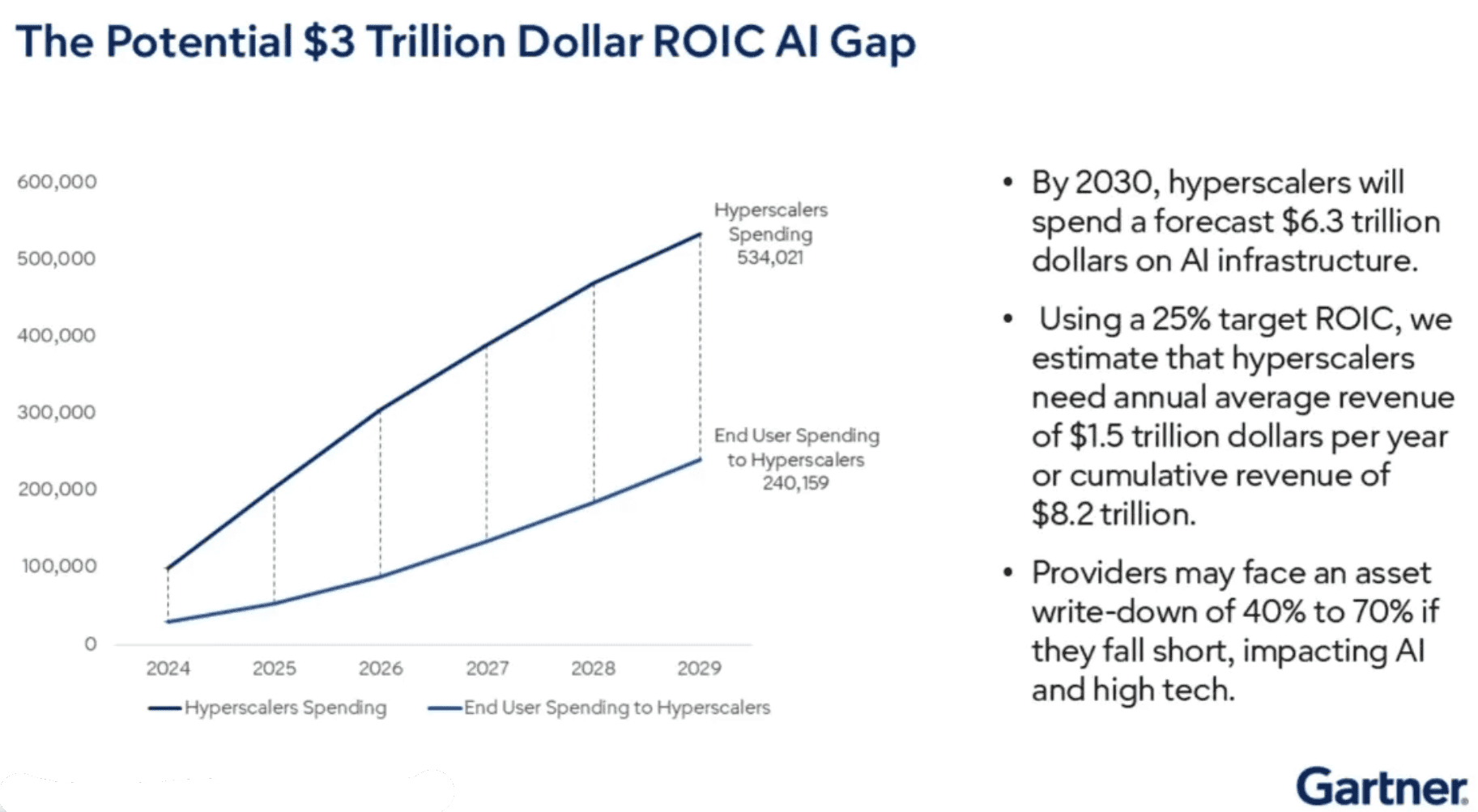
When factoring in the substantial investments from key hardware manufacturers and component suppliers such as Nvidia, TSMC, Micron, Intel, SK Hynix, and Seagate, the total annualized investment in AI infrastructure for 2026 is nearing a staggering $1 trillion. This relentless investment cycle is not expected to abate; Gartner forecasts that global spending on AI infrastructure could reach an astonishing $6.3 trillion by 2030.

The "SaaS-apocalypse" and the Pressure for Profitability
The financial strain is not confined to infrastructure providers. Many AI development companies, particularly those that have recently gone public or are anticipating initial public offerings (IPOs), face immense pressure to demonstrate profitability. Companies like Anthropic and OpenAI, at the forefront of developing cutting-edge AI models, are increasingly under scrutiny to exhibit positive gross margins. This financial imperative is likely to translate into price increases for their services.
Furthermore, established Software-as-a-Service (SaaS) giants, including SAP, Workday, Oracle, Salesforce, and Adobe, are also integrating AI capabilities into their offerings. These "SaaS-apocalypse" companies, as some industry observers have termed them, will also be motivated to showcase strong financial performance to Wall Street, potentially leading them to adjust their pricing strategies for AI-enhanced products and services.
Early Indicators: Rising Costs and Customer Adjustments
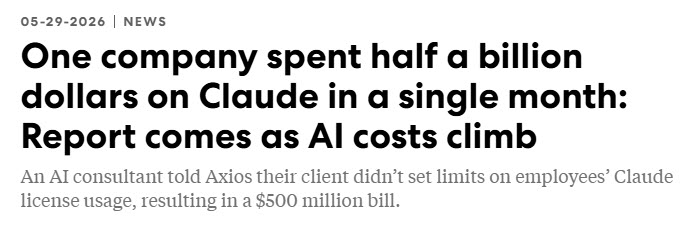
Evidence of this pricing trend is already emerging. Reports indicate that companies utilizing AI tools like Anthropic’s Claude are experiencing significant cost increases. In one instance, a recent Fast Company report highlighted that Anthropic’s operational costs alone reached half a billion dollars in a single month, underscoring the substantial expenditure involved in delivering these advanced AI services.
This financial reality is prompting businesses to re-evaluate their AI adoption strategies. Chief Information Officers (CIOs) and Chief Human Resources Officers (CHROs) are reportedly discussing the financial implications of high AI costs, with some considering outsourcing AI development to regions with lower labor costs, such as India, as a potential cost-saving measure.
The Information reported that Eric Johnson, CIO at PagerDuty, a company that assists software engineers in managing technical outages, is preparing for "volatile costs" as his organization’s 1,200 employees leverage Anthropic’s AI tools for software development and other tasks. Johnson anticipates being "surprised" by the upcoming bills and acknowledges that "open questions" remain regarding AI’s cost-effectiveness and return on investment.
Anthropic’s recent shift in pricing models, moving from flat fees to charging enterprise customers based on their actual AI usage, is a direct response to these escalating costs. The company’s adoption of a new version of a "tokenizer" technology for its latest AI models is also cited as a factor contributing to increased customer expenditures. Despite these rising costs, many technology firms and large Anthropic customers indicate a willingness to absorb these expenses in their pursuit of enhanced productivity through AI-driven automation for their software engineers and sales teams.
The Battle for Price-Performance: A New Frontier
The competitive landscape is also evolving to address the cost concerns. In a significant development, Google recently announced its Gemini 3.5 Flash model, reportedly offering a cost that is ten times lower than comparable advanced models like Opus 4.7. This move signals the commencement of a critical "price-performance battle" within the AI industry, as providers strive to balance advanced capabilities with accessible pricing to capture market share and cater to a wider range of customer budgets.
Projected Price Increases: A Trillion-Dollar Question
The core of the economic challenge lies in how these massive investments will be recouped. Industry analyses suggest that to achieve a 15% compound annual return on investment, assuming a five-year depreciation period for AI infrastructure, companies will need to generate revenue in excess of $1 trillion annually. This figure is likely to be even higher, considering the profit margins sought by AI providers.
This revenue must be generated from various sources, including consumers and businesses. On the consumer front, the global internet advertising market currently stands at approximately $750 billion. To offset AI costs solely through advertising, the industry would need to significantly increase the volume of advertisements, a scenario that could lead to a doubled cost for consumers in terms of their exposure to advertising.
For businesses, the global enterprise software market is valued at around $1.2 trillion. A scenario where AI costs necessitate a doubling of enterprise software spending would represent a substantial increase for organizations.
While other revenue streams, such as government spending on defense and research in sectors like bio-research and energy, will contribute to AI’s financial ecosystem, the core economic proposition for widespread AI adoption hinges on either a significant increase in consumer spending on ads or a substantial rise in enterprise software costs.
Challenging the "Moore’s Law" Paradigm
The notion that computing power consistently becomes cheaper, often associated with Moore’s Law, may not hold true in the current AI landscape, at least in the short to medium term. The historical cost of computing, exemplified by the IBM PC, illustrates a complex pricing evolution. While the initial cost of a PC has decreased in real terms when accounting for technological advancements and the integration of additional functionalities like smartphones, the underlying cost of raw computing power and the infrastructure to support it are demonstrably on the rise.
The current AI boom is driven by a business model that prioritizes growth and revenue generation from AI compute itself. Companies like Nvidia, Oracle, Microsoft, and Workday, as well as tech giants like Google, Meta, SpaceX, Amazon, and Apple, are not seeking to simply replace existing revenue streams with AI. Instead, their objective is to achieve substantial growth, with AI compute being a direct engine for revenue. This implies a shift away from traditional seat-based licensing models towards usage-based pricing, where the cost is directly tied to the consumption of AI resources.

Broader Implications and Future Outlook
The economic ramifications of escalating AI costs are profound. For businesses, this could lead to a recalibration of AI adoption strategies, with a greater emphasis on cost-benefit analysis and a potential slowdown in the widespread deployment of less critical AI applications. The pursuit of AI-driven productivity gains will be tempered by the reality of increased operational expenses.
Consumers, while not directly paying for AI tools in many instances, will likely experience the impact through higher prices for goods and services, increased advertising exposure, or a combination of both. The economic benefits of AI, such as enhanced productivity, improved healthcare outcomes, and advancements in scientific research, will need to demonstrably outweigh these increased costs to justify the ongoing investment.
The current trajectory suggests a period of significant economic adjustment. The promise of AI remains immense, but its widespread and sustainable integration into the global economy will depend on the industry’s ability to navigate the complex interplay between innovation, infrastructure investment, and economic feasibility. The "AI compute is revenue" mantra, while driving investment and innovation, also underscores the fundamental economic challenge: the cost of advanced AI is substantial, and ultimately, that cost will be borne by someone. The question remains whether the transformative benefits of AI will sufficiently offset these escalating expenses for businesses, consumers, and society at large.