
The rapid ascent of artificial intelligence, once a promise of enhanced productivity and innovation, is now poised to trigger a significant and potentially disruptive increase in the cost of AI tools and services. This forecast, grounded in the immense and escalating investments required to power the AI revolution, suggests a fundamental shift in the economic landscape for businesses and consumers alike. The infrastructure underpinning AI’s capabilities is demanding an unprecedented level of capital expenditure, leading to projections of soaring prices that could reshape market dynamics and necessitate a re-evaluation of AI adoption strategies.
The Unprecedented Cost of AI Infrastructure
The core of this projected price surge lies in the sheer expense of building and maintaining the sophisticated infrastructure necessary for advanced AI models. Data centers, the physical backbone of AI, have become gargantuan consumers of capital. Inflation-adjusted spending on data centers has already surpassed the historic cost of constructing the entire 47,000-mile U.S. highway network over four decades, a figure estimated at $670 billion.
The past twelve months alone have witnessed staggering investment figures. The four major hyperscale cloud providers—Amazon, Alphabet (Google), Microsoft, and Meta—collectively invested between $370 billion and $410 billion in 2025. This figure is based on various accounting methods, including capital expenditures and finance leases, with some estimates placing the 2025 investment at approximately $410 billion, and projecting a substantial increase to around $650 billion for 2026.
When expanding the scope to include other significant players in the AI infrastructure build-out, such as Oracle, CoreWeave, and Elon Musk’s xAI and SpaceX initiatives, the annual investment in AI data centers approaches $500 billion. Projections indicate this figure could climb to between $700 billion and $750 billion or more by 2026, reflecting a run-rate of spending. This does not even account for larger, multi-year commitments that represent contracted or announced capacity rather than immediately spent capital.

The ecosystem supporting this massive infrastructure expansion adds further to the financial burden. Companies like Nvidia, TSMC, Micron, Intel, SK Hynix, and Seagate, which supply the critical hardware components—from advanced GPUs to memory and storage—are also experiencing massive demand. Their collective investments are estimated to add another $200 billion to $300 billion to the total, pushing the projected 2026 spending run-rate close to a staggering $1 trillion.
Looking further ahead, the scale of investment is expected to intensify. Gartner, a leading research and advisory firm, forecasts that global AI spending will reach $6.3 trillion by 2030, underscoring the long-term commitment and financial magnitude of the AI era.
The Pressure to Monetize: Price Hikes on the Horizon
The immense capital outlay creates a powerful economic imperative for AI providers to generate substantial revenue and demonstrate profitability. As companies like Anthropic and OpenAI, major players in the large language model space, prepare for or undergo public offerings, they will face intense scrutiny from investors to showcase positive gross margins. Anthropic, for instance, is reportedly nearing this threshold, a development that will likely embolden them to increase prices.
Similarly, established enterprise software giants such as SAP, Workday, Oracle, Salesforce, and Adobe, which are integrating AI capabilities into their existing platforms, will also be under pressure to demonstrate the financial viability of their AI investments to Wall Street. This dual pressure from emerging AI startups and established software vendors suggests a broad-based trend toward higher pricing across the AI tool and service market.
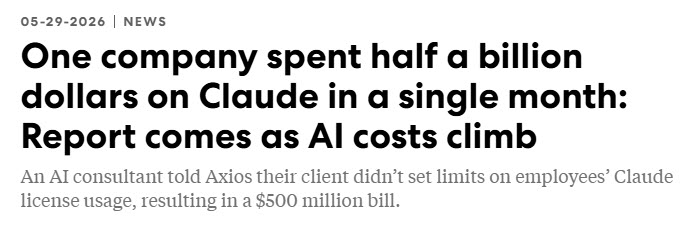
Early indicators of this shift are already visible. Recent reports highlight that Anthropic, a key competitor to OpenAI, has been adjusting its pricing models. The company is reportedly moving towards charging enterprise customers based on their actual usage of AI tools, rather than relying solely on flat-fee subscriptions. This usage-based model, combined with the implementation of new technologies like advanced tokenizers for its latest AI models, is contributing to increased costs for its customers.
Customer Reactions and the Search for Value
The prospect of rising AI costs is already prompting concern among enterprise leaders. In recent discussions with clients, several Chief Information Officers (CIOs) and Chief Human Resource Officers (CHROs) have expressed apprehension regarding the escalating costs of AI tools, particularly for generative AI coding assistants. Some have even begun exploring the feasibility of outsourcing AI-related tasks to engineers in lower-cost regions, such as India, as a potential cost-saving measure.
Eric Johnson, CIO at PagerDuty, a company that provides incident response services for software engineers, articulated this sentiment, stating he is "bracing for volatile costs." PagerDuty’s 1,200 employees are beginning to leverage Anthropic’s AI coding and other tools to enhance software development and other operational tasks. Johnson acknowledged the significant value proposition of these tools but also highlighted the uncertainties surrounding their cost and return on investment due to the nascent nature of the technology.
Despite the potential for increased expenses, many businesses are signaling a willingness to absorb these rising costs. A significant number of technology firms and other large Anthropic customers indicate their intention to "eat the soaring costs." This acceptance stems from the perceived strategic advantage of boosting productivity among their workforce, particularly software engineers and sales teams, through the automation of various tasks enabled by AI.
The Emerging Price-Performance Battle
The competitive landscape of AI is rapidly evolving, with a new focus on price-performance ratios. In a significant development, Google recently announced Gemini 3.5 Flash, a model reportedly priced at a fraction of the cost of comparable models like Anthropic’s Opus 4.7, being ten times less expensive. This move signals the beginning of a direct competition centered on delivering AI capabilities at more accessible price points, potentially influencing the pricing strategies of other major AI providers.
The Trillion-Dollar Revenue Imperative
To justify the enormous investments in AI infrastructure, companies are facing a formidable challenge: generating substantial new revenue. An analysis suggests that to achieve a 15% compound annual return on investment, assuming a generous five-year depreciation period for their infrastructure assets, companies require over a trillion dollars in annual new revenue. This figure is likely even higher when considering the potential profit margins associated with AI.
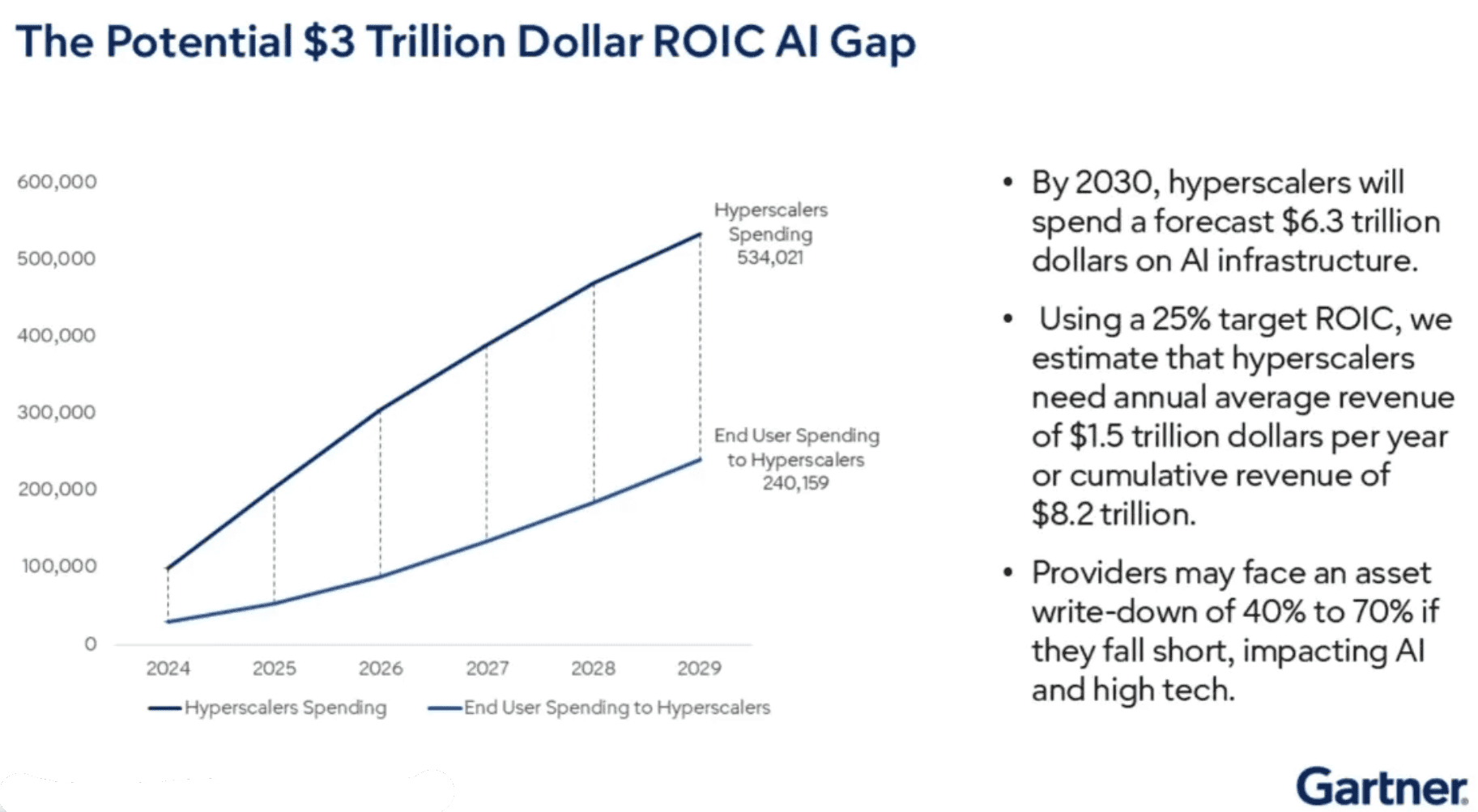
This revenue must be sourced from somewhere. While consumer spending and advertising represent significant markets, the scale of AI investment suggests these alone may not be sufficient. The entire global internet advertising market currently stands at approximately $750 billion. Doubling or even more than doubling this figure, which would imply a substantial increase in online advertising across all platforms, might be necessary to contribute significantly to covering AI costs.
On the enterprise side, global spending on enterprise software is estimated by Gartner to be around $1.2 trillion. The AI sector could potentially aim to double this market as well, by embedding AI deeply into business processes and creating new software categories.
Broader Economic Implications and the Future of Computing Costs
The economic implications of this trillion-dollar revenue requirement are profound. It suggests that consumers and businesses will likely face significantly higher costs for enterprise software, or potentially for consumer-facing services, if these investments are to be recouped. The idea that computing costs will continue to fall indefinitely, a trend often associated with Moore’s Law, may not hold true in the immediate future for AI-related technologies.
Historically, the cost of computing has seen a relative decrease over time. For example, the original IBM PC, priced at $1,565 in 1981 (without a hard disk), would cost around $5,700 in today’s inflation-adjusted dollars. Modern PCs and smartphones, while technologically advanced, often retail for significantly less than this historical equivalent, especially when considering the integrated functionality of smartphones. However, the underlying computational power and data processing demands of AI are on a different scale.
The current trajectory indicates that the "cost of computing" for advanced AI tasks is increasing dramatically. This implies that unless AI delivers transformative productivity gains, health benefits, or other tangible improvements that offset the higher expenditure, the overall cost of technology and services will rise.

Companies like Nvidia, Oracle, Microsoft, and Workday are not aiming to simply replace existing revenue streams with AI; they are pursuing growth. Similarly, tech giants like Google, Meta, SpaceX, Amazon, and Apple are focused on expanding their market share and revenue. Jensen Huang, CEO of Nvidia, has succinctly stated, "AI compute is revenue," signaling a shift away from traditional seat-based licensing models towards a revenue generation model directly tied to the use of AI processing power.
A New Economic Paradigm?
The current AI investment cycle is unlike previous technological advancements in its sheer scale and the fundamental shift it represents. The move towards AI compute as a direct revenue driver suggests a departure from the subscription-based software models that have dominated for decades. This could lead to a more dynamic and potentially volatile pricing environment for businesses reliant on AI.
As the AI revolution matures, its economic impact will extend beyond the direct costs of tools and services. The increased demand for specialized hardware and infrastructure will influence global supply chains, energy consumption, and the labor market. The challenge for policymakers, businesses, and consumers will be to navigate this period of significant investment and rapid technological advancement, ensuring that the benefits of AI are broadly shared and its costs are sustainable. The coming years will likely be defined by a delicate balance between innovation, investment, and the economic realities of powering the artificial intelligence era.