

The rapid proliferation of artificial intelligence tools, once heralded as a democratizing force, is poised for a dramatic and potentially disruptive price escalation. A confluence of immense infrastructure investment, evolving company strategies, and the inherent cost of advanced computing power suggests that the era of readily accessible, low-cost AI may be drawing to a close, forcing businesses and potentially consumers to confront significantly higher expenses. This shift, driven by economic realities and strategic imperatives, could redefine the accessibility and adoption trajectory of AI technologies globally.
The Escalating Infrastructure Imperative
The fundamental driver behind the anticipated price hike is the staggering financial commitment required to build and maintain the AI infrastructure that powers these sophisticated tools. Data center construction and operation, the bedrock of AI development and deployment, have already surpassed historic infrastructure benchmarks. Global spending on data centers, even adjusted for inflation, has exceeded the $670 billion investment poured into constructing the entire 47,000-mile U.S. highway network over four decades.
This colossal expenditure is not a static figure. The last twelve months have witnessed an unprecedented surge in capital investment. The "Big Four" hyperscalers – Amazon, Alphabet (Google), Microsoft, and Meta – collectively invested an estimated $370 billion to $410 billion in 2025 alone. Projections indicate this figure will climb to approximately $650 billion in 2026, according to estimates cited by Reuters. This aggressive expansion is driven by the insatiable demand for computing power to train and run increasingly complex AI models.

When factoring in other significant players in the AI data center ecosystem, including Oracle, CoreWeave, and emerging entities like xAI/SpaceX, the annualized investment in recent AI infrastructure development nears $500 billion. This figure is projected to surge towards $700 billion to $750 billion or more by 2026. Beyond direct capital expenditure, broader market commitments, often structured as multi-year agreements, further inflate the total economic commitment, though these represent contracted capacity rather than immediately spent capital.
Adding the substantial investments from critical component manufacturers and hardware providers such as Nvidia, TSMC, Micron, Intel, SK Hynix, and Seagate, the total annualized spending rate for AI infrastructure in 2026 is projected to approach a staggering $1 trillion. This exponential growth underscores the immense resources required to fuel the current AI revolution.
The Gartner Projection: A $6.3 Trillion Future
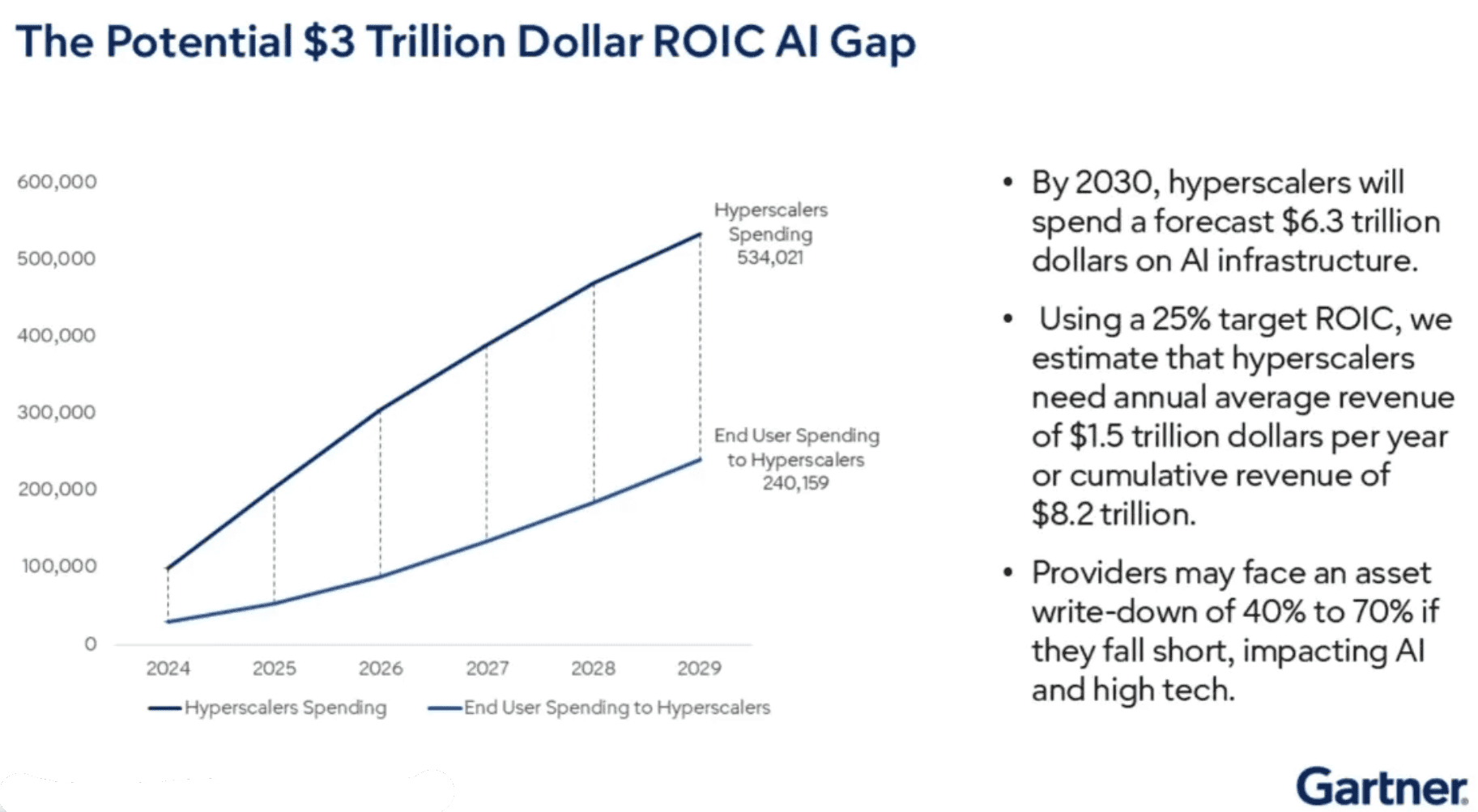
Looking further ahead, the trajectory of AI-related spending suggests an even more significant financial landscape. Gartner, a leading research and advisory firm, forecasts that global spending on AI will reach an astounding $6.3 trillion by 2030. This projection encompasses a wide array of AI applications, development, and operational costs, signaling a sustained and accelerating investment in the technology.
This escalating cost of development and deployment directly influences the pricing models adopted by AI providers. Companies like Anthropic and OpenAI, now increasingly operating as public entities or under intense investor scrutiny, are under significant pressure to demonstrate profitability. This necessitates a focus on positive gross margins, a metric Anthropic is reportedly nearing. Consequently, these companies are expected to leverage their growing market power to increase prices for their AI tools and services. The pressure is not confined to pure AI developers; established Software-as-a-Service (SaaS) giants, including SAP, Workday, Oracle, Salesforce, and Adobe, are also keen to showcase robust financial performance to Wall Street, suggesting that AI-enhanced offerings across the enterprise software landscape could also see price adjustments.
Early Indicators of Price Volatility
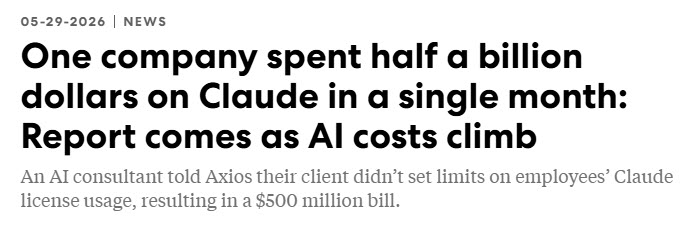
Anecdotal evidence suggests that businesses are already encountering the financial implications of AI’s escalating costs. In recent discussions with clients in New York, several Chief Information Officers (CIOs) and Chief Human Resource Officers (CHROs) indicated that the high cost of specific AI tools, such as Claude Code, was prompting them to re-evaluate their strategies. One recurring theme was the consideration of outsourcing AI-related tasks to engineers in regions with lower labor costs, such as India, as a means to mitigate rising expenses.
The Information reported on Anthropic’s strategic pricing adjustments, noting that customers are "willingly eat[ing] the cost" amidst a "compute crunch." Eric Johnson, CIO at PagerDuty, a company that aids software engineers in managing technical outages, expressed his anticipation of "volatile costs" as his organization’s 1,200 employees integrate Anthropic’s AI coding and other tools to enhance software development and other critical functions. Johnson stated, "I am preparing myself to be surprised by the bills… We believe that there’s a lot of value here. Unfortunately, it’s fairly new technology, so there’s some open questions that we’re gonna be working through around its costs and getting a return on the investment."
Anthropic has revised its pricing model to charge enterprise clients based on the volume of AI utilization rather than fixed subscription fees. This shift, coupled with the adoption of new technologies like advanced tokenizers for its latest AI models, is contributing to increased costs for customers. Despite these increases, many technology firms and large Anthropic clients are reportedly prepared to absorb these rising expenses, driven by the potential for significant productivity gains among their software engineering and sales teams through task automation.
The Evolving Price-Performance Landscape
The competitive landscape is not static, however. In a recent development, Google announced Gemini 3.5 Flash, positioned as a significantly more cost-effective alternative, reportedly ten times less expensive than Opus 4.7. This move signals the beginning of a price-performance battle within the AI market, as providers seek to balance advanced capabilities with customer affordability.
Quantifying the Price Increase: The Trillion-Dollar Revenue Imperative
To understand the magnitude of the anticipated price surge, it is crucial to examine the revenue generation required to justify the immense capital investments. To achieve a 15% compound annual return on investment, assuming a conservative five-year depreciation period for AI infrastructure, the industry needs to generate upwards of a trillion dollars in new annual revenue. This figure could be even higher, considering the potential profit margins associated with AI services.
This substantial revenue generation is expected to be sourced from both consumer and business markets. On the consumer front, global internet advertising spending currently hovers around $750 billion. While a significant increase in digital advertising, potentially doubling the current volume, could contribute to covering AI costs, this scenario is considered less likely due to potential market saturation and consumer fatigue.
More probable is the impact on the enterprise sector. Global enterprise software spending is estimated to be around $1.2 trillion, according to Gartner. A scenario where businesses double their spending on enterprise software, driven by the integration of AI-powered solutions, could generate the necessary revenue. This implies a significant increase in the cost of business software and services as AI becomes more deeply embedded.
Beyond consumer and enterprise software, other revenue streams are anticipated. Government spending, particularly in defense, and the emergence of new markets for AI in bio-research, energy research, and other scientific fields are expected to contribute to the overall revenue pool. However, the fundamental economic equation suggests a significant increase in the cost of computing and AI-driven services.

The notion that computing power inherently becomes cheaper, akin to the historical trend of Moore’s Law, is unlikely to hold true for advanced AI in the near term. While personal computing costs have decreased in real terms over decades, the complexity and resource intensity of modern AI demand a substantial and sustained financial outlay. The original IBM PC, costing approximately $1,565 in 1981 (equivalent to around $5,700 today without a hard disk), contrasts with modern PCs and smartphones, where the "cost of computing" for an individual, when considering device acquisition and integration into a digital ecosystem, has not seen a proportionally dramatic decrease over the last 45 years.
Therefore, the widespread adoption of AI, unless it leads to unprecedented levels of productivity gains that fundamentally displace other costs or create entirely new economic efficiencies, will likely translate to higher overall expenses for businesses and consumers.
Strategic Imperatives: Growth Over Replacement
It is crucial to recognize that major technology companies, including Nvidia, Oracle, Microsoft, Workday, Google, Meta, SpaceX, Amazon, and Apple, are not primarily focused on using AI to "replace" existing revenue streams. Instead, their strategic objective is to achieve significant growth. Jensen Huang, CEO of Nvidia, succinctly articulated this by stating, "AI compute is revenue." This perspective signals a departure from traditional seat-based licensing models towards a consumption-based or value-driven revenue generation approach, where the use and impact of AI directly correlate with its cost.
This shift in business strategy, coupled with the massive infrastructure investments and the inherent cost of cutting-edge AI technology, paints a clear picture: the era of cheap AI is likely drawing to a close. Businesses that heavily rely on AI tools should brace for increased expenditures, and the broader economic implications will necessitate a re-evaluation of how AI’s value is measured and delivered across industries. The coming years will likely be defined by how effectively organizations can harness the power of AI while navigating its escalating financial realities, and whether the promised productivity gains will indeed offset the rising costs.







