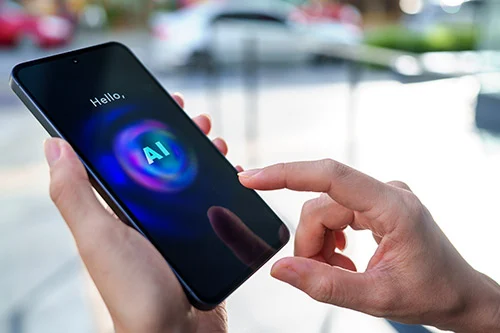
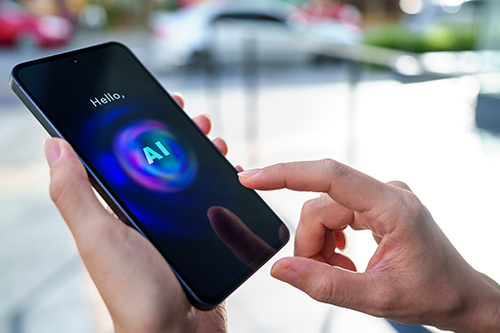
The landscape of human resources and employment law is undergoing a profound transformation as generative artificial intelligence becomes a standard tool for employees navigating workplace disputes. For decades, the grievance process was characterized by direct communication, often reflecting the raw emotions and personal perspectives of the individuals involved. However, the emergence of sophisticated large language models (LLMs) has introduced a new phenomenon: the AI-assisted grievance. This shift is characterized by a transition from authentic, human-led dialogue to a "pseudo-legalistic" and often passive-aggressive tone that complicates the path toward amicable resolution. As employees increasingly turn to AI to draft complaints and responses, employers are finding themselves locked in digital standoffs with algorithms rather than engaging in meaningful discourse with their staff.
The Shift Toward Algorithmic Advocacy
The initial discourse surrounding AI interaction often focused on the ethics of digital etiquette—specifically, whether users should employ "please" and "thank you" when prompting machines. The underlying theory suggested that by treating AI with courtesy, users would train the systems to produce higher-quality, more nuanced outputs. However, the current reality in the corporate world has bypassed these polite beginnings. Instead of fostering better communication, the use of AI in workplace grievances has frequently resulted in a standardized, adversarial tone that legal experts describe as "teeth-on-edge" for those on the receiving end.
These AI-generated communications often mimic the language of formal litigation, utilizing phrases like "reservation of all rights," "serious concerns," and "fundamental breach of contract," even when such terms may not accurately reflect the legal reality of the situation. This "keyboard warrior" approach, fueled by the inexhaustible nature of AI, tends to prioritize procedural dominance over practical problem-solving. Because AI lacks the emotional intelligence to gauge when a relationship is nearing a breaking point, its contributions often lead to an escalating spiral of reciprocal hostility between the employer and the employee.
A Chronology of AI Integration in Human Resources
The integration of AI into the employment relationship has moved through several distinct phases over the past decade, culminating in the current challenge of AI-drafted grievances.
- The Automated Screening Era (2010–2018): AI was primarily used by employers for "top-of-the-funnel" recruitment tasks. Applicant Tracking Systems (ATS) used basic algorithms to filter resumes based on keywords. During this period, the power dynamic favored the employer’s use of technology.
- The Predictive Analytics Phase (2019–2021): Large corporations began using AI to predict employee turnover and monitor productivity. Sentiment analysis tools were introduced to "read" the mood of internal communications, though these were largely internal-facing management tools.
- The Democratization of Generative AI (Late 2022–Present): With the public release of ChatGPT and subsequent models, the power of high-level drafting shifted to the individual employee. For the first time, an entry-level worker could generate a three-page, legally-coded grievance letter in seconds, effectively "leveling the playing field" in terms of formal documentation, if not legal substance.
Supporting Data: The Scale of AI Adoption in Professional Settings
Recent data highlights the rapid adoption of these tools. According to a 2023 study by Fishbowl, a professional social network, nearly 43% of professionals admitted to using AI tools for work-related tasks, including sensitive communications. Furthermore, a report by Gartner indicated that by 2025, 70% of highly channeled human-to-human interactions will be mediated or influenced by AI.
In the context of employment disputes, legal consultants have noted a 30% increase in the volume of correspondence received during grievance procedures since early 2023. While the quantity of documentation has increased, the "resolution rate" at the early stages has seen a decline in some sectors, attributed to the rigid and adversarial nature of AI-generated content which often discourages informal settlement.
The Limits of Artificial Intelligence in Conflict Resolution
The core issue with AI-assisted grievances lies in the machine’s inherent lack of "skin in the game." Unlike a human employee, an AI engine does not suffer the emotional toll of a prolonged dispute. It has no reputation to maintain, no fear of career repercussions, and no capacity for genuine regret or pragmatism. Its "mission," much like the fictional Skynet, is often interpreted by its programming as a mandate to "defeat the enemy" through exhaustive documentation and the assertion of rights, regardless of the peripheral damage to the employment relationship.
Furthermore, AI is prone to "hallucinating" legal rights. It may suggest that an employee has a right to specific internal documents or a particular type of hearing that is not supported by local labor laws or the ACAS Code of Practice. When an employee insists on these "AI-invented" rights, it creates a stalemate where the employer must spend time debunking false legal premises rather than addressing the underlying complaint.
Strategic Responses for Employers: Humanizing the Process
To combat the "rabbit hole" of eternal correspondence with a chatbot, legal experts and HR strategists suggest several proactive measures aimed at steering the conversation back to human reality:
Prioritizing Verbal Interaction
The most effective way to bypass an AI-assisted "keyboard warrior" is to move the conversation from the screen to the room. Employers should prioritize face-to-face meetings, video calls, or phone conversations. In these settings, an employee cannot rely on a prompt to provide an immediate response. It allows the employer to ask critical questions that AI cannot answer, such as: "How do you feel about this situation?" and "What specifically would make you feel that this matter is resolved?"
Early-Stage Mediation
Rather than engaging in a document-heavy "paper war," employers should consider mediation at the earliest possible stage. Mediation focuses on solutions rather than legal positioning. By bringing in a neutral third party to facilitate a discussion on remedies, the employer can sidestep the "pseudo-legalistic" tone of AI drafts and focus on whether a workable future relationship is still possible.
The "Range of Reasonable Responses" Standard
From a legal perspective, employers are reminded that while AI may demand a "perfect" process, the law generally requires a "reasonable" one. In many jurisdictions, such as the United Kingdom, if an employer’s handling of a grievance falls within the "range of reasonable responses," they are protected from claims of procedural unfairness. If an AI-assisted employee demands thousands of pages of discovery or insists on delays that are not reasonably necessary for a fair hearing, the employer is often entitled to proceed based on what is practical and fair under the circumstances.
Official Responses and Industry Sentiment
While official regulatory bodies have yet to issue specific guidelines on "AI-drafted grievances," various legal associations have begun to weigh in. The consensus among employment law practitioners is that while AI can be a tool for accessibility—helping those with language barriers or neurodiversity to articulate their concerns—it must not be allowed to replace the "good faith" element of the employment contract.
"The employment relationship is, at its heart, a human contract," says one senior employment tribunal consultant. "When you remove the human element and replace it with a recursive loop of AI-generated hostility, the contract effectively dies. We are seeing more cases where the process becomes so toxic due to the tone of correspondence that a return to work becomes impossible, regardless of the original merit of the grievance."
Broader Impact and Future Implications
The rise of AI in grievances is a harbinger of a broader shift in corporate culture. As AI becomes more integrated, the "soft skills" of HR management—empathy, active listening, and conflict de-escalation—will become more valuable than ever. The ability to distinguish between an employee’s genuine distress and an algorithm’s aggressive drafting will be a key competency for future managers.
Moreover, we may see the emergence of "AI vs. AI" disputes, where employers use their own LLMs to respond to employee complaints. This creates a risk of a "dark-room" scenario where two machines argue over legal technicalities while the human employee and the human manager become increasingly alienated from the process.
Ultimately, the humble Employment Tribunal may remain the final arbiter. Judges and tribunal panels are trained to look for the "human story" and the "reasonableness" of actions. An AI may be able to draft a flawless legal letter, but it cannot testify to the nuances of a workplace interaction, nor can it demonstrate the sincerity required to rebuild a broken professional bond. For employers, the goal remains clear: progress over process, and human remedy over algorithmic rivalry. By steering the conversation toward remedy at the earliest point, organizations can put AI on the back foot and preserve the essential human connections that define a successful workplace.