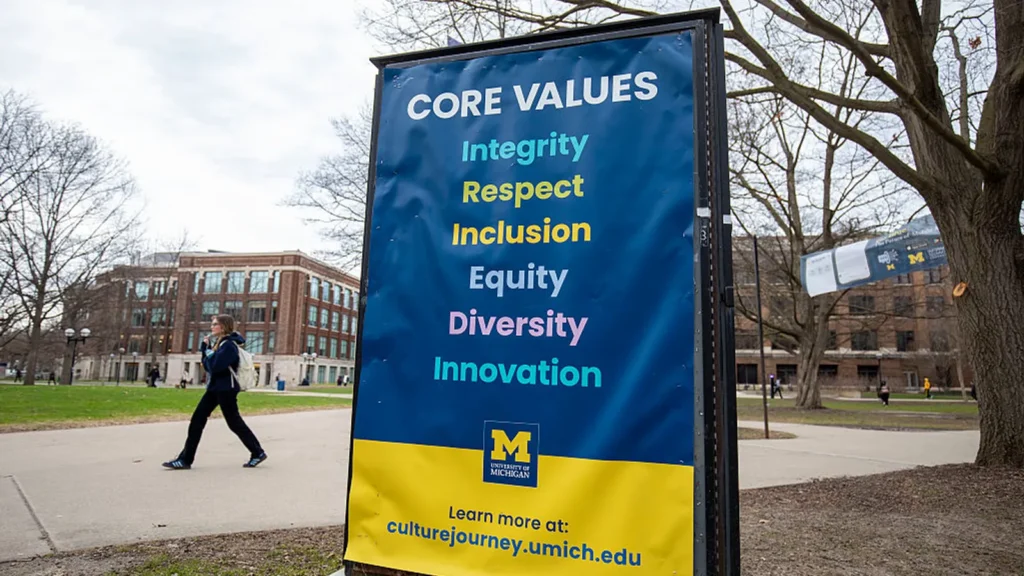
The legal ground beneath Diversity, Equity, and Inclusion (DEI) programs continues to shift dramatically, driven significantly by an openly hostile political environment. This evolving landscape was starkly encapsulated by President Donald Trump’s declaration during his February State of the Union address that his administration had "ended DEI." While such pronouncements signal a clear intent from federal authorities, attorneys at Epstein Becker Green (EBG) assert that corporate DEI programs are far from extinct, though they are undergoing profound transformations in language, content, and underlying policies to navigate these complex challenges.
Despite federal claims that certain DEI initiatives are discriminatory, the foundational intent behind their adoption by organizations was largely positive, aiming to foster more equitable workplaces. Pete Steinmeyer, a member of the firm at EBG, emphasized this point during a recent virtual event: "People did not implement these policies and procedures with the intent of being unfair to anybody. To the contrary, they were intended to lift people up and extend a helping hand." This inherent goodwill now confronts a legal and political environment that has become increasingly scrutinizing, demanding a strategic recalibration of DEI efforts across the corporate spectrum.
The Evolving Legal and Political Landscape
The legal framework governing DEI has indeed seen significant changes in recent years, perhaps best exemplified by the U.S. Supreme Court’s landmark decision in June 2023 regarding affirmative action in collegiate admissions. This ruling, while directly addressing higher education, sent ripples through corporate America, prompting widespread reevaluation of diversity initiatives. The decision in Students for Fair Admissions v. Harvard/UNC effectively ended race-conscious admissions policies, leading many legal experts to anticipate similar challenges to corporate DEI programs that incorporate race-based preferences or quotas.
Following this, federal authorities, particularly the Department of Justice (DOJ) and the Equal Employment Opportunity Commission (EEOC), have intensified their scrutiny. The DOJ has explicitly cautioned against certain DEI initiatives, including those mandating "diverse slates" for hiring, particularly for employers receiving federal funds, deeming them potentially discriminatory. The EEOC has also issued guidance suggesting that some DEI initiatives could be seen as discriminatory if they disadvantage individuals based on protected characteristics. This concerted pressure from the highest levels of government has created a climate of uncertainty, compelling companies to meticulously audit and adjust their DEI frameworks to mitigate legal exposure.
The timeline of these challenges highlights a growing trend:
- September 2020: President Trump issues Executive Order 13950, banning certain diversity training topics deemed "divisive" for federal contractors, signaling an early anti-DEI stance.
- January 2021: President Biden rescinds EO 13950, indicating a shift back towards supporting DEI at the federal level, but the political debate continues.
- June 2023: The Supreme Court rules against affirmative action in college admissions, intensifying legal scrutiny on race-conscious initiatives in all sectors.
- Late 2023 – Early 2024: Federal agencies like the DOJ and EEOC issue warnings and guidance regarding potentially discriminatory aspects of corporate DEI programs, specifically targeting practices like "diverse slate" mandates and certain types of bias training.
- February 2024: President Trump’s State of the Union address explicitly claims his administration "ended DEI," reinforcing the political hostility.
This chronology underscores a consistent and intensifying pressure from conservative legal and political factions against what they perceive as discriminatory or reverse-discriminatory DEI practices.
Corporate Response and Adaptation: A Strategic Retreat or Reframing?
In response to this heightened scrutiny, companies have been compelled to return to the drawing board, engaging in what some describe as a strategic reevaluation rather than an outright abandonment of DEI principles. Lauri Rasnick, also a member of the firm at EBG, observed that many organizations have proactively scrubbed DEI-related language from their public-facing websites, uncoupled executive compensation from specific DEI numerical goals, or eliminated diverse slate requirements in hiring processes. Some have even disbanded internal DEI councils and committees, opting for broader, more inclusive frameworks.
However, this adaptation does not signify the demise of DEI. Instead, it reflects a nuanced shift towards practices that prioritize broad inclusivity and merit-based opportunities, while carefully avoiding any perception of preferential treatment based on protected characteristics. The objective remains to foster diverse and equitable workplaces, but through methods that are legally defensible and universally applicable.
Navigating the New Terrain: Legal Strategies for Sustainable DEI
Attorneys at Epstein Becker Green have outlined several key areas where employers can make strategic tweaks to their DEI programs, significantly reducing the likelihood of litigation while maintaining their commitment to a diverse and inclusive workforce.
1. Open Up Employee Resource Groups and Affinity Groups
Employee Resource Groups (ERGs) and affinity groups have long been cornerstones of corporate DEI efforts, fostering community and support among employees with shared backgrounds or interests. Legally, these groups are generally permissible, but their structure and membership criteria are now under intense scrutiny. Rasnick emphasizes that participation and membership should not be restricted based on protected characteristics such as gender or race.
Instead, ERGs should be open to all employees, regardless of background, and must not provide preferential access to training, promotions, leadership pipelines, or career development opportunities that are not broadly available to individuals outside the group. To further mitigate risk, HR departments are advised to reframe the charters of these groups, shifting their focus from advocacy for specific identities to professional development, mentorship, and broader networking opportunities that benefit all employees. This ensures that these valuable groups serve their purpose of fostering connection and growth without creating exclusionary environments.
2. Mind Your Use of Demographic Data
Tracking workforce demographics is a fundamental aspect of understanding an organization’s diversity landscape and is often a legal requirement, as is the case with the U.S. Equal Employment Opportunity Commission’s (EEOC) EEO-1 data collection. This annual report requires employers to submit workforce demographic data, including race, ethnicity, sex, and job category. While data collection is permissible, Rasnick cautions employers on how this data is subsequently used.
A critical adjustment involves decoupling demographic measurements or quotas from compensation plans or promotion benchmarks. Tying performance bonuses or career advancement directly to achieving specific demographic targets can invite claims of reverse discrimination. Furthermore, companies must rethink how demographic data informs other contexts, such as pay equity analyses. While pay equity analysis is a legally sound practice aimed at identifying and rectifying pay disparities, employers should avoid framing these efforts as solely intended to correct disparities for a particular demographic group. Instead, the focus should be on eliminating discrimination against any group and ensuring equal treatment for all. Conducting such analyses under attorney-client privilege can also offer an additional layer of legal protection.
3. Reframe Your DEI-Related Training
Unconscious bias training and similar programs have become particularly vulnerable under the current political climate, with federal regulators directly targeting them. The risk is compounded by the fact that employee opposition to certain training programs can constitute protected activity, potentially leading to retaliation claims if employees suffer adverse consequences for their objections.
To mitigate these risks, employers are advised to refocus their training efforts on universally accepted concepts such as anti-harassment, anti-discrimination, and respectful workplace conduct. These subjects represent best practices and are often legally mandated in many jurisdictions. Simultaneously, HR departments should consider shifting away from training components that delve into systemic or group-level concepts, as these can inadvertently provide fodder for reverse discrimination lawsuits. Specifically, any training that suggests any group of employees has a particular or inherent bias based on their race, sex, or other protected characteristics should be avoided. If organizations still wish to offer unconscious bias or general diversity training, making participation voluntary rather than mandatory can further reduce legal risk. Leah Brownlee Taylor, another EBG attorney, noted that the firm has counseled clients against training themed around the creation of "safe spaces" if these spaces are implicitly or explicitly exclusionary, reiterating that "there’s real liability risk in having or facilitating groups that exclude individuals."
4. Make Development Opportunities Broadly Available
Career development programs, including internships, mentorships, and sponsorships, are crucial for fostering talent pipelines and promoting upward mobility. To ensure legal compliance, the criteria for selecting participants in these programs should be merit-based and the programs themselves open to any interested individuals who meet objective qualifications.
Rasnick strongly advises against any eligibility criteria related to demographics. Even facially neutral criteria like "underrepresented talent" or "first-generation citizens" can be legally problematic if they are found to serve as proxies for selecting individuals of specific demographic groups. Instead, employers should clearly articulate objective, job-related criteria such as "high-potential employees," "early-career employees," or "employees in specific business units." Transparency in criteria and the selection process is paramount to demonstrate fairness and equal opportunity for all.
5. Cast Broader Nets for Job Candidates, Avoid ‘Diverse Slates’
"Diverse slate" hiring policies, which mandate that a certain number or percentage of candidates on an interview slate must come from underrepresented groups, are particularly risky under current federal guidance. The U.S. Department of Justice has explicitly prohibited employers receiving federal funds from using such mandates. This is a direct outcome of the intensified scrutiny on race-conscious practices.
Instead, HR professionals should concentrate on sourcing strategies that cast a broader net without mandating specific demographic goals. This involves expanding outreach to a wider array of recruitment channels, including historically Black colleges and universities, women’s professional networks, and organizations serving veterans or individuals with disabilities, among others. Simultaneously, employers should revisit and standardize interview questions to ensure objectivity and consistency across all candidates. The use of interview scorecards can further streamline this process, leading to more objective evaluations and ultimately, better and more equitable hiring decisions based purely on qualifications and merit.
6. Conduct Privileged Audits Regularly
Given the rapidly evolving legal landscape, employers are highly encouraged to conduct regular, comprehensive audits of their DEI programs. Steinmeyer confirmed that his firm has seen a significant uptake in clients seeking such audits over the past year.
Critically, these DEI audits should be conducted under attorney-client privilege. This legal protection ensures that any findings or recommendations remain confidential, allowing organizations to identify and rectify potentially problematic components without creating discoverable evidence that could be used against them in future litigation. Rasnick emphasizes that these audits should not be a one-time event but a "living process," conducted on a regular basis to stay ahead of new legal interpretations and potential risks. This proactive approach is essential for maintaining both legal compliance and the integrity of DEI efforts in a challenging environment.
Broader Implications and The Future of DEI
The ongoing legal and political pressures are undeniably reshaping the corporate DEI landscape. The shift is less about abandoning the goals of diversity, equity, and inclusion, and more about redefining the methods through which these goals are pursued. The focus is moving from explicit race-conscious measures and numerical targets towards broader concepts of fairness, equal opportunity, and a respectful workplace culture for all employees.
Despite the challenges, the business case for DEI remains robust. Numerous studies have linked diverse workforces to increased innovation, improved financial performance, higher employee engagement, and better decision-making. Companies recognize that an inclusive culture is vital for attracting and retaining top talent in a competitive global market. Therefore, while the how of DEI is changing, the fundamental why largely persists.
The implications extend beyond mere legal compliance. This era demands that corporate leadership articulate a clear, legally sound, and universally appealing vision for inclusion. It requires a deeper understanding of what constitutes genuine equity versus what might be perceived as preferential treatment. The future of DEI will likely see an increased emphasis on systemic barrier removal, fostering psychological safety, and promoting merit-based opportunities for all, rather than prescriptive demographic-focused initiatives. This strategic pivot ensures that organizations can continue to champion diverse, equitable, and inclusive workplaces without running afoul of increasingly stringent legal interpretations and political headwinds.
In conclusion, while President Trump’s assertion that DEI has been "ended" might be politically potent, the reality in corporate America is far more nuanced. DEI programs are not being dismantled but rather meticulously refined and strengthened through a lens of legal prudence and universal inclusivity. By embracing open membership, careful data usage, reframed training, broad development opportunities, objective hiring, and regular privileged audits, companies can navigate the current legal complexities, ensuring their commitment to a diverse and equitable workforce remains steadfast and sustainable for the long term. The challenge lies in adapting the mechanisms without compromising the underlying values of fairness and opportunity for all.