For much of the past year, a prevailing narrative suggested that Artificial Intelligence (AI) had a negligible impact on the United States job market. My own analysis of employment data and numerous conversations with press outlets indicated that the slowdown in job growth was primarily driven by broader economic factors such as cost-cutting measures and pervasive economic uncertainty, rather than explicit job displacement by AI. However, as we enter 2026, this landscape is demonstrably changing, revealing a subtle yet significant divergence in employment trends, particularly when examining different demographic groups.
The overall unemployment rate in the U.S. has seen a noticeable uptick. Data from the Bureau of Labor Statistics (BLS) indicates that the unemployment rate has risen to 4.6% by late 2025. This represents a 9.5% increase from 4.2% recorded a year prior and a substantial 24.7% surge from the 3.7% unemployment rate observed in November 2023. To provide further context, the unemployment rate stood at a mere 3.6% in November 2022, underscoring the accelerating trend of job market contraction. This upward trajectory suggests a cooling economy following the post-pandemic "revenge spending" boom of 2021 and 2022. Contributing factors to this economic deceleration include persistent U.S. tariffs, ongoing inflation, and relatively high interest rates, which collectively dampen consumer and business spending.
A Tale of Two Graduate Groups: The Widening Employment Gap
While the aggregate unemployment figures paint a picture of a slowing economy, a deeper dive into specific demographics reveals a more nuanced and concerning trend. By segmenting the workforce into two key groups – recent college graduates (aged 24 and younger) and more established professionals (aged 25-35) – a clear divergence in employment prospects emerges. This distinction, often overlooked in broader economic analyses, highlights the disproportionate impact of current economic shifts on emerging talent.
The data, visualized through employment trend charts, consistently shows a steady unemployment rate for tenured college graduates, remaining below the overall national average. This group, characterized by their accumulated experience, established skill sets, mature judgment, and seasoned decision-making capabilities, appears to be navigating the current economic climate with greater resilience. Their existing contributions and established roles within organizations provide a degree of insulation against market fluctuations.
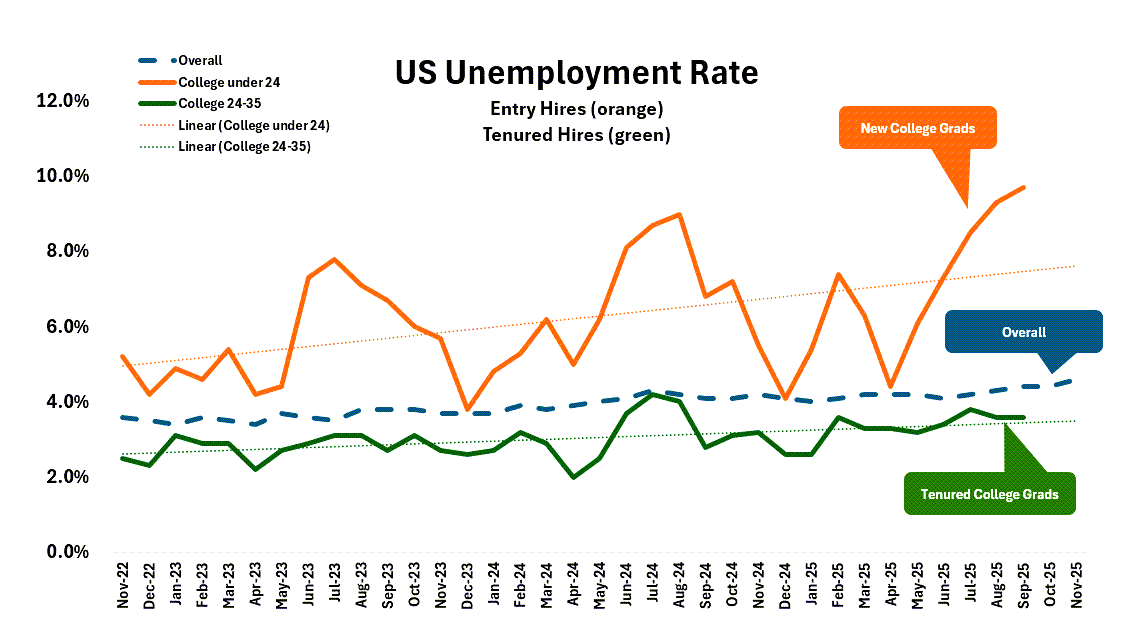
In stark contrast, the unemployment rate for new college graduates is on a pronounced upward trajectory. As of late 2025, this rate is approaching 10%, a level not seen since July 2021, which marked the peak of the post-pandemic economic recovery. Historical data suggests that such elevated unemployment rates for young college graduates are rare. Indeed, the last period when young college graduates faced comparable job market challenges was in 2011, during the protracted recovery from the 2008 Great Recession. This observation is corroborated by research from institutions such as the St. Louis Federal Reserve, which has also pointed to recent college graduates bearing the brunt of recent labor market shifts.
The Shrinking Demand for Degree-Based Roles and the AI Factor
Adding another layer to this evolving employment narrative is the changing nature of job postings themselves. Data from sources like Hiring Lab indicates that jobs not requiring a college degree constitute approximately 82% of the workforce, a figure that has steadily increased from 79% just five years ago. This suggests a dual impact from technological advancements, particularly AI: not only is AI influencing hiring decisions for roles requiring higher education, but it may also be contributing to a reduction in the overall number of jobs that traditionally necessitate a college degree.
This phenomenon has significant implications. It suggests that the skills acquired through a four-year degree are becoming less of a guaranteed pathway to immediate employment, especially for those entering the workforce for the first time. The economic climate, coupled with the increasing sophistication of AI, appears to be recalibrating the demand for specific skill sets and educational backgrounds.
AI’s Socio-Technological Impact and Employee Trust
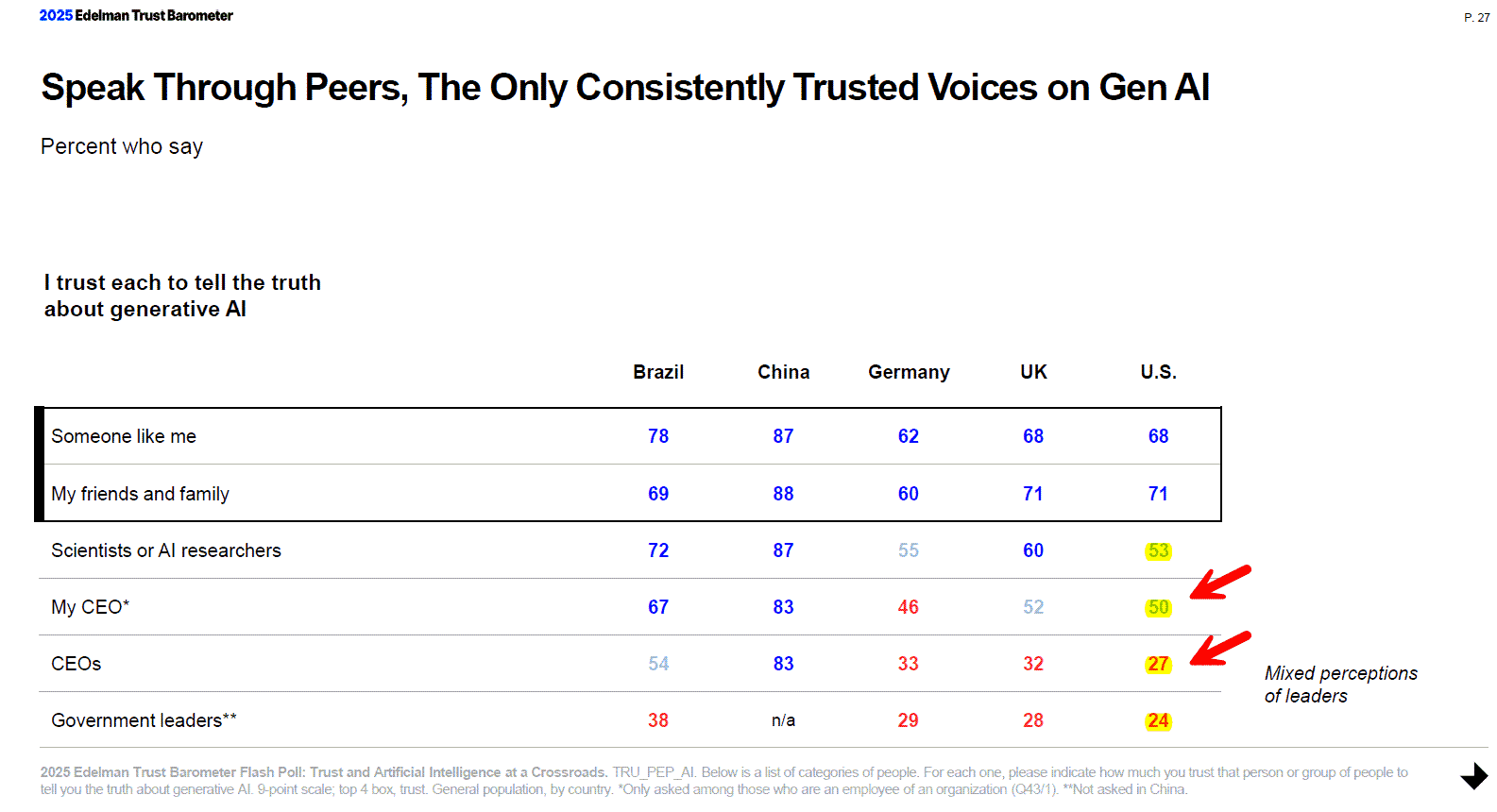
The growing influence of AI in the workplace is not merely a technological shift; it is a profound socio-technological innovation with far-reaching sociological impacts. As highlighted in recent discussions surrounding the human capital agenda, the integration of AI necessitates a nuanced understanding of its societal and sociological ramifications. A critical component of this integration is employee trust, not just in the functionality of AI platforms, but more importantly, in the perceived value and implications of AI for their careers and livelihoods.
Recent polling data, such as the Edelman Trust Barometer flash poll on trust in Artificial Intelligence, reveals a complex picture of public perception. While the specifics of the 2025 poll are not detailed here, similar trends observed in previous years suggest that trust in AI is often contingent on perceived benefits and the transparency of its deployment. When employees perceive AI as a threat to their job security or career progression, their trust in leadership and organizational initiatives involving AI can erode significantly.

This erosion of trust can lead to widespread economic insecurity. When a substantial portion of the workforce harbors concerns about their jobs, career trajectories, and future earning potential, a climate of apprehension prevails. This anxiety, in turn, can have a detrimental effect on overall economic productivity. Instead of embracing new technologies that could enhance efficiency, employees experiencing AI anxiety may become hesitant, resistant to change, and less engaged, inadvertently lowering economic output.
Navigating the Age of AI: The Imperative for Open Dialogue and Adaptation
The path forward requires confronting the inherent uncertainties surrounding AI’s ultimate impact. The current overestimation of AI’s capabilities by many platforms, coupled with the inherent unfamiliarity and potential "creepiness" of emerging AI applications, contributes to this apprehension. From conversational interfaces and personalized email outreach to AI-driven job interviews, career counseling, and performance reviews, employees are being asked to adapt to a rapidly evolving technological landscape.
The advent of "digital twins," advanced robotics, and increasingly sophisticated human-like animations in professional settings, as anticipated for 2026, will further blur the lines between human and artificial capabilities. Platforms like Galileo Learn, which offer AI agents for coaching and challenge, exemplify this trend, pushing the boundaries of how we interact with and learn from AI.
Advice for Employers and Aspiring "Superworkers"
For employers contemplating their hiring strategies, particularly regarding entry-level positions, a reevaluation may be in order. There is a compelling argument to be made that holding back on hiring younger talent could be a strategic misstep. This demographic, having grown up with digital technologies, is often more predisposed to rapidly adopting, building with, and innovating AI applications. While tenured employees may initially view new tools as a means to accelerate existing processes, younger workers are more likely to question the status quo and propose entirely new ways of working, driving much-needed reinvention.
The concept of the "Superworker" is emerging as a key outcome of AI integration. AI is not necessarily a job destroyer, but rather a significant job leveler, democratizing access to information and expertise. For younger workers, this means the potential to rapidly transition from an "apprentice" role to that of a newly minted expert, armed with an unprecedented level of readily available knowledge. Similarly, job seekers can leverage AI to become deeply knowledgeable about a company before even engaging with recruiters, setting them apart from the competition.
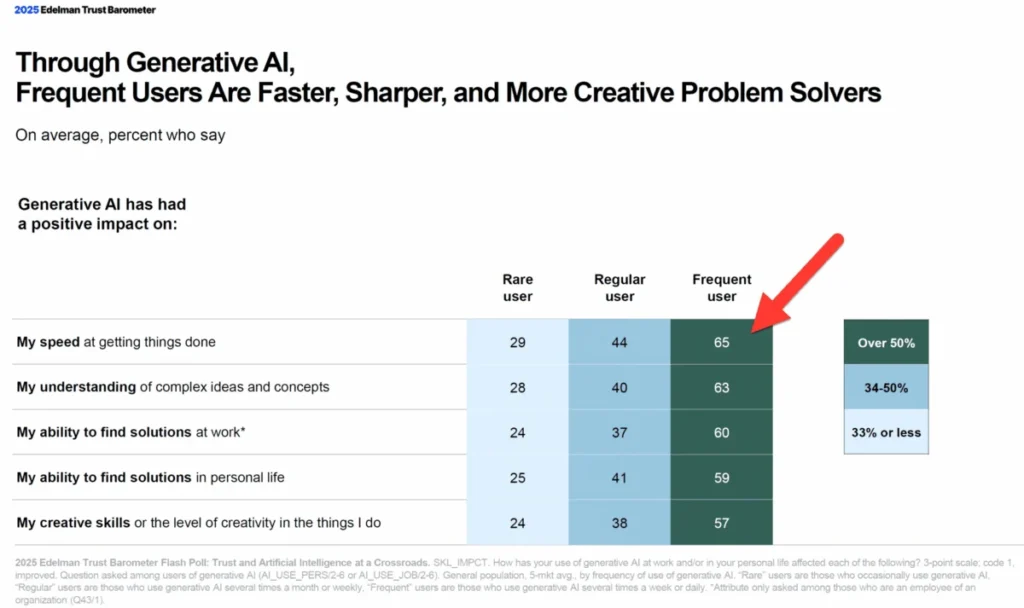
For seasoned professionals, the message is equally clear: relying solely on experience is no longer sufficient. Continuous learning and adaptation are paramount. Engaging with new technologies, tools, and advancements within their respective domains is crucial for remaining relevant and competitive. Research consistently indicates that frequent AI users report a higher likelihood of finding solutions at work and completing tasks more efficiently, underscoring the productivity gains associated with AI adoption.
A Call to Action for Employers and Leadership
Hiring managers and executives must be vigilant against the "tenure trap." While institutional knowledge is invaluable, an overreliance on it could overlook the potential of younger, AI-savvy individuals who may rapidly acquire the skills and insights needed to innovate and drive change. The perception of AI as a tool for faster execution of old methods, rather than a catalyst for rethinking work itself, can hinder organizational progress.
HR leaders and recruiters play a pivotal role in identifying and nurturing future talent. By recognizing the rapid learning potential and faster productivity gains offered by younger, AI-adept individuals, organizations can cultivate a new generation of "Superworkers." These individuals, often costing less and possessing a greater capacity for AI integration, represent a significant opportunity for enhanced organizational performance.
Ultimately, for CEOs and senior executives, honesty and strategic foresight are critical. The prevailing research points to AI as a "scaling technology" rather than a pure job elimination tool. A transparent and supportive approach to AI implementation, coupled with a clear articulation of its role in augmenting human capabilities, will foster faster employee adaptation and ensure that companies remain competitive in the evolving economic landscape. The future of work hinges on a collaborative and informed approach to integrating AI, recognizing its potential to both challenge and empower the workforce.