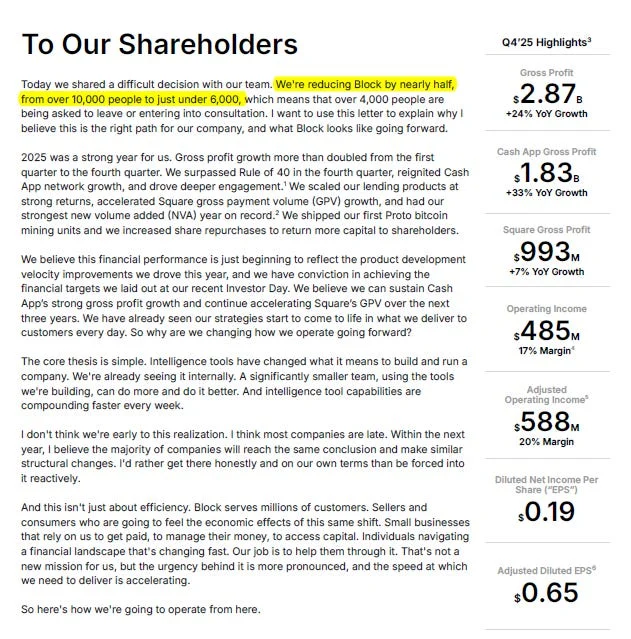
The tech world was abuzz last week following a bold announcement from Jack Dorsey, CEO of Block Inc., the parent company behind popular financial services platforms Square and Cash App. Dorsey declared plans to lay off a significant portion of its workforce – approximately 40% of its over 10,000 employees, equating to around 4,000 individuals – with the explicit intention of replacing these roles with artificial intelligence (AI). The announcement, delivered with a notable lack of detailed specifics, has ignited a firestorm of discussion regarding the practicalities of such a large-scale AI integration, its potential impact on employment, and the underlying strategic motivations.
A Bold Declaration with Limited Details

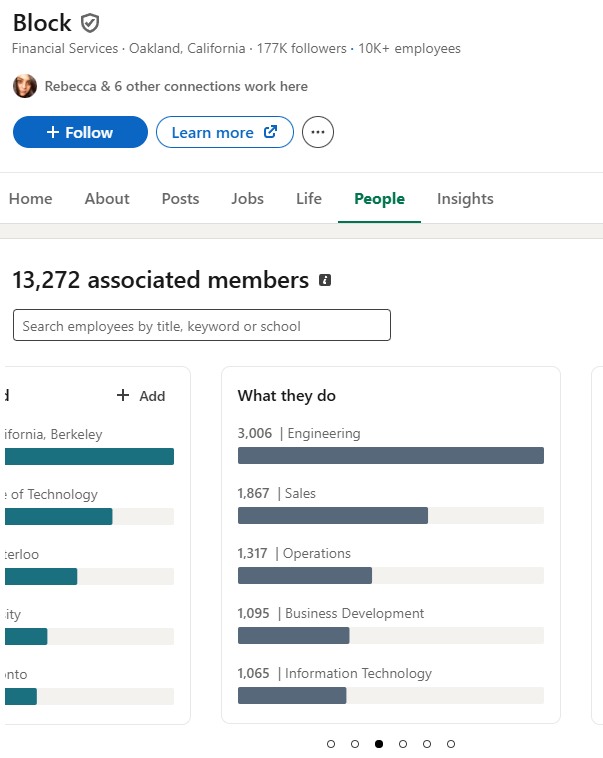
Dorsey’s pronouncement was succinct, stating that Block Inc. would be replacing a substantial segment of its workforce with AI. While the company’s LinkedIn profile indicates a workforce of around 13,000 employees, primarily concentrated in engineering, IT, operations, and sales, the precise departments and roles targeted for this AI-driven transformation remain largely undefined. This ambiguity has fueled speculation and concern among employees and industry observers alike.
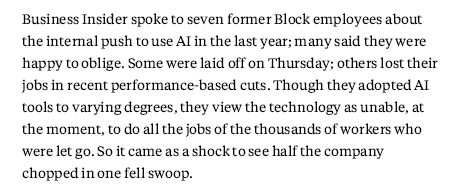
The lack of concrete information on how this transition will be executed has led to uncertainty. Interviews with seven Block Inc. employees, as reported by Business Insider, revealed that none had a clear understanding of the specific mechanisms or timeline for this significant business transformation. This suggests a considerable gap between the ambitious announcement and its practical implementation on the ground.
The AI Landscape: Hype vs. Reality

The rapid advancements in artificial intelligence have undeniably positioned it as a transformative force across various industries. However, the notion of AI directly replacing thousands of human jobs in a single sweeping move is a complex proposition, fraught with technical, economic, and ethical considerations.
Industry experts, like those at Anthropic, a leading AI research company, have acknowledged the significant potential of AI to reshape the labor market. Yet, they also emphasize that the transition is often more nuanced than a simple headcount reduction. AI’s current capabilities excel at automating specific tasks rather than entire job functions. A comprehensive analysis of AI’s impact on employment requires a deeper dive into the specifics of task automation, the cost-effectiveness of AI solutions, and the necessary human oversight and management.
Is AI a Catalyst for Efficiency or a Justification for Restructuring?
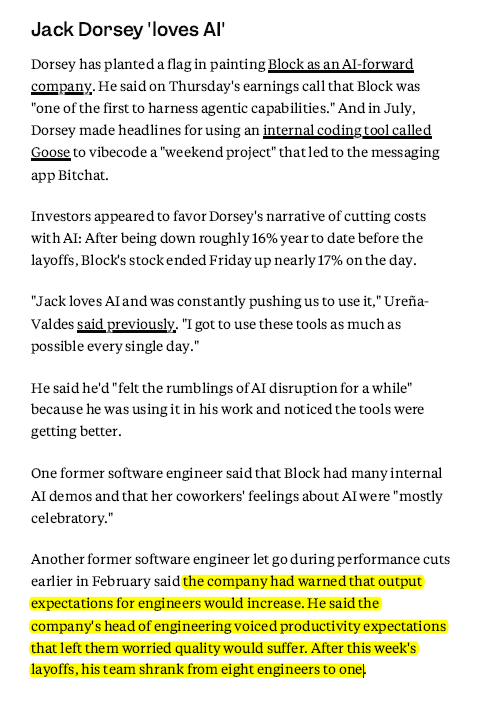
The announcement from Block Inc. raises a critical question: is the embrace of AI a genuine strategic move to harness its productivity gains, or is it a convenient justification for performance management and organizational streamlining?
Historical precedents offer some perspective. Following Elon Musk’s acquisition of Twitter, the company underwent significant layoffs, with Musk citing the discovery of substantial bureaucracy. In such instances, the introduction of new technologies or strategic shifts can serve as a catalyst for addressing existing inefficiencies and optimizing organizational structures.
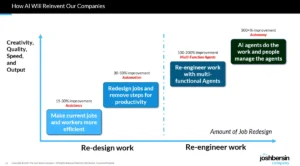
A comprehensive study conducted last year on organizational redesign around AI, involving over 70 companies, found that most organizations leveraging AI primarily as a tool to enhance individual productivity did not experience significant job reductions. True job displacement, or even substantial role alteration, typically requires a more fundamental re-engineering of business processes and workflows. Reports such as "The Rise of the Superworker" and research on "Dynamic Work Design" highlight that achieving significant workforce transformation through AI necessitates a strategic redesign of how work is performed.
Financial Context: Performance and Investor Pressure
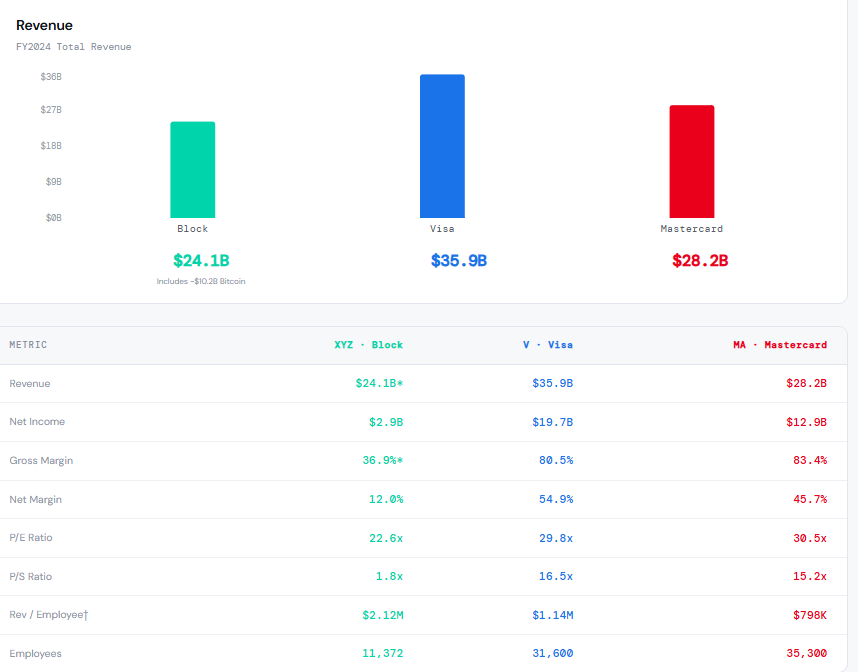
To understand the potential drivers behind Block Inc.’s announcement, a comparative financial analysis can be insightful. When juxtaposed with entities like Visa, Mastercard, and Shopify—companies operating in related but distinct sectors—Block Inc. presents a different financial profile. Block demonstrates lower profitability and a significantly smaller gross margin compared to its counterparts. This suggests that the company may not be operating at the same level of scale and efficiency as some of its industry peers.
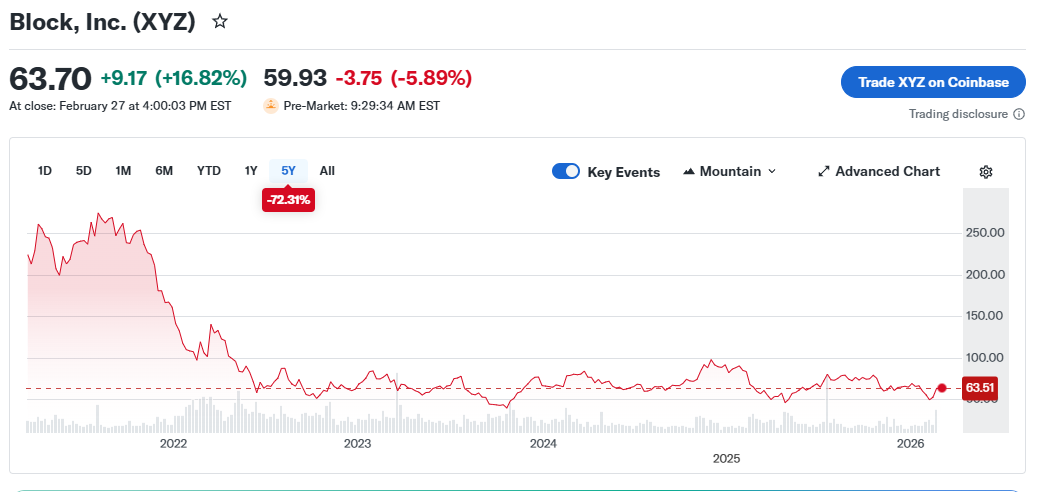
This financial backdrop, coupled with potential investor dissatisfaction regarding performance, could be a key factor influencing the company’s decision-making. The drive for operational efficiency, particularly in the current economic climate where cost optimization is paramount, might be a primary motivator for exploring AI-driven solutions. The pressure to demonstrate improved financial metrics to shareholders could be a powerful impetus for such a radical workforce adjustment.
The Nuances of AI Implementation: Beyond Job Elimination
The discourse surrounding AI and job displacement often simplifies a complex reality. While AI is indeed capable of automating numerous tasks, its implementation is not a straightforward replacement for human labor.
The Short-Term Approach to AI Transformation
Viewing AI solely as a job-eliminating tool is likely a short-sighted strategy. The very process of building, implementing, and scaling enterprise AI requires significant human capital. Companies need skilled personnel to develop AI agents and superagents, manage these sophisticated systems, and oversee crucial aspects like model building, training, verification, and ensuring the accuracy and ethical conduct of AI interactions. The non-deterministic nature of AI means that unexpected behaviors can arise, necessitating human oversight to prevent errors, especially in critical applications like financial services where accuracy is paramount.
The Substantial Cost of AI Integration
Beyond the initial development and implementation, the ongoing costs associated with AI are considerable. While it’s projected that AI could automate tasks currently performed by customer support representatives earning around $35,000 annually, leading to potential savings of 50-60% in operating costs, the AI agent itself incurs expenses. These costs, estimated between $15,000 and $20,000 per year per agent (assuming voice capabilities), are significant and do not include the expenses related to training, maintaining the AI ecosystem, and ensuring data governance.
The economic equation becomes even more intricate when considering roles like software engineering. While an engineer might earn $100,000 per year, the operating cost of AI tools that assist in coding can, in some scenarios, exceed the human cost. For instance, if 100 engineers represent an annual payroll of $10 million, and AI can automate 80% of their manual coding tasks, freeing up $8 million in labor capacity, the actual cost savings are not absolute. The "reasoning tokens" and computational resources required for AI to understand and generate code in a high-context, non-linear environment like software development can be substantial. Analysis suggests that the capital and operating costs for AI solutions in these areas can still represent one-third to one-half, or even more, of the cost of employing human staff. The burgeoning costs of data centers, essential infrastructure for AI, further contribute to this financial complexity.
Re-engineering Processes: The True ROI of AI
The most impactful transformations driven by AI typically stem from business re-engineering, not solely from job displacement. Leading companies are leveraging AI to fundamentally redesign their operations and enhance their service offerings.
- Allianz, for example, has developed digital twins to streamline claims processing and knowledge sharing.
- Travelers utilizes AI to accelerate employee enablement and reduce time-to-market for new initiatives.
- Hubspot is integrating AI to develop innovative services for its clients, expanding its market reach rather than cutting its workforce.
- Companies like Josh Bersin’s own AI venture, Galileo, aim to scale operations exponentially, enabling engagement with a far wider client base than previously possible.
While Block Inc.’s announcement begins with layoffs, the true measure of its AI strategy will be its ability to re-engineer its business processes and achieve sustainable, long-term operational improvements. Investors will be closely watching for tangible results that go beyond immediate cost-cutting.
Key Takeaways for Businesses and Employees
The situation at Block Inc. serves as a compelling case study, underscoring several critical lessons regarding AI in the workplace:
- AI is an Opportunity for Re-engineering, Not Just Job Elimination: Companies that view AI solely as a means to reduce headcount may miss its transformative potential. The true return on investment (ROI) lies in re-imagining and optimizing business processes, workflows, and service delivery.
- The Implementation of AI is Resource-Intensive: Building and maintaining AI systems requires specialized expertise and significant financial investment in infrastructure, training, and ongoing operational costs.
- Transparency and Clear Communication are Crucial: Vague announcements about AI-driven job cuts can breed uncertainty and anxiety. Companies need to articulate clear strategies, timelines, and the rationale behind such significant workforce changes.
- The Human Element Remains Vital: Even with advanced AI capabilities, human oversight, strategic decision-making, and the ability to handle complex, nuanced, and unforeseen situations remain indispensable. The focus should be on how AI can augment human capabilities and create a more productive and innovative workforce.
As Block Inc. embarks on this ambitious AI-driven overhaul, the industry will be closely observing whether this move leads to genuine operational excellence and sustainable growth, or if it becomes another example of a bold declaration that struggles to navigate the complexities of AI integration and workforce transformation. The path forward for Block Inc., and indeed for many organizations grappling with the AI revolution, hinges on their ability to move beyond mere job displacement and embrace a holistic strategy of process re-engineering and strategic adaptation.