In the dynamic landscape of modern business, organizational structures are in constant flux, driven by technological advancements, evolving market demands, and strategic reorientations. However, when departmental responsibilities shift, a critical oversight often occurs: job descriptions (JDs) fail to keep pace. This seemingly administrative detail has profound implications, leading to recruiters advertising outdated requirements, managers grappling with conflicting expectations, and employees remaining perpetually unclear about their precise roles and accountabilities. The resultant cascade of inefficiencies—from misaligned hiring to compromised performance management and eroded employee morale—underscores an urgent need for organizations to implement robust, dynamic processes for managing their most fundamental organizational documents.
The phenomenon of static job descriptions in a fluid operational environment is not merely a bureaucratic inconvenience; it represents a systemic vulnerability that can impede strategic execution and talent management. Human Resources departments, as custodians of organizational design, bear the primary responsibility for ensuring JDs accurately reflect current realities. This necessitates a proactive, comprehensive approach that extends beyond isolated updates, requiring a systematic identification of every affected role, a cross-departmental revision of responsibilities, and an unwavering commitment to maintaining a single, approved version that serves as the definitive reference for all stakeholders.
The Dynamic Landscape: Why Roles Are Constantly Shifting
The acceleration of organizational change over the past decade has made the traditional, static job description an anachronism. Several powerful forces contribute to the continuous evolution of roles and responsibilities within enterprises:
- Technological Advancement: The rapid adoption of new software, AI, automation, and digital platforms frequently redefines workflows and skill requirements. Tasks once performed manually are automated, requiring employees to acquire new competencies or pivot to different functions.
- Market Disruption and Competition: Businesses must adapt quickly to changes in consumer behavior, competitor strategies, and emerging industry trends. This often necessitates organizational redesigns, the creation of new departments, or the reallocation of strategic functions to enhance agility and responsiveness.
- Agile Methodologies and Cross-Functional Teams: The shift towards agile frameworks and project-based work often blurs traditional departmental boundaries. Teams frequently collaborate across functions, leading to shared responsibilities and fluid reporting lines that challenge conventional, siloed job descriptions.
- Mergers and Acquisitions: Integrating two or more organizations inevitably involves significant restructuring, harmonizing roles, and redefining responsibilities across merged entities.
- Remote and Hybrid Work Models: The widespread adoption of remote work has introduced new considerations for collaboration, oversight, and task distribution, sometimes necessitating adjustments to individual and team responsibilities.
- Regulatory Changes: New compliance requirements or industry standards can mandate shifts in how certain tasks are performed, documented, or overseen, directly impacting roles in legal, finance, and operations.
Eos Choi, Marketing Lead at LDPlayer, an Android emulator provider, articulates this rapid evolution: “When we ship features fast, work moves between product, marketing, and support before anyone touches the role docs. We started rewriting the description the same week the work changes hands. Wait a month and two people each assume the other owns it.” This anecdote highlights the critical need for immediate action, preventing ambiguity from taking root and becoming ingrained.
The Silent Saboteur: Consequences of Stagnant Job Descriptions
The failure to update job descriptions in lockstep with organizational shifts creates a ripple effect of detrimental consequences across an enterprise, impacting everything from talent acquisition to legal compliance.
- Recruitment Inefficiencies and Misaligned Hires: Recruiters relying on outdated job descriptions risk attracting candidates with misaligned skill sets or experience. If a sales role still lists "customer onboarding" as a responsibility when it has moved to customer success, the company may hire a salesperson expecting to perform that duty, leading to frustration, poor performance, and potentially high turnover. Industry reports suggest that the cost of a bad hire can range from 30% to 150% of the employee’s annual salary, a significant portion of which can be attributed to unclear role definitions.
- Performance Management Challenges: Without an accurate and current job description, setting clear performance objectives becomes problematic. Managers struggle to evaluate employees against responsibilities that no longer exist or are now owned by another department. This ambiguity can lead to unfair performance reviews, missed targets, and a lack of accountability, eroding trust and demotivating high performers.
- Employee Disillusionment and Role Ambiguity: Employees operating under outdated job descriptions often experience significant role ambiguity. This uncertainty about who owns what can lead to duplicated efforts, critical tasks falling through the cracks, or a general sense of confusion and frustration. Studies consistently link role ambiguity to decreased job satisfaction, increased stress, and higher rates of employee turnover. When employees are unsure of their exact contributions, their engagement and sense of purpose can diminish.
- Compliance Minefields and Legal Risks: Inaccuracies in job descriptions can expose organizations to legal and regulatory risks. Misclassifying employees (e.g., exempt vs. non-exempt) due to outdated scope descriptions can lead to wage and hour violations. Similarly, if JDs do not accurately reflect the essential functions of a role, companies may face challenges defending hiring practices or accommodation requests under disability laws. The compensation team also plays a vital role here; changes in responsibilities like budget ownership or supervisory duties can impact job level and pay, requiring careful review to ensure equitable compensation and avoid discrimination claims.
Architecting Clarity: A Framework for Dynamic JD Management
To counter these pervasive issues, organizations must adopt a systematic and collaborative approach to job description management. This framework emphasizes clear ownership, a structured review process, and centralized control.
1. Establishing Clear Ownership and Accountability:
While HR typically maintains the central job description library, the accuracy of content hinges on the active participation of departmental leaders. A defined matrix of responsibilities ensures that all critical perspectives are integrated:
- HR: Oversees the entire process, maintains the approved library, ensures consistency in language and format, and checks for compliance.
- Department Heads: Crucial for confirming significant changes to team responsibilities, reporting structures, and strategic alignment.
- Hiring Managers: Provide granular insight into day-to-day work, required skills, and specific qualifications for their immediate teams.
- Compensation Team: Reviews any changes that might affect job level, pay grade, or overall compensation strategy, ensuring internal equity and market competitiveness.
- Legal or Compliance Team: Scrutinizes descriptions for adherence to employment laws, industry regulations, and internal policies, mitigating potential legal risks.
It is critical to distinguish between minor edits (e.g., updating software names) and substantive changes to a role’s scope (e.g., adding budget authority or supervisory duties). Each requires a different level of review and approval, with broader stakeholder involvement for more impactful revisions.
2. Crafting a Robust Review and Approval Workflow:
A structured, step-by-step process is essential for effectively managing JD updates:
- Identify the Responsibility that Moved: This is the starting point. When a function shifts, dissect it into its constituent tasks. For example, if "lead-quality reporting" moves from sales to marketing, clarify who now prepares the reports, who interprets the findings, and who acts upon them. Each element might land in a different role or department.
- Identify Every Affected Position: Beyond the immediate role impacted, consider all related positions. This includes not just the employees performing the work, but their managers, supporting roles, and any roles responsible for overseeing the function. Updating only one description while leaving others unchanged perpetuates inconsistency.
- Determine Whether the Change Affects the Role’s Scope: A simple task addition is different from a fundamental shift in authority or accountability. Changes related to decision-making power, supervisory duties, budget ownership, or required expertise warrant a more comprehensive review, especially by the compensation team, as these can trigger reclassification or pay adjustments.
- Secure Approval from All Relevant Stakeholders: Crucially, when responsibilities move between departments, both the relinquishing and receiving departments’ heads, along with HR, must formally agree on the new division of work. This joint approval ensures buy-in and prevents future disputes. HR’s role is to ensure consistency, clarity, and adherence to organizational standards before final approval.
- Publish and Disseminate Approved Versions: Once approved, the new job description must immediately replace all outdated copies in the central library, applicant tracking systems, and manager resources. Critically, affected employees must be formally notified and briefed on the changes. An updated JD is only effective if it is actively used and understood by those it impacts.
The Imperative of Centralized Management and Version Control:
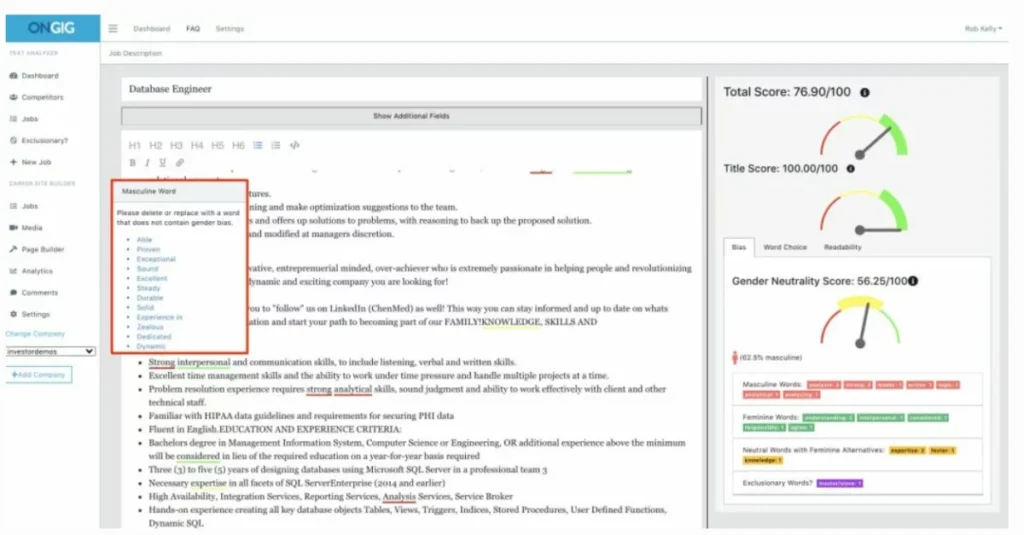
The existence of multiple, conflicting versions of the same job description is a pervasive problem. A centralized job description library, managed by HR, is indispensable. This library should store the single, approved version for each role, meticulously recording its department, reporting structure, revision date, and a complete approval history. This robust version control is vital for resolving disputes and ensuring historical accountability. For instance, a company with business analysts across finance, operations, and product might share core analytical skills, but their specific responsibilities are distinct. The centralized system must preserve these nuances while ensuring consistent writing standards. Platforms like Ongig, with their job description software and Text Analyzer, offer solutions to manage these complexities, checking content for clarity, consistency, and inclusive language.
Leveraging Innovation: Technology in JD Management
The scale and frequency of organizational changes make manual job description management increasingly untenable. Automation and integrated technologies are becoming essential tools for HR teams.
- Automated Review Tools: These tools can significantly streamline the process by automatically flagging discrepancies or outdated information. For example, if a finance department replaces its reporting platform, automated checks can instantly identify all job descriptions that still list proficiency in the previous, obsolete software.
- AI and Machine Learning: Advanced AI can analyze current JDs against internal performance data, market benchmarks, and even communication patterns to suggest potential areas for revision, highlight skill gaps, or identify redundancies across roles.
- Integration with Core HR Systems: Seamless integration with Applicant Tracking Systems (ATS) and Human Resource Information Systems (HRIS) ensures that the approved job descriptions are consistently applied across recruitment, onboarding, performance management, and payroll workflows. This eliminates manual data entry and reduces the risk of discrepancies. Automated systems can alert HR to potential inconsistencies, such as a recruiter posting an outdated JD or a manager initiating a performance review based on an old role definition. While automation can flag issues, the critical decisions about ownership and scope still require human input and departmental collaboration.
Beyond the Annual Cycle: A Continuous Update Model
The traditional annual review cycle is fundamentally inadequate for keeping pace with the velocity of modern organizational change. Waiting for a scheduled review means JDs can remain outdated for months, or even a full year, creating prolonged periods of ambiguity.
Jeffrey Zhou, CEO and Founder of Fig Loans, a fintech lender, emphasizes the necessity of an event-driven approach: “A role can change the same quarter a new regulation lands, and the description still lists work from a year ago. We attach the review to the event that forced the change rather than the annual cycle. That way, the person is measured against what the job became rather than what it used to be.”
Certain organizational events should immediately trigger a job description review:
- Organizational Restructuring: Any significant re-drawing of the organizational chart.
- Technology Implementation: Adoption of new core software or platforms that alter workflows.
- New Regulatory Requirements: Changes in legal or compliance mandates affecting specific roles.
- Introduction of New Products or Services: This can create entirely new responsibilities or shift existing ones.
- Changes in Reporting Structures: Alterations to who reports to whom.
- Significant Shifts in Business Strategy: A pivot in strategic direction can redefine roles.
- Substantial Changes to Role Scope: Additions or deletions of major responsibilities, budget ownership, or supervisory duties.
- Creation of New Roles: Requires defining new responsibilities and ensuring no overlap with existing roles.
Beyond these immediate triggers, implementing quarterly "health checks" can help catch smaller, unreported shifts in responsibilities. More importantly, HR must proactively require department heads to report any organizational changes that impact existing roles, fostering a culture of continuous communication rather than relying on reactive discovery.
The Human Touch: Communicating Organizational Evolution
Even the most perfectly crafted and updated job description is ineffective if employees are unaware of the changes or do not understand their implications. An updated JD should ideally formalize a conversation that has already taken place, not introduce new expectations out of the blue.
Managers play a pivotal role in this communication. They must clearly explain:
- What specific responsibilities have changed.
- Which new duties employees are now expected to own.
- Whether their reporting lines or decision-making authority have shifted.
Nick Wiese, Regional Vice President at Balance Point Heating, Cooling & Plumbing, highlights this crucial human element: “Our field teams don’t read memos. When a lead tech picks up scheduling duties, that has to be a conversation on site, and the written description just confirms what we already agreed. If the paperwork is the first time someone hears about a change, it’s already gone wrong.”
When a role takes on substantially more responsibility, it is imperative to review performance expectations and, critically, compensation alongside the revised description. This ensures fairness and acknowledges the increased value and complexity of the role. Providing employees and managers with easy, consistent access to the same approved version of their job descriptions reinforces clarity and mutual understanding. Recruiters must also be mandated to use these current versions for all hiring activities.
Strategic Imperative: Driving Agility and Talent Advantage
Ultimately, maintaining accurate and dynamic job descriptions is not merely an administrative task; it is a strategic imperative. In an era where organizational agility is paramount, clear role definitions enable faster adaptation, better resource allocation, and more effective talent development. By eliminating ambiguity, organizations foster an environment of accountability, improve employee engagement, and build a stronger foundation for sustained growth and innovation. The ability to quickly and accurately reflect organizational reality in job descriptions becomes a competitive advantage, allowing companies to attract the right talent, optimize performance, and navigate change with confidence.
Implementing a Robust JD Strategy: Practical Steps
For organizations looking to embark on this journey, a phased approach can be effective. Start by identifying departments where responsibility shifts are most frequent or where role ambiguity is highest. Conduct a thorough audit, comparing existing job descriptions with the actual work being performed by employees. Identify overlapping responsibilities, gaps, and discrepancies. Crucially, establish the initial processes for who approves revisions within these pilot departments. Once these processes are refined and demonstrate success, gradually extend them across the entire organization, leveraging the lessons learned and building internal champions for change.
Ongig’s job description software supports centralized description management, while its Text Analyzer helps HR teams review content for clarity, inclusion, and consistency, providing valuable tools for organizations committed to mastering this critical aspect of modern HR.