The seemingly robust HR tech stack, complete with engagement surveys, performance reviews, recognition platforms, and development plans all managed by an HRIS, often gives a false sense of security. While each component may function adequately in isolation, the true challenge emerges in the gaps between them. Crucial insights, such as a subtle dip in employee engagement that never reaches a manager for a one-on-one conversation, or the fading recognition of a high performer that signals an impending retention risk, are lost in the silos. These signals, vital for proactive human capital management, are present but never converge, creating a blind spot that can have significant financial and operational consequences. This pervasive issue, termed the "disconnected data problem," is not merely an IT concern; it directly impacts an HR leader’s ability to provide strategic answers to executive inquiries, proactively identify flight risks, and dedicate valuable time to actionable strategies rather than manual data compilation. The good news, however, is that the solution lies not in acquiring more data, but in enabling existing systems to communicate effectively. Understanding the true cost of this fragmentation and the transformative power of connected data is paramount for modern organizations.
Understanding the Disconnect: Fragmented People Data Defined
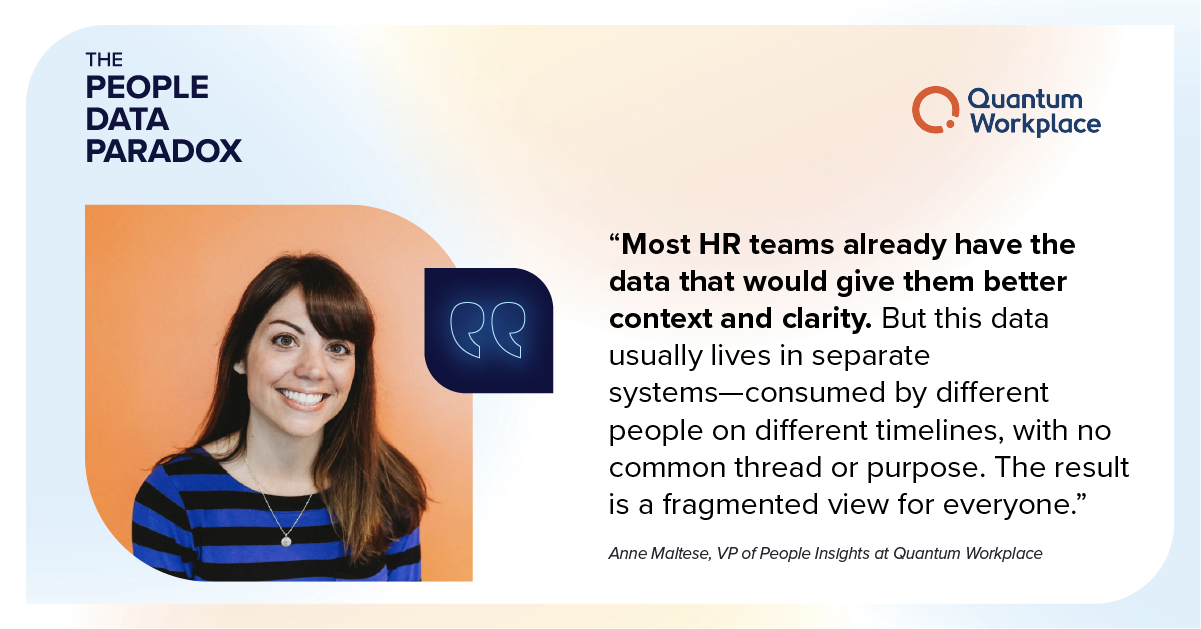
Disconnected people data refers to the scenario where critical HR functions, such as engagement surveys, performance evaluations, employee recognition programs, individual development plans, and core HRIS records, reside in disparate systems. These systems were typically designed and implemented independently, lacking native interoperability. Consequently, each system captures a vital piece of the employee experience puzzle, but no single platform offers a holistic view of an organization’s workforce dynamics. Instead of a clear, unified perspective on team performance and well-being, HR professionals are left with a collection of isolated snapshots that require laborious manual stitching to derive actionable intelligence. This fragmentation creates a significant bottleneck in translating raw data into strategic HR initiatives.
The impact of this disconnect is not theoretical. Research consistently highlights the financial burden. For instance, a mid-sized company with 2,500 employees can incur nearly $4 million in annual losses due to under-equipped managers and the attrition of top talent, according to an analysis by Forbes. This staggering figure underscores the tangible economic consequences of failing to leverage people data cohesively. The frustration of manually compiling reports from multiple, siloed systems to answer a single executive question is a common experience for HR professionals. While the necessary data often exists within the organization, accessing it efficiently and with the confidence required for decisive action remains a significant hurdle. This challenge is not attributable to individual shortcomings or technological failures but rather to the inherent limitations of a fragmented HR technology ecosystem. Data from Quantum Workplace indicates that HR leaders typically utilize between two and four HR solutions from different vendors, yet a mere 39% report that these systems are meaningfully integrated. This disparity leads to an accumulation of data without a corresponding increase in actionable clarity.
The detrimental effects of fragmented data manifest in several critical areas:
The Cost of Underequipped Managers
Managers serve as the primary conduit for employee engagement and performance. When managers are empowered and effective, their teams tend to mirror their success. Conversely, when managers struggle, this difficulty cascades throughout their reporting structures. The root cause of managerial struggle often lies not in a lack of inherent talent but in the absence of adequate support and resources. On average, managers are burdened with approximately 51% more responsibilities than they can realistically manage, and a significant portion, 39%, have never received formal leadership training.

This managerial deficit carries substantial business implications. Studies from Zenger Folkman reveal that managers operating within the top decile of leadership effectiveness generate twice the net revenue compared to their counterparts. This considerable disparity between the highest and lowest performing managers represents more than a mere development gap; it is a critical performance issue that silently impacts organizational output. The lack of integrated data means that feedback from engagement surveys, performance reviews, or even informal observations may not effectively inform a manager’s development needs or highlight their potential struggles to HR, preventing timely intervention and support.
The Cost of Overlooking High-Potential Talent
High-performing employees are not simply valuable; they are disproportionately so, contributing an estimated 400% to 800% more than the average employee, as indicated by McKinsey. Despite this amplified impact, a surprising 57% of organizations lack a formal, robust process for identifying these key individuals, according to Talent Strategy Group. In the absence of connected data, the identification of high performers often relies on subjective factors such as visibility and internal advocacy, meaning that those who contribute the most may not always be recognized or nominated. This oversight means that an organization may fail to fully leverage the exceptional contributions of its most impactful employees each quarter. Without a unified view that correlates performance metrics with engagement scores, development aspirations, and recognition history, identifying true high-potentials becomes an exercise in educated guesswork rather than data-driven strategy.
The Cost of Missing Retention Risk
By the time a high-performing employee decides to resign, the decision is often months in the making. The subtle warning signs—a decline in survey sentiment, a cessation of development conversations, or a reduction in recognition—are frequently present but remain isolated. Individually, these signals may not trigger alarm bells. However, when viewed in aggregate and connected across different systems, they can paint a clear picture of impending attrition. Replacing an employee can cost anywhere from 50% to 200% of their annual salary, as reported by SHRM. Furthermore, research suggests that one in three departing employees believe their exit could have been prevented. The critical data points that could have signaled this risk are often scattered across disparate HR systems, rendering them invisible and rendering proactive intervention impossible.
The Cumulative Impact of Fragmented Data
The financial implications of these disconnected data points are substantial. Consider an organization with 2,500 employees and 250 managers. If 50 of these managers are inadequately supported and, as a result, 10% of their direct reports experience disengagement, the annual cost in lost productivity could approach $1.7 million. This figure does not even account for the ripple effect of such disengagement on overall team morale and output.
When the cost of potential retention issues is factored in, the financial drain intensifies. If 10 high performers depart due to a lack of recognition or development, and their replacement costs are twice their salary, this adds another $2 million to the organizational deficit. This cumulative loss, totaling nearly $4 million annually, is directly attributable to the inability to connect and interpret fragmented people data. This calculation, as highlighted by Forbes, does not encompass the broader inefficiencies that arise when teams lack the optimal conditions to thrive, such as misdirected effort, slow skill development, and unrealized potential. The silent drain of disconnected data impacts not just immediate financial metrics but the long-term strategic growth and competitive advantage of an organization.
The Transformative Power of Connected Data
For years, the endeavor of connecting disparate HR data streams was a resource-intensive and time-consuming undertaking, often beyond the practical capacity of many HR departments. However, advancements in technology, particularly artificial intelligence, are now enabling continuous analysis across engagement, performance, development, and recognition data. This integration allows for the identification of patterns that were previously obscured by system silos. The fundamental shift is not in the volume of data collected but in the ability to finally derive meaningful insights from existing information.
When these critical signals are interconnected, organizations can begin to address the most pressing questions that preoccupy HR and executive leadership:
- Identifying Flight Risks Proactively: By correlating declining engagement scores with a reduction in recognition or stalled development plans, HR can pinpoint employees who are silently disengaging and at risk of leaving, enabling timely intervention.
- Understanding the Drivers of Performance: Analyzing the relationship between specific development initiatives, manager effectiveness, and team performance metrics can reveal which interventions are most impactful, allowing for the optimization of talent development strategies.
- Uncovering Hidden High-Potentials: By examining consistent high performance, positive engagement, and proactive development activities, organizations can identify emerging leaders who may not be the most visible but possess the critical attributes for future success.
- Assessing Managerial Effectiveness: Correlating manager feedback from various sources (performance reviews, engagement surveys, 360-degree feedback) with team outcomes can provide a comprehensive understanding of leadership strengths and areas for development.
- Optimizing Employee Experience: By understanding how different aspects of the employee journey (recognition, development, engagement) interact, organizations can design more effective strategies to foster a positive and productive work environment.
Bridging the Gap: From Fragmented Data to Connected Talent Insights
The true value of understanding the full picture lies in its ability to inform and shape subsequent actions. This is where integrated HR technology platforms, such as Quantum Workplace, play a crucial role. These platforms are designed to unify engagement, performance, development, and recognition data into a single, coherent view. This integration empowers leaders to move beyond piecing together fragmented information and instead gain a clear, real-time understanding of their teams’ dynamics. AI-powered insights illuminate the patterns hidden within and between existing systems, providing clear, prioritized next steps. These recommendations are contextualized by the organization’s specific priorities and benchmarks, and delivered directly to leaders within their natural workflow.
By connecting these vital data streams, HR teams can achieve several critical objectives:
- Elevate Manager Effectiveness: Equip managers with actionable insights into their team’s engagement, performance trends, and development needs, enabling them to provide more targeted support and coaching.
- Enhance Employee Engagement and Retention: Identify engagement drivers and potential attrition risks early, allowing for proactive strategies to improve the employee experience and reduce costly turnover.
- Accelerate Talent Development: Recognize high-potential employees and tailor development plans based on a comprehensive understanding of their skills, aspirations, and performance, fostering a culture of growth.
- Improve Performance Management: Create a more holistic and continuous performance management process by integrating feedback from various sources, leading to more accurate assessments and targeted development.
- Drive Strategic Workforce Planning: Gain a deeper understanding of workforce dynamics, enabling more informed decisions regarding talent acquisition, development, and succession planning.
The transition from a fragmented data landscape to a connected talent insights ecosystem represents a fundamental evolution in how organizations manage their most valuable asset: their people. By breaking down data silos and fostering interoperability, businesses can unlock a wealth of actionable intelligence, driving improved performance, enhanced engagement, and ultimately, sustainable organizational success.