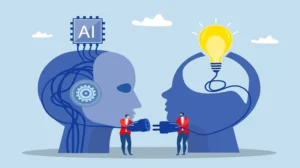
Modern organizations are currently grappling with an unprecedented challenge in workforce development, characterized by a widening chasm between the emergence of new technical requirements and the ability of employees to master them. This phenomenon, increasingly referred to as "speed-to-skill," has become a primary focus for executive leadership and human resources departments worldwide. According to the latest "Speed-to-Skill" report released by TalentLMS, an industry-leading employee training platform, the pace of work is now outstripping the traditional cycles of professional development, leaving both management and staff in a state of perpetual catch-up.
The comprehensive study, which surveyed 1,500 respondents across the United States—comprising 964 managers and 536 employees—highlights a systemic failure in current corporate learning structures. The data suggests that the traditional model of periodic training is no longer sufficient in an era defined by rapid technological disruption. This research contributes to a growing body of evidence from across the professional landscape, including major reports from LinkedIn and the Josh Bersin Company, all of which point to a singular conclusion: the velocity of change in the modern workplace has reached a critical threshold that demands a fundamental reimagining of how skills are acquired and applied.
The Convergence of Crisis and Opportunity in Professional Development
The TalentLMS findings arrive at a time when the global workforce is already under significant pressure. LinkedIn’s annual Workplace Learning Report recently revealed that nearly half of its respondents view the ongoing skills gap not merely as a corporate hurdle, but as a full-scale crisis. This sentiment is echoed by the Josh Bersin Company’s 2025 report, "Dynamic Skilling, Anticipating and Mitigating Current and Future Skills Gaps," which argues for a radical departure from static training programs. The Bersin report advocates for "dynamic skilling," a strategy where workforce development is treated as a fluid, continuous process that realigns in real-time with evolving business objectives.
The urgency of this shift is underscored by the sentiment of the employees themselves. Seven in 10 workers surveyed by TalentLMS indicated that they require faster, more efficient ways to practice and implement new skills to remain relevant in their roles. However, a significant obstacle remains: 44 percent of respondents reported that the daily demands of their jobs frequently interfere with the time allocated for learning. This creates a "productivity paradox" where employees are too busy performing outdated tasks to learn the methods that would make them more efficient.
A Chronology of the Skills Transformation
To understand the current "speed-to-skill" crisis, it is necessary to look at the timeline of workplace evolution over the last decade. The shift has occurred in three distinct phases:
- The Digital Integration Era (2014–2019): During this period, digital transformation was viewed as a long-term goal. Skills had a perceived "half-life" of approximately five to seven years. Learning was largely event-based, involving annual seminars or quarterly workshops.
- The Pandemic Acceleration (2020–2022): The COVID-19 pandemic forced a decade’s worth of digital adoption into a two-year window. Remote work and virtual collaboration became the norm, necessitating an immediate surge in digital literacy. This period proved that rapid upskilling was possible under pressure but also led to widespread burnout.
- The Generative AI Explosion (2023–Present): The public release and corporate integration of advanced artificial intelligence have fundamentally altered the timeline of skill relevancy. Skills that were considered cutting-edge in 2022 are, in many cases, already becoming obsolete. Managers now report that job skills are becoming outdated within just three to five years, requiring a constant cycle of "reskilling."
Deep Dive into the TalentLMS Data: The Managerial Perspective
The burden of this rapid evolution is felt acutely at the management level. According to the TalentLMS report, three out of four managers expressed a desire for their teams to have the ability to practice and master new skills at a much higher velocity. However, these same leaders are operating in a fog of uncertainty. The data reveals that many managers are unsure of which specific competencies their teams will even require 12 months from now.
This uncertainty is largely driven by the integration of artificial intelligence into core business functions. AI is not just another tool; it is a fundamental shift in how work is structured. As automated systems take over routine tasks, the "human" skills required—such as critical thinking, prompt engineering, and complex problem-solving—are becoming the new gold standard. Yet, because these technologies are evolving month-to-month, creating a stable curriculum for training has become nearly impossible for many organizations.
The Shift Toward Self-Directed and Experiential Learning
Perhaps the most telling statistic from the TalentLMS research is that 53 percent of employees are now taking skills development into their own hands. This "shadow learning" occurs outside of official corporate channels, as workers turn to YouTube, specialized forums, and peer-to-peer networks to find the answers they need to perform their daily duties.
While formal learning platforms still hold value—33 percent of respondents continue to utilize their company’s internal Learning Management Systems (LMS)—the trend is clearly moving toward "learning by doing." Employees are increasingly favoring experiential learning, where they acquire knowledge in the flow of work rather than in a classroom setting. This shift suggests that the traditional "top-down" approach to corporate training is losing its efficacy. If an organization cannot provide the tools for rapid skill acquisition, employees will seek them elsewhere, often leading to a fragmented knowledge base within the company.
Official Responses and Inferred Industry Reactions
While few major corporations have issued public statements specifically regarding the TalentLMS report, the broader industry reaction can be inferred from the shift in L&D (Learning and Development) budgets and strategies. Tech giants like Google and Amazon have already begun pivoting toward "micro-credentialing" and internal boot camps that focus on immediate application rather than theoretical knowledge.
Industry analysts suggest that the reaction from senior leadership must involve a shift from "training as an event" to "learning as an infrastructure." This involves several key strategic changes:
- Decentralizing Knowledge: Moving away from a centralized L&D department that dictates all training, and instead empowering department heads to identify and fill skill gaps in real-time.
- Allocating "Learning Time": To combat the 44 percent of workers who say work interferes with learning, forward-thinking companies are beginning to formalize "protected learning hours" where employees are encouraged to experiment with new tools without the pressure of immediate deliverables.
- Investing in Simulation Technology: To satisfy the 70 percent of employees who want faster ways to practice, organizations are looking toward AI-driven simulations and "sandbox" environments where workers can fail and learn in a safe, low-stakes setting.
Broader Impact and Economic Implications
The implications of the speed-to-skill gap extend far beyond individual career trajectories; they pose a significant risk to organizational competitiveness and national economic productivity. In a global economy where innovation is the primary currency, the ability to rapidly redeploy human capital is a major strategic advantage. Organizations that fail to close the speed-to-skill gap risk high turnover rates, as top talent will naturally migrate toward employers that offer better growth and development opportunities.
Furthermore, there is a socio-economic dimension to this trend. As skills become outdated more quickly, there is a risk of creating a "permanent underclass" of workers whose competencies have been rendered obsolete by AI and who lack the resources to self-fund their own reskilling. This places a social responsibility on corporations to ensure that their "speed-to-skill" initiatives are inclusive and accessible to all levels of the workforce.
Analysis of Future Trends: Treating Learning as an Operation
The TalentLMS report concludes with a stark warning: the gap is unlikely to close on its own. As the workplace shows no signs of slowing down, the only viable path forward is to treat learning as an ongoing operational function rather than a secondary HR benefit. This means integrating learning metrics into performance reviews and making "skill agility" a key KPI for both managers and individual contributors.
The transition to a "dynamic skilling" model will require a cultural shift. It necessitates a move away from the "expert" mindset—where a degree or a decade of experience is seen as a permanent qualification—toward a "learner" mindset, where the ability to unlearn and relearn is the most valuable asset a worker can possess.
In summary, the "Speed-to-Skill" report serves as a definitive call to action. The data from TalentLMS, LinkedIn, and the Josh Bersin Company collectively illustrates a world where the traditional boundaries between "working" and "learning" have dissolved. For organizations to survive and thrive in the coming decade, they must not only keep pace with the technological curve but also empower their workforce to master that curve with unprecedented speed and efficiency. The marathon of the modern workplace is accelerating, and the winners will be those who can learn while they run.