Employee disengagement represents a profound and escalating business risk, precisely where well-structured incentive programs can profoundly reshape organizational dynamics. When exceptional effort remains unrecognized, the workforce invariably disconnects, leading to precipitous declines in productivity and alarming surges in employee turnover. Recent data from the Achievers Workforce Institute paints a stark picture, revealing that a mere 26% of employees report feeling engaged, and only 25% genuinely believe their contributions are appreciated at work. These figures serve as a critical warning sign for any enterprise striving to retain its top talent in an increasingly competitive landscape. Indeed, the financial repercussions of an unmotivated workforce are staggering, with unhappy employees costing the U.S. economy an estimated $1.9 trillion annually in lost productivity alone – a figure emphasized with a capital ‘T’.
The good news, however, lies in the transformative potential of thoughtfully designed employee incentive programs. When implemented effectively, these initiatives act as catalysts, igniting motivation, systematically reinforcing desired behaviors, and cultivating a workplace culture where individuals feel genuinely seen, heard, and valued. Conversely, poorly conceived or executed programs often languish, collecting dust alongside stagnant or declining engagement scores, failing to deliver any meaningful impact. This article delves into the critical elements that render employee incentive programs effective, explores the psychological underpinnings of their success, and outlines a comprehensive array of 25 actionable incentive ideas that organizations can confidently deploy.
Defining Employee Incentive Programs in the Modern Enterprise
At their core, employee incentive programs are formalized frameworks designed by organizations to motivate and acknowledge employees for their meaningful contributions. These structured initiatives leverage a diverse array of rewards – including recognition, monetary bonuses, points-based systems, professional development opportunities, and even flexible time off – to reinforce behaviors that directly contribute to organizational objectives and drive tangible results. When meticulously crafted, these programs foster an environment where employees feel valued and appreciated, leading to a virtuous cycle of higher engagement, enhanced performance, and superior talent retention over time. They serve as potent, consistent signals to employees, communicating unequivocally: "We acknowledge your efforts, and your contributions are indispensable." By strategically aligning rewards with desired outcomes, these programs effectively encourage critical behaviors such as collaboration, innovation, and sustained high-quality work.
The Mounting Urgency: Why Incentive Programs are More Critical Than Ever

Employee incentive programs are not merely a ‘nice-to-have’ perk but a strategic imperative because they provide a structured, consistent mechanism to reward exemplary work. This reward can manifest in myriad forms: financial bonuses, redeemable points, public recognition, bespoke development opportunities, comprehensive wellness perks, and flexible lifestyle benefits. The most impactful programs transcend simple reward distribution; they actively shape and reinforce positive behaviors, subtly guiding employees toward peak performance and alignment with company values.
The chasm between effective and ineffective programs often lies in their approach to appreciation. According to the Achievers Workforce Institute’s 2026 Engagement and Retention Report, employees who consistently feel appreciated exhibit markedly superior outcomes. While specific statistical breakdowns were not provided in the original text, industry research consistently shows that appreciated employees are significantly more productive, more loyal, and more likely to advocate for their organization. This underscores the profound human need for acknowledgment and validation in the workplace.
The inherent power of incentive programs stems from their ability to tap into fundamental human psychology. The "magic" of these programs often resides in the frequency and meaningfulness of rewards, establishing a clear and direct link between task completion, goal attainment, and tangible positive reinforcement. Companies that strategically embed incentive programs into their operational fabric consistently report higher success rates in achieving their strategic objectives, leveraging the inherent human desire for recognition and reward.
Furthermore, a significant paradigm shift is occurring, moving beyond traditional, often infrequent, gestures like annual "years of service" awards. Integrating continuous, dynamic incentives into the daily cultural fabric of an organization can profoundly transform performance. When employees feel consistently recognized, their performance metrics improve, and their propensity to remain with the company increases dramatically. Businesses that strategically implement tangible sales incentives, for instance, frequently report impressive revenue growth, directly correlating effort with financial reward. Moreover, professionals who express satisfaction with their overall benefits package are statistically more likely to report higher job satisfaction, creating a holistic win-win scenario for both employer and employee.
The Comprehensive Benefits of Strategic Employee Rewards Programs
Modern employee rewards programs serve as powerful instruments for organizations to reinforce desired behaviors, thereby enhancing overall performance while simultaneously strengthening employee engagement and fostering deeper connections across the entire workforce. The key benefits are multi-faceted and far-reaching:
- Boosted Employee Morale and Job Satisfaction: Consistent recognition and rewards create a positive work environment, making employees feel valued and happy, which directly translates into higher morale.
- Enhanced Productivity and Performance: When employees know their efforts will be acknowledged and rewarded, they are naturally more motivated to perform at their highest level, leading to measurable improvements in productivity.
- Improved Employee Retention and Reduced Turnover: A culture of appreciation and recognition significantly reduces the likelihood of employees seeking opportunities elsewhere. Investing in incentives is often far more cost-effective than the continuous cycle of recruitment and training for new hires.
- Stronger Organizational Culture and Values Alignment: Incentive programs can be designed to reward behaviors that align with the company’s core values, effectively embedding these values into daily operations and strengthening the overall culture.
- Increased Innovation and Creativity: By recognizing and rewarding new ideas and creative problem-solving, organizations can foster an environment where employees feel empowered to experiment and innovate.
- Better Talent Attraction: A company known for its robust recognition and rewards programs becomes a more attractive employer, helping to draw in top-tier talent in a competitive market.
- Enhanced Team Cohesion and Collaboration: Programs that encourage peer-to-peer recognition can build stronger bonds between colleagues and foster a more collaborative work environment.
When strategically integrated with frequent, social recognition practices, reward programs evolve into an exceptionally potent tool for shaping organizational culture and driving measurable, positive impact across every department and level.
Improving Employee Engagement Through Thoughtful Rewards
Employee engagement flourishes when recognition is genuine and meaningful, but its impact scales exponentially when consistently supported by tangible rewards. Rewards amplify the effect of recognition by transforming appreciation from an abstract sentiment into a concrete, memorable experience. They clearly signal that individual contributions are not merely acknowledged in the moment but are deeply valued by the organization as a whole. However, mirroring the principles of effective recognition, rewards only meaningfully drive engagement when applied consistently and directly linked to behaviors that align with strategic objectives.
The empirical evidence is unequivocal: a strong correlation exists between feeling appreciated and high engagement. The Achievers Workforce Institute (AWI) 2026 Engagement and Retention Report highlights that employees who feel appreciated are an astonishing 12 times more likely to perceive their work as meaningful and 17 times more likely to envision a long-term career path within their current company. Rewards serve to reinforce this profound sense of appreciation, transforming a simple verbal acknowledgment into a powerful experience that employees are motivated to remember and replicate.
Crucially, consistency is the differentiating factor. AWI’s 2026 State of Recognition Report research demonstrates that employees who receive frequent, meaningful recognition are 2.6 times more likely to be productive and 6 times more likely to remain with their company for the long term. When recognition is systematically paired with rewards, organizations find it significantly easier to maintain this desired frequency, thereby embedding a pervasive habit of appreciation across all teams and departments.
Executed with precision, rewards transcend mere motivational tools; they become powerful behavioral guides. They illuminate what success truly entails, reinforce core company values, and consistently encourage employees to contribute at an elevated level. Over time, this iterative process cultivates a robust culture where employees feel genuinely seen, actively supported, and profoundly inspired to consistently deliver their best work. The overarching takeaway is clear: rewards are not a mere optional add-on to recognition; they are an indispensable, powerful mechanism for embedding appreciation into the very fabric of the daily employee experience.
A Spectrum of Solutions: 25 Proven Employee Incentive Programs to Boost Engagement
For organizations seeking to invigorate their workforce and cultivate a vibrant culture of recognition, the following 25 proven employee incentive programs offer diverse and effective starting points:
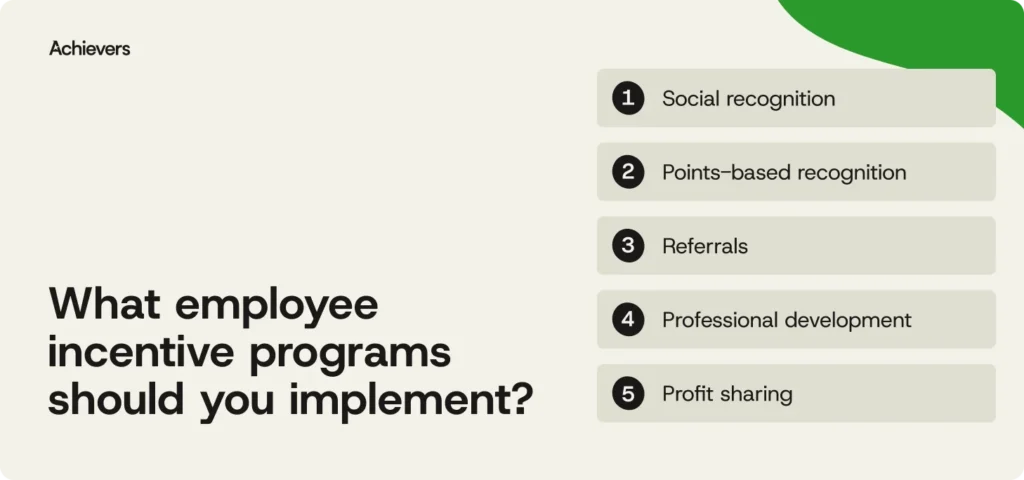
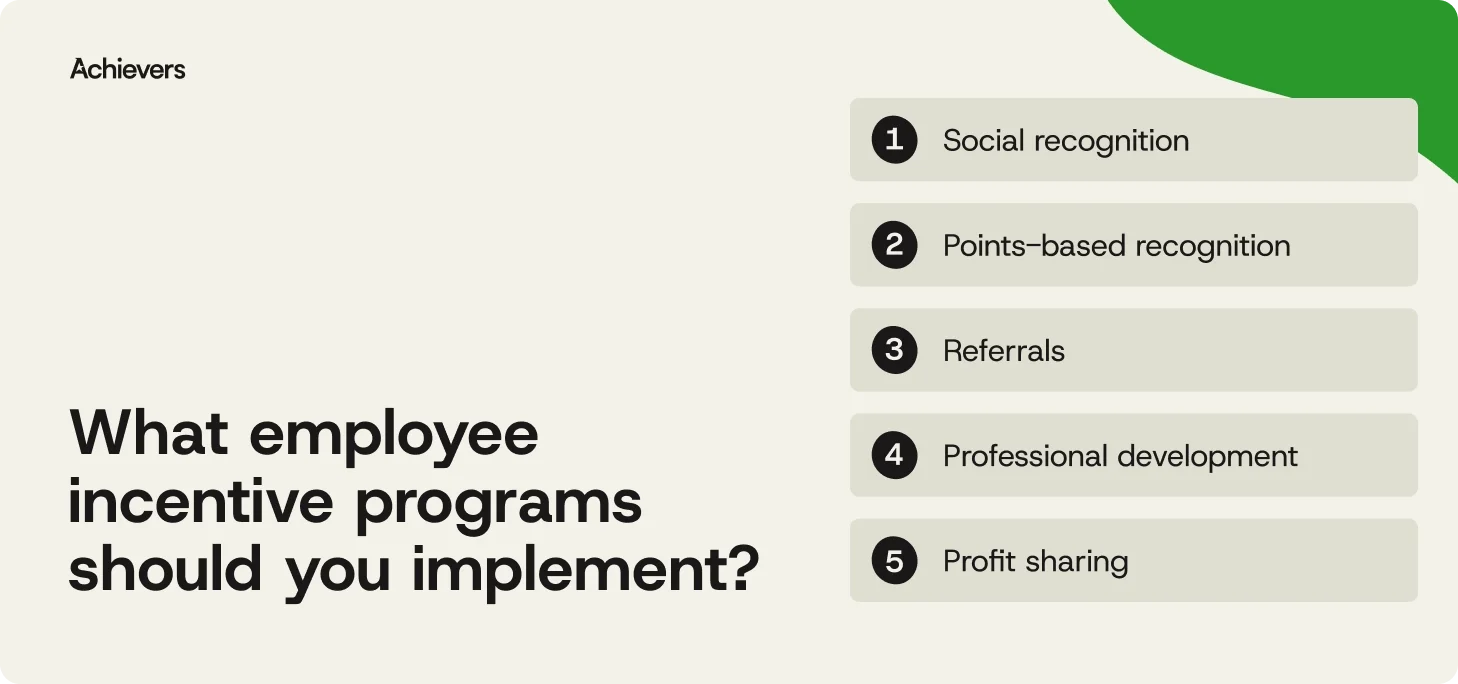
- Social Recognition Programs: These platforms enable peer-to-peer and manager-to-employee recognition, making everyday achievements visible. Such visibility fosters connection; appreciated employees are 41% more likely to feel connected to their managers and 47% more likely to feel supported in their well-being, leading to a 55% reduction in turnover risk.
- Points-Based Recognition Programs: Employees earn redeemable points for performance or contributions, which can be spent in a curated reward marketplace. This offers choice and meaning, with AWI data showing 85% of employees are likely to repeat actions for which they are recognized.
- Referral Programs: Leveraging existing employees as recruiters taps into the power of connection. Employees with strong peer connections are 3 times more likely to envision a long career at their company. Tiered rewards can attract top talent and maintain team enthusiasm.
- Professional Development Programs: Investing in employee growth through training and skill enhancement yields significant returns. Companies offering training to engaged employees see 17% higher productivity and 21% more profitability. Only 22% of employees report access to such opportunities, yet those who do exhibit higher loyalty and satisfaction.
- Profit-Sharing Programs: Directly linking employee compensation to company financial success fosters a sense of ownership and shared destiny, boosting engagement and loyalty. 401(k) matches serve a similar purpose, ensuring employees feel invested in the company’s future.
- Health and Wellness Programs: Beyond basic offerings, comprehensive wellness programs proactively prevent burnout and support overall employee well-being. Employees feeling supported in their well-being are 47% more likely to feel appreciated and significantly less likely to seek new employment.
- Tuition Reimbursement Programs: Financial support for education not only boosts retention but also enhances employee capabilities. 84% of employees report feeling more prepared for their roles after receiving educational assistance.
- Bonuses and Raises: Direct financial incentives remain a powerful motivator. 52% of workers report feeling more valued when receiving an annual bonus. Clear, attainable goals ensure these incentives drive excellence, not rivalry.
- Fun Gifts: Thoughtful, often personalized, gifts (or gift cards offering choice) demonstrate appreciation beyond monetary compensation, making a significant impact on morale.
- Additional Time Off: Extra paid vacation time is a highly valued reward, boosting satisfaction, combating burnout, and offering employees crucial time to recharge.
- Choice of Projects: Empowering employees to select projects aligned with their passions or strengths fosters motivation, engagement, and enables them to leverage their unique talents effectively.
- Comprehensive Employee Benefits Programs: A robust benefits package, extending beyond salary to include health insurance, paid time off, and other perks, signals organizational care for employee health and happiness, enhancing security, engagement, loyalty, and talent attraction.
- Human Resources Development: Focus on long-term skill enhancement and career progression dramatically increases engagement and satisfaction, signaling a commitment to employee growth.
- Performance Management Programs (Reimagined): Moving beyond annual reviews, these programs should offer continuous feedback, coaching, and recognition. Only 22% of employees feel they have the necessary tools and growth opportunities, underscoring the need for a continuous, recognition-led approach to growth.
- Travel Incentives: Fully paid trips for achieving targets turn success into adventure. Platforms like Achievers’ Travel Store (powered by Switchfly) offer vast global options. 53% of senior leaders consider travel a "must-have" incentive, and 48% see it as a strategic differentiator for morale and loyalty.
- Commission Programs: Directly linking effort to financial reward, particularly effective for sales teams, aligning individual success with company growth. Over $200 billion is spent annually on sales compensation in the U.S.
- Flextime Programs: Offering flexible work hours is a powerful retention tool, with 80% of employees stating they would stay longer with flexible options. It builds trust and supports work-life balance.
- Employee Resource Groups (ERGs): ERGs foster belonging and connection, critical predictors of retention. AWI’s 2026 report states employees with a strong sense of belonging are 2.2 times more likely to see a long-term career and 2 times less likely to job hunt.
- Customized Learning Stipends: Providing funds for individual courses or conferences empowers employees to invest in their unique professional development, fostering continuous learning and motivation.
- Sabbatical Leave Rewards: Extended paid leave allows employees to deeply recharge, preventing burnout, rewarding loyalty, and ensuring they return refreshed and re-energized.
- Green Commuting Incentives: Encouraging eco-friendly commuting options (e.g., public transit subsidies, bike-to-work programs) supports sustainability, reduces costs, improves health, and aligns with corporate values.
- Wellness Challenges with Rewards: Group or individual challenges (e.g., step counts, fitness goals) make healthy habits engaging and competitive, fostering team spirit and well-being.
- Family-Oriented Perks: Benefits such as childcare support, family outing allowances, or educational scholarships demonstrate care for employees’ personal lives, enhancing work satisfaction and loyalty.
- Recognition Through Peer Awards: Empowering employees to recognize each other’s contributions fosters a positive, inclusive, and collaborative environment, boosting morale across all levels.
- Innovation Incentives: Rewarding novel ideas that lead to improved business outcomes (e.g., bonuses, leadership opportunities) cultivates a culture of creativity and continuous improvement.
Best Practices for Implementing Impactful Employee Incentive Programs
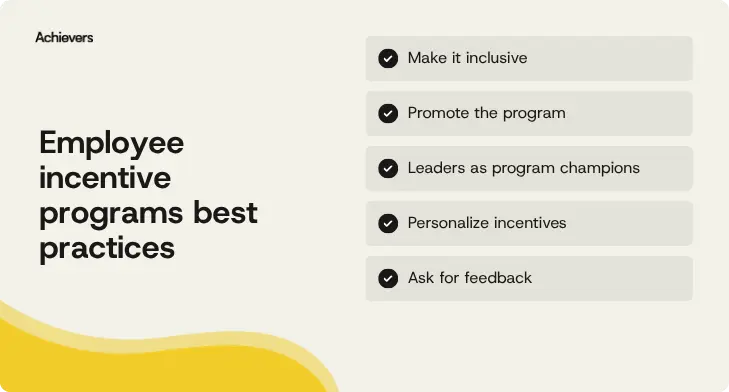
Selecting the right incentive programs is merely the first step; successful implementation requires adherence to strategic best practices:
- Ensure Inclusivity and Accessibility: Programs must cater to diverse employee needs and preferences. Offer a variety of incentives, ensure the platform is user-friendly, and actively recognize both program leaders and participants to foster widespread involvement.
- Strategic Promotion and Communication: Develop a robust communication plan to raise awareness and sustain engagement. Utilize multiple channels – from internal newsletters and digital signage to onboarding sessions – to ensure all employees, especially new hires, are fully informed about the program’s benefits and how to participate.
- Leadership Buy-in and Modeling: Leaders must actively champion and participate in incentive programs. When managers lead by example, recognizing their teams and utilizing the program themselves, it creates a powerful ripple effect, legitimizing the program and encouraging broad adoption.
- Personalize Incentives for Maximum Impact: A "one-size-fits-all" approach rarely succeeds. Leverage data, AI tools, and direct feedback to tailor rewards to individual preferences and motivational triggers. This personalization ensures employees feel truly seen and appreciated, enhancing the perceived value of the incentives.
- Solicit Continuous Feedback: Never assume what employees want. Implement pulse surveys, feedback platforms, and regular conversations to gather insights on program effectiveness and desired improvements. This iterative feedback loop ensures programs remain relevant, valued, and genuinely impactful.
Key Performance Indicators (KPIs) to Measure Program Success
To ascertain whether an employee incentive program is delivering tangible results, organizations must establish clear KPIs that connect recognition directly to engagement, retention, and performance. The right metrics provide more than just activity data; they reveal what is working, pinpoint areas for refinement, and demonstrate how recognition contributes to overarching business objectives.
- Participation Rates: This metric indicates the program’s reach and inclusivity. High participation suggests the program is accessible and embedded across the organization, rather than confined to a select few.
- Recognition Frequency: How often recognition events occur is crucial. Frequent, timely recognition signals a healthy, vibrant recognition culture, moving beyond occasional gestures to consistent appreciation.
- Employee Engagement Scores: Regular surveys tracking morale, motivation, and connection over time are vital. Effective incentive programs should correlate with sustained improvements in these scores, particularly in areas related to feeling valued and appreciated.
- Retention and Voluntary Turnover Rates: These are direct indicators of program success. Well-designed incentive programs should contribute to higher retention and significantly lower voluntary turnover, especially among high-performing and critical roles.
- Performance Metrics: Connect program activities to quantifiable business outcomes such as goal attainment, sales growth, project completion rates, or customer satisfaction scores. When incentives reinforce desired behaviors, positive shifts in these metrics should be evident.
- Employee Feedback (Qualitative): Beyond quantitative data, qualitative feedback from pulse surveys, open-text responses, and focus groups provides essential context. It helps understand the employee experience of the program and whether it genuinely aligns with individual and team motivations.
- Reward Redemption Rates: This metric reveals the perceived value of the rewards offered. Low redemption rates may signal a mismatch between available incentives and what employees actually desire or find meaningful.
Further insights can be gained by layering in metrics like productivity gains, reduced absenteeism, and internal mobility or promotion rates. Collectively, these indicators forge a comprehensive link between recognition and long-term workforce outcomes. Regular reporting and benchmarking are essential to ensure that employee incentive programs not only perform effectively today but also continuously evolve and deliver sustainable results over time.
Making Employee Incentive Programs Truly Meaningful
Recognition is far more than a simple pat on the back; it is the fundamental affirmation that one’s work genuinely matters. Leading organizations recognize that strategically acknowledging the right behaviors provides a significant competitive advantage in the modern economy. This is where specialized platforms like Achievers excel, transforming recognition into measurable business results through tools grounded in behavioral science and organizational psychology.
By offering double the engagement rates of competing platforms, Achievers empowers organizations to proactively shape their workforce and dramatically boost performance. This translates into more impactful rewards for every dollar invested, up to five times greater engagement, and a seamless integration into existing workflows. Great businesses partner with Achievers because they intuitively understand that shaping employee behavior is synonymous with shaping sustained organizational success. Effective incentives cultivate profound appreciation, and appreciation, in turn, fundamentally transforms every aspect of the workplace.