
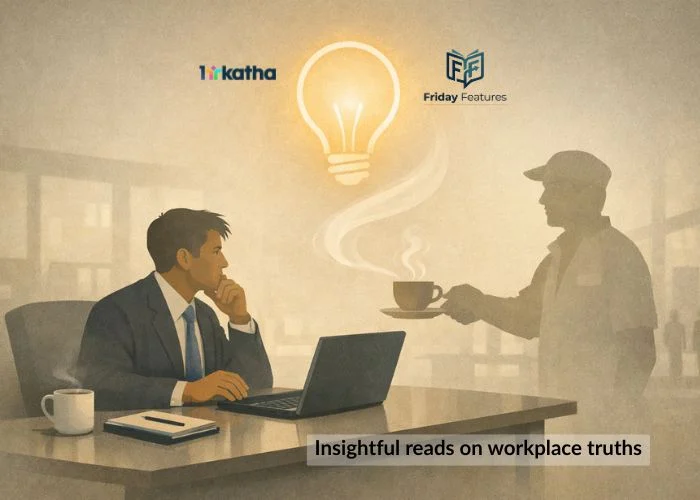
In the contemporary professional landscape, the concept of mentorship often conjures images of formal programs, senior executives imparting wisdom to eager protégés, and structured meetings meticulously designed to foster career growth. These formalized mentorship initiatives, frequently championed by human resources departments, present a clean, hierarchical model of professional development. Yet, a deeper, more candid reflection by seasoned professionals reveals a stark contrast between this idealized framework and the organic, often serendipitous, encounters that truly shape careers and leadership philosophies. Many will attest that their most profound growth stemmed not from designated mentors, but from unexpected sources – a casual remark from a junior colleague, the quiet resilience of support staff, or even the challenging dynamic with a difficult superior. These are the unsung mentors, operating without titles or formal agendas, whose authentic presence and unfiltered insights leave an indelible mark.
The Limitations of Formal Mentorship and the Rise of Organic Learning
While structured mentorship programs serve a vital role in onboarding, skill transfer, and networking, their inherent formality can sometimes limit the spontaneity and emotional depth crucial for transformative learning. A 2019 study published in the Journal of Vocational Behavior indicated that while formal mentoring relationships are beneficial, informal mentoring often leads to higher career satisfaction and greater compensation growth, suggesting a qualitative difference in impact. The modern workplace, characterized by rapid change and diverse teams, increasingly demands adaptive leadership and a fluid approach to professional development. This environment underscores the value of learning derived from a multitude of interactions, rather than solely from top-down guidance.
Traditional leadership models, emphasizing command-and-control, are giving way to more empathetic and collaborative approaches. This evolution necessitates a broader understanding of where wisdom resides within an organization. It suggests that valuable insights are not confined to the executive suite but are distributed across all levels, often found in individuals who, by virtue of their roles or disposition, possess unique observational skills and perspectives untainted by corporate hierarchy. This shift challenges organizations to cultivate cultures that recognize and reward learning from every interaction, fostering environments where humility and curiosity supersede rigid reporting lines.
Case Study 1: The Housekeeping Staff Member Who Reshaped Leadership Principles
Vinod Rai, currently the Group Head-HR at Shahi Exports, recounts an pivotal experience from his early career that fundamentally altered his understanding of leadership. Initially, Rai adhered to a leadership philosophy rooted in strict enforcement of rules, maintaining discipline, and relentless pursuit of results. His belief was that a firm hand would invariably lead to efficiency and compliance. However, despite his efforts, this approach consistently yielded frustration: meetings became unproductive, negotiations stalled, and his team grew increasingly disengaged and silent. The harder he pushed, the more resistance he encountered, leading to a palpable sense of professional exhaustion and self-doubt.
One particularly draining evening, Rai found himself alone in the company cafeteria, lost in thought, his tea growing cold. It was then that Mewalal, an elderly housekeeping staff member with over two decades of service at the plant, approached him. With a gentle smile, Mewalal offered a simple observation: “When the mind is disturbed, tea gets cold faster.” This seemingly innocuous comment, delivered without judgment, was Rai’s first true interaction with a man he had barely noticed despite their shared workplace. Mewalal, with his unassuming role, possessed an extraordinary capacity for observation and an intuitive understanding of human nature.
Over the ensuing weeks, Mewalal’s quiet presence became a subtle source of mentorship. He would occasionally check in, sometimes offering tea, sometimes a soft inquiry about Rai’s day. Through these brief, unscripted exchanges, Rai began to grasp Mewalal’s profound insight into the organizational dynamics. Mewalal, through years of observing from the periphery, had a unique pulse on the workplace—he knew which supervisors instilled fear, which employees struggled in silence, and which leaders genuinely commanded trust. His perspective, unburdened by corporate politics, offered an unfiltered view of the human element within the company.

The turning point arrived one afternoon when Mewalal delivered a sentence that resonated deeply with Rai: “You explain rules correctly, but you explain them like rules. People listen better when they feel you understand their problem first.” This insight was a revelation. It highlighted the critical difference between mere instruction and empathetic communication. Mewalal’s wisdom underscored that true leadership isn’t about wielding authority, but about connecting with people on a human level, acknowledging their perspectives, and building a foundation of understanding before demanding compliance.
The very next morning, Rai consciously applied this lesson. Instead of issuing directives from his office, he walked the shop floor, actively listening to his team members before speaking. He engaged in conversations, seeking to understand their challenges and perspectives, rather than simply reiterating rules. This shift in approach yielded immediate results; the long-standing resistance he had faced began to soften, replaced by a nascent sense of cooperation. Years later, even after ascending to the position of Global CHRO, Vinod Rai steadfastly acknowledges Mewalal as one of his most formative mentors—a testament to the profound impact of wisdom found outside the conventional organizational chart. This narrative highlights how humility and openness to learning from any source can redefine a leader’s approach, transforming efficiency-driven management into a more humane and effective leadership style.
Case Study 2: The Junior Colleague and the Dual Nature of Guidance
Raja Varadarajan, formerly the CHRO of Vistara, articulates a compelling perspective on unexpected mentorship, categorizing his most impactful experiences into two types: instructive and cautionary. Both, he posits, were equally instrumental in shaping his leadership philosophy. His journey underscores that mentorship is not always about positive reinforcement, but also about learning from less ideal scenarios.
The instructive mentor in Varadarajan’s career was a team member nearly 15 years his junior. At a point when Varadarajan found himself grappling with team resistance and inadvertently reverting to an authoritative leadership style—a mode he recognized as neither sustainable nor effective—he observed his younger colleague navigate similar conflicts with remarkable dexterity. Unlike Varadarajan, who might have asserted his position, the junior colleague consistently took the time to meticulously understand each individual’s perspective before articulating his own. This process, though seemingly slower, invariably led to more favorable and enduring outcomes. This observation became a profound catalyst for Varadarajan, forcing him to re-evaluate his own approach.
"That completely shifted my thinking," Varadarajan reflects, highlighting the profound impact of this peer learning. He began to actively seek out his younger colleague’s counsel on complex management situations, realizing the immense power of empathy over sheer authority. There was no formal structure to their interactions, no designated mentorship labels; it was simply a matter of astute observation and the humility to learn from a different, yet highly effective, methodology. This informal exchange underscores the growing recognition of "reverse mentorship," where senior leaders gain valuable insights from younger generations, particularly in areas like communication, technology, and evolving workplace expectations. Studies by organizations like Deloitte have emphasized the importance of multi-directional learning, where knowledge flows freely across hierarchies and age groups, fostering a more dynamic and inclusive organizational culture.
Complementing this instructive experience was the cautionary mentor: a manager whose deep insecurity and demanding nature made working with them an exhausting endeavor. While initially challenging, this experience proved invaluable. It compelled Varadarajan to cultivate robust resilience, establish clear emotional boundaries, and crystallize his vision of the leader he did not want to become. This negative example, through sheer contrast, provided a powerful blueprint for his desired leadership persona. Almost every professional can recall such a challenging figure in their past. Those who reflect on these experiences with generosity often acknowledge that such discomfort, far from being detrimental, provided lessons in self-preservation, strategic navigation, and personal values that comfort alone could never have taught. This dual nature of mentorship—learning what to emulate and what to avoid—highlights the comprehensive and often unpredictable pathways to professional maturity.
Case Study 3: Life’s Unscripted Curriculum: Lessons Beyond the Boardroom
For Sujiv Nair, the Global CPO at MSn Laboratories, the concept of mentorship transcends singular workplace moments or hierarchical relationships. His most meaningful lessons, he asserts, originated from individuals who were never formally designated as mentors, often operating entirely outside his professional sphere. This expansive view of mentorship underscores the pervasive nature of learning, suggesting that wisdom can be gleaned from every facet of life.

"Unexpected mentors often provide what formal programmes sometimes miss," Nair explains, "fresh perspective and unfiltered feedback." This sentiment reflects a growing understanding in talent development that holistic growth requires a broader spectrum of influences than traditional corporate training can offer. When prompted to reflect on the people who most profoundly shaped him, Nair’s thoughts ventured far beyond boardrooms and corporate hierarchies, extending into the intimate sphere of his family.
One of his earliest and most enduring lessons came from his grandmother, observed during the seemingly mundane act of cooking. "She taught me the importance of staying organised," Nair recalls. "Before starting, she would always keep every ingredient in place. I still carry that lesson. Preparation may look small, but it helps deliver consistent outcomes every single time." This anecdote illustrates how fundamental life skills, such as meticulous preparation, directly translate into professional efficiency and reliability. In a professional context, this translates to project management, strategic planning, and ensuring all resources are aligned before execution, leading to predictable and high-quality results.
His grandfather, through simple, everyday habits, instilled in him the virtue of discipline. "I still remember how carefully he would wipe and maintain his cycle or scooter every day," Nair reminisces. "Years later, those vehicles would still look brand new. It taught me that consistency in small things creates long-term excellence." This lesson on consistent, diligent effort in seemingly minor tasks highlights the cumulative effect of discipline, leading to sustained quality and longevity in both personal and professional endeavors. This translates into maintaining high standards in daily work, fostering attention to detail, and building a reputation for reliability.
Innovation, a critical attribute in modern leadership, was cultivated by his father, who constantly encouraged Nair to observe the world closely and apply creative problem-solving. This mindset empowered Nair to win state-level science fair awards for three consecutive years with projects ranging from emergency battery chargers to petrol-saving ignition systems. His father’s influence instilled a spirit of inquiry and a practical approach to overcoming challenges, fostering a mindset where problems are viewed as opportunities for inventive solutions.
Further lessons in practical problem-solving emerged from other relatives, who, without conscious intent, demonstrated resourcefulness. Nair vividly recalls watching a relative seamlessly repair a broken carved elephant tusk using a simple piece of wood, rendering the damage invisible. "It taught me creativity is often about resourcefulness, not sophistication," he notes. This experience underscores that ingenious solutions often arise from making the most of available resources rather than relying solely on advanced tools or complex methods.
Even his children, Nair humorously adds, serve as continuous mentors, teaching him adaptability to technology and fostering a deeper understanding of different generations. This "reverse mentorship" from his children keeps him abreast of evolving societal norms and technological advancements, crucial for leading diverse, multi-generational workforces.
Yet, when Nair reflects on the most profound influence, one person stands paramount: his mother. "She has been the critic and the silent force behind most things," he states, acknowledging her foundational role in his development. This underscores the often-unseen yet deeply impactful role of primary caregivers in shaping an individual’s character, resilience, and ethical compass—qualities that are indispensable in leadership.
Collectively, these lessons—organization, discipline, creativity, resourcefulness, adaptability, and unwavering support—may appear ordinary on the surface. However, their enduring impact lies precisely in their fundamental nature and the authentic way they were imparted. The individuals who shape us most profoundly often do so not by consciously teaching, but by authentically living their lives in ways that leave a lasting legacy of wisdom for others to internalize and carry forward. This rich tapestry of influences highlights that true leadership development is a continuous, multi-faceted journey, drawing strength from every corner of one’s existence.
The Broader Implications for Modern Organizations: Cultivating a Mentorship Ecosystem

The narratives of Vinod Rai, Raja Varadarajan, and Sujiv Nair present a compelling argument for a paradigm shift in how organizations perceive and cultivate mentorship. Traditional workplaces often channel learning upwards, directing employees towards bosses, CXOs, and industry veterans, predicated on the assumption that authority and insight are intrinsically linked. However, these real-world experiences consistently demonstrate that this correlation is not always absolute. Some of the most valuable lessons manifest laterally, downwards, or from individuals entirely outside the formal professional hierarchy.
Rethinking Talent Development and HR Strategies: For HR departments and learning and development (L&D) professionals, these insights necessitate a re-evaluation of current strategies. Instead of solely focusing on formal mentorship pairings, organizations should strive to create environments where organic, multi-directional learning is encouraged and celebrated. This involves fostering a culture of psychological safety, where employees at all levels feel empowered to share observations and offer constructive feedback without fear of reprisal. Programs that encourage peer-to-peer learning, reverse mentorship, and cross-functional collaborations can naturally facilitate these unexpected mentorship opportunities. A 2023 report by the Society for Human Resource Management (SHRM) highlighted that companies with robust internal mobility and learning cultures experience 3.5 times higher employee engagement and significantly lower turnover rates, underscoring the business imperative of diverse learning pathways.
Cultivating a Culture of Continuous Learning: Moving beyond structured workshops and formal training modules, organizations must instill a mindset where continuous learning is embedded in daily operations. This means recognizing that every interaction, every challenge, and every individual, regardless of their role, holds the potential for a valuable lesson. Leaders, in particular, must model humility and an openness to learning from all sources, thereby normalizing the practice of seeking insights from unexpected corners. This continuous learning approach not only enhances individual capabilities but also bolsters organizational resilience and adaptability in a rapidly changing global market.
The Power of Psychological Safety and Inclusivity: The stories illustrate that insights from frontline staff (like Mewalal) or junior colleagues (like Varadarajan’s teammate) often go unnoticed in hierarchical structures. Establishing psychological safety—where individuals feel safe to speak up, share ideas, and admit mistakes—is paramount. When employees feel valued for their unique perspectives, regardless of their position, the entire organization benefits from a richer pool of collective wisdom. Inclusive practices that intentionally seek out and amplify diverse voices can transform potential "unexpected mentors" into recognized contributors to organizational growth and innovation.
The Silent Forces of Professional Evolution
What these unexpected mentors share is an absence of performance anxiety or a formal agenda. There are no carefully curated philosophies or pre-planned lessons. Instead, their influence stems from ordinary moments—a timely comment, a consistent habit, a challenging interaction—that subtly yet profoundly alter how someone leads, listens, or perceives people. Growth, as these narratives powerfully illustrate, is rarely a linear, hierarchical ascent. The most profound shifts in perspective and capability often originate from sources nobody initially thought to look. They are the silent forces of professional evolution, shaping individuals through authentic presence and wisdom that transcends conventional titles and expectations.
The call to action, therefore, extends beyond the individual to the entire organizational ecosystem. By consciously valuing and creating space for these informal, often unacknowledged, mentors, companies can unlock a deeper, more resilient, and more empathetic form of leadership development. It’s about recognizing that every individual, by simply living their life and performing their role with integrity and insight, has the potential to leave a transformative imprint on another’s professional journey.
Who was the most unexpected mentor in your career? The person who shaped how you work, lead, or think, without ever officially being called a mentor? Reflecting on these formative, often overlooked, relationships is not merely an exercise in nostalgia; it is an essential practice for understanding the true, multifaceted nature of professional growth and the distributed wisdom that exists within every human collective.







