Updated January 13, 2026
Performance reviews, often maligned as mere corporate report cards, are undergoing a significant transformation. Far from being dreaded annual formalities, well-executed performance evaluations are emerging as powerful catalysts for enhanced employee retention, heightened engagement, increased productivity, and improved morale. They represent the bedrock of a robust performance management program, and a strategic shift towards more insightful questioning is proving key to unlocking their full potential. The objective is to move beyond retrospective assessments and foster forward-looking dialogues that ignite growth and provide meaningful feedback.
This evolution is driven by the understanding that performance reviews, when approached with the right mindset and tools, can be dynamic conversations that propel both individual employees and the organization as a whole toward ambitious goals. This article delves into the strategic importance of asking the right performance review questions, offering a comprehensive guide for HR leaders and managers to craft evaluations that not only assess past performance but actively accelerate future growth and improvement. By embracing these advanced questioning techniques, organizations can transform their review processes from obligatory tasks into strategic opportunities for development and alignment.
Elevating the Impact of Employee Reviews: A Paradigm Shift
The traditional, checklist-style performance review is rapidly becoming obsolete. The modern approach prioritizes engagement and insight, moving away from perfunctory assessments towards dialogues that actively foster employee development. By revolutionizing the review process with probing, open-ended questions, organizations can unlock a wealth of information that goes beyond surface-level observations. This strategic questioning cultivates an effective performance review culture, one that thrives on constructive feedback and encourages employees to push their capabilities to new limits.
The shift is predicated on the idea that performance reviews are not just about evaluating what has been done, but about understanding the drivers behind that performance and charting a course for future success. This involves creating an environment where open communication is encouraged, and feedback is viewed as a gift for continuous improvement. The ultimate goal is to build a system where employees feel empowered and supported in their professional journeys, leading to greater job satisfaction and a stronger commitment to organizational objectives.
The Pivotal Role of Managers in Performance Reviews
Managers are not merely administrators of performance assessments; they are integral architects of their teams’ success and crucial conduits for employee development. Possessing intimate knowledge of their team members’ daily contributions and challenges, managers are uniquely positioned to identify and nurture individual potential. Their mandate extends beyond setting clear performance goals; it encompasses fostering a culture of frequent, constructive feedback and transforming formal review sessions into strategic, growth-oriented dialogues.
The aim is to eliminate surprises during formal evaluations by ensuring a consistent stream of communication. This proactive approach allows for timely recognition of strengths, collaborative identification of areas for improvement, and open discussions about employee aspirations. By investing in these managerial capabilities, organizations can ensure that performance reviews become a valuable tool for mutual understanding and strategic development, rather than a source of anxiety. Research from organizations like the Society for Human Resource Management (SHRM) consistently highlights the critical impact of effective management on employee engagement and retention, underscoring the importance of equipping managers with the skills to conduct impactful performance conversations.
Transforming Standard Review Dialogue into Engaging Conversations
The difference between a standard, often transactional performance review and an engaging, effective one lies in the quality of the dialogue. By tailoring conversations to align with individual career ambitions, managers can create a personalized and motivating experience for every employee. This involves fostering an environment where open, honest exchanges are the norm, and where the focus is not solely on past performance but on co-creating a roadmap for future growth.
Consider the stark contrast between two hypothetical review dialogues:
Standard Review Dialogue:
- Manager: "So, looking at your sales numbers, you’ve met the expected targets. That’s good. However, your client feedback scores need improvement. Try to work on that for the next quarter."
- Employee: "I understand. I’ll work on improving my client interactions."
In this scenario, the feedback is direct but lacks depth and actionable guidance. The employee’s response is compliant but doesn’t indicate deeper engagement or understanding.

Engaging and Effective Review Dialogue:
- Manager: "I’ve noticed you’ve hit your sales targets consistently, which is fantastic. What’s your secret to maintaining such steady performance?"
- Employee: "I think it’s about understanding the customer’s needs. But sometimes, it’s challenging to handle difficult clients."
- Manager: "I see, it sounds like you have a real strength in client understanding. How about we explore some advanced communication strategies to turn those challenging interactions into opportunities? I’d also love to hear about your career goals and how I can support you in reaching them."
- Employee: "That would be great! I’ve been thinking about leadership roles and how I could start preparing for that path."
- Manager: "Perfect, let’s outline some leadership development steps and see how we can align them with your daily work to give you exposure and experience in that area. How does that sound?"
- Employee: "Sounds like a plan. I’m excited to see where this can go."
This second dialogue exemplifies a more dynamic and future-oriented approach. The manager not only acknowledges achievements but probes for underlying strengths and proactively addresses challenges. Crucially, it opens the door to discussing career aspirations, transforming the review into a collaborative career development session. This approach fosters a stronger manager-employee relationship, boosts engagement, and aligns individual growth with organizational needs. This aligns with research indicating that employees who feel their managers are invested in their development are significantly more likely to remain with their employer.
By revitalizing the performance review process, organizations move beyond mere performance appraisal to actively cultivate transformation, propelling individuals and teams toward shared success. The inclusion of specific, open-ended questions is the cornerstone of this transformation, as it encourages deeper reflection and more productive dialogue.
The Art of Asking: Crafting the Right Performance Review Questions
The power of a performance review lies significantly in the questions asked. Well-crafted questions serve as springboards for dynamic dialogues, enabling a deep dive into an individual’s daily achievements, areas where targets may have been missed, and the factors that contribute to their best work. These questions should be designed to uncover the "why" behind the performance data, sparking insights that can significantly accelerate an employee’s growth trajectory.
The most effective questions move beyond generic inquiries to prompt specific examples and encourage self-reflection. For instance, instead of asking "How are you doing?", a more impactful question might be, "Can you share an example of a recent project where you felt you made a significant contribution and explain why?" This approach not only elicits valuable information but also empowers the employee to articulate their achievements and thought processes.
Setting the Scene: Performance Review Questions on Overall Performance
Before delving into specific metrics, it’s essential to establish a broad understanding of the employee’s overall experience and contributions. These questions frame the review by encouraging a holistic perspective, allowing both manager and employee to step back and view the bigger picture before focusing on granular details.

Mediocre Questions:
- How was your performance this year?
- Did you meet your goals?
Great Questions:
- Reflecting on the past review period, what are you most proud of accomplishing, and why?
- In what ways do you feel your role has evolved or expanded since our last review?
- How would you describe the overall impact of your contributions to the team and the organization during this period?
These enhanced questions invite reflection, encourage employees to connect their work to broader organizational goals, and provide a more nuanced understanding of their overall performance and job satisfaction.
Unearthing the Gold: Performance Review Questions on Strengths & Challenges
This category of questions aims to identify an employee’s core competencies and areas ripe for development. Strategic inquiry can uncover an individual’s resilience, resourcefulness, and readiness to embrace improvement, providing a foundation for targeted development plans.
Mediocre Questions:
- What are your strengths?
- What do you need to improve?
Great Questions:
- Describe a situation where you leveraged one of your key strengths to overcome a significant obstacle. How did this demonstrate your capability?
- When faced with a particularly challenging project or task, what specific skills or approaches did you utilize that proved most effective?
- Can you identify a specific instance where you encountered a setback or made a mistake? What did you learn from that experience, and how have you applied that learning since?
- Beyond technical skills, what "soft skills" do you believe are most critical to your success, and how have you demonstrated them recently?
By asking for specific examples, managers can move beyond general statements to gain concrete insights into an employee’s capabilities and their ability to learn from experience. This also provides a foundation for identifying development opportunities that are aligned with the employee’s actual experiences and learning styles.
Looking Forward: Performance Review Questions on Future Outlook
Encouraging managers to shift their focus from the past to the future is crucial. Future-oriented questions transform a standard review into a strategic launchpad for career trajectory and skill-building, benefiting both the employee and the organization. These questions set the stage for future discussions and ensure that development is an ongoing, forward-looking process.
Mediocre Questions:
- Where do you see yourself in five years?
- What training do you want?
Great Questions:
- What are your aspirations for your career over the next 1-3 years, and what steps do you envision taking to achieve them?
- What new skills or knowledge do you believe would be most beneficial for you to acquire to excel in your current role and prepare for future opportunities?
- What kind of projects or responsibilities would excite you and allow you to contribute at a higher level in the coming year?
- How can we, as an organization, better support your professional development and career growth?
These questions encourage employees to think proactively about their career paths and identify how their goals align with the organization’s future needs. This proactive approach can foster a sense of ownership and commitment, as employees see their development as an integral part of their long-term career journey.
Getting Personal: Performance Review Questions for Individual Needs
Tailoring performance review questions to individual roles is akin to curating a personalized experience. Managers should craft questions that resonate with the unique demands of each team member’s daily tasks and tap into their personal career aspirations. This individualized approach ensures that each review contributes to the employee’s development, setting them up for success in their current role and empowering them to advocate for their own career progression.
Mediocre Questions:
- Do you need any resources?
- Are you happy with your job?
Great Questions:
- Considering the specific demands of your role, what tools, resources, or support do you find most critical for your success, and are there any current gaps?
- What aspects of your daily work do you find most engaging and motivating, and how can we amplify those experiences?
- Are there any particular challenges or bottlenecks in your current workflow that hinder your productivity or job satisfaction? How might we address them?
- How does your current role align with your long-term career interests, and what adjustments or opportunities could make that alignment stronger?
By understanding and addressing individual needs, organizations can foster a more supportive and productive work environment. This personalized approach demonstrates that the organization values each employee’s unique contribution and is invested in their individual success.
Strengthening the Feedback Loop: Performance Review Questions for Continuous Growth
Cultivating a continuous feedback loop is essential for fostering a culture of ongoing development. Managers should be guided to integrate feedback into the daily workflow, making it a consistent rhythm rather than an infrequent event. Refined questions not only nurture employee growth but also fortify the manager-employee relationship, ensuring that development remains a constant priority.
Mediocre Questions:
- Do you have any feedback for me?
- Is there anything else?
Great Questions:
- What is one thing I could do as your manager to better support your work or development?
- What is a recent success or challenge you’ve experienced that you’d like to discuss further to extract lessons learned?
- How can we ensure that the feedback you receive throughout the year is timely, actionable, and constructive?
- What are your thoughts on the frequency and format of our ongoing check-ins and feedback sessions?
These questions emphasize the reciprocal nature of feedback and development, reinforcing the idea that growth is a shared responsibility. By normalizing ongoing conversations about performance and development, organizations can create a more agile and responsive workforce.
Aligning the Stars: Performance Review Questions for Organizational Alignment
Connecting an employee’s daily tasks to the broader organizational mission is paramount. These questions help each team member understand their role within the larger corporate galaxy, ensuring that individual efforts propel the entire organization forward. They aim to weave individual aspirations with the company’s overarching narrative, transforming performance reviews into collaborative explorations of alignment and impact.
Mediocre Questions:
- Do you understand the company’s mission?
- How do you contribute to the company?
Great Questions:
- How do you see your current responsibilities directly contributing to our company’s strategic objectives for this year?
- Can you provide an example of how your work has recently aligned with our core values or mission statement?
- In what ways do you believe your role can evolve to have an even greater impact on achieving our organizational goals?
- What insights or suggestions do you have regarding how we can collectively improve our alignment with the company’s vision and strategic priorities?
These questions foster a sense of purpose and belonging, ensuring that employees understand the significance of their contributions within the larger organizational context. This alignment is crucial for driving collective success and fostering a unified organizational culture.
From Conversation to Action: Following Up on Performance Reviews
The performance review conversation is merely the starting point; its true value is realized through effective follow-up and implementation of agreed-upon actions. Transforming insights gleaned from these discussions into concrete, actionable steps is critical. This involves outlining clear, achievable objectives and setting defined timelines for performance review follow-up. This ensures that the momentum generated during the review translates into tangible progress and sustained growth.
Accountability in this process is not a solitary endeavor but a shared partnership. Establishing robust support mechanisms, such as regular check-ins, providing necessary resources, and offering targeted training, reinforces the organization’s commitment to the employee’s development. This demonstrates a tangible investment in turning aspirations into achievements. Organizations that effectively implement follow-up strategies often see a marked improvement in goal attainment and employee engagement. For instance, studies by organizations like Gallup consistently show that when employees see their feedback acted upon, their engagement levels increase significantly.
Fostering a Culture of Continuous Development
Human Resources departments play a pivotal role in cultivating a workplace culture where continuous growth and learning are embedded in the everyday fabric of the organization. Encouraging a mindset that values ongoing development not only enhances individual careers but also enriches the organization as a whole. This cultural shift ensures that development is viewed as a journey, not a destination, and that learning is a continuous process.
The conclusion of a performance review should not signify the end of the development conversation. HR leaders should champion managers in maintaining open lines of communication, fostering a dynamic environment where feedback and development discussions are an integral part of daily work life. This continuous dialogue ensures that development remains a constant priority, fostering agility and adaptability within the workforce. This proactive approach aligns with the evolving demands of the modern workplace, where continuous learning is no longer a luxury but a necessity for sustained success.
How Quantum Workplace Can Help You Streamline Performance Reviews
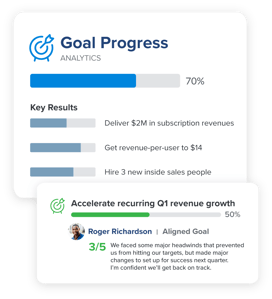
The process of conducting performance reviews can be significantly enhanced with the right technological support. Quantum Workplace offers a performance review software designed to keep managers and employees aligned, facilitating more objective and engaging conversations. Their platform provides reliable context, enabling teams to have more productive discussions centered on growth and development.
Key features of Quantum Workplace’s performance review software include:
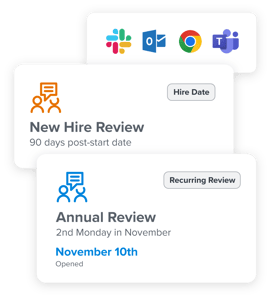
- Customizable Reviews: The platform allows for flexible review modules that can be tailored to fit the unique needs of an organization’s culture and its various employee groups, ensuring that performance metrics are relevant and measurable.
- Manager Habit Building: By integrating the performance review process into existing workflows, the software helps managers build positive performance habits. Formal conversation cycles can be established to ensure consistent and timely touchpoints between managers and their teams.
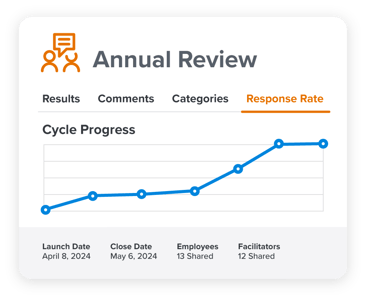
- Response Rate Tracking: The system provides clear visibility into the status of each review cycle, enabling HR and management to monitor progress, encourage participation, and ensure accountability. Performance ratings can be tracked in real-time, offering insights into overall team performance.
- Embedded Performance Goals: The platform facilitates the direct inclusion of performance goals within evaluation cycles, empowering managers to conduct objective, effective, and growth-oriented conversations that are directly linked to strategic objectives.
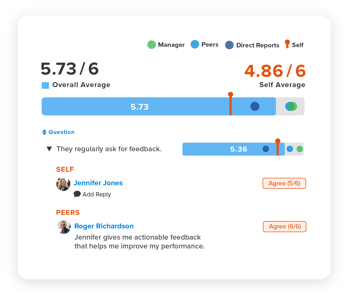
- Multi-Rater Feedback Integration: By incorporating feedback from various sources—colleagues, direct reports, and other stakeholders—into review cycles, organizations gain a more comprehensive understanding of an employee’s performance and can orient conversations around development needs.
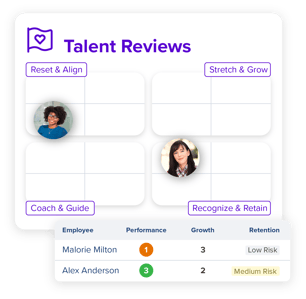
- Data Visualization and Alignment: A talent dashboard provides a comprehensive view of organizational talent, enabling leadership to identify trends, visualize performance data across teams, and make more informed decisions regarding talent management, retention, and development strategies.
Conclusion
The journey through the art of asking the right questions, the importance of creating a conducive environment for feedback, the steps to translate conversation into action, and the significance of fostering a culture of continuous development are all critical components for cultivating a vibrant, engaged, and high-performing team. These elements serve as the foundational seeds for robust organizational growth.
HR leaders are instrumental in shaping this new era of performance reviews. By equipping themselves with the right tools and strategies, they can carve out spaces where growth, feedback, and development are seamlessly interwoven into the organizational DNA. Championing these practices not only elevates individual careers but also propels the organization towards a future where continuous improvement and employee engagement are the norm, not the exception.
Frequently Asked Questions About Performance Review Questions
What are the best performance review questions?
The most effective performance review questions are those that encourage deep reflection, open communication, and a clear path for growth. They should prompt employees to provide specific examples and articulate their thought processes, moving beyond superficial responses. Questions that focus on achievements, challenges, future aspirations, and alignment with organizational goals are generally considered best practice.
What are performance review questions for achievements?
To effectively assess achievements, consider asking questions such as: "Can you detail your most significant accomplishments during this review period and explain the impact they had?" or "Describe a project where you exceeded expectations and outline the specific strategies you employed to achieve that success." These questions encourage employees to highlight their contributions and the methods they used.
What are performance review questions for strengths and areas of improvement?
To evaluate strengths and areas for improvement, ask: "What specific strengths do you believe were most critical to your success in your role this past year, and can you provide an example?" and "Looking at areas where you faced challenges or could develop further, what is one specific skill or competency you aim to enhance, and what steps will you take to do so?" These questions facilitate a balanced discussion on performance, focusing on both commendable skills and opportunities for growth.
What are performance review questions for career growth?
For career development, consider questions like: "What are your short-term and long-term career aspirations within the organization?" and "What kind of professional development opportunities, training, or experiences would best support your career goals and your ability to contribute more effectively to the company?" These questions encourage employees to reflect on their professional ambitions and how the organization can support their journey.
By implementing these refined questioning strategies and leveraging appropriate technology, organizations can transform their performance review processes into powerful engines for individual development and sustained organizational success. Quantum Workplace’s performance review software is designed to support managers and teams in preparing for, facilitating, and following up on reviews, ultimately leading to better performance outcomes.