
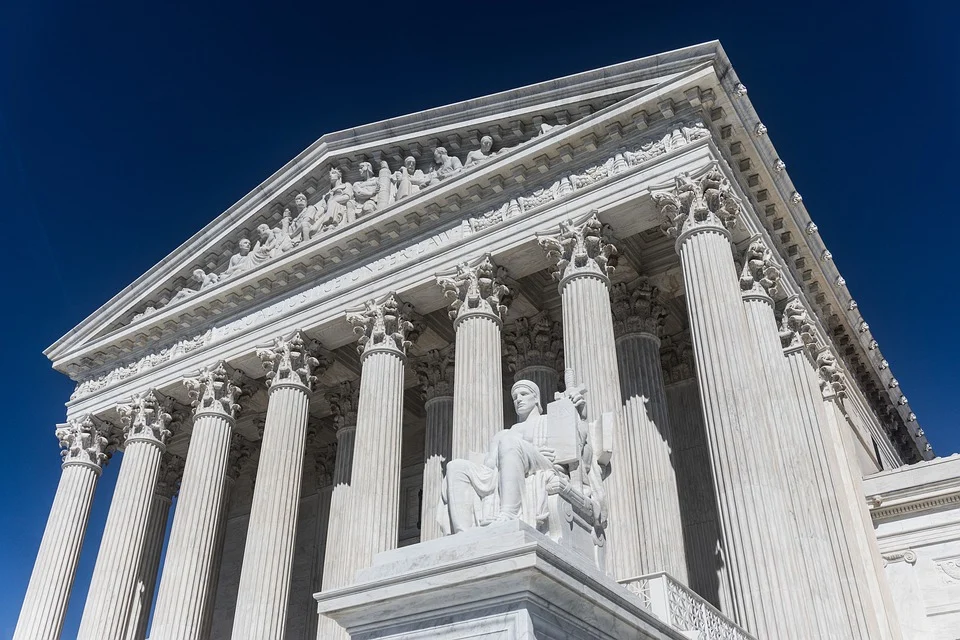
The United States Supreme Court has unexpectedly altered the landscape of federal class action litigation by dismissing a case that was poised to resolve a long-standing circuit split regarding the composition of damages classes. On June 5, 2025, the Court issued a per curiam decision in Laboratory Corporation of America Holdings v. Davis, No. 24-304, dismissing the writ of certiorari as "improvidently granted." This procedural move effectively leaves intact a controversial Ninth Circuit ruling and delays a definitive national standard on whether a class can be certified under Federal Rule of Civil Procedure 23(b)(3) when it contains members who have suffered no actual injury. The decision has significant ramifications for corporate defendants, particularly those operating in jurisdictions with aggressive statutory damage frameworks, and leaves employers in a state of continued legal uncertainty regarding the defense of high-stakes class actions.
Background of the Dispute: Accessibility and Statutory Damages
The litigation originated from a challenge to the modern service infrastructure of Laboratory Corporation of America (Labcorp), one of the world’s largest clinical laboratory networks. To streamline patient intake, Labcorp implemented on-site, self-service touchscreen kiosks at its various patient service centers. While these kiosks were intended to improve efficiency for the general population, they presented a significant barrier to individuals with visual impairments.
The plaintiffs, Luke Davis and Julian Vargas, both of whom are legally blind, filed a class action lawsuit alleging that these kiosks were not accessible to them, thereby violating Title III of the Americans with Disabilities Act (ADA). Because the case was filed in California, the plaintiffs also invoked the California Unruh Civil Rights Act. The Unruh Act is particularly potent for plaintiffs because it stipulates that any violation of the federal ADA also constitutes a violation of California state law. Crucially, while the ADA primarily allows for injunctive relief (ordering a company to fix a problem), the Unruh Act provides for mandatory minimum statutory damages of $4,000 per violation.
Labcorp argued that it had provided reasonable accommodations by ensuring that front-desk staff were available to assist patients who could not use the kiosks. However, the plaintiffs contended that the lack of independent access to the kiosks constituted a discriminatory denial of full and equal enjoyment of the facilities.
The Certification of an "Overinflated" Class
The central legal controversy arose during the class certification stage. The district court certified a class that potentially included over 100,000 blind individuals who had visited Labcorp locations in California. Given the Unruh Act’s $4,000-per-offense penalty, Labcorp faced a staggering potential liability of nearly $500 million per year.
The defense pointed out a significant flaw in the class composition: many of the individuals included in the class had not actually attempted to use the kiosks or had no desire to do so, preferring the traditional front-desk check-in regardless of the technology available. Under Article III of the U.S. Constitution, federal courts generally require a plaintiff to have "standing," which necessitates a concrete and particularized injury. Labcorp argued that a class cannot be certified if it is "overinflated" with members who were never actually harmed by the alleged barrier.
Despite these arguments, the U.S. District Court for the Northern District of California certified the class, and the Ninth Circuit Court of Appeals subsequently affirmed the decision. The Ninth Circuit’s stance aligned with a broader trend in certain appellate districts that allows for the certification of classes containing uninjured members, provided that the uninjured members can be weeded out at the damages stage of the trial.
Chronology of the Supreme Court Proceedings
The path to the Supreme Court’s dismissal was marked by several critical procedural milestones:
- Initial Filing: The class action was initiated following the rollout of Labcorp’s kiosk system, targeting the lack of screen-reading software or tactile interfaces.
- District Court Certification: The court granted class status to all blind individuals who visited Labcorp service centers in California during the relevant period, regardless of whether they personally encountered a barrier.
- Ninth Circuit Affirmation: Labcorp sought an interlocutory appeal. During this time, the district court issued a "clarifying" order regarding the class definition, which the Ninth Circuit used as a basis to uphold the certification.
- Grant of Certiorari: The Supreme Court agreed to hear the case in late 2024 to address the specific question: "Whether a class may be certified under Rule 23(b)(3) even if it includes members who lack Article III standing."
- Oral Arguments and Deliberation: Following briefs from both sides and several amicus curiae (including the United States government), the Court deliberated on the merits of the Rule 23 requirements versus the constitutional requirements of standing.
- Dismissal (June 5, 2025): The Court issued a one-sentence order dismissing the case as "improvidently granted," a move often referred to as a "DIG."
The Dissenting Voice: Justice Kavanaugh’s Warning
The dismissal was not unanimous in spirit. Justice Brett Kavanaugh penned a sharp dissent, expressing frustration with the Court’s refusal to engage with the merits of the case. He argued that the "mootness" argument raised by the plaintiffs—based on the district court’s minor clarification of the class definition—was "insubstantial" and should not have prevented the Court from ruling.
Justice Kavanaugh emphasized that the current state of the law creates "serious and real-world consequences." He noted that when classes are overinflated with uninjured members, the potential for massive, aggregate liability often forces defendants into "blackmail settlements." These settlements, according to Kavanaugh, are not based on the merits of the legal claims but on the sheer risk of financial ruin. He further argued that these costs are ultimately passed on to consumers and workers, creating a ripple effect through the economy.
Kavanaugh’s dissent also provided a glimpse into how he and potentially other conservative justices might rule in the future. He stated clearly that under Rule 23(b)(3), common questions cannot "predominate" if the court must engage in thousands of individualized inquiries to determine which class members were actually injured and which were not.
Supporting Data: The Surge in ADA and Class Action Litigation
The Labcorp case is emblematic of a broader trend in the American legal system. According to data from legal analytics firms and the Seyfarth ADA Title III database, federal lawsuits related to disability access have hit record highs over the last five years.
- Annual Filings: Approximately 10,000 to 11,000 ADA Title III lawsuits are filed in federal court annually.
- The California Concentration: California accounts for nearly 50% of all such filings nationwide. This is largely attributed to the synergy between the ADA and the Unruh Civil Rights Act, which transforms a federal regulatory violation into a lucrative state-law damages claim.
- Class Action Volume: Across all sectors (employment, consumer protection, and civil rights), roughly 10,000 class action petitions are filed each year in the United States.
- Settlement Trends: In the most recent fiscal year, the top 10 class action settlements in various categories totaled several billion dollars, highlighting the massive financial stakes involved when class certification is granted.
Official Responses and Stakeholder Reactions
While the Supreme Court’s per curiam order was silent on its reasoning, the legal community has been vocal.
Defense Counsel Perspective: Attorneys representing corporate interests expressed disappointment. Many had hoped the Court would build upon its 2021 decision in TransUnion LLC v. Ramirez, where it held that every class member must have Article III standing to recover individual damages. The dismissal in the Labcorp case leaves a gap between "standing to recover" and "standing to be part of a certified class."
Plaintiff Advocacy Groups: Representatives for disability rights and consumer advocates viewed the dismissal as a temporary victory. They argue that requiring every single class member to prove injury at the certification stage would make it nearly impossible to hold large corporations accountable for systemic barriers, as the cost of individual litigation would far outweigh the recovery for most plaintiffs.
The United States Government: The Solicitor General’s office, acting as amicus curiae, had previously suggested that if class members are not injured, they cannot share the same "injury in fact" required for commonality. However, the government also noted procedural complexities in the Labcorp record that may have contributed to the Court’s decision to dismiss.
Fact-Based Analysis of Implications
The dismissal of Labcorp v. Davis creates a period of strategic maneuvering for both plaintiffs and defendants. Without a Supreme Court mandate, the "circuit split" remains active.
- Jurisdictional Arbitrage: Plaintiffs are likely to continue favoring the Ninth Circuit and other jurisdictions with lenient certification standards. Conversely, defendants will continue to push for transfers to circuits that maintain stricter interpretations of Rule 23(b)(3) and Article III standing.
- Increased Settlement Pressure: For companies operating in California, the threat of a certified class including thousands of uninjured members remains a potent weapon for plaintiff attorneys. Employers may find themselves settling cases with questionable merits simply to avoid the "death knell" of class certification.
- Defense Strategy Evolution: Defense counsel will likely pivot toward creating a more robust evidentiary record at the district court level. By presenting specific evidence of uninjured individuals within the proposed class early on, they can argue that "individualized inquiries" will overwhelm the litigation, thereby defeating the "predominance" requirement of Rule 23.
- Future SCOTUS Intervention: Legal experts agree that this issue is too significant to remain unresolved indefinitely. The "DIG" in the Labcorp case suggests the Court was unhappy with this specific case as a "vehicle" for the question, but not that they are uninterested in the question itself. A cleaner case—one without mid-appeal class definition changes—will likely be granted certiorari within the next two terms.
In conclusion, while the Supreme Court’s decision to dismiss Laboratory Corporation of America Holdings v. Davis provides no new legal rules, it underscores the intense volatility of class action law in the United States. For now, the gates remain open for large-scale damages classes in many parts of the country, leaving the balance of power in the hands of trial court judges and the specific appellate circuits in which they sit.








