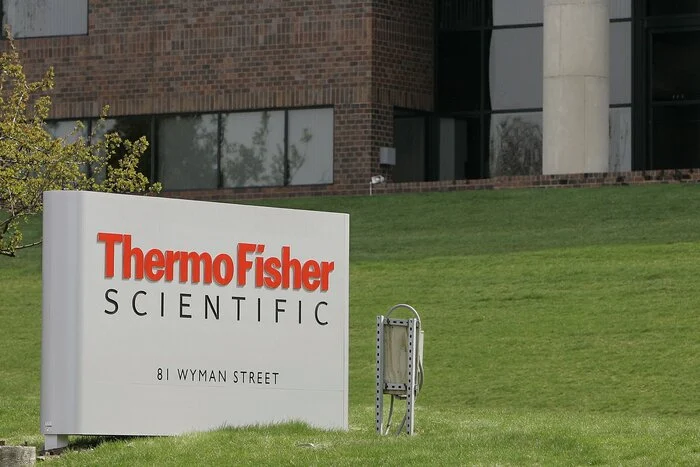
The Ninth Circuit Court of Appeals has delivered a landmark decision regarding the digital notification of employment terms, ruling that arbitration agreements sent via email are not legally binding if the employer cannot prove the recipient actually viewed or manifested assent to the message. This ruling, handed down on Wednesday, represents a significant setback for medical technology giant Thermo Fisher Scientific and establishes a high bar for how corporations must communicate mandatory arbitration policies to their workforce. The decision underscores a growing judicial skepticism toward "notice-by-history" in the digital age, emphasizing that the mere delivery of an email to a work inbox does not constitute a "meeting of the minds" necessary for a valid contract.
At the heart of the dispute was a proposed class action lawsuit filed by a former Thermo Fisher employee who alleged various labor code violations. Thermo Fisher had sought to move the case out of the public court system and into private arbitration, citing a company-wide policy distributed via email. However, the Ninth Circuit panel held that because the employee never opened or interacted with the specific email containing the arbitration agreement, no enforceable contract was ever formed. The court’s rejection of Thermo Fisher’s assertions marks a pivotal moment in the evolution of electronic contract law, particularly within the jurisdiction of the Ninth Circuit, which covers much of the Western United States, including California’s tech-heavy economy.
The Legal Framework: Mutual Assent in the Digital Era
The central question before the court was whether "constructive notice"—the idea that a person should have known about something because it was made available to them—is sufficient to waive a fundamental right, such as the right to a jury trial. Under the Federal Arbitration Act (FAA), arbitration agreements are treated as a matter of contract. For any contract to be valid, there must be mutual assent, often referred to as a "meeting of the minds."
In the context of physical documents, signing a paper contract provides clear evidence of assent. In the digital realm, this has evolved into "clickwrap" agreements (where a user must click "I Agree") and "browsewrap" agreements (where terms are posted on a website and usage implies consent). The Thermo Fisher case involved a middle ground: an email notification. The Ninth Circuit clarified that for an email to create a binding agreement, the notice must be "conspicuous" and the user’s transition to the agreement must be "explicit."
The court noted that an unread email sitting in a crowded inbox does not meet the threshold of conspicuousness. Unlike a pop-up window that prevents further action until a button is clicked, a standard email can be easily overlooked, filtered into spam, or buried by daily administrative communications. Without evidence that the employee was specifically alerted to the legal significance of the email or that they took an affirmative step to acknowledge it, the court found the requirement of mutual assent remained unfulfilled.
Chronology of the Litigation
The legal battle began in early 2024 when a former employee of Thermo Fisher Scientific filed a class action complaint alleging wage and hour violations, including failure to pay overtime and inadequate meal breaks. Thermo Fisher promptly moved to compel arbitration, pointing to a 2022 initiative where the company transitioned its dispute resolution process to a mandatory arbitration model.
According to court records, the timeline of the notification process was as follows:
- November 2022: Thermo Fisher’s Human Resources department sent a mass email to thousands of employees titled "Update to Company Policy." The email contained a link to a new Mutual Agreement to Arbitrate Claims.
- December 2022: A follow-up email was sent to employees who had not yet accessed the internal portal to view the document.
- January 2023: The plaintiff continued their employment, which Thermo Fisher argued constituted "implied consent" under the terms of the email, which stated that continued employment after a certain date would be deemed acceptance of the arbitration policy.
- May 2024: The plaintiff filed suit in federal court. Thermo Fisher produced metadata showing the email was successfully delivered to the plaintiff’s work address.
- August 2025: A district court initially ruled in favor of the employee, finding the notice insufficient. Thermo Fisher appealed to the Ninth Circuit.
- August 5, 2026: The Ninth Circuit affirmed the lower court’s decision, setting the current precedent.
Supporting Data: The Rise of Mandatory Arbitration
The Ninth Circuit’s ruling arrives at a time when mandatory arbitration has become the standard in American employment. According to data from the Economic Policy Institute (EPI), more than 60 million American workers—roughly 55% of the non-union private-sector workforce—are currently subject to mandatory arbitration procedures. This represents a massive shift from the early 1990s, when less than 2% of workers were covered by such clauses.
The proliferation of these agreements has been a point of contention for labor advocates. Statistics show that employees are significantly less likely to win their cases in arbitration compared to federal court. In employment discrimination cases, for instance, the win rate for employees in federal court is approximately 30%, whereas, in arbitration, it drops to roughly 19%. Furthermore, the median award in arbitration is often substantially lower than those granted by juries.
By ruling that unread emails are unenforceable, the Ninth Circuit has effectively created a "speed bump" for the automated implementation of these clauses. This decision suggests that the convenience of digital mass-communication cannot override the constitutional and common-law requirements of informed consent.
Official Responses and Industry Reactions
Legal experts and representatives from both sides of the bar have been quick to weigh in on the implications of the ruling. Counsel for the plaintiff hailed the decision as a victory for transparency. "This ruling ensures that companies cannot strip away an employee’s day in court through administrative sleight-of-hand," said a spokesperson for the legal team representing the ex-employee. "An email is a communication, not a contract, unless both parties treat it as such."
Conversely, defense attorneys representing corporate interests expressed concern that the ruling creates an "impossible burden" for large employers. "If a company can prove an email was delivered and that the employee was given ample time to review it, that should be sufficient," argued a senior partner at a firm specializing in management-side labor law. "Requiring proof that an email was ‘read’—which is difficult to track without invasive monitoring—could invalidate thousands of existing corporate policies overnight."
Thermo Fisher Scientific issued a brief statement following the ruling: "While we are disappointed in the court’s decision, we remain committed to fair and efficient dispute resolution. We are currently reviewing our internal notification processes to ensure they align with the court’s clarified standards for digital notice."
Fact-Based Analysis of Implications
The Ninth Circuit’s decision is expected to trigger a widespread audit of HR practices across the United States. To ensure arbitration agreements are enforceable, companies will likely move away from "passive" notification (sending an email) toward "active" acknowledgement (requiring an electronic signature or a "click-to-accept" prompt).
Key implications include:
- Technological Integration: HR software providers will likely see increased demand for "read-receipt" and "activity-tracking" features. However, even these may not be enough; the court’s emphasis on "manifested assent" suggests that a physical or electronic signature remains the gold standard.
- Increased Litigation over Notice: We can expect a wave of "mini-trials" centered solely on whether an employee saw a specific email. Plaintiffs will likely testify that they never saw the notice, while defendants will produce server logs, creating a new theater of evidentiary disputes.
- Potential for Supreme Court Review: Given the importance of the Federal Arbitration Act and the potential for a circuit split—should another appellate court rule that delivery equals notice—this issue may eventually reach the U.S. Supreme Court. The high court has historically been very pro-arbitration, and it may seek to harmonize the standards for digital notice.
- Impact on Other Contracts: While this case focused on employment, the logic could easily extend to consumer contracts, such as Terms of Service updates sent via email by banks, streaming services, or software providers.
Broader Impact on Employment Law
The ruling also touches upon the "digital divide" in the workplace. Many employees, particularly those in manufacturing or field-based roles, may not check their work email with the same frequency as corporate office staff. By requiring more than just delivery, the Ninth Circuit is protecting workers who may not have the time or technical inclination to parse through every administrative email they receive.
Furthermore, this decision serves as a reminder that the Ninth Circuit remains a more protective jurisdiction for employee rights compared to the Fifth or Eleventh Circuits. For multi-state employers, this creates a complex "patchwork" of compliance requirements. A company might find its arbitration agreement enforceable in Texas but void in California, despite using the exact same email notification system.
Conclusion: A New Standard for Corporate Communication
The Ninth Circuit’s ruling in the Thermo Fisher case reinforces the principle that fundamental legal rights cannot be waived by silence or oversight. In an era where the average professional receives over 120 emails per day, the court has recognized that a single message containing a life-altering legal waiver can easily be missed.
For the legal community, the message is clear: the medium is not the message, and delivery is not the same as agreement. As corporations continue to digitize their operations, they must ensure that their methods for obtaining consent are as robust as the legal protections they seek to invoke. The "unread email" defense has now been codified into precedent, and the burden of proof has shifted squarely onto the shoulders of the employer to prove that their workers didn’t just receive the notice, but actually understood and accepted the terms of their employment.