
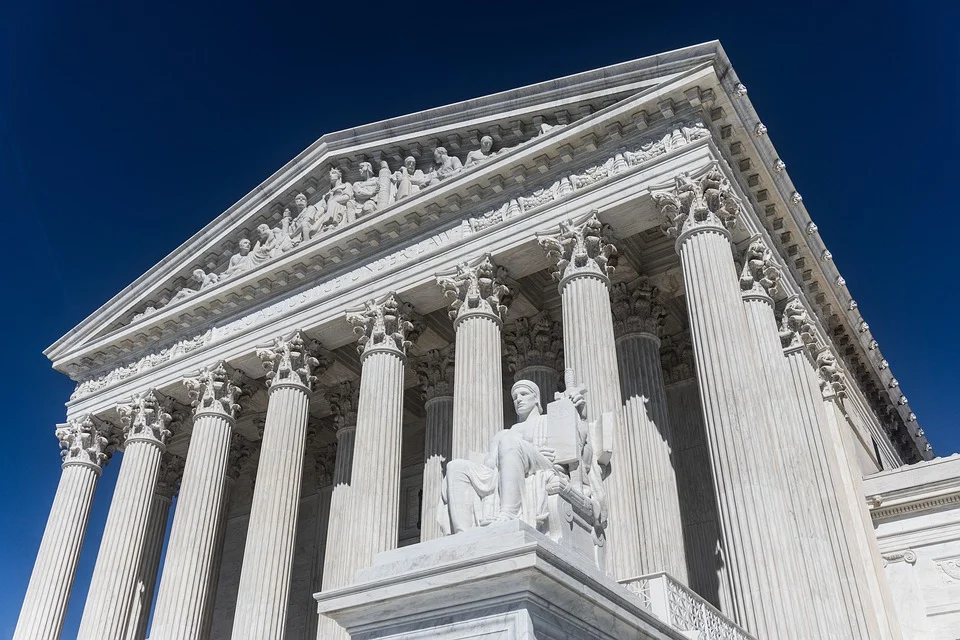
On June 5, 2025, the Supreme Court of the United States issued a surprising procedural pivot by dismissing the writ of certiorari in the highly anticipated case of Laboratory Corporation of America Holdings v. Davis. The dismissal, categorized as "improvidently granted," effectively ends the Court’s immediate involvement in a dispute that legal scholars and corporate defense attorneys hoped would resolve a long-standing circuit split regarding the composition of class action lawsuits. The central question—whether a federal court may certify a class action for damages under Federal Rule of Civil Procedure 23 when the proposed class includes members who have suffered no actual injury—remains unanswered at the highest level of the American judiciary.
The Court’s decision to retreat from the case is particularly significant for the employer and corporate community, as the inclusion of uninjured members in class definitions has become a primary driver of massive settlement figures and protracted litigation. By passing on this opportunity, the Supreme Court leaves in place a patchwork of standards across different appellate circuits, most notably the Ninth Circuit, which has historically been more permissive regarding broad class certifications.
The Genesis of the Dispute: Kiosks and Accessibility
The litigation began with a challenge to the modernizing infrastructure of Laboratory Corporation of America (Labcorp). In an effort to streamline patient check-ins at its various service centers, Labcorp introduced on-site, self-service touchscreen kiosks. While these kiosks were intended to provide convenience, they lacked integrated screen-reading technology or tactile interfaces, rendering them inaccessible to blind or visually impaired patients unless they sought third-party assistance.
Plaintiffs Luke Davis and Julian Vargas, both of whom are legally blind, initiated a class action alleging that Labcorp’s reliance on these kiosks violated Title III of the Americans with Disabilities Act (ADA) and the California Unruh Civil Rights Act. Labcorp contended that it provided meaningful access through alternative means, specifically by ensuring that front-desk staff were available to assist patients with the same check-in technology. However, the plaintiffs argued that the mere presence of the inaccessible kiosks constituted a discriminatory barrier.
The legal complexity intensified due to the specific nature of California’s Unruh Act. Unlike the federal ADA, which primarily allows for injunctive relief (ordering a change in behavior or infrastructure), the Unruh Act permits plaintiffs to seek statutory damages of $4,000 per violation. In the context of a class action, these numbers escalate exponentially.
A Chronology of the Litigation
The journey of Laboratory Corporation of America Holdings v. Davis through the federal court system illustrates the procedural hurdles that often define large-scale class actions:
- Initial Filing: Plaintiffs filed suit in a California federal district court, seeking to represent a nationwide class under the ADA and a California-specific class under the Unruh Act.
- Class Certification: The district court certified a class that could potentially include more than 100,000 blind individuals. Given the Unruh Act’s $4,000-per-offense minimum, Labcorp faced a theoretical liability exceeding $500 million per year of the kiosks’ operation.
- The Injury Argument: During discovery, evidence emerged suggesting that a significant portion of the class members had not attempted to use the kiosks or preferred using the front desk regardless of the technology. Labcorp argued these individuals lacked Article III standing because they suffered no "injury in fact."
- Ninth Circuit Review: Labcorp sought an interlocutory appeal. While this was pending, the district court issued a "clarification" of its certification order. The Ninth Circuit eventually affirmed the certification, maintaining that the presence of uninjured members did not inherently defeat the "predominance" requirement of Rule 23.
- Supreme Court Intervention: In late 2024, the Supreme Court granted Labcorp’s petition for a writ of certiorari, signaling a desire to address the "uninjured member" problem.
- The Dismissal: On June 5, 2025, after briefing and oral arguments, the Court issued its one-sentence per curiam order dismissing the case as improvidently granted (DIG).
The Predominance Problem and Rule 23
The core of the legal debate rests on Federal Rule of Civil Procedure 23(b)(3), which requires that "questions of law or fact common to class members predominate over any questions affecting only individual members."
Corporate defendants argue that if a class contains thousands of individuals who were never actually harmed by a policy or product, the court must conduct individualized inquiries to separate the injured from the uninjured. These inquiries, they contend, should logically overwhelm the common questions, making class certification improper.
In the Labcorp case, the company argued that a blind person who visited a service center but had no desire to use a kiosk—or who successfully checked in at the front desk without issue—could not be grouped with someone who was actively denied service. The Ninth Circuit’s willingness to overlook this distinction has made it a preferred venue for plaintiffs’ attorneys, a trend that the Supreme Court’s dismissal leaves unchecked.

Justice Kavanaugh’s Dissenting Perspective
While the majority of the Court opted for a silent exit, Justice Brett Kavanaugh issued a solo dissent that provided a roadmap for future challenges to broad class certifications. Kavanaugh expressed frustration with the procedural technicalities—specifically a mootness argument regarding the district court’s clarified order—that his colleagues likely used as a basis for the dismissal.
Kavanaugh characterized the plaintiffs’ threshold arguments as "insubstantial" and urged the Court to address the merits. He aligned himself with the position of the United States Solicitor General’s office, which filed an amicus curiae brief supporting the idea that uninjured members cannot share the same legal standing as those who suffered actual harm.
"If there are members of a class that aren’t even injured, they can’t share the same injury with the other class members," Kavanaugh wrote. He warned that the Ninth Circuit’s current path has "serious and real-world consequences," specifically the creation of "overinflated" classes that leverage massive potential liability to force companies into "blackmail settlements."
Supporting Data and Industry Impact
The stakes of this legal stalemate are reflected in the surging volume of ADA and consumer class actions. According to data tracked by Seyfarth Shaw LLP, ADA Title III federal lawsuit filings have hit record highs in recent years, with California frequently accounting for nearly 50% of all nationwide filings.
The appeal of California as a jurisdiction is driven largely by the Unruh Act’s statutory damages. In a typical consumer or employment class action, damages must be proven. Under the Unruh Act, the mere proof of a violation triggers the $4,000 penalty. When applied to a class of 100,000 people, as seen in the Labcorp case, the financial risk becomes existential for even the largest corporations.
Furthermore, legal analysts point out that approximately 10,000 class action lawsuits are filed annually in U.S. federal courts. A significant portion of these involve "no-injury" or "technical violation" claims, where plaintiffs allege a statutory breach (such as a missing disclosure or a non-compliant interface) without demonstrating that the breach caused them actual economic or physical harm.
Broader Implications for Employers and Defendants
The Supreme Court’s refusal to rule in Labcorp v. Davis means that the 2021 precedent set in TransUnion LLC v. Ramirez remains the primary, albeit incomplete, guidance on this issue. In TransUnion, the Court held that "every class member must have Article III standing to recover individual damages." However, it did not explicitly forbid the certification of a class containing uninjured members at the outset of litigation.
This distinction creates a "wait and see" environment. Plaintiffs can still get a class certified, use the threat of a massive judgment to secure a settlement, and never have to reach the stage where uninjured members are actually filtered out.
For employers and corporate defendants, the implications are several:
- Jurisdictional Strategy: Defendants must remain wary of the Ninth Circuit and other jurisdictions that adhere to a more lenient interpretation of Rule 23.
- Early Discovery on Injury: Defense strategies will likely pivot toward aggressive early discovery aimed at proving that the "commonality" of the class is an illusion. By identifying uninjured members early, defendants can argue that individualized issues of standing predominate over common questions of law.
- Settlement Pressure: The threat of "overinflated" classes remains a potent tool for plaintiffs. Without a Supreme Court ruling to curb the inclusion of uninjured members, the cost of resolving class actions is likely to remain high.
- Passing Costs to Consumers: As noted in Justice Kavanaugh’s dissent, the costs of defending and settling these massive suits are rarely borne by the company alone. These expenses are frequently passed on to consumers through higher prices, to workers through stagnating wages, and to shareholders through reduced returns.
Conclusion
The dismissal of Laboratory Corporation of America Holdings v. Davis is an anti-climax for those seeking clarity in class action jurisprudence. While the Supreme Court has "passed" for now, the sharp tone of Justice Kavanaugh’s dissent suggests that the issue is far from settled. The circuit split remains a live conflict, and it is only a matter of time before another case—perhaps one with a cleaner procedural record—forces the Court to decide whether the federal courts will continue to permit damages classes to be populated by individuals who were never harmed. Until then, the "California gold rush" of statutory damage class actions is expected to continue unabated.








