
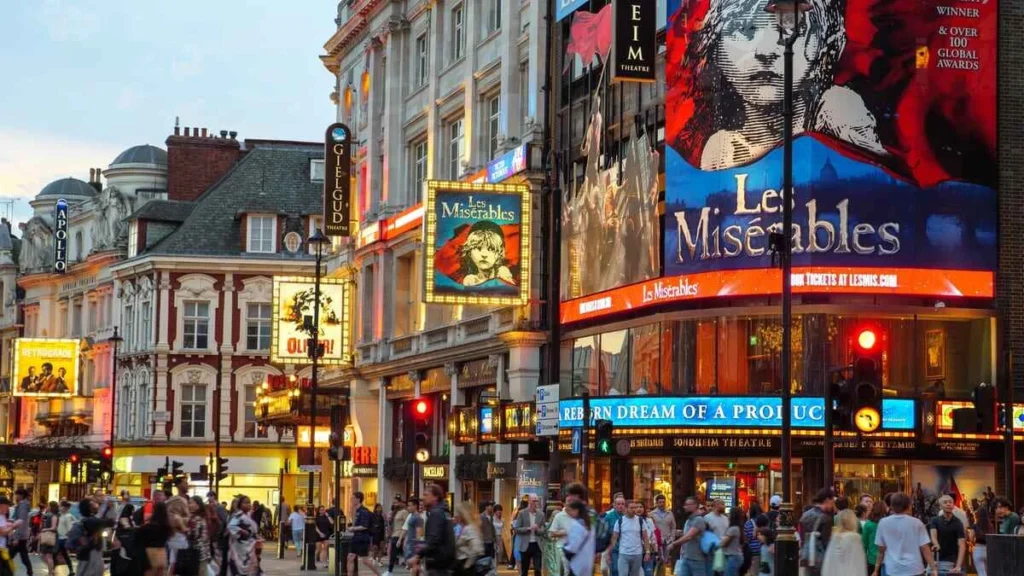
London’s iconic West End theatre district, a global beacon of performing arts, is teetering on the brink of unprecedented industrial action as members of Equity, the union representing performers and stage managers, have overwhelmingly voted in favour of potential Saturday strikes. This seismic development comes amidst a deepening dispute over pay with the Society of London Theatre (Solt), the representative body for producers and theatre owners, threatening to cast a shadow over midsummer performances and disrupt one of the capital’s most vital cultural and economic engines. The indicative ballot saw a resounding 98% of participating members support strike action on Saturdays if a more favourable pay offer is not agreed upon, with a robust 78% turnout and 99% of those casting a valid vote supporting the measure, underscoring the widespread dissatisfaction within the workforce.
The Genesis of the Dispute: A Call for Fair Wages in a Booming Industry
At the heart of the contention lies a proposed three-year pay deal that Equity deems insufficient to meet the rising cost of living and fairly compensate its members in what it describes as a period of significant industry growth. The union is advocating for annual pay rises of 7% over the next three years. This proposal, if accepted, would elevate the minimum weekly pay for performers and technicians working in mid-sized theatres from the current £828 to £1,000 for a demanding six-day, eight-show week by the conclusion of the agreement. Equity argues that this adjustment is not merely an increase but a necessary recalibration to ensure that skilled professionals can sustain a livelihood commensurate with their contributions to a highly profitable sector. The union points to the West End’s robust post-pandemic recovery and record audience numbers as evidence of the industry’s capacity to afford these improved wages, challenging Solt’s claims of financial hardship.
A Critical Juncture: Negotiations Stall Ahead of June 10th Meeting
The path to potential industrial action has been marked by a series of negotiations that have now reached a critical impasse. Following the decisive indicative ballot results, discussions between Equity and Solt have stalled, raising the stakes significantly for a pivotal meeting scheduled for June 10th. Equity has issued a stark warning: should no substantial progress be achieved during these forthcoming talks, the union intends to proceed with a formal strike ballot. Such a move would be a direct precursor to official industrial action, potentially paving the way for Saturday blackouts to commence as early as later this summer. The implications of this timeline are profound, as the looming threat adds immense pressure to the upcoming negotiations, making them a make-or-break moment for the future stability of West End productions.
The Devastating Impact of Saturday Blackouts
Saturday performances are widely regarded as the financial backbone of the West End theatre industry, consistently attracting the largest audiences and generating the highest revenues. The prospect of Saturday strikes, therefore, carries a uniquely devastating potential impact. Each Saturday typically features two performances – a matinee and an evening show – meaning that a single day of strike action would result in the loss of two entire performances for affected theatres. While workers would forgo only one day’s pay, the revenue loss for producers and theatre owners would be substantial, running into hundreds of thousands, if not millions, of pounds across the sector, depending on the scale and duration of the strikes. Beyond the immediate financial repercussions, such blackouts would cause widespread disruption for patrons, leading to cancellations, refund requests, and significant damage to the West End’s reputation as a reliable and vibrant cultural destination. The knock-on effect would also be felt by surrounding businesses, including restaurants, bars, hotels, and transport services, which rely heavily on theatregoers.
Historical Context: A Rare Threat to West End Stability
Industrial action of this magnitude is a remarkably rare phenomenon in the annals of West End history. The last instance of widespread action formally halting performances across multiple venues dates back over a century to the 1907 Music Hall strike. While sporadic "wildcat" strikes did affect National Theatre performances in the late 1970s, these were generally localised and not sanctioned by a formal union ballot across the entire commercial theatre sector. This historical context underscores the gravity of the current situation. The threat of a formal, widespread strike in the West End represents an unprecedented challenge in modern times, signalling a profound breakdown in the traditionally cooperative, albeit sometimes tense, relationship between Equity and Solt. The rarity of such a threat amplifies the concerns within the industry, highlighting the depth of the "fundamental disagreement" that Equity’s General Secretary, Paul Fleming, has acknowledged.
Equity’s Perspective: Booming Business vs. Stagnant Wages
Equity’s leadership firmly rejects Solt’s claims of financial constraint, arguing that the industry’s robust health should translate into improved conditions for its workforce. Paul Fleming articulated this sentiment, stating, "I’m not Arthur Scargill and Solt aren’t Mrs Thatcher’s coal board," a colourful analogy intended to convey a desire for constructive dialogue while simultaneously asserting the union’s determination. However, he quickly added that a "fundamental disagreement" exists over the industry’s capacity to afford improved wages and necessary changes to working practices.

Fleming further elaborated on the union’s frustration, accusing theatre owners and producers of enjoying booming business while failing to adequately reward the very workers who make that success possible. He directly challenged Solt’s narrative, recalling past negotiations: "When we negotiated last time around, in 2023, they argued that the theatre landscape was still really uncertain after the pandemic and they would offer us more if things improved. Now, after three years of boom, with them boasting that they are attracting more people than Broadway, they say the future is too uncertain to offer more." This perceived inconsistency fuels Equity’s conviction that their members are being unfairly denied a share of the industry’s prosperity.
Fleming also dismissed arguments that soaring production costs justify holding down wages, drawing a pointed comparison: "When suppliers demand 100% more for materials, Solt’s members suddenly find the money. We aren’t asking for anything like 100%, but our members are being paid less than they were in 2019 and we aren’t having it." This statement highlights the union’s belief that producers prioritise other expenditure areas over equitable worker compensation, suggesting a disparity in how financial pressures are managed and absorbed within the industry.
Solt’s Counter-Arguments: The Economic Realities Behind the Headlines
The Society of London Theatre, through its representatives, presents a contrasting picture of the economic realities facing the West End. While acknowledging strong audience numbers, Solt insists that Equity’s demands are financially unrealistic. Patrick Gracey, a board member at Solt and an experienced theatre producer, articulated this position, stating, "The economics are much harder than headline turnover suggests. The work has rarely been better, and audiences are coming in record numbers, but it has become significantly harder to make the numbers add up."
Gracey elaborated on the myriad of escalating costs that burden productions, ranging from materials, energy, and insurance to maintenance, transport, and borrowing. He explained that these surging operational expenses mean that productions are taking considerably longer to recover their initial investment costs, and in many cases, struggle to recoup them at all. This extended payback period, coupled with increased upfront capital requirements, significantly tightens profit margins, even for successful shows.
Furthermore, Gracey contended that the perception of exorbitant ticket prices is often misleading. He claimed that ticket prices have not risen as sharply as many believe, asserting that they remain nearly 9% lower in real terms than before the pandemic. To underscore this point, he provided specific data: "Fewer than 4% of tickets sold above £150, and only 0.38% exceeded £250." This data aims to demonstrate that the vast majority of tickets are sold at more accessible price points, challenging the notion that theatres are simply raking in profits from high-cost seats. Solt’s argument, therefore, posits that while the headline figures for audience attendance and gross revenue appear robust, the underlying financial structure of theatrical production is increasingly fragile due to an inflationary environment and constrained pricing power.
Broader Economic Implications and the West End’s Contribution
The West End is not merely a collection of theatres; it is a significant economic powerhouse for London and the wider UK economy. Before the pandemic, the sector directly and indirectly supported tens of thousands of jobs, from performers and stagehands to marketing teams, front-of-house staff, and countless ancillary businesses. It attracts millions of domestic and international tourists annually, contributing substantially to London’s tourism revenue. The annual gross income generated by West End productions runs into hundreds of millions of pounds, solidifying its status as a cornerstone of the UK’s creative industries.
A prolonged period of industrial action, particularly impacting peak Saturday performances, would have a ripple effect far beyond the immediate theatre community. It could deter future tourism, damage London’s reputation as a global cultural capital, and exert downward pressure on economic activity in the central London hospitality and retail sectors. The current dispute, therefore, transcends a simple employer-employee disagreement; it touches upon the economic health and cultural vibrancy of one of the world’s most renowned theatrical districts.
The Path Forward: High Stakes for June 10th and Beyond
The upcoming meeting on June 10th represents a critical inflection point in this escalating dispute. Both Equity and Solt face immense pressure to find common ground and avert a strike that neither side genuinely desires, given the potential for severe disruption and financial losses across the board. Should negotiations fail to yield a breakthrough, Equity’s planned formal ballot would introduce a heightened level of certainty regarding industrial action. A formal ballot, subject to legal requirements for turnout and majority, would empower the union to call for legally protected strikes, transforming the current threat into a tangible reality.
The outcome of this dispute will undoubtedly set a precedent for industrial relations within the UK’s arts and culture sector. It reflects broader national conversations around wage stagnation, the cost of living crisis, and the distribution of profits in industries that have experienced significant post-pandemic recovery. As the West End stands at this pivotal juncture, the eyes of the industry, its workforce, and millions of theatre lovers worldwide will be fixed on the developments of the coming weeks, hoping for a resolution that preserves both the livelihoods of its talented professionals and the uninterrupted magic of its stages. The specter of Saturday blackouts hangs heavy, promising a summer of discontent if an equitable agreement cannot be forged.








