In the modern corporate landscape, the deployment of new enterprise software is often met with a predictable and costly cycle: intensive training sessions followed by a rapid decline in user proficiency and a subsequent surge in technical support requests. Despite the billions of dollars invested annually in Learning and Development (L&D), organizations continue to struggle with the "forgetting curve," a psychological phenomenon that renders traditional, one-time software training sessions largely ineffective for long-term retention. As companies transition to increasingly complex digital ecosystems, the traditional "Day One" training model is being scrutinized for its inability to provide support at the "moment of need," prompting a shift toward in-app guidance and continuous performance support.
The Science of Cognitive Decay: The Ebbinghaus Legacy
The fundamental challenge of software training is rooted in human biology and the way the brain processes procedural information. In the 1880s, German psychologist Hermann Ebbinghaus conducted pioneering research on memory, identifying what is now known as the "Forgetting Curve." His studies demonstrated that humans lose approximately 50% of new information within an hour of learning it, and up to 70% within 24 hours, unless that information is consciously reviewed or applied.
While Ebbinghaus initially used meaningless syllables for his experiments, modern replications—such as a 2015 study published in the journal PLOS ONE—have confirmed that the exponential shape of the curve remains consistent for modern learners. In the context of enterprise software, this means that an employee who attends a three-hour seminar on a new CRM (Customer Relationship Management) system on Monday will likely have forgotten the specific sequence of clicks required for a complex task by Wednesday, especially if they have not yet had the opportunity to perform that task in a real-world scenario.
The Complexity Crisis in Modern Enterprise Software
The fragility of software skills is exacerbated by the sheer volume and volatility of the modern digital workplace. According to industry data from SaaS management platforms, the average enterprise now utilizes over 350 different applications. Each of these tools features a unique user interface, distinct terminology, and proprietary workflows. For the average employee, the cognitive load required to master multiple systems simultaneously is immense.
Software training is uniquely susceptible to the forgetting curve for three primary reasons:
- High Information Volume: A single software module often requires the learner to memorize dozens of steps across multiple screens. The human brain’s working memory is ill-equipped to store this volume of procedural detail without immediate, repetitive application.
- Low Task Frequency: Many of the most critical software functions—such as generating quarterly financial reports, conducting annual performance reviews, or managing rare compliance exceptions—are performed infrequently. By the time an employee needs to execute these tasks, the training they received months prior has effectively evaporated.
- The Rate of Iteration: Unlike static mechanical processes, modern cloud-based software (SaaS) is updated frequently. User interfaces change, buttons are moved, and new fields are added without warning. A well-remembered procedure from six months ago may no longer be accurate, rendering traditional training manuals obsolete almost as soon as they are printed.
Shifting the Paradigm: The Five Moments of Need
To combat the limitations of traditional training, L&D experts are increasingly adopting the "Five Moments of Need" framework, developed by Dr. Conrad Gottfredson and Bob Mosher. This model categorizes the instances when an employee requires knowledge into five distinct stages:
- Learning for the First Time: Understanding the basics of a new system.
- Learning More: Deepening existing knowledge or exploring advanced features.
- Applying: Executing a task in real-time on the job.
- Solving Problems: Troubleshooting when things go wrong or an error occurs.
- Changing: Adapting to updates or new ways of performing a task.
Traditional training focuses almost exclusively on the first two stages. However, the most critical points for organizational productivity are the "Applying," "Solving," and "Changing" stages. These moments occur during the flow of work, where an employee does not have the luxury of exiting their application to search through a Learning Management System (LMS) or a PDF user guide.
The Rise of In-App Guidance and Performance Support
The solution to the software adoption gap lies in providing support exactly where the work happens. In-app guidance, often delivered via Digital Adoption Platforms (DAPs), provides interactive, step-by-step overlays that guide users through processes in real-time. This approach eliminates the need for rote memorization, allowing the software itself to act as a "GPS" for the employee.

By integrating job aids, checklists, and micro-learning videos directly into the software interface, organizations can ensure that help is immediate and specific. This "just-in-time" support model acknowledges that employees are more likely to retain information when it is applied to a live task with immediate consequences and rewards.
Strategic Content Curation: Memorization vs. Reference
A major pitfall in L&D design is the attempt to teach everything. Modern instructional design suggests a strategic split in content delivery. Information that should be memorized is limited to "High-Frequency, High-Impact" tasks—the actions an employee performs daily that define their core role. These tasks benefit from formal training and spaced reinforcement.
Conversely, "Low-Frequency, High-Complexity" tasks—such as rare administrative overrides or annual audits—should be designated as "Reference" material. Instead of trying to teach these steps during an onboarding session, L&D should focus on teaching employees where to find the support for these tasks when the time comes. This shift not only reduces the cognitive burden on the learner but also allows formal training sessions to be shorter, more engaging, and focused on high-level conceptual understanding rather than button-clicking sequences.
Measuring What Matters: From Attendance to Proficiency
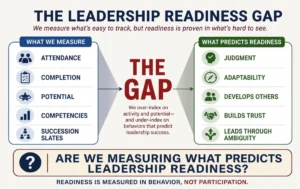
The effectiveness of software training has traditionally been measured by "vanity metrics," such as course completion rates and attendance logs. However, these metrics provide no insight into whether an employee can actually use the software to drive business value. To truly gauge success, organizations must move toward performance-based metrics:
- Time to Proficiency: How long does it take for a new user to complete a standard workflow without assistance?
- Support Ticket Volume: Are help desk requests decreasing for specific tasks following a rollout?
- Error Rates: Is data being entered accurately, or are "exception" errors rising?
- Feature Adoption: Are employees utilizing the advanced features of the software, or are they sticking to a limited, inefficient set of basic functions?
Data-driven L&D departments are now using these KPIs to identify "friction points" in software adoption. If data shows a high error rate in a specific module, the response is no longer to schedule another mandatory seminar, but to deploy a targeted in-app tooltip or a 30-second instructional "nudge."
Industry Reactions and the Path Forward
Industry leaders are increasingly vocal about the need for this evolution. CIOs (Chief Information Officers) note that the "ROI of software is zero if the employees don’t use it correctly," emphasizing that software spend must be matched by "enablement spend." Meanwhile, L&D specialists argue that their role is shifting from "content creators" to "experience designers," focusing on the ecosystem of support surrounding the worker.
Critics of traditional methods point out that the "Day One" approach often creates a false sense of security. Managers may believe their team is "trained," only to find productivity plummeting two weeks later. The emerging consensus is that software enablement is a marathon, not a sprint. It requires a structured approach to onboarding that includes spaced reinforcement—short, frequent prompts that bring knowledge back to the surface before it fades.
Conclusion: Redefining the Finish Line
Software training remains a vital component of organizational success, but its purpose must be redefined. It should serve as the foundation for understanding the "why" behind a system—the logic, the data flow, and the business goals. It should not be the primary vehicle for the "how."
The goal of modern software enablement is to stop treating training as the finish line. An effective strategy recognizes that the most important learning happens after Day One, in the messy, high-pressure environment of daily operations. By combining foundational formal learning with continuous, contextual support, organizations can bridge the gap between initial exposure and true mastery. When help is available at the moment of need, employees can stop struggling with the tools and start focusing on the work the tools were designed to facilitate. In this new model, success is not measured by who stayed awake through a slideshow, but by the speed, accuracy, and confidence with which an organization can navigate its digital future.