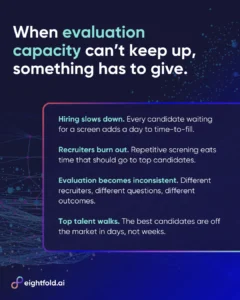
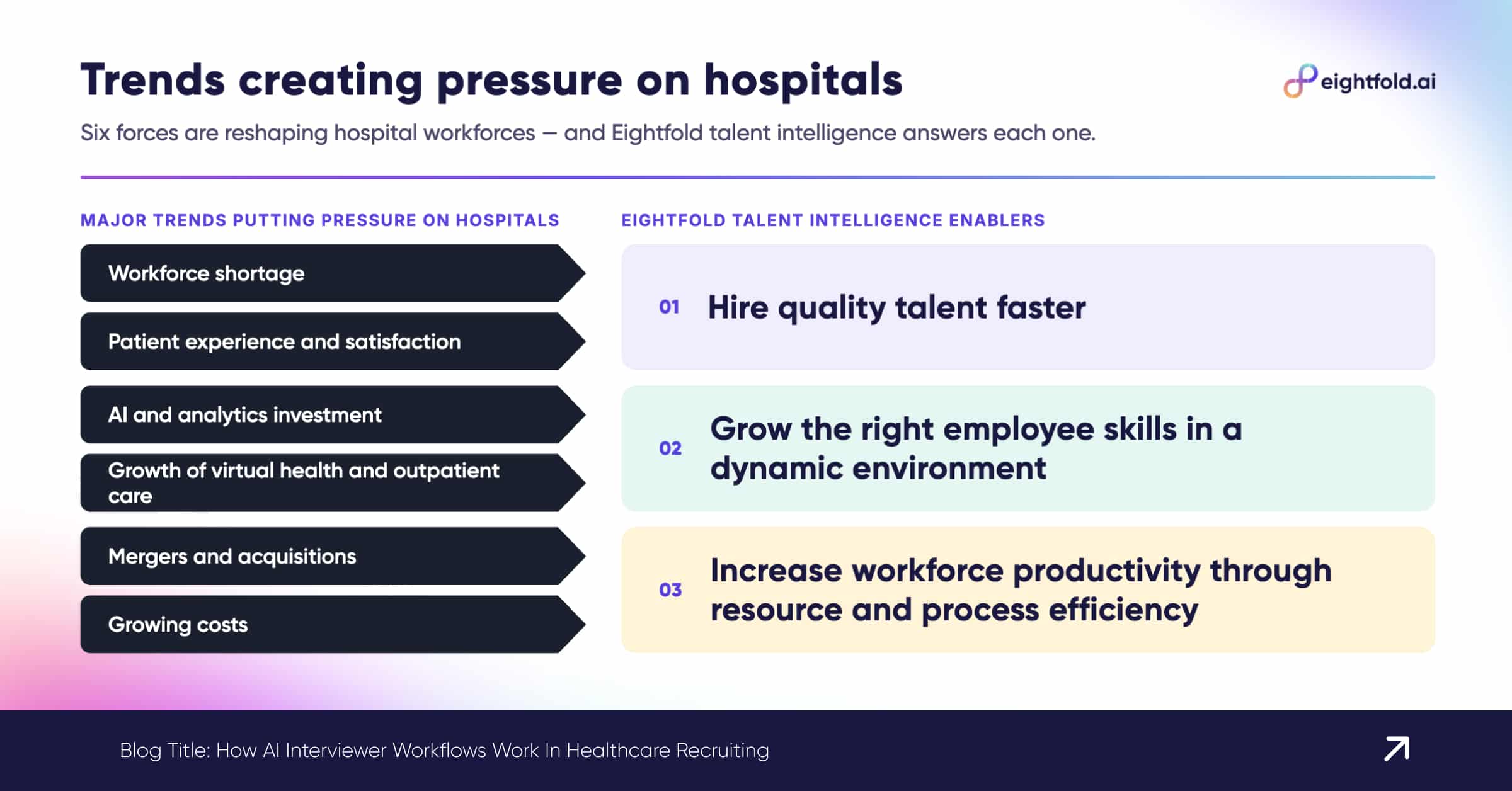
The healthcare industry is grappling with an unprecedented surge in recruitment volume, a challenge for which traditional hiring models were simply not designed. Health systems nationwide are simultaneously managing hundreds, if not thousands, of open requisitions. These span critical roles from Registered Nurses (RNs) and medical technologists to patient care technicians, environmental services staff, and revenue cycle specialists. The urgency is palpable; an unfilled shift translates directly into a tangible operational deficit, impacting patient care and staff well-being. In response to this escalating demand and persistent talent shortages, healthcare organizations are increasingly turning to AI interviewer workflows, a technological solution designed to scale recruitment efforts efficiently without a proportional increase in recruiter headcount.
The core problem AI interviewers address is the inherent scalability issue in human-led recruitment. A single recruiter can only conduct a finite number of structured phone screenings per day. As the number of open positions grows, adding more recruiters becomes a costly and often slow solution. Furthermore, each additional screening step introduced into the hiring pipeline inevitably lengthens the time it takes to fill a position. AI interviewer workflows offer a paradigm shift, enabling interviews to scale in lockstep with requisition volume, thereby closing critical talent gaps more rapidly.
Understanding the AI Interviewer Workflow
At its heart, an AI interviewer workflow involves a structured, conversational interview conducted by an artificial intelligence agent. This AI is programmed to evaluate candidates against predefined competencies for a specific role, delivering consistent and comparable results for every applicant. This consistency is a key differentiator. Human recruiters, by their nature, may ask different follow-up questions or weigh responses differently, even when screening for the same position. An AI interviewer, however, poses the same core questions in the same manner to every candidate, ensuring that variations in evaluation stem solely from the candidate’s responses, not the interviewer’s subjectivity.
The broader application of AI in healthcare recruiting encompasses the strategic use of Talent Intelligence. This involves leveraging AI for a range of recruitment functions, including sourcing qualified candidates, matching skills to job requirements, facilitating candidate communication, and streamlining interview scheduling. The AI interviewer is a specific component within this larger ecosystem, focused on gathering interview evidence while other AI-powered tools manage the logistical aspects of scheduling. It’s crucial to note that AI interviewers are not autonomous hiring authorities. Human oversight remains essential at every critical decision point, including the final selection of candidates.
The effectiveness of AI interviewers hinges on the quality and currency of the data they are trained on. Inaccurate inputs, outdated criteria, or data drift can lead to distorted outcomes. While bias-audited hiring practices and continuous monitoring are implemented to identify and mitigate these risks, achieving a completely bias-free process remains an ongoing challenge.

The Pressures Driving AI Adoption in Healthcare Hiring
Several significant factors are compelling healthcare talent acquisition (TA) teams to embrace AI interviewer workflows with renewed urgency:
- Volume: Healthcare experiences exceptionally high turnover rates and a constant demand for staff, particularly in roles that operate 24/7. The sheer volume of open positions means hiring cannot afford to pause due to recruiter bandwidth limitations. AI interviewers are particularly adept at handling high-volume, hourly hiring scenarios, significantly reducing time-to-hire.
- Consistency and Compliance: The healthcare sector is subject to stringent compliance regulations and rigorous audits. A bias-audited, structured interview process, such as that provided by AI interviewers, is more easily defended and compliant with these demanding standards. The ability to demonstrate a consistent evaluation methodology is paramount.
- Candidate Experience: Clinical candidates, in particular, often have multiple employment options. A slow, inconsistent, or impersonal hiring process can be a significant deterrent, leading them to accept offers from competing organizations. AI interviewers, when implemented effectively, can enhance the candidate experience by offering flexibility and transparency.
How AI Interviewer Workflows Function in Practice
The implementation of an AI interviewer workflow begins with recruiters or TA leaders defining the core competencies and interview guide for a specific role. Candidates then engage with the AI interviewer, typically asynchronously via video or voice, answering a standardized set of questions. The AI agent evaluates each response against the pre-defined competencies, moving beyond simple resume keyword matching to assess nuanced skills and aptitudes. The output is a structured report delivered directly to the recruiter’s pipeline within their Applicant Tracking System (ATS).
This process ensures that every candidate is assessed using the same rubric, irrespective of the recruiter involved or the timing of the interview. The AI interviewer scales seamlessly from a single applicant to thousands, maintaining its rigorous evaluation standard. It is important to clarify that the AI interviewer’s role is focused on the initial evaluation; it does not handle scheduling or candidate tracking, which remain within the purview of the ATS. The AI interviewer integrates into the existing pipeline, augmenting rather than replacing current systems. More advanced applications, such as 360-degree interviews, can even consolidate screening, functional, coding, and language assessments into a single, AI-orchestrated conversation.
An agentic AI recruiting platform can orchestrate these complex healthcare hiring workflows, ensuring that critical judgment remains with human decision-makers. This involves a series of carefully defined stages:

- Role Planning: Talent Intelligence tools help define role criteria, with human leaders approving these essential parameters.
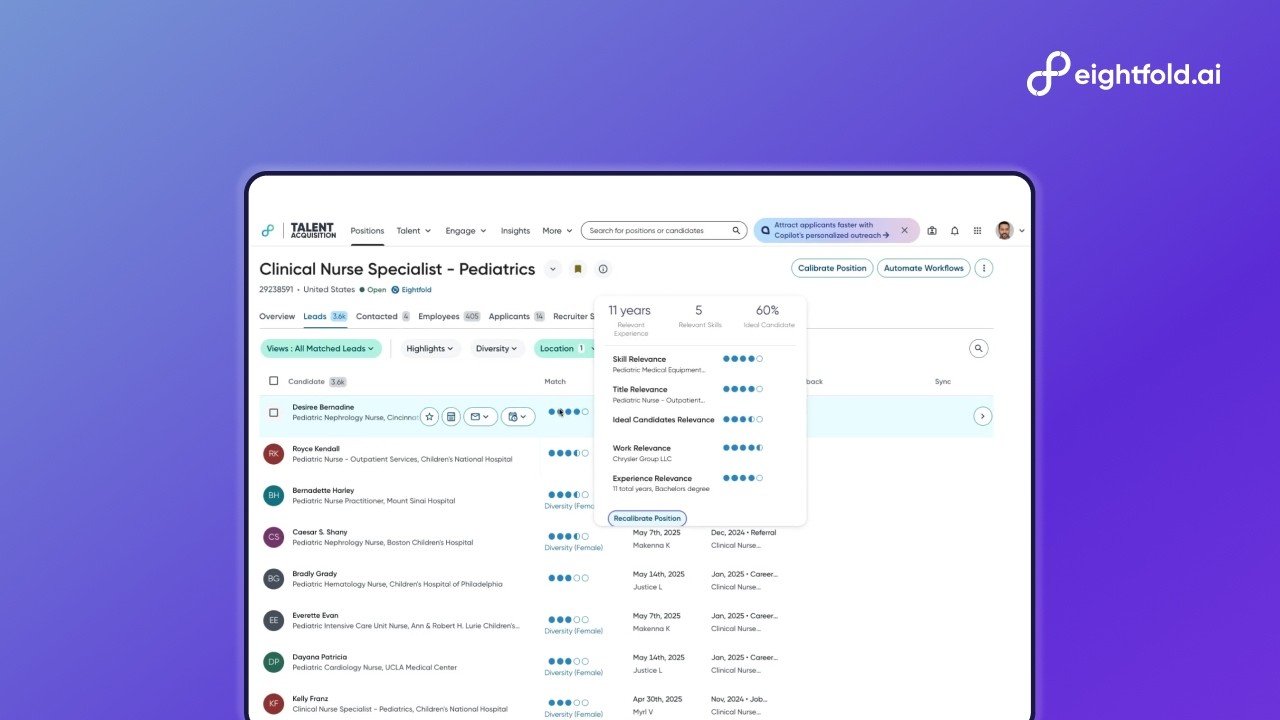
- Applicant Review: Skills matching technology identifies suitable candidates, followed by recruiter review of the contextual information provided.
- First Conversation: The AI Interviewer conducts the initial assessment, with recruiters then reviewing the generated evidence.
- Skills Validation: This stage may involve functional or language assessments, with the hiring team interpreting the results.
- Interview Logistics: Talent Agents coordinate scheduling, with human teams setting the specific rules for calendar management.
- Candidate Updates: Communication agents provide candidate updates, with recruiters overseeing the messaging strategy.
- Pipeline Oversight: ATS reporting offers visibility into the recruitment funnel, with the talent team monitoring overall outcomes.
Addressing Common Misconceptions About AI Interviewers
Several prevalent misconceptions surround AI interviewers, particularly in high-stakes fields like healthcare:
- AI Replaces the Recruiter: This is a fundamental misunderstanding. The AI Interviewer handles the first round of evaluation, freeing up recruiters to focus on higher-value tasks. The recruiter continues to make the ultimate hiring decisions and manages all subsequent stages of the recruitment process. The AI acts as a bottleneck remover, not a role eliminator.
- AI Cannot Fairly Assess Individuals: A well-designed AI interviewer workflow can actually reduce bias. Instead of relying on subjective human signals like tone of voice, background similarity, or a recruiter’s daily stress levels, AI grounds assessments in verifiable capabilities. While risks of bias are not entirely eliminated, the criteria become explicit and auditable, a level of transparency often lacking in informal phone screens. Robust AI bias testing is crucial to ensure fairness.
- Candidates Dislike AI Interviews: Contrary to this belief, data from organizations utilizing AI interviewers often reveals high candidate Net Promoter Scores (NPS). Candidates frequently report AI interviews as fair, transparent, and less stressful than traditional phone screenings. This is largely due to the flexibility offered; candidates can complete the interview on their own schedule, rather than being confined to a recruiter’s limited availability.
The Limits of AI and the Need for Explicit Controls
It is imperative to acknowledge that AI recruiting tools have limitations. Their performance is directly correlated with the quality and representativeness of the data they process. No AI system can be entirely "zero bias" or "100% bias-free." Healthcare organizations must implement explicit controls and governance structures. This includes publishing transparency statements, providing clear candidate notices, offering accommodation pathways, and mandating human review for all significant decision points. For jurisdictions with specific regulations, such as New York City, independent bias audits conducted within a defined timeframe (e.g., annually) are essential. A comprehensive governance framework for ethical AI interviewer implementation is critical.
Risks associated with AI in hiring can be effectively managed through robust controls:
- Risk: Poor Data or Drift:
- Control: Validate input data rigorously and implement regular monitoring of AI performance.
- Owner: TA Analytics Team.
- Risk: Discrimination or Automation Bias:
- Control: Conduct regular outcome testing and mandate human recruiter review of all AI-generated assessments.
- Owner: Compliance Lead.
- Risk: Access or Language Barriers:
- Control: Offer comprehensive accommodations and alternative assessment methods for all candidates.
- Owner: Candidate Operations Team.
- Risk: Privacy, Stale Criteria, ATS Handoffs:
- Control: Limit data usage, refresh criteria periodically, and ensure seamless reconciliation of data transfers with the ATS.
- Owner: Privacy, Clinical, and HRIS Leads.
Expanding Recruiter Capacity While Retaining Accountability
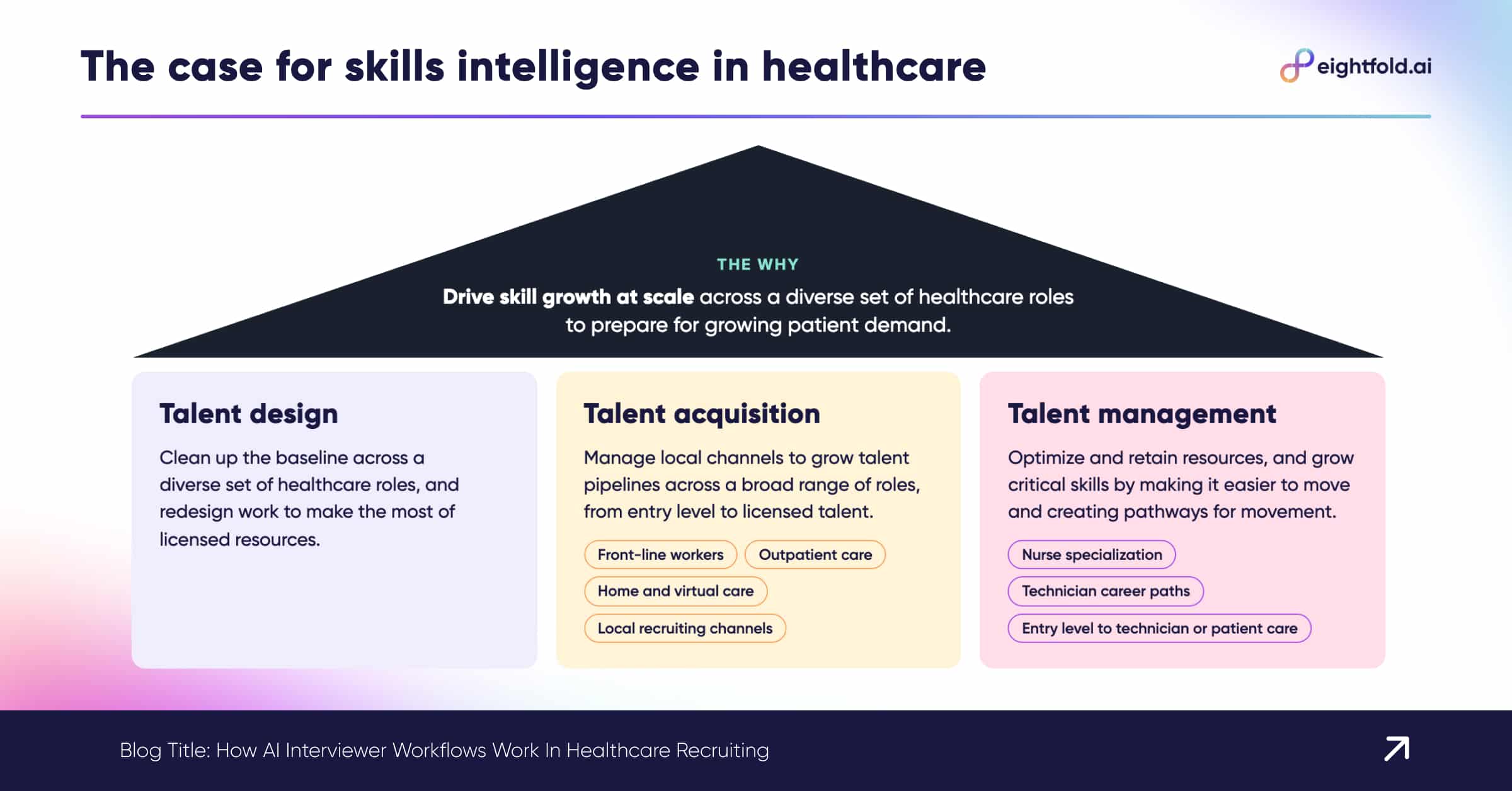
An AI Interviewer workflow fundamentally expands recruiter capacity. By automating repetitive first-round conversations, note-taking, and calendar coordination, it liberates recruiters to engage more deeply with candidates and address critical staffing needs. Human accountability remains firmly in place: recruiters define the core competencies, arrange necessary accommodations, verify credentials, investigate any anomalies, and ultimately make every final hiring decision.
Evidence from early adopters, such as Amgen using Eightfold’s platform, indicates significant improvements. These include a reduction of 1 to 1.5 days in initial review time and a 90% to 92% increase in recruiter efficiency over a 3-to-5-month period. While results can vary based on workflow specifics and data quality, continuous monitoring for drift and potential discriminatory outcomes as candidate pools evolve is crucial.
High-Volume Healthcare Roles Benefiting from AI Interviewers
Healthcare TA teams are prioritizing AI interviewer workflows in areas where the dual pressures of high volume and the need for consistency are most pronounced. This includes:
- High-Volume Clinical Support Roles: Positions like Certified Nursing Assistants (CNAs) and patient care technicians, which see a constant influx of applicants.
- Allied Health Positions: Roles with well-defined skill sets and competencies that can be effectively assessed by AI.
- Multi-Site Roles: Positions that require a standardized evaluation across numerous facilities, ensuring a uniform hiring bar.
The primary advantage across these categories is the provision of a structured, repeatable first-round evaluation that is not dependent on the specific recruiter assigned to the requisition. This approach aims to standardize the initial assessment phase, not necessarily to dictate the outcomes of highly specialized or difficult-to-fill niche roles.
Key Questions for Healthcare TA Leaders Evaluating AI Interviewers
Before embarking on an evaluation of AI interviewer workflows, healthcare TA leaders should address several critical internal questions:
- Role Prioritization: Which roles present the greatest volume and standardization opportunities, making them ideal candidates for AI-driven screening? Typically, these are positions with the highest requisition counts and the most compliance-sensitive requirements, rather than the most challenging specialty roles.
- Interview Guide Management: Who will be responsible for defining and maintaining the interview guide as job requirements evolve? This requires a clear ownership and update process.
- ATS Integration: How will the AI interviewer’s output seamlessly integrate with the existing ATS, ensuring it augments rather than creates a parallel, siloed process?
- Compliance and Legal Review: What are the specific requirements from compliance and legal departments regarding how interview criteria are defined, audited, and reported?
Integrating AI into Healthcare Recruiting Without Adding Complexity
A pragmatic approach to implementing AI in healthcare recruiting involves starting with a narrow pilot. This typically means introducing one AI interview step for a single high-volume role. The objective is to demonstrate a reduction in friction and an improvement in efficiency before expanding the rollout.
A pilot scorecard should track key metrics:
- Speed and Experience: Application-to-interview time, interview completion rates, and candidate NPS.
- Operations and Risk: Recruiter hours saved, demographic outcome differences, and the volume of escalations requiring human intervention.
Evidence suggests that well-executed pilot programs can achieve significant hiring cycle compression, reducing the average time from 42 days to as little as 5 days in controlled rollouts. While these figures represent achievable outcomes, they are not universally guaranteed for every organization.
Post-pilot, leaders require a consolidated view of performance. A CHRO-level dashboard that integrates talent management and talent acquisition metrics—such as attrition rates, internal hire rates, offer acceptance rates, and average days to fill—alongside data on skills in demand versus internal skill supply, provides crucial strategic insights.
The Bottom Line: AI Interviewer Workflows in Healthcare
An AI interviewer workflow represents a standardized, agent-conducted interview designed to evaluate every candidate against a consistent set of criteria, scaling as required by the role. Its significance in healthcare recruiting stems from the confluence of high volume, stringent compliance scrutiny, and the imperative for a positive candidate experience. These factors collectively demand a first-round evaluation process that is consistent, auditable, and does not become a bottleneck due to recruiter bandwidth constraints. The ultimate success and integration of this technology depend on the specific roles, regulatory environments, and existing workflow architectures into which it is embedded. At its core, it is an intelligent agent performing interviews consistently at scale.
Frequently Asked Questions
How does AI interview scheduling work in healthcare recruiting?
AI interview scheduling systems allow candidates to select available time slots directly from a synchronized calendar, verifying real-time availability across multiple interviewers and accounting for time zone differences. Automated confirmations and reminders are standard. For healthcare, this is particularly beneficial as clinical hiring managers often have unpredictable shift schedules. The system can incorporate blackout dates tied to patient care needs, and automatically re-book appointments if a candidate or manager needs to reschedule. This process keeps high-volume hiring for roles like RNs and allied health staff moving efficiently, bypassing traditional scheduling bottlenecks and reducing time-to-fill.
What does bias-audited hiring mean for AI interviewers in healthcare?
Bias-audited hiring signifies that an independent third party has statistically tested the AI interviewer’s scoring outputs across various demographic groups, including race, gender, and age. The goal is to confirm that no group is disproportionately screened out, typically adhering to the "four-fifths rule." This rule flags adverse impact when a selection rate for one group falls below 80% of the selection rate for the highest-scoring group. Regulations like NYC Local Law 144 mandate annual audits. A comprehensive audit report should be publicly accessible and regularly updated. Organizations should inquire about the vendor’s audit documentation, methodology, and the specific demographic categories tested before deploying AI interviewers at scale.
Does the AI Interviewer integrate with existing healthcare ATS platforms?
Yes, most AI Interviewer platforms are designed to integrate with major healthcare ATS platforms through APIs or native connectors. This integration allows for automatic synchronization of candidate records, interview scores, and status updates, eliminating the need for manual data re-entry by recruiters. Common integrations include platforms widely used in the healthcare sector, such as Workday and iCIMS. Prospective buyers should verify bidirectional synchronization capabilities and whether the integration requires custom IT work or operates out-of-the-box. For example, Eightfold AI has integrated its agentic interviewing capabilities with Oracle Fusion Cloud Recruiting.