A subtle yet pervasive force within any organization, leadership energy, is emerging as a critical determinant of success, directly impacting performance and resilience. While often overlooked and seldom quantified, this dynamic element shapes everything from individual motivation to overarching organizational outcomes. Recent analyses highlight that the most effective leaders, even those demonstrating exceptional capability, remain intrinsically reliant on the supportive organizational structures and interpersonal dynamics surrounding them. Understanding and actively cultivating leadership energy, therefore, is not merely a matter of individual leader development but a strategic imperative for sustainable organizational achievement.
The subtle erosion of effectiveness within an organization can often be traced back to shifts in this invisible yet potent force. Consider a scenario where a high-performing director, once a vibrant contributor, begins to exhibit a noticeable decline in engagement, becoming withdrawn in meetings despite retaining their core capabilities. Concurrently, established processes, such as inter-team handoffs that once operated with seamless efficiency, start encountering friction. Misalignment becomes common, and a palpable sense of distrust permeates interactions between previously collaborative groups. As the fiscal quarter concludes, multiple departments report falling short of their targets, with each unit operating under the conviction that their struggles are isolated incidents, unrelated to the challenges faced by their colleagues.
On the surface, these issues appear disparate, each seemingly requiring a distinct solution: a targeted coaching intervention for the disengaged director, a specific boundary-spanning initiative for the fractured teams, and a comprehensive performance audit for the underperforming departments. However, a deeper examination suggests a common root cause, manifesting across various organizational functions. This unifying factor is leadership energy.
Energy, in the context of organizational dynamics, is a frequently misunderstood and inadequately measured driver of performance. When viewed with clarity, it is a cultivable asset, something leaders can foster within themselves and empower others to develop. At an organizational scale, it represents a fundamental reason for institutions to design systems that sustain energy rather than inadvertently deplete it. Emerging research underscores the significant cost of de-energizing relationships and provides actionable strategies for organizations to address this critical area.
What Constitutes Leadership Energy?
Leadership energy serves as a crucial barometer, dictating whether an organization’s collective efforts build sustainable momentum or fragment into inefficiency. It is the underlying capacity that underpins employee motivation, morale, and ultimately, overall organizational performance. More importantly, it acts as a leading indicator, signaling the trajectory of performance well before quantifiable results fully materialize.
To grasp the multifaceted nature of leadership energy, it is helpful to conceptualize its operation across three interconnected levels:
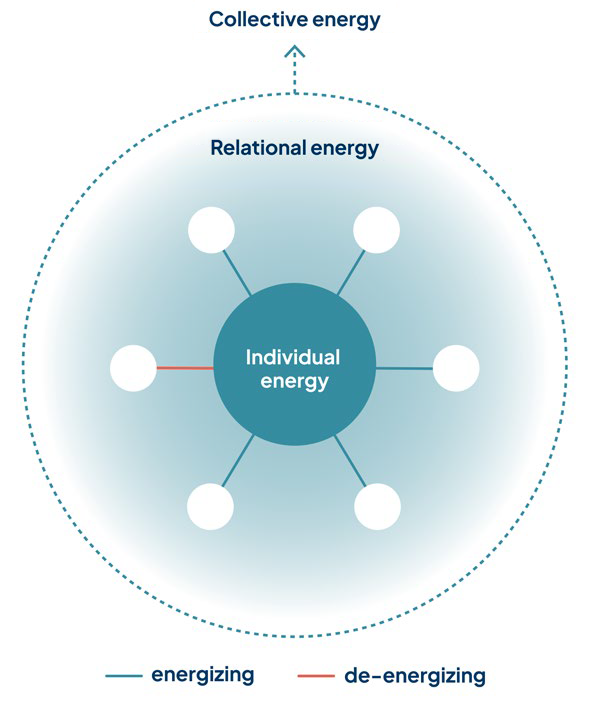
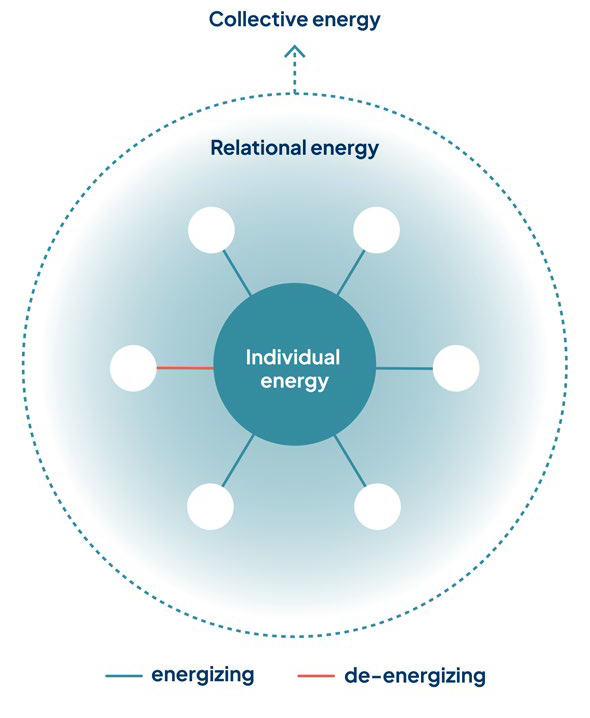
- Individual Energy: This refers to the personal reserve of vitality, enthusiasm, and mental fortitude that a leader brings to their role. It is influenced by factors such as personal well-being, resilience, and the leader’s own sense of purpose and engagement.
- Relational Energy: This level encompasses the dynamic energy exchanged between individuals within the organization. Positive interactions, characterized by trust, respect, and effective communication, generate energizing effects, fostering collaboration and problem-solving. Conversely, negative interactions, marked by conflict, criticism, or a lack of psychological safety, can be profoundly de-energizing. Research indicates that the impact of a single de-energizing relationship can be disproportionately detrimental, outweighing the benefits of multiple positive connections.
- Collective Energy: This represents the cumulative energy that emerges from the compounding of individual and relational exchanges across the entire organization. A high collective energy fosters a sense of shared purpose, innovation, and a collective drive towards common goals. Conversely, a pervasive lack of energy at the individual and relational levels can lead to organizational inertia, widespread disengagement, and ultimately, stalled performance.
The interplay of these three levels creates a powerful feedback loop. An individual leader with high personal energy can positively influence their immediate team, and if these relational exchanges are consistently energizing, this positive impact can ripple outward, contributing to a robust collective energy. Conversely, a leader experiencing burnout or consistently engaging in de-energizing interactions can drain their team, creating a negative cascade that impacts broader organizational effectiveness.

Energy Management: A Shared Responsibility
While cultivating and managing energy is undeniably a core leadership capability, it extends beyond the sole purview of individual leaders. Effective energy management commences with a leader’s commitment to self-awareness and the adoption of sustainable personal habits. However, a comprehensive understanding of organizational energy necessitates acknowledging factors that lie beyond any single leader’s direct control: the very systems and structures within which they operate.
When individual leadership development efforts are harmonized with the cultivation of a healthy leadership ecosystem, the synergistic effect amplifies performance. Consider the example of a director who, through 360-degree feedback, identifies that their team meetings are consistently draining, not due to their frequency, but because of an open-ended discussion format lacking clear objectives and outcomes. Upon restructuring these meetings to be more focused and productive, the team responds positively, experiencing renewed engagement. Yet, if other departments within the organization continue to operate with inefficient meeting practices, the director’s team, despite their individual improvements, may remain susceptible to the broader organizational drain.
This scenario underscores a critical point: Even when a leader implements the correct strategies for their immediate sphere of influence, their efforts can be undermined by an organizational environment that inadvertently saps energy. The cost of treating energy solely as a personal responsibility, rather than a shared organizational one, is substantial. It means that even the most well-intentioned fixes may prove unsustainable if they are not supported by a conducive organizational system.
The Outsized Impact of De-Energizing Relationships
Research has consistently demonstrated that not all interpersonal relationships carry equal weight in shaping organizational dynamics. A single de-energizing relationship can incur costs far exceeding initial perceptions, and often, this detrimental effect is experienced unilaterally, with only one party in the dyad feeling drained.
A comprehensive study, drawing on assessment data from over 600 leadership teams, quantified the significant influence of energy dynamics. This research measured how interactions with each individual member affected team members’ energy levels. The findings revealed a stark imbalance: the negative energy emanating from one relationship can destabilize team functioning and erode key performance indicators.
Crucially, the detrimental impact of negative energy does not remain confined to the immediate interaction between two individuals. It actively shapes outcomes that dictate a team’s overall capacity. For instance, psychological safety, a well-established predictor of high team performance, is particularly vulnerable. A single de-energizing relationship can diminish psychological safety to a greater extent than multiple energizing relationships can enhance it. In fact, neutralizing the corrosive effect of one negative connection on psychological safety requires the presence of four strongly energizing relationships, and even then, the team is merely returned to a neutral state, not one of significant improvement.
When this mathematical principle is applied across an entire organization, the implications become profound. A handful of unaddressed negative relationships can effectively cap the potential for collective energy and, consequently, limit overall organizational performance. This highlights the imperative for organizations to proactively identify and mitigate these de-energizing dynamics.
Leadership Energy as a Lens for Familiar Challenges
The manifestation of leadership energy, or its absence, is at the core of many persistent organizational challenges that leadership development programs strive to address. Beyond the impact of individual relationships, negative energy can permeate organizational systems in various ways, contributing to a range of familiar issues.
One such challenge is decreased employee engagement. When leaders consistently operate from a place of low energy, or when organizational systems fail to replenish leader energy, it can lead to a pervasive sense of apathy and disinterest among employees. This disengagement often translates into reduced productivity, higher turnover rates, and a decline in overall organizational effectiveness.
Another significant challenge is strained team collaboration. In environments where relational energy is low or negative, teams struggle to communicate effectively, share information openly, and build the trust necessary for synergistic collaboration. This can lead to silos, duplicated efforts, and a general lack of cohesive action towards common objectives.
Furthermore, innovation and creativity can be stifled in low-energy environments. When leaders are depleted or when the organizational culture discourages risk-taking and open dialogue, employees are less likely to propose new ideas or challenge the status quo. The fear of negative repercussions or a general lack of enthusiasm can create an atmosphere where creativity withers.
Resistance to change is also often amplified in organizations with low leadership energy. Employees are more likely to embrace new initiatives and adapt to evolving circumstances when they feel energized, supported, and confident in their leadership. Conversely, a pervasive sense of depletion or uncertainty can foster a defensive posture, making it difficult to implement necessary organizational shifts.
Finally, talent retention suffers when leadership energy is consistently compromised. High-potential employees are drawn to environments where they feel valued, challenged, and inspired. When leaders are disengaged or the organizational culture is draining, top talent is more likely to seek opportunities elsewhere, leading to significant knowledge and experience loss.
Each of these challenges may present differently on the surface, but they often share a common underlying mechanism: leadership energy that is not being adequately preserved, renewed, or strategically guided. By viewing these issues through the lens of leadership energy, organizations gain a powerful diagnostic tool that can address multiple critical challenges simultaneously. The opportunity lies in identifying the confluence of a leader’s personal energy reserves and the surrounding organizational systems, and then strategically intervening at the appropriate level – individual, relational, or collective.

Energy as a Leading Indicator for Organizational Health
The interconnectedness of individual, relational, and collective energy means that shifts at one level inevitably have repercussions at others. This compounding effect makes leadership energy an exceptionally valuable leading indicator of organizational health and future performance. A subtle change in a leader’s energy, or the dynamics within a team, can signal potential issues long before they manifest in traditional metrics like engagement surveys or exit interviews.
Recognizing and interpreting these energy signals early can provide a critical advantage. It allows organizations to intervene proactively, shifting behaviors before they solidify into entrenched habits, and preventing habits from calcifying into a detrimental organizational culture.
When organizations develop the capacity to diagnose where energy is generated, shared, or lost, they can design targeted development initiatives. These interventions can focus on enhancing individual leaders’ energy management skills, strengthening the relational dynamics between team members, and fostering an overall leadership ecosystem that actively sustains and amplifies energy.
The "Energy Equation," a framework that provides the language to diagnose these dynamics, offers a powerful starting point. By understanding the underlying research and implementing specific development actions that address energy at its source, organizations can move beyond reactive problem-solving and cultivate a truly energized and high-performing environment. This holistic approach, recognizing the vital role of leadership energy, is essential for building resilience, fostering innovation, and achieving sustainable success in today’s dynamic business landscape.