Workday, a long-standing innovator in enterprise software for finance and human resources, has publicly detailed a comprehensive strategy to navigate the rapidly evolving landscape of artificial intelligence. This strategic pivot, unveiled with significant integration and clarity, leverages a substantial investment in acquisitions, a refreshed executive leadership team, and a redefined role for Workday within the burgeoning ecosystem of AI agents. The company’s approach signifies a determined effort to reassert its leadership by transforming its core "system of record" into a robust platform for intelligent automation.
The renewed focus comes as Aneel Bhusri, Workday’s co-founder, stepped back into the CEO role in early 2024, recognizing a perceived drift in the company’s startup culture and a lack of a clear artificial intelligence strategy. His return signals a proactive response to market dynamics, aiming to recapture the innovative spirit that defined Workday’s initial success. This strategic overhaul is built upon several key pillars, designed to position Workday not just as a provider of foundational enterprise data, but as the essential infrastructure upon which future AI-driven business processes will be built and managed.
The Genesis of Workday and its Foundational Impact
Workday’s journey began in 2008 with a revolutionary cloud-native platform. At a time when businesses were largely reliant on outdated on-premise client-server systems or less integrated Software-as-a-Service (SaaS) offerings, Workday introduced a groundbreaking architecture. This new model featured an object-oriented database, an integrated security and business rules engine, and a novel user interface that quickly captivated a broad spectrum of industries. The company’s core message, "Power of One," resonated deeply, promising a single, unified system for all HR and financial needs, built on a forward-looking architecture.
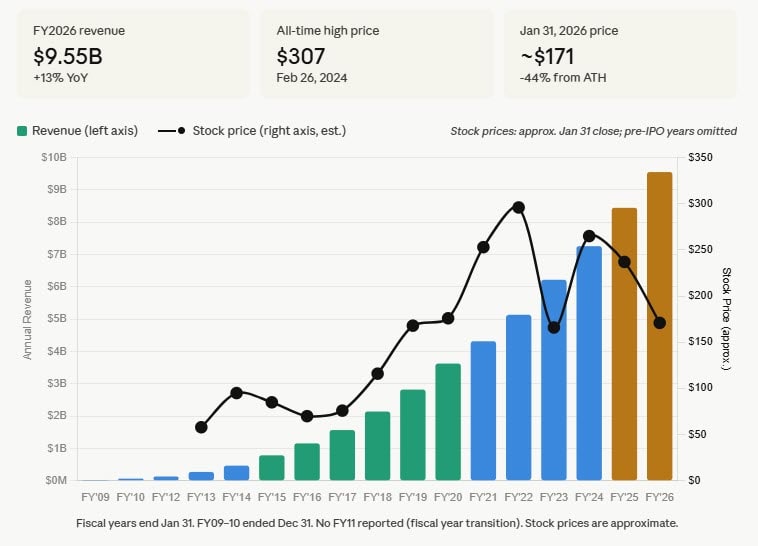
This approach fueled rapid growth, enabling Workday to capture a significant share of the enterprise market. The company now boasts over 11,500 customers, including more than 30% of the Fortune Global 2000, and serves over 75 million end-users. Throughout this expansion, Workday maintained a strong emphasis on its employee-first culture, attracting top talent in HR, IT, and garnering significant investor confidence. Aneel Bhusri’s leadership was instrumental in this growth phase, guiding the company until he transitioned the CEO role to Carl Eschenbach.
Addressing the AI Agent Challenge: A New Role for the System of Record
The advent of easily accessible AI agent development platforms presents a fundamental question for established enterprise software providers: what is the role of a "system of record" in a world where intelligent agents can seemingly perform complex tasks independently? Workday’s strategic answer is to transform its system of record into a "platform for agents."

The core of this strategy lies in unlocking the rich data, robust security, and intricate business rules embedded within Workday. By making these foundational elements accessible and governable, Workday aims to enable the secure, scalable, and rapid development of AI agents. The company argues that Workday provides the essential "rails" – the corporate rules, policies, security models, and compliance frameworks – that are crucial for agents to operate effectively and at scale within an enterprise context. Recreating this infrastructure outside of Workday is presented as an expensive, time-consuming, and inherently risky endeavor.
The Five Pillars of Workday’s Reinvention Strategy
Workday’s new direction is underpinned by five key arguments that articulate its evolving role in the AI era:
Pillar 1: AI as a Complement, Not a Replacement, for Enterprise Software
Workday asserts that while AI excels at probabilistic reasoning, it cannot autonomously handle core enterprise functions like payroll processing, financial closing, employee onboarding, or enforcing segregation of duties. These processes necessitate deterministic rules, established approval workflows, and data models refined over years of operational experience. Workday’s vision is to combine the power of probabilistic AI reasoning with the reliability of deterministic execution. The company contends that standalone agent platforms, operating on extracted enterprise data, are fundamentally incomplete because they lack this integrated, rule-based execution capability.
This perspective draws an analogy to physical infrastructure: autonomous vehicles, while advanced, cannot function without roads, traffic signals, and regulatory frameworks. Similarly, data centers require a stable electric grid. Workday’s argument is not merely about protecting its existing customer base, but about enabling innovation by providing a stable and scalable infrastructure that AI agents can leverage.
Pillar 2: Workday’s "Rails" as the Core of Enterprise AI
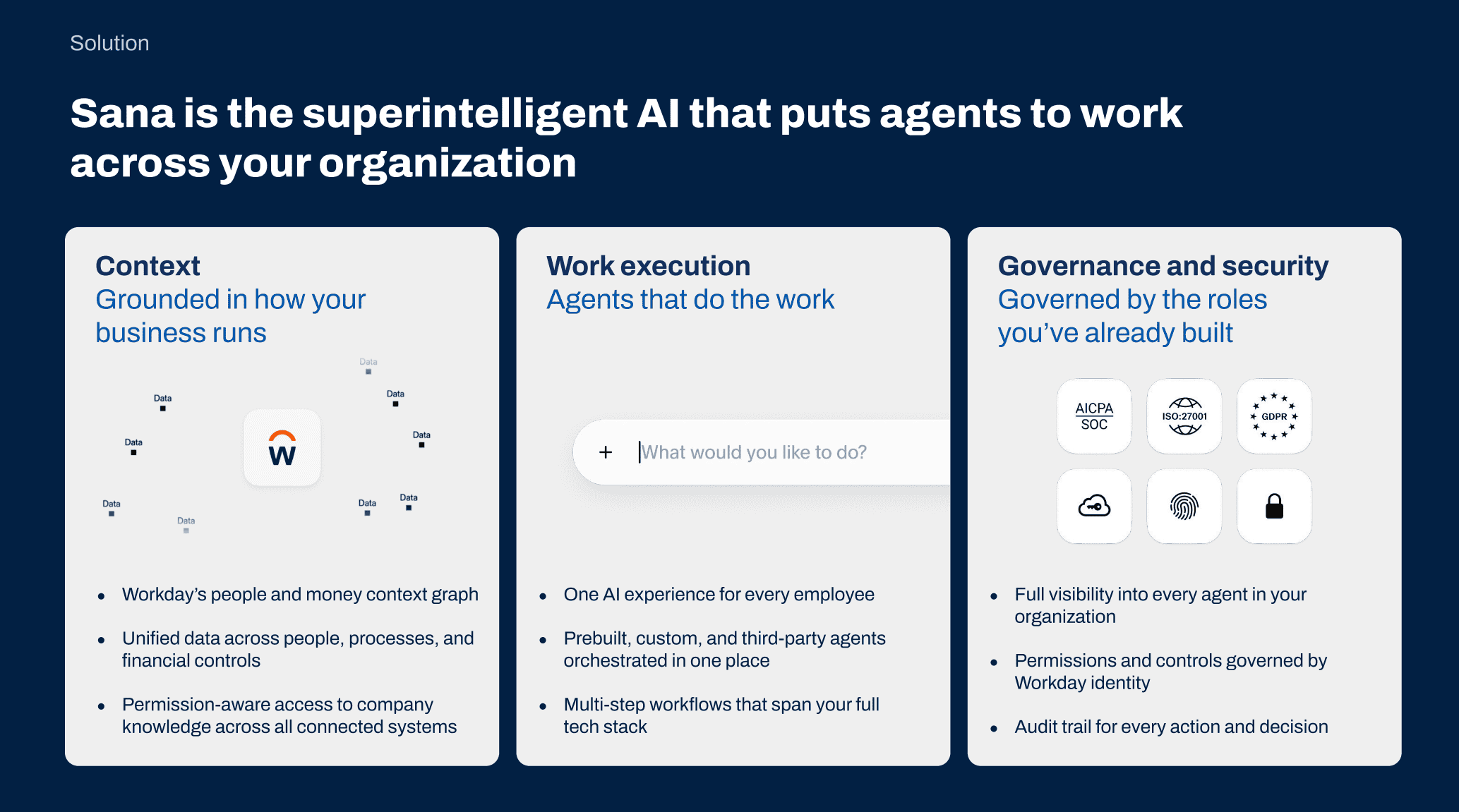
The intricate configuration and business process framework within Workday encapsulate each customer’s unique policies, approval hierarchies, compliance mandates, and organizational structures. These codified rules, in essence, represent the operational DNA of a company. Workday posits that agents operating outside of this framework lack the context to adhere to these critical business rules, potentially producing outputs that appear reasonable but violate compliance standards. By routing agent actions through Workday’s existing configuration, agents are inherently "lawful by default," ensuring adherence to enterprise governance.
This emphasizes the necessity of "coordination" and "rules" agents within any complex AI agent ecosystem. Workday’s proposition is to leverage its existing, mature framework for these essential functions, rather than requiring businesses to build them from scratch.
Pillar 3: Productizing Governance and Agent Management
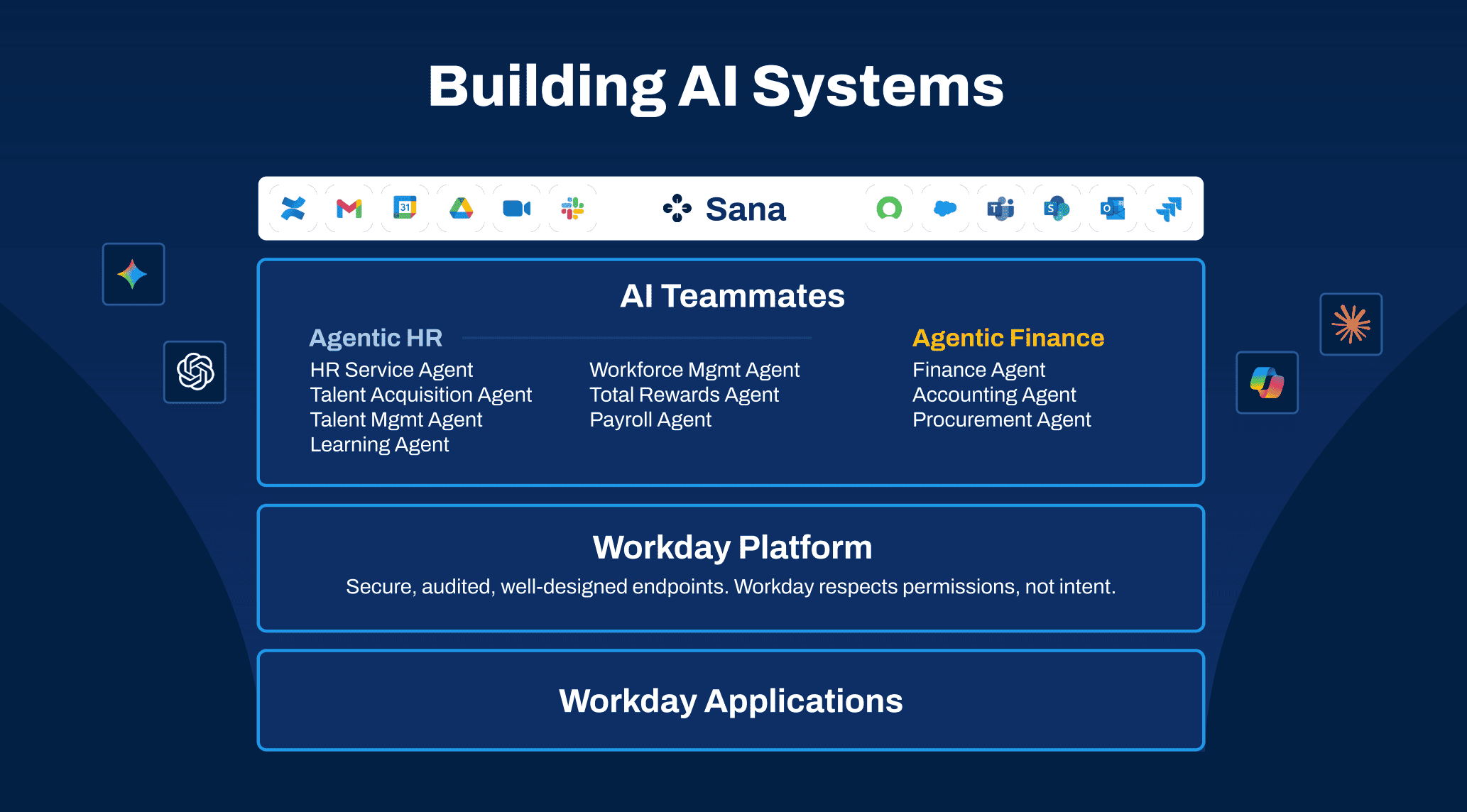
Workday aims to provide robust agent management tools as a core component of its future infrastructure. The company views agents as first-class citizens within the enterprise, possessing unique identities, defined skill sets, scoped authorization, and comprehensive audit trails. To address the potential sprawl and complexity of AI agents, Workday is introducing several productized layers:
- Agent System of Record: A system designed for registering and observing agents, already adopted by over twelve hundred customers.
- Standards-Based Access and Privilege Management: A new system for controlling agent permissions.
- Single Front Door for Agents: A unified interface for accessing both internal and external agents.
These offerings are positioned as enterprise-grade trust infrastructure designed to manage the proliferation of AI agents effectively. While this is a rapidly evolving and competitive space, with players like ServiceNow and Microsoft also offering agent management tools, Workday’s integrated approach within its existing ecosystem offers a compelling proposition for its customer base.
Pillar 4: The Unified Experience Through Sana
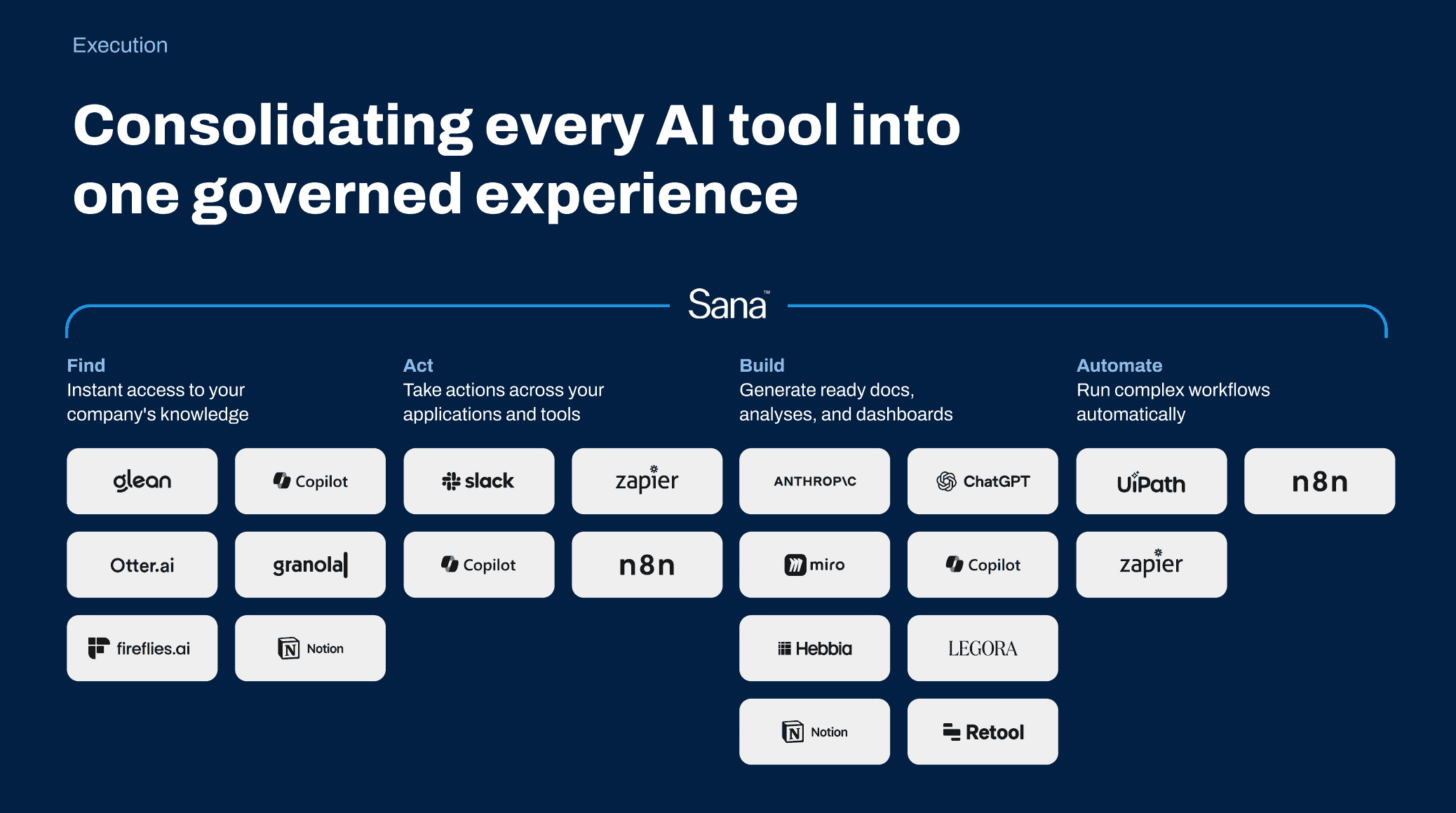
A significant element of Workday’s AI strategy is the integration of Sana, an AI-powered platform that serves as the new default user interface for Workday. Bundled for all customers, Sana for Workday can be extended to interact with other leading platforms like Salesforce, Slack, Microsoft Teams, and SharePoint through Sana Enterprise. This positions Sana as a direct competitor to other front-door AI agents, such as Microsoft Copilot.
Workday believes Sana represents the last enterprise application employees will ever need to learn, functioning as both an agent development studio and a learning surface. The potential of Sana extends beyond traditional training; it is envisioned as a platform for global employee enablement, driving significant improvements in productivity and reskilling. This dynamic learning platform is recognized for its profound impact on workforce development, enabling AI-native learning experiences.
Pillar 5: Outcome-Aligned Commercial Models
Shifting away from traditional per-seat licensing, Workday is moving towards a hybrid model that combines seat-based licensing with consumption-based pricing, utilizing "Flex Credits" as the unit of consumption. This new commercial approach aligns Workday’s revenue more closely with customer outcomes, measured by business growth, productivity gains, and enhanced management capabilities. APIs used by external platforms will also be metered per call, capturing revenue that Workday believes has historically been uncollected.
This model redefines the value proposition. Instead of paying for licenses based on employee count, customers are encouraged to view Workday as an "Agentic Business Platform" that performs actions on their behalf, with payment tied to the execution of those actions. This has the potential to drive significant growth as customers adopt more advanced agentic capabilities.
Workday’s Response to the "Build from Scratch" Mentality
The rise of powerful AI development tools like Claude Code, Codex, and Cursor has led some organizations to consider rebuilding their core HR and finance functionalities from the ground up using these new technologies. Workday directly addresses this trend by arguing that such an approach results in a "shadow ERP" that is prohibitively expensive to build, lacks a unified object graph and configuration system, and is inherently fragile. Furthermore, agents developed in such a manner are often "lawless by design," prioritizing task completion over rule adherence, thereby introducing significant risk. Workday asserts that these custom builds will inevitably necessitate the very security and workflow tools already present within its platform.
Navigating a Multi-Agent Future
Workday acknowledges that businesses will likely operate with multiple AI surfaces, including Microsoft Copilot, Anthropic Claude, Gemini Enterprise, Salesforce Agentforce, and internally developed custom agents. The company’s strategy embraces this reality, positioning its platform as the central hub for agent interaction within the enterprise.
External agents can access Workday through an "Agent Gateway," utilizing open standards. They can delegate tasks to Workday agents, inheriting Workday’s governance "rails," or directly call Workday APIs, which are now metered. In scenarios requiring interaction with people, financial transactions, or regulated workflows, reasoning is handed off to Workday for secure and compliant execution.
This approach offers a compelling proposition for developers. If Workday’s new Sana-based Agent Developer platform proves as accessible and powerful as demonstrated, it could significantly lower the barrier to entry for building Workday Extend applications. This ease of development is crucial for fostering an ecosystem of innovative agents that leverage Workday’s robust backend.
Enhancing Dynamism: The Promise of Dynamic Reconfiguration
Traditionally, cloud-based enterprise systems have faced criticism for slow product release cycles and lengthy implementation times. Workday’s bi-annual update schedule and interlinked product roadmaps have sometimes led to customers waiting years for new features. To address this, Workday is implementing two key changes:
-
Extended Workday Capabilities via Sana: The integration of Sana and the new UX allows for the registration of agents within the Agent System of Record, enabling the rapid development of new applications without extended wait times. Furthermore, Workday is actively building an Agent Partner Network to facilitate the creation of industry-specific and advisory agents.
-
The Deployment Agent: This dynamic system testing, configuration, and consultative deployment system significantly accelerates the process of deploying changes. It empowers customers to configure and deploy Workday in as little as a week, reducing reliance on expensive systems integrators. This also paves the way for more continuous rollout of new releases and features, drastically lowering implementation and ownership costs. This innovation is poised to disrupt traditional Workday system integrator partners, as evidenced by early customer successes.
Analysis: A Founder’s Vision for a New Era
The strategic reorientation at Workday, particularly under the renewed leadership of co-founder Aneel Bhusri, signifies a critical turning point for the company. This revitalization is marked by several key observations:
1. The Founder’s Return and Renewed Energy
As seen with prominent tech leaders like Steve Jobs at Apple and Howard Schultz at Starbucks, a founder’s return can often reignite a company’s innovative drive and strategic clarity. Aneel Bhusri, with his deep understanding of technology and the Workday market, is uniquely positioned to define the company’s next chapter. He has been instrumental in rebuilding the executive team and implementing a more focused "General Manager" model for product areas, particularly concerning AI initiatives. This includes establishing clear ownership for the Agent Factory and AI APIs, and fostering a cross-functional AI task force. The company has reportedly narrowed down numerous agent projects to a more manageable fifteen, signaling a return to a more agile, startup-like culture, mirroring recent strategic consolidations observed at companies like Microsoft.
2. Leading the Charge in Agentic HR and Finance
Workday is strategically positioning itself to lead the transformation of HR and finance functions through AI agents. Rather than focusing on incremental agent implementations within existing workflows, the company is betting on large-scale, transformative agents. The acquisitions of Paradox and Sana, both leaders in AI-driven recruitment, agents, and learning, provide Workday with a management team possessing deep expertise in agentic applications. This allows Workday to showcase how existing infrastructure can be leveraged to facilitate agentic futures, proactively guiding businesses toward redefining operational paradigms. The true ROI in agentic technology often comes from automating entire workflows, not just individual tasks, a future that Sana and Paradox embody.
3. Sana and Paradox: Catalysts for Change and New Leadership
The integration of Sana and Paradox brings new leadership and dynamic capabilities to Workday. Adam Godson, CEO of Paradox, now leads Workday’s entire talent acquisition platform, including its ATS and intelligence systems acquired from HiredScore. This is a critical move in a highly competitive market. Similarly, Joel Hellermark, CEO of Sana, now spearheads Workday’s learning platform and AI layer, encompassing Workday Learning. As General Managers, these leaders are responsible for product strategy, revenue, and customer support, fostering a high degree of accountability and driving increased product velocity and competitiveness. The advancements in talent acquisition and corporate learning, areas where AI is most mature within HR, are expected to influence agentic redesigns across other Workday product lines. The market valuation of companies like SmartRecruiters (acquired for $1.8 billion) and Glean (valued at $7.2 billion) underscores the significant market potential of these domains.
4. Defining Enterprise AI Infrastructure
Workday has an opportunity to play a pivotal role in defining the architecture of enterprise AI. The current landscape is complex, with questions surrounding the optimal number and type of agents, the balance between "action" and "observation" agents, and the hierarchy and permissions governing agent interactions. Workday’s historical role as a "system of record" provides a foundation for establishing governance layers that can manage the complexities of LLMs, semantic and rules engines, agent code orchestration, and runtime trust layers encompassing security and compliance. While competing with major players like Microsoft, Anthropic, and Google, Workday’s deep integration within the ERP and HCM space positions it to take a leadership role in shaping how enterprise AI is deployed and managed.
5. Understanding Context and Semantic Layers
Joel Hellermark’s observation that "everyone is ignoring the big boring problem of bad context" resonates deeply with the challenges of AI implementation. Workday recognizes that context is paramount to creating value and ensuring the trustworthiness of AI agents. The company is investing in knowledge graphs and context engineering, understanding that improvements in accuracy often stem from richer contextual data rather than solely from larger AI models. Workday’s evolution of its Data Cloud to encompass business semantics – including skills models, cost centers, career paths, and certification workflows – signifies a move towards thinking like an AI company rather than a transactional vendor. This focus on semantic understanding is crucial for building truly intelligent and reliable agents.
Conclusion: A Reinvention on the Horizon
The recent strategic announcements and leadership changes at Workday mark a significant turning point. The company appears poised to reinvent itself, pioneer new solutions, and empower its customers and partners to embrace the burgeoning business agent revolution. With new product leadership, a strengthened AI infrastructure, and a focus on enabling near real-time system testing and reconfiguration, Workday is positioned for a substantial reinvention.
For financial analysts, the immediate impact of products like Sana and Paradox, alongside new enterprise AI management tools, is expected to drive significant revenue growth. The proven value these acquired companies bring to Workday customers, based on years of close collaboration, suggests a rapid path to market impact. Workday’s strategic pivot, driven by a renewed founder’s vision and a commitment to leveraging its foundational strengths, positions it as a key player in the future of enterprise AI.