This week marked a significant moment in enterprise AI as Workday announced a comprehensive and forward-looking artificial intelligence strategy, centered around its newly integrated technology platform, Sana. This strategic move, bolstered by Workday’s acquisition of Sana Labs, positions the company to fundamentally reshape how businesses interact with their core operational data and empower their workforces. For industry observers and existing users of the Sana platform, such as those behind the HR Superagent Galileo, this announcement represents the culmination of years of development and a clear vision for the future of AI in the workplace.
Understanding the Foundation: The Genesis of Sana Labs
To fully grasp the implications of Workday’s announcement, it is crucial to understand the origins and core strengths of Sana Labs. Founded in 2016 by Joel Hellermark, Sana Labs was conceived with a foundational mission: to leverage machine learning and artificial intelligence to revolutionize how individuals learn, access knowledge, and collaborate within professional environments. From its inception, Sana Labs operated with an AI-first mindset, viewing its product development as a means to realize its ambitious AI research and engineering goals.
In its formative years, prior to the widespread adoption of technologies like ChatGPT, Sana Labs collaborated with leading AI research organizations, including OpenAI, to develop sophisticated AI-driven learning systems. As the company matured and secured significant investment, it strategically evolved its product portfolio. This led to the creation of two distinct, yet interconnected, offerings: Sana Learning, an AI-native content and learning management system designed for the next generation of digital education, and Sana Agents, an elegantly designed platform that aggregates multiple large language models (LLMs) to deliver a seamless and intuitive productivity experience.
Sana Agents: The Powerhouse Behind Modern Workflows
Sana Agents, the underlying technology powering solutions like Galileo, provides users with a versatile toolkit for AI-powered productivity. This platform empowers users to query any available LLM, manage and integrate personal and organizational data and documents, generate visual content such as images and presentations, record and analyze meetings, and develop custom prompts and intricate workflows. Effectively, Sana Agents function as an "agent platform" that acts as an intermediary, simplifying the interaction with any AI model. It provides robust features for storing interaction history and enables users to build their own personalized productivity agents with ease.
Sana Learning: A Catalyst for Dynamic Enablement
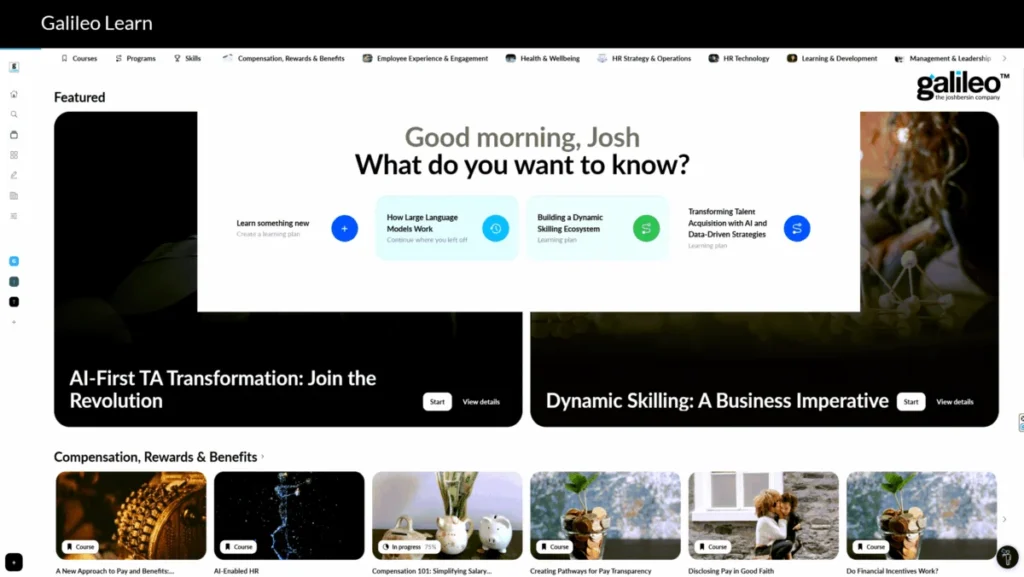
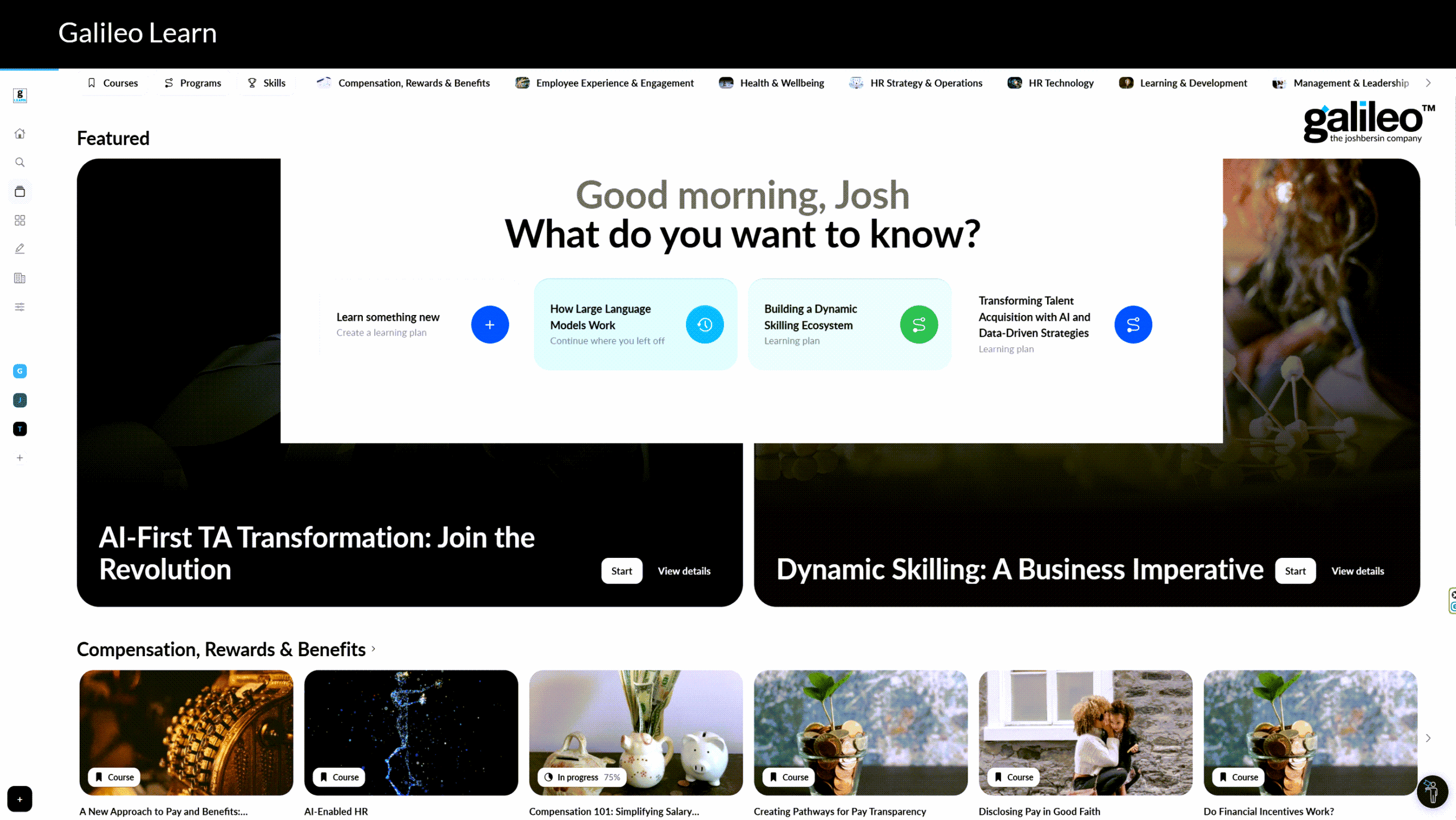
Complementing Sana Agents, Sana Learning, known to users as Galileo Learn, offers a sophisticated learning platform that has established itself as a leader in delivering training, coaching, assessments, and other critical development initiatives. While this article focuses on the broader AI strategy, it is important to note that Sana Learning is poised to become a cornerstone of a significant and potentially highly profitable business for Workday, aligning with the concept of "Dynamic Enablement" – a framework for continuous and adaptive workforce development.
The integration of Galileo with Galileo Learn creates a unified experience, allowing users to seamlessly run applications, access extensive knowledge bases, and engage in learning activities within a single, cohesive environment. A notable feature of Sana Agents, and by extension Galileo, is its mobile accessibility and advanced voice generation capabilities, allowing for personalized interactions, such as Galileo speaking in a user’s own voice.
Workday’s Strategic AI Overhaul: Four Key Announcements
Following its acquisition of Sana Labs, Workday has wasted no time in outlining its bold AI roadmap, marked by four pivotal announcements that signal a paradigm shift in its approach to enterprise software and artificial intelligence.
1. Sana for Workday: Immediate Access to an Enhanced User Experience
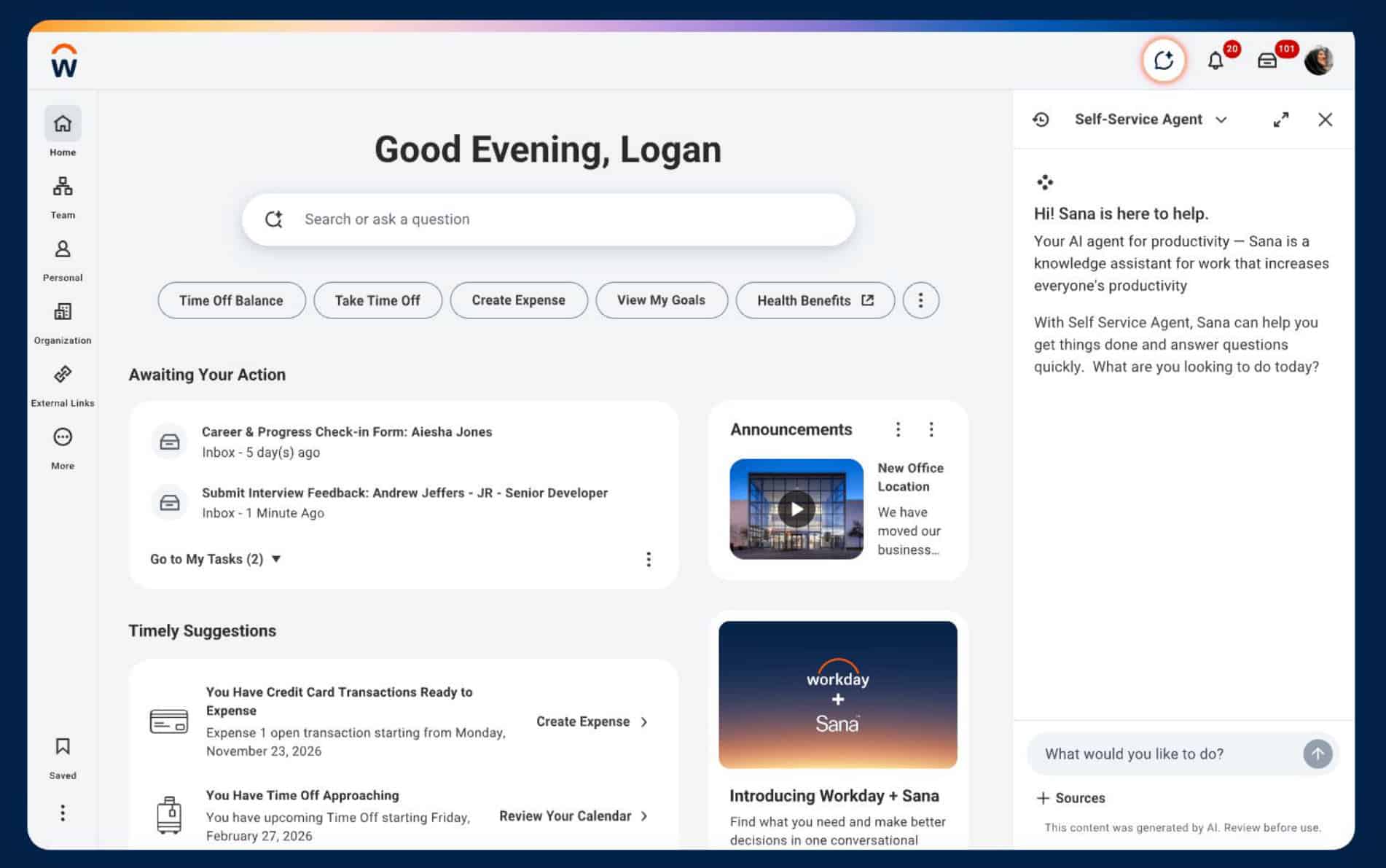
Effective immediately, all Workday customers gain access to a newly integrated Workday interface named "Sana for Workday." This innovative experience brings Workday’s transactional data and core functionalities directly into the Sana Agent interface. This integration empowers employees and managers to interact with their company’s Workday system in a natural, conversational manner. Users can now ask questions, generate reports, initiate transactions, and analyze data directly through the Sana interface, bypassing the traditional complexities of the Workday user experience.
Crucially, Sana for Workday adheres to Workday’s stringent security protocols, ensuring that each user only accesses data and performs transactions for which they have explicit authorization. For users of solutions like Galileo, this means the analytical and intelligent capabilities of their chosen HR AI agent can now be directly applied to the entirety of their organization’s Workday data. This initial step is transformative, effectively "unlocking" the Workday system for a broader audience of employees, casual users, managers, and administrative teams, making enterprise resource planning more accessible and intuitive.
2. Sana Enterprise: Unifying External Systems
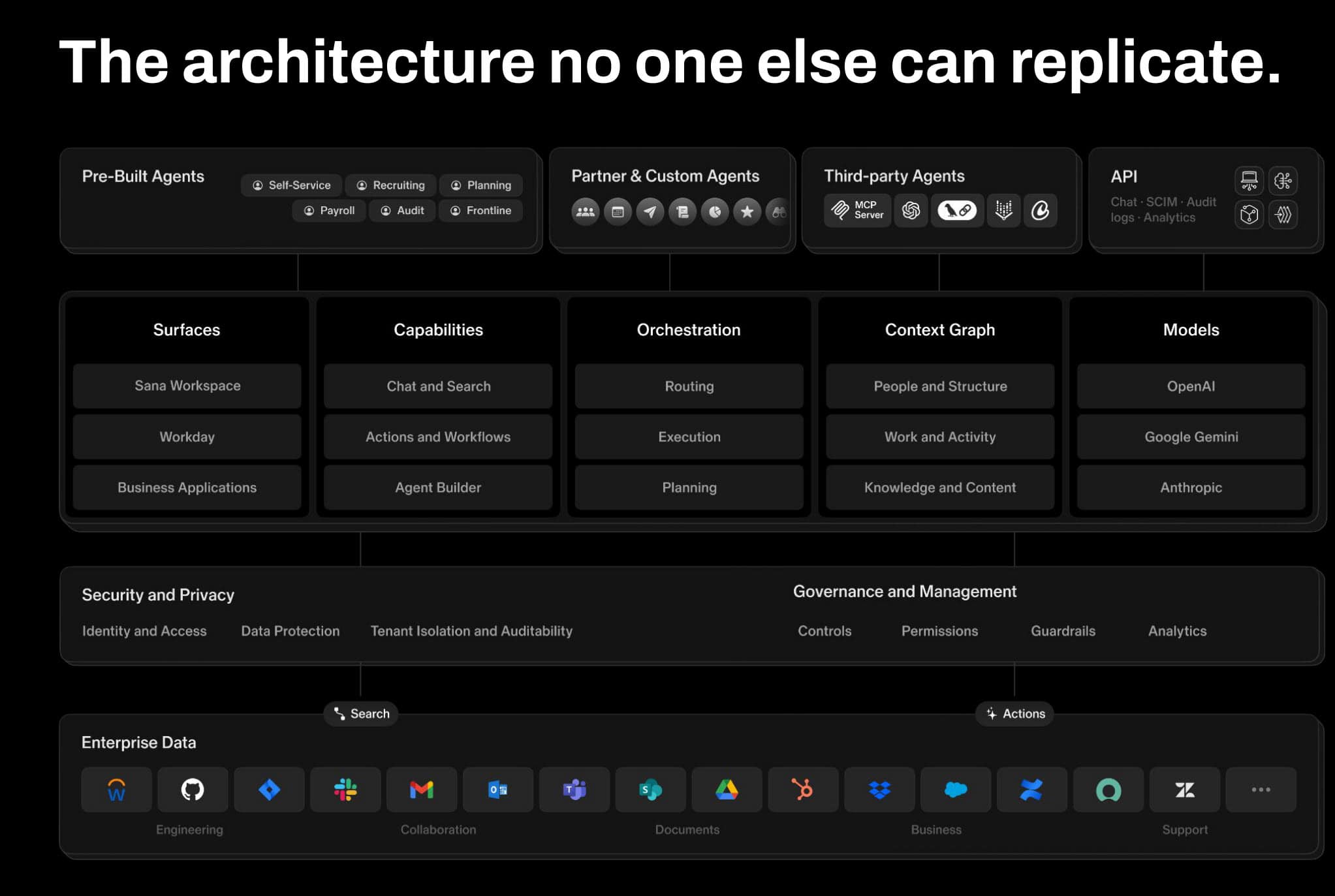
Workday is also introducing an upgraded version of its platform, dubbed "Sana Enterprise." This enhanced offering, available through an upgraded license, extends the capabilities of Sana beyond Workday’s ecosystem. Sana Enterprise allows users to seamlessly integrate and interact with a multitude of other enterprise systems, including but not limited to Salesforce, Microsoft Teams, Slack, and SharePoint.
This cross-system integration capability, already a proven feature within Galileo, provides a straightforward configuration process and enables both read and write access to these diverse platforms. Consequently, Sana Enterprise is positioned to serve as a unified "front door" for all user interactions within an organization, potentially competing with established employee experience platforms like Microsoft Viva and ServiceNow. Leveraging the embedded security, job role, and hierarchical data inherent in Workday, Sana Enterprise inherits these critical security and data privacy controls, alleviating concerns for IT departments deploying the solution.

3. Sana as the Agent Development System: Empowering Customization
A significant aspect of Workday’s new strategy is the designation of Sana as its official Agent Development System. This empowers organizations and their employees to build custom AI agents directly within the Sana platform. Sana employs a user-friendly workflow development tool, allowing for the drag-and-drop creation of "steps" and "prompt paths" to build sophisticated applications. Future iterations are planned to integrate visual coding tools, further enhancing Sana’s capabilities as a robust development studio.
This democratizes application development, enabling employees, managers, HR teams, and corporate developers to create internal tools with unprecedented ease. An illustrative example provided is an employee travel booking application that can accommodate company travel policies, identify flights, seek approval for exceptions, and facilitate expense reporting. The expectation is that organizations will develop thousands of such agents and applications, with the potential for third-party developers to contribute to this growing ecosystem.
4. Sana’s AI Infrastructure: The Backbone of Workday’s AI Future
As depicted in Workday’s architectural diagrams, Sana’s AI infrastructure is set to become the foundational AI infrastructure for the entire Workday suite. In previous years, Workday promoted its various AI initiatives under the "Illuminate" brand to highlight its advancements. Moving forward, all new AI agents developed by Workday will operate within and be powered by the Sana infrastructure. This strategic consolidation ensures a unified and scalable approach to AI development and deployment across Workday’s product portfolio.
Broader Implications and Analysis
The strategic announcements from Workday carry significant implications for its vast customer base and the broader enterprise software landscape.
Enhanced User Experience and Employee Engagement
The most immediate impact for Workday customers is a substantial upgrade to the user experience. Having been a daily user of Sana for nearly three years, the platform is consistently described as elegant, intuitive, fast, and enjoyable to use – a stark contrast to the often perceived complexity of traditional Workday interfaces. The ability to store documents, integrate seamlessly with Microsoft and Google ecosystems, and potentially make Sana the primary desktop experience offers a significant improvement in daily productivity. For organizations that adopt Sana Enterprise, Workday is effectively offering a competitive employee experience platform that can vie with established players. While the market for employee experience platforms is highly competitive, the inherent integration with Workday’s core functionalities provides a distinct advantage.
A New Era of Application Development and AI Education
Workday customers now possess a powerful and accessible means to build custom applications and educate their workforces about artificial intelligence. As a Sana user, any employee can explore, learn, and develop their own AI solutions. The tight integration between Sana Agents and Sana Learning ensures that employee training and enablement are intrinsically linked to the development process. For organizations leveraging multiple LLMs, such as Claude, OpenAI, or Gemini, Sana provides a single interface for access. Furthermore, the ability for employees to ask questions and perform transactions within Workday from the same unified experience streamlines workflows.
For those inclined towards creation, Sana offers an intuitive AI studio. Similar to the prompt storage and custom GPT creation capabilities found in native LLM platforms, Sana’s workflow module allows for visual development of applications with branching logic and easy editing. This empowers a wider range of users to contribute to the organization’s digital transformation.
Strengthening Workday’s AI Engineering Prowess
The acquisition of Sana Labs brings a highly experienced AI engineering team into Workday’s fold. This team possesses deep expertise in critical areas such as data labeling, LLM optimization, Retrieval Augmented Generation (RAG) pipelines, and the nuanced tuning required for AI systems. This in-house expertise is expected to accelerate Workday’s AI development lifecycle, enhance efficiency, and ensure that AI projects are architected for seamless integration. The underlying architecture, which preserves Workday’s native business rule and security frameworks above the Sana layer, facilitates the secure and controlled development of AI-powered applications.

A World-Class AI-Native Learning System
Sana Learning stands out as one of the most advanced AI-native platforms available in the market. The learning and development technology sector, valued at nearly $400 billion, represents a significant new opportunity for Workday and its customers. This acquisition positions Workday to capitalize on the growing demand for personalized and adaptive learning experiences, further enhancing its value proposition beyond traditional HR and financial management software.
Navigating the Competitive Landscape
While Workday’s strategic move with Sana is a significant development, it enters a dynamic and competitive market.
- Oracle’s AI Studio: Oracle has also been investing heavily in its AI capabilities, with its AI Studio offering a robust platform and its own proprietary AI infrastructure. Given Oracle’s scale and market presence, it presents a formidable competitor.
- SAP’s Joule: SAP has embarked on a similar path with Joule, its AI agent designed to interact with applications and subsystems within SAP and its SuccessFactors suite. While Joule may possess certain advantages, the integration of Sana positions Workday to compete vigorously in the "agentification" of enterprise systems.
- Microsoft’s AI Ecosystem: Microsoft’s suite of AI tools, including MS Copilot, Copilot Studio, Agent365, and the WorkIQ intelligence layer, represents a direct challenge. While MS Copilot may not yet have direct Workday integration, its unified experience, particularly within the Microsoft 365 ecosystem, mirrors the integrated approach offered by Sana Enterprise. The choice for customers will likely depend on their existing technology stack and strategic priorities.
- LLM Providers: The foundational LLM providers such as OpenAI, Anthropic, and Google (Gemini) also represent a competitive factor. Many organizations have already allocated significant budgets to these providers, and justifying additional investment in a new agent front-end will require clear demonstration of value. However, the deep integration of Sana with Workday and its learning capabilities may prove compelling.
- Emerging Platforms: The rapid pace of AI development means that new tools and platforms can emerge quickly. Workday’s move into the "front-end productivity business" necessitates continuous adaptation to evolving trends, new models, and communication tools.
- ServiceNow’s Acquisitions: ServiceNow, a major player in enterprise workflow and employee experience, has further bolstered its position by acquiring Moveworks, an agent platform directly competitive with Sana. With ServiceNow’s substantial market presence, Workday clients have multiple viable options, though Workday aims to make Sana adoption as seamless and attractive as possible.
Workday, Sana, and the Galileo Partnership
The integration of Sana into Workday’s platform also has direct implications for existing partners and users. Effective immediately, Galileo is a partner of Workday, enabling Workday and Sana customers to directly integrate Galileo’s HR Intelligence and knowledge corpus into their Workday environment. This means that Galileo’s HR intelligent agent, along with its extensive library of over 400 pre-built prompts and workflows, can now directly access and leverage Workday data.
Furthermore, the Galileo Learn library, featuring over 750 courses spanning HR, leadership, technology, and management, can be activated within a customer’s instance of Sana Learning. This effectively positions Galileo as an "instant-on" solution that capitalizes on the comprehensive Workday-Sana experience. Organizations interested in exploring these integrations are encouraged to connect with Galileo for detailed discussions.
The Unfolding AI Landscape
As observed from conversations with numerous organizations, there is no single, universal AI platform that fits every need. Companies are increasingly adopting a heterogeneous approach, utilizing a blend of solutions like MS Copilot, OpenAI, Claude, and other specialized AI tools. Workday, by leveraging the immense value of its existing HR data, security frameworks, and financial management capabilities, has the potential to cut through this complexity. While predicting the future trajectory of AI development is challenging, with further consolidation and innovation likely, the Workday-Sana integration offers a robust and secure choice for Workday customers seeking to harness the power of artificial intelligence.