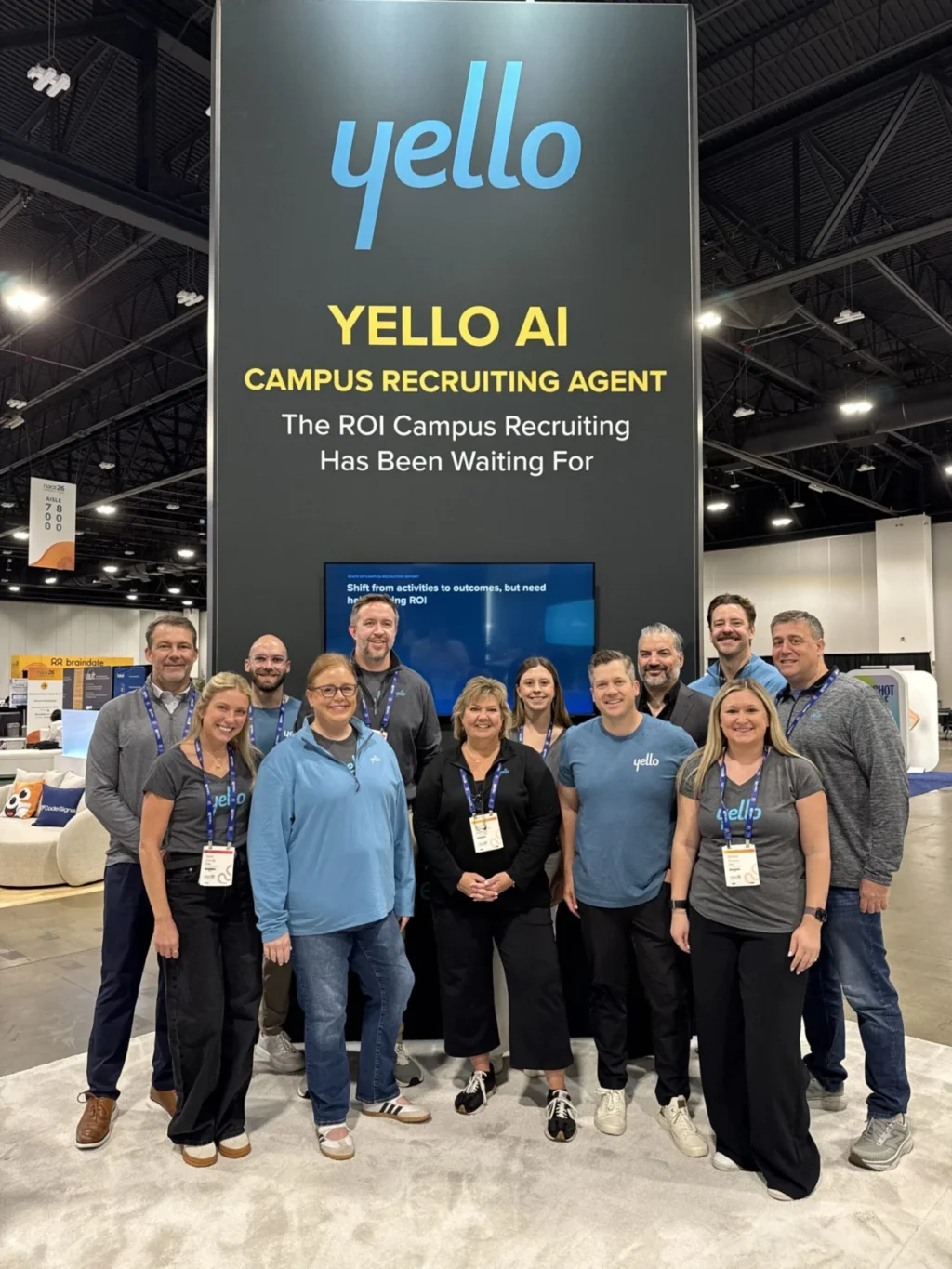
The recent National Association of Colleges and Employers (NACE) Annual Conference in Denver served as a pivotal gathering for early talent acquisition professionals, where industry leaders converged to dissect the most pressing challenges and innovations shaping the future of campus recruiting. Against a backdrop of rapid technological advancement and shifting candidate expectations, Yello, a prominent player in recruitment automation, made significant waves, introducing its groundbreaking AI Campus Recruiting Agent and announcing a strategic partnership with Symplicity. These developments underscore a broader industry pivot towards more strategic, data-driven, and personalized engagement with the next generation of talent.
The Evolving World of Early Talent Acquisition: Insights from NACE
The NACE Annual Conference is a cornerstone event for college relations and recruiting professionals, offering a unique platform for sharing best practices, networking, and exploring emerging trends in the talent acquisition ecosystem. NACE, a professional association, connects college career services professionals and HR/recruiting professionals who hire new college graduates. Its mission revolves around facilitating the employment of new college graduates, and its annual conference is a barometer for the state of early career hiring. Attendees typically include university career services directors, corporate recruiters, talent acquisition specialists, and HR technology providers, all focused on optimizing the journey from campus to career.
Yello’s presence at the conference was substantial, reflecting its commitment to the early talent community. As a platinum sponsor, the company not only hosted speaking sessions and a rooftop happy hour but also maintained a prominent booth that served as a hub for discussions. The energy surrounding Yello’s participation was palpable, particularly as the company used this esteemed forum to debut its highly anticipated AI Campus Recruiting Agent and solidify its alliance with Symplicity, a leading provider of student success and engagement platforms. These announcements resonated deeply with the conference’s overarching themes, which largely centered on the transformative potential of artificial intelligence, the evolving efficacy of recruiting events, and the persistent challenge of offer reneges.
AI’s Double-Edged Sword in Campus Recruiting
Artificial intelligence has rapidly permeated various facets of human resources, and campus recruiting is no exception. However, discussions at NACE revealed a nuanced landscape concerning AI adoption. According to Yello’s 2026 State of Campus Recruiting report, a significant portion of current AI usage, approximately 26%, is concentrated in sourcing, while another 25% is dedicated to candidate communications – primarily top-of-funnel activities. This data suggests that while AI is widely embraced for initial outreach and candidate identification, its potential remains largely untapped in more strategic areas such as data analysis and proving return on investment (ROI). This discrepancy was a recurring topic of conversation in Denver.
Recruiters expressed a clear preference: they are not seeking AI tools that autonomously make hiring decisions. Instead, their primary desire is for AI to alleviate the administrative burden and handle repetitive tasks that consume valuable time, thereby freeing them to focus on high-value interactions with candidates. This sentiment was encapsulated in a Yello-sponsored session titled "Can Campus Recruiting Be Autonomous? The Answer Is Complicated." Panelists, including Tamara Welch from LPL Financial, NACE’s Matthew Brink, and Yello’s Dan Bartfield, explored whether the ultimate goal should be fully autonomous recruiting or merely empowering recruiters to dedicate more time to strategic engagement. The audience overwhelmingly favored the latter, emphasizing that for AI to be truly effective, it must be purpose-built to address the unique complexities and challenges inherent in campus recruiting. By automating manual workflows, AI can significantly enhance recruiter efficiency, allowing for a deeper focus on candidate experience and relationship building.
The candidate perspective on AI in hiring also emerged as a critical consideration. Matthew Brink highlighted a growing wariness among students regarding employers who lean too heavily on AI in their hiring processes, particularly when the use of such technology is not transparently disclosed. A recruitment process perceived as impersonal, driven solely by algorithms, risks alienating qualified candidates and subtly eroding employer brand reputation. In an increasingly competitive talent market, where authentic connection can be a differentiator, the judicious and transparent application of AI is paramount. Industry data indicates that 70% of job seekers are more likely to apply to a company that clearly communicates its use of AI in hiring, suggesting that disclosure fosters trust rather than suspicion.
Yello’s Answer: The AI Campus Recruiting Agent
In direct response to these evolving needs and challenges, Yello chose the NACE Annual Conference to unveil its transformative AI Campus Recruiting Agent. This innovative solution is designed to automate manual work across various stages of the recruiting lifecycle, simplifying the creation and management of events, candidate sourcing, campaign execution, and interview scheduling. The overarching goal is to liberate recruiting teams from administrative overhead, enabling them to prioritize meaningful engagement with candidates.
The AI Campus Recruiting Agent fundamentally redefines the traditional approach to campus recruiting. Historically, recruiters would attend events, hoping to encounter suitable candidates at their booth. Yello’s new agent flips this model on its head. It proactively identifies best-fit candidates from a vast pool of talent and pre-schedules interviews even before an event commences. This powerful capability handles the extensive groundwork involved in event planning and management, candidate matching and prioritization, outreach, and interview coordination. Consequently, recruiters arrive at an event armed with a meticulously organized interview schedule populated by candidates who precisely align with their hiring requirements, transforming uncertainty into strategic certainty. The development of this agent involved extensive R&D, leveraging Yello’s deep understanding of early talent workflows and integrating advanced machine learning algorithms to optimize matching and scheduling functionalities. This launch marks a significant milestone in Yello’s product roadmap, solidifying its commitment to intelligent automation in talent acquisition.
Rethinking Event Strategy: Quality Over Quantity
Another significant theme at the NACE conference was the re-evaluation of event strategies by employers. A panel session titled "Purpose Over Presence: Rethinking Your Event Strategy for Better ROI" brought together leaders like Vincent Bond from Synchrony, Kristin Leek from Boeing, and Christopher Cantu from Marathon Petroleum. These panelists articulated a common dilemma: while application volumes continue to surge, identifying truly qualified candidates has become increasingly difficult. A key contributing factor, as Vince Bond noted, is the phenomenon of "AI fighting AI," where candidates leverage AI to generate polished resumes, which are then screened by employers’ AI tools, often leading to a homogenous pool of applications that lack genuine differentiation.
In response, these industry leaders underscored a strategic shift: a more intentional and earlier investment in building relationships, predominantly through in-person events. The purpose of the in-person event has fundamentally transformed. The era of attending numerous career fairs with the hope of sifting through a high volume of candidates to find a few suitable ones, while measuring success merely by activity, is waning. Instead, employers are adopting an outcomes-based approach, meticulously evaluating which events yield the highest return on investment and culminate in quality hires. Chris Cantu’s analogy of career fairs as the "end zone"—the place to finalize decisions rather than initiate them—powerfully illustrates this paradigm shift. The foundational work, the groundwork of relationship building, now occurs months, or even years, in advance through targeted events and consistent touchpoints. This emphasis on "relationship equity" is becoming the competitive differentiator in campus recruiting, enabling teams to navigate the challenges of escalating application volumes and mitigate the risks of candidate fraud. A recent study indicated that only 15% of employers feel traditional career fairs deliver high ROI without prior engagement, reinforcing the need for this strategic shift.
Combating the Reneging Dilemma
The pervasive issue of offer reneges remained a hot topic throughout NACE26, highlighting that an accepted offer no longer guarantees a done deal. The most successful teams, according to conference discussions, are those who proactively treat the post-offer period as an active recruiting phase. This necessitates consistent, personalized communication between the offer acceptance and the candidate’s start date, a critical strategy for retaining top talent. Panelists reiterated that their sustained relationship-building efforts, initiated much earlier during events, played a crucial role in keeping their renege rates low. Industry statistics suggest that the cost of a single renege can range from $10,000 to $20,000, factoring in lost productivity, administrative costs, and the need to restart the recruitment process.
Yello addressed this critical challenge in a virtual session titled "Designing the Complete Journey: From Pre-Boarding to Off-Boarding," where Yello’s Ahva Sadeghi introduced the KEEP framework. This strategic framework, standing for Kick Off, Engage, Enable, and Perform, provides employers with a structured approach to maintain talent engagement throughout the entire candidate journey. These four pillars guide candidates from offer acceptance through to their first day, ensuring a seamless and supportive transition. Sadeghi also delved into the underlying reasons why candidates renege, the substantial financial and operational costs these actions incur for employers, and presented compelling case studies, including how Symba customers have achieved remarkable reductions in their renege rates, exceeding 55%. This data underscores the effectiveness of structured engagement and support in converting offers into committed employees.
Strategic Alliance: Yello and Symplicity Partnership
Beyond the launch of its AI agent, Yello made another significant announcement at NACE: a new partnership with Symplicity. This collaboration represents a substantial expansion of candidate access for Yello customers, integrating Symplicity’s extensive network of over 600,000 early talent candidates directly into Yello’s ecosystem. Symplicity is widely recognized for its comprehensive suite of student success solutions, connecting millions of students with career opportunities through university career services offices.
This strategic alliance means that employers utilizing the Yello Campus Recruiting Agent can now seamlessly match against active candidates from the Symplicity database. This capability significantly augments the agent’s sourcing power, which already draws from employers’ existing Applicant Tracking Systems (ATS), their proprietary Yello database, WayUp, and more than 35 other diverse sources across the web. The partnership is a testament to Yello’s commitment to providing a holistic and expansive talent acquisition platform, empowering recruiters with unparalleled reach and precision in identifying top early talent. For Symplicity, the partnership enhances the value proposition for its university and student users, offering them broader exposure to leading employers leveraging Yello’s advanced recruiting technologies. This collaboration is expected to streamline the discovery process for both candidates and recruiters, fostering more efficient and effective talent matches across the early career landscape.
Broader Implications for Early Talent Acquisition
The announcements and discussions at the NACE Annual Conference signal a transformative period for early talent acquisition. The integration of advanced AI, coupled with strategic partnerships like Yello’s with Symplicity, suggests a future where campus recruiting is less about volume and more about precision, personalization, and proactive engagement. The role of the campus recruiter is evolving from administrative gatekeeper to strategic relationship builder and talent advisor. Automation of routine tasks, as offered by Yello’s AI Campus Recruiting Agent, will free up recruiters to focus on the human elements of hiring: fostering genuine connections, providing exceptional candidate experiences, and making informed, data-backed decisions.
The shift in event strategy—from presence to purpose—will necessitate a more sophisticated approach to measuring ROI and understanding the long-term impact of early engagement. Companies that invest in relationship equity, starting years before an offer is even extended, will likely gain a significant competitive edge in securing top talent and minimizing renege rates. Furthermore, the emphasis on transparent and ethical AI usage will become increasingly critical for maintaining a positive employer brand in a talent pool that is acutely aware of technological implications. The competitive landscape in HR tech will also continue to intensify, with providers racing to offer integrated, intelligent solutions that address the complex and evolving needs of talent acquisition professionals. Ultimately, these developments underscore a future where technology and human connection are harmoniously blended to create a more efficient, equitable, and effective early talent pipeline.