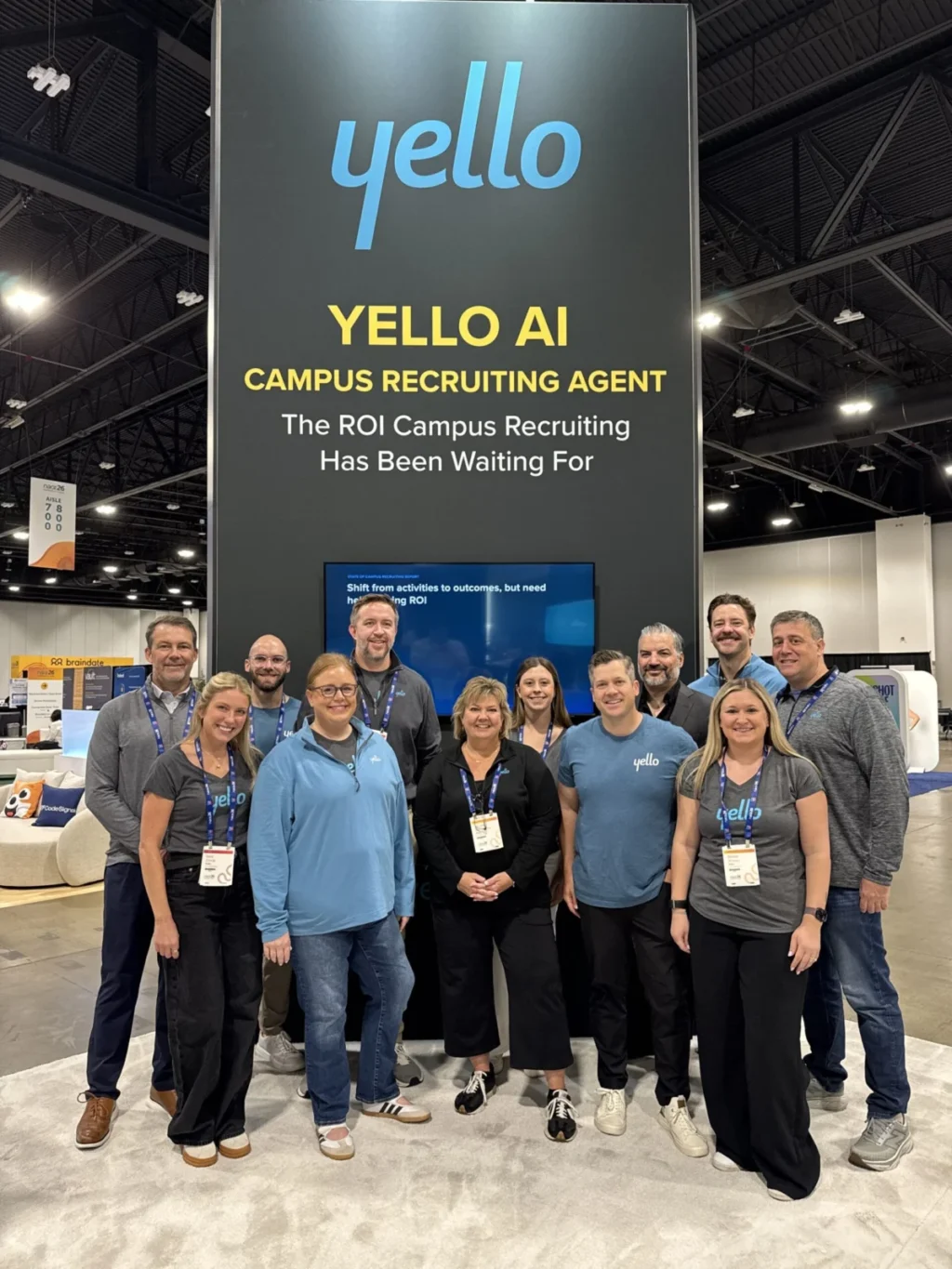
Denver, CO – The National Association of Colleges and Employers (NACE) 26th annual conference in Denver recently concluded, bringing together the nation’s leading early talent acquisition professionals to discuss the evolving landscape of campus recruiting. Yello, a prominent provider of early talent acquisition software, played a significant role as a platinum sponsor, leveraging the event to debut its groundbreaking AI Campus Recruiting Agent and announce a strategic partnership with Symplicity. The conference served as a critical platform for industry leaders to dissect key trends, including the transformative impact of artificial intelligence, the recalibration of event strategies, and the persistent challenge of offer reneges.
NACE26: A Confluence of Early Talent Innovators
The NACE conference is widely recognized as the premier gathering for professionals at the intersection of higher education career services and employer recruiting. Held annually, it provides a vital forum for sharing best practices, networking, and exploring the latest innovations shaping the future of early talent acquisition. This year’s event in Denver, from [hypothetical date range, e.g., June 3-6], was particularly significant as the industry grapples with a dynamic job market, rapid technological advancements, and shifting candidate expectations. Attendees from across the United States engaged in a series of workshops, keynote addresses, and panel discussions aimed at optimizing recruitment strategies for a new generation of talent. The energy was palpable, reflecting an industry eager for solutions to enhance efficiency, improve candidate experience, and ultimately, secure top-tier talent in an increasingly competitive environment. Against this backdrop, Yello’s prominent presence and major announcements resonated deeply with the challenges and aspirations of the NACE community.
AI: Reshaping Recruitment, But with a Human Touch
One of the most dominant themes permeating NACE26 discussions was the rapidly expanding role of artificial intelligence in campus recruiting. While the consensus pointed to AI as an indispensable tool, the nuance of how it should be deployed remained a central point of debate. Yello’s latest "State of Campus Recruiting report," a key data point frequently referenced during the conference, highlighted that current AI adoption is heavily concentrated at the top of the funnel: 26% in sourcing and 25% in candidate communications. Strikingly, AI’s potential for high-impact areas such as data analysis and demonstrating return on investment (ROI) remains largely untapped.
This disparity underscored a recurring sentiment among recruiters: a desire for AI that augments human efforts rather than replacing them entirely. Professionals expressed little interest in AI making autonomous hiring decisions; instead, they sought tools that could alleviate the burden of administrative tasks and repetitive workflows, thereby freeing up valuable time for more meaningful candidate engagement. This perspective was thoroughly explored in a Yello-sponsored session titled "Can Campus Recruiting Be Autonomous? The Answer Is Complicated." The panel featured Tamara Welch from LPL Financial, Matthew Brink from NACE, and Dan Bartfield from Yello, who collectively delved into whether the ultimate goal should be fully autonomous recruiting or simply empowering recruiters to focus on higher-value, human-centric work.
The audience’s response was unequivocal: the preference was overwhelmingly for the latter. Participants stressed that for AI to be truly effective, it must be purpose-built to address the unique complexities and requirements of campus recruiting. By intelligently automating manual processes, AI can enable recruiters to dedicate more resources and personal attention to critical aspects of the hiring journey, such as building rapport, conducting in-depth interviews, and providing personalized feedback. This approach not only optimizes operational efficiency but also safeguards the human element that remains crucial in attracting and retaining talent.
Matthew Brink’s insights further emphasized the candidate perspective, noting a discernible wariness among students regarding employers who overly rely on AI in their hiring processes, particularly if such reliance is not transparently disclosed. An impersonal, algorithm-driven experience risks alienating highly qualified candidates and can subtly but significantly erode an employer’s brand reputation. The implications are clear: ethical AI implementation, coupled with clear communication, is paramount to maintaining trust and fostering positive candidate relationships. Industry analysts suggest that companies failing to balance AI efficiency with genuine human interaction risk falling behind competitors who prioritize a holistic and empathetic candidate journey.
Event Strategy: Prioritizing Purpose Over Mere Presence
Another critical topic at NACE26 revolved around the fundamental re-evaluation of event strategies in campus recruiting. Panelists in the session "Purpose Over Presence: Rethinking Your Event Strategy for Better ROI" articulated a shared challenge: while application volumes continue to surge, identifying truly qualified candidates has become increasingly difficult. Vincent Bond from Synchrony, Kristin Leek from Boeing, and Christopher Cantu from Marathon Petroleum all echoed the sentiment that the proliferation of AI-assisted resume tools has paradoxically created a homogeneous applicant pool, where "every resume looks the same now." This phenomenon, often described as "AI fighting AI," pits candidate-generated AI resumes against employer-used AI screening tools, complicating the initial identification process.
In response to this evolving dynamic, these industry leaders described a strategic pivot towards earlier and more intentional investments in relationship building, primarily through targeted in-person events. The traditional model of attending numerous career fairs with the aim of high-volume candidate interactions, hoping to stumble upon a few good fits, is increasingly being superseded by an outcomes-based approach. Employers are now meticulously evaluating which events yield the highest return on investment and consistently result in quality hires, rather than merely measuring success by activity metrics like booth visitors or resume collections.
Christopher Cantu eloquently characterized career fairs as the "end zone"—the final stage where offers are extended and commitments solidified, rather than the starting line for initial engagement. The foundational work, he argued, must commence months, or even years, prior through carefully curated events and sustained, meaningful touchpoints. This proactive, relationship-centric approach, termed "relationship equity," is emerging as the new competitive advantage in campus recruiting. It is seen as a crucial countermeasure against both the overwhelming volume of applications and the growing concern of candidate fraud, ensuring that employers connect with authentic, engaged talent. The shift underscores a broader industry trend towards quality over quantity, where deeper, more personalized interactions are valued above superficial mass outreach.
Addressing the Persistent Challenge of Offer Reneges
Building upon the emphasis on relationship building, the issue of offer reneges—when a candidate accepts a job offer but later withdraws—was a prominent and frequently discussed concern at NACE26. The sobering reality is that an offer acceptance no longer guarantees a done deal, highlighting a critical vulnerability in the talent acquisition pipeline. Companies that are successfully mitigating renege rates are those that view the post-offer period not as a conclusion, but as an active and vital phase of continued recruiting.
Industry professionals stressed that consistent, personalized communication between the offer extension and the candidate’s start date is an absolute imperative for retaining top talent. This engagement can take various forms, from welcoming emails and virtual meet-and-greets with future teammates to providing resources for relocation or onboarding preparation. Panelists uniformly noted that robust relationship-building efforts initiated during early recruitment events directly contribute to lower renege rates, as candidates feel a stronger sense of connection and commitment to the organization. The financial and operational costs associated with reneges—including lost productivity, recruitment expenses, and delays in project timelines—are substantial, making proactive retention strategies economically critical.
During Yello’s virtual session, "Designing the Complete Journey: From Pre-Boarding to Off-Boarding," Ahva Sadeghi introduced the innovative KEEP framework. This strategic model outlines four pillars—Kick Off, Engage, Enable, and Perform—designed to keep talent actively engaged throughout the entire candidate journey, from offer acceptance through their initial days on the job. Sadeghi also provided valuable insights into the underlying reasons why candidates renege, the true cost implications for employers, and presented compelling data on how Symba customers have achieved remarkable success, reducing their renege rates by over 55% through optimized engagement strategies. This framework offers a practical guide for organizations seeking to solidify their talent pipeline and maximize their investment in new hires.
Yello’s Landmark Announcements: Pioneering the Future of Early Talent
NACE26 served as the official launchpad for two pivotal developments from Yello, poised to significantly impact the early talent acquisition landscape.
First, Yello unveiled its AI Campus Recruiting Agent, demonstrating its capabilities to an enthusiastic audience. This new AI-powered agent represents a paradigm shift in how campus recruiting teams operate. It is specifically designed to automate a wide array of manual tasks, simplifying processes such as event building, candidate sourcing, campaign management, and interview scheduling. The core objective is to liberate recruiting teams from administrative burdens, allowing them to redirect their focus to the crucial task of engaging with candidates on a deeper, more personal level. The agent promises to deliver the long-awaited ROI that campus recruiting has sought, transforming efficiency and effectiveness.
Traditionally, campus recruiting has relied on a reactive model: attending events and hoping the right candidates visit a booth. Yello’s AI Campus Recruiting Agent fundamentally flips this model. By leveraging advanced AI, the agent proactively identifies best-fit candidates and pre-schedules interviews before an event even begins. It handles the heavy lifting of event management, candidate matching and prioritization, outreach, and interview scheduling. This means recruiters can arrive at an event with a fully populated interview schedule, comprising candidates who have already been identified as ideal matches for open roles. This strategic shift moves beyond passive engagement to proactive, precision-driven recruitment.
Second, Yello announced a significant new partnership with Symplicity, a leading provider of student success and engagement solutions. This collaboration immediately expands the reach for Yello customers, granting them unparalleled access to Symplicity’s extensive network of over 600,000 early talent candidates. The integration is seamless: employers utilizing the Yello Campus Recruiting Agent can now match against active candidates from the Symplicity database, augmenting their existing pools from their Applicant Tracking System (ATS), their proprietary Yello database, WayUp, and a comprehensive array of more than 35 other sourcing channels across the web. This partnership is a strategic move to address the challenge of candidate discovery, ensuring Yello users have the broadest possible access to qualified early talent.
Broader Implications and the Future of Early Talent Acquisition
Yello’s announcements at NACE26 are indicative of a broader industry trend towards intelligent automation and data-driven decision-making in human resources technology. The introduction of the AI Campus Recruiting Agent underscores a commitment to streamlining operations and enhancing recruiter effectiveness, signaling a future where technology empowers recruiters to be more strategic and less administrative. The focus on pre-scheduled, best-fit interviews before events is a testament to the industry’s evolving understanding of efficiency and targeted engagement.
Furthermore, the partnership with Symplicity highlights the increasing importance of comprehensive talent ecosystems. By integrating with a vast network of early talent, Yello is not only expanding its customers’ reach but also emphasizing the value of interconnected platforms in a fragmented recruiting landscape. This move strengthens Yello’s position as a holistic solution provider, capable of offering both advanced automation and expansive candidate access.
The discussions and innovations showcased at NACE26 collectively point towards a future for early talent acquisition that is more strategic, more personalized, and more technologically advanced. Companies that embrace purpose-driven event strategies, prioritize continuous candidate engagement to combat reneges, and intelligently deploy AI to augment human capabilities will be best positioned to attract, hire, and retain the next generation of leaders. Yello’s recent developments are not merely product launches; they are strategic responses to these evolving industry imperatives, aiming to equip organizations with the tools necessary to navigate and succeed in the dynamic world of early talent acquisition.