
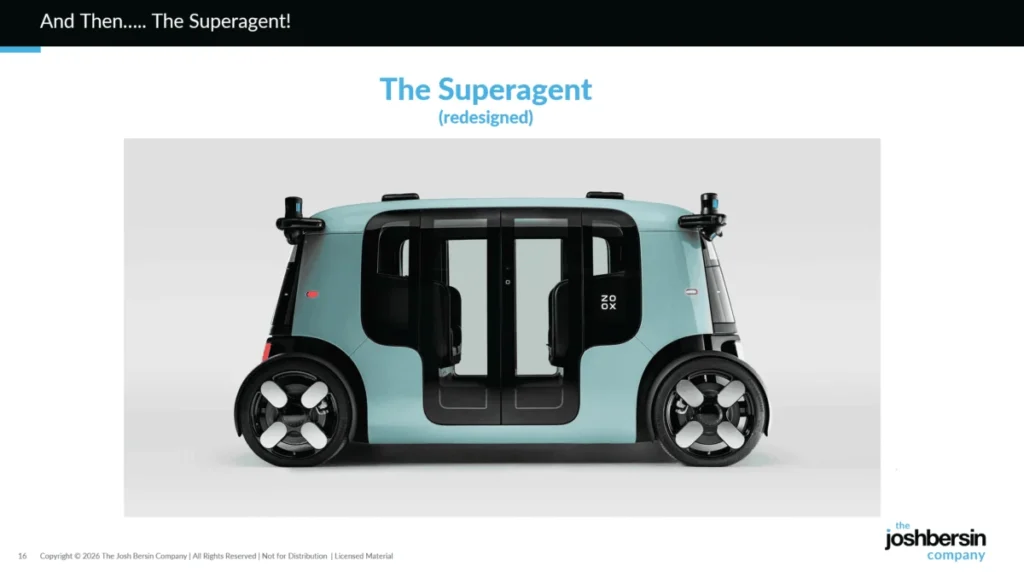
Last week, SAP launched one of the most significant announcements in years, introducing a comprehensive enterprise AI architecture that CEO Christian Klein proclaimed positions SAP as an AI company at its core. This ambitious initiative, branded as "The Autonomous Enterprise," represents a multi-year effort to deeply embed artificial intelligence across SAP’s extensive suite of business software.
The unveiling, which occurred amidst SAP’s Sapphire event, detailed a unified AI platform designed for building, contextualizing, and governing intelligent agents. This platform supports an "autonomous suite" intended to execute core business operations and introduces a novel user experience aimed at redefining how professionals interact with enterprise software. "The Autonomous Enterprise includes a unified AI platform for building, contextualizing and governing agents, an autonomous suite that executes core business operations and a new user experience that redefines how people work with enterprise software," stated Christian Klein, CEO of SAP SE.

This announcement marks a substantial strategic shift for SAP, building upon more than three years of development focused on AI initiatives like Joule, agent frameworks, and various data layers. While the "Autonomous Enterprise" moniker itself may face some interpretive challenges, the underlying technological architecture and strategic direction signal a profound evolution for the enterprise software giant.
The Foundation of SAP’s Enterprise Software
To understand the significance of SAP’s AI pivot, it’s crucial to acknowledge the depth and breadth of its core offerings. Unlike some competitors, SAP is a true Enterprise Resource Planning (ERP) system, managing a vast array of business resources. This includes financial management, human capital, inventory, manufacturing processes, procurement, contracts, supplier relationships, and contingent labor. With over 25 industry-specific editions, SAP’s systems are designed to track a product’s entire lifecycle, from sale back to its constituent parts and suppliers, providing end-to-end visibility across complex value chains.
For instance, a pharmaceutical company, an automotive manufacturer, or an airline can leverage SAP to manage intricate business processes, revenue streams, costs, and profit margins. The system’s capability extends to answering complex diagnostic questions. An organization could query their SAP system to understand why profit margins for a specific product group are declining in a particular region. Traditionally, such an inquiry would require extensive data analysis by human teams. SAP’s new AI stack aims to automate this process. By asking Joule, the AI assistant, the question, users can receive immediate insights, even when the answer involves multiple contributing factors like fluctuating supplier prices, increased shipping costs, or changes in raw material commodities. This ability to rapidly diagnose complex issues within the vast SAP ecosystem is a core promise of "The Autonomous Enterprise."
Deconstructing "The Autonomous Enterprise"
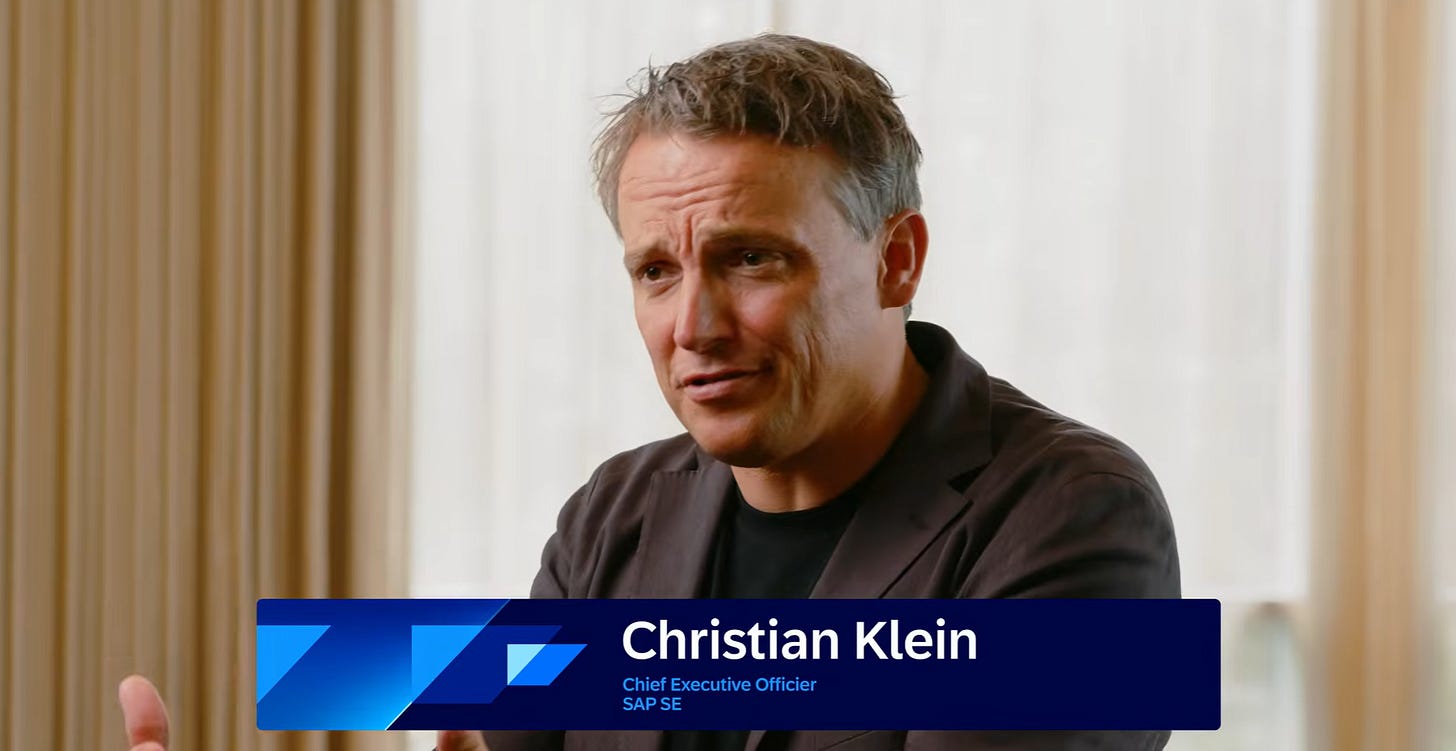
The central theme of SAP’s announcement is "autonomy." While SAP envisions a future where its systems can operate with minimal human intervention, automatically identifying and rectifying suboptimal processes, the immediate focus appears to be on sophisticated automation and enhanced operational intelligence. The company has unveiled a significant number of AI agents – over 224 announced across various business functions.
In the Human Capital Management (HCM) domain alone, SAP has introduced a range of specialized agents. These agents, while varying in scope and complexity, are designed to address specific business processes. For example, within HCM, agents are being developed for tasks such as payroll processing, which is notoriously complex and prone to errors, and employee development. Demos showcased how these agents can automate numerous steps, identify and rectify glitches, generate development materials, and personalize upskilling recommendations for employees.
A "Waymo" Moment for Enterprise AI?
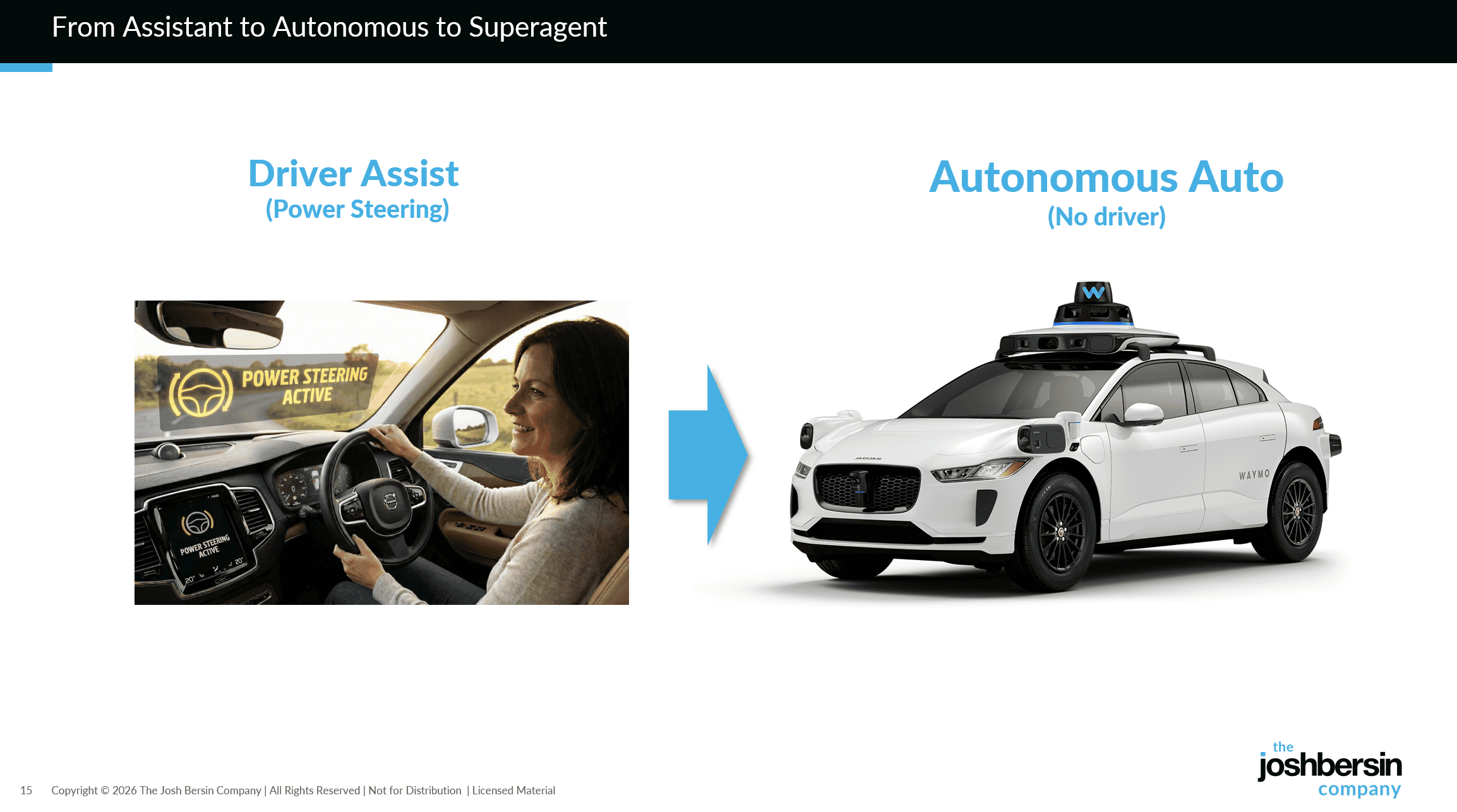
The author of the original analysis posits that SAP’s approach is akin to Waymo, the self-driving car technology company, rather than Zoox, which aims to fundamentally redesign the automobile for passenger experience. In this analogy, SAP’s AI is designed to enhance the existing SAP system, making it operate more autonomously and effectively, rather than fundamentally altering how business processes are conducted. This is seen as a pragmatic approach, given the immense complexity and investment in existing SAP deployments. Automating these intricate, often manual, processes offers immediate and substantial value.
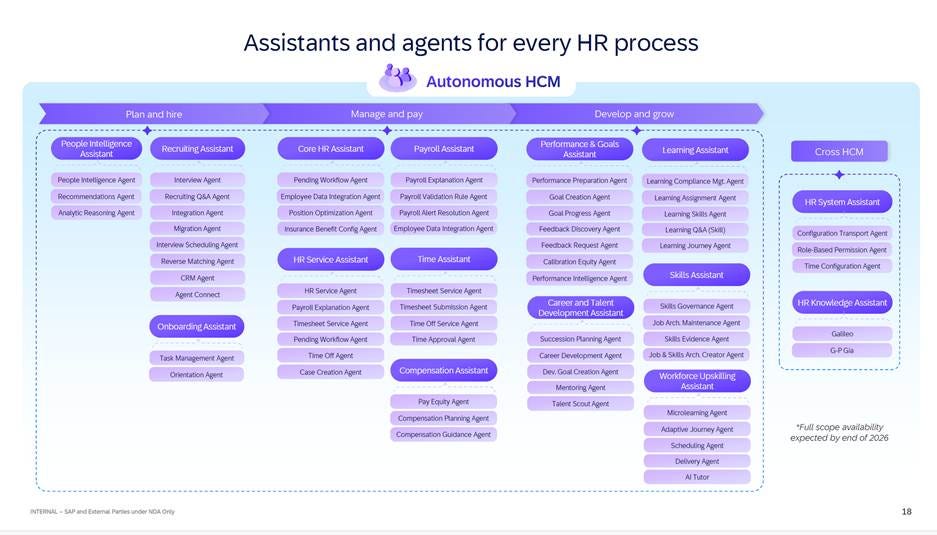
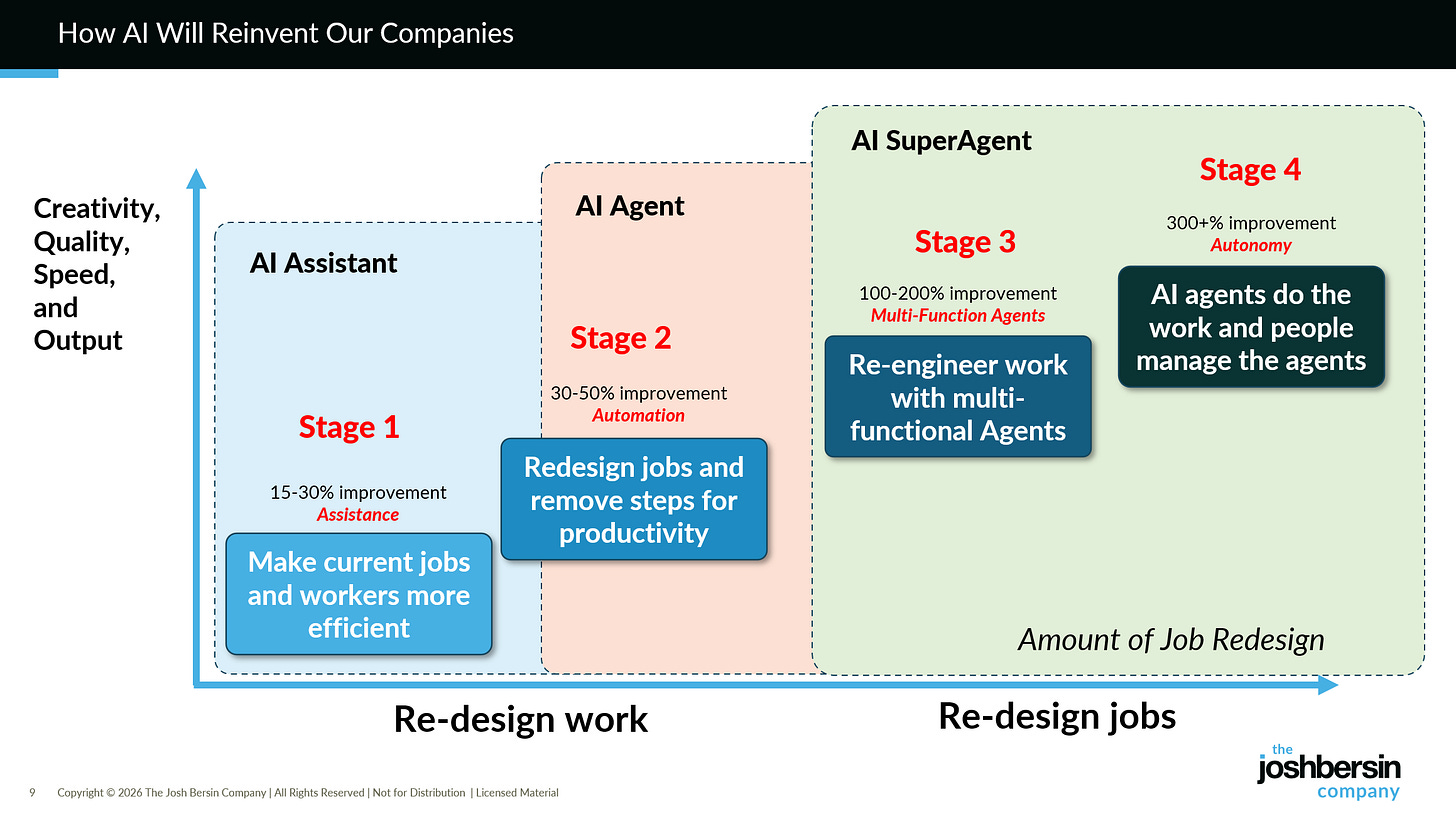
This strategy is broken down into two key stages:
- Stage 1: From Driver Assist to Autonomous Driving: This phase focuses on automating existing processes, making them more efficient and less reliant on manual intervention.
- Stage 2: From Autonomous (Old Process Automated) to Superagent (Redesigned): This represents a more advanced stage where AI agents not only automate but also begin to redesign and optimize processes, leading to greater innovation and higher return on investment. The research suggests that Stage 3 and Stage 4, focusing on process redesign and intelligent automation, offer significantly higher ROI (5-10 times) compared to automation alone.
SAP has already released 224 agents with varying degrees of autonomy and 51 assistants across its core business areas, indicating a rapid development and deployment pace.
Under the Hood: The Technological Architecture
The technical underpinnings of "The Autonomous Enterprise" are crucial to its potential impact. SAP’s AI architecture features a prominent blue AI layer, integrating a data fabric and numerous AI models. A significant innovation is the introduction of a new tabular data model, SAP-RPT-1.5. This proprietary SAP AI model is specifically optimized for analyzing, evaluating, and modeling tabular data, which forms the bedrock of all business software. Unlike traditional Large Language Models (LLMs) that can struggle with structured data, SAP’s model is designed to efficiently handle massive tables, enabling users to find, analyze, model, and perform "what-if" scenarios on complex, real-time business data. A public playground for this tabular data model has been made available for exploration.
Central to the architecture is the SAP Knowledge Graph. This component acts as the "brains" of the system, mapping the thousands of business entities, structures, and rules within SAP into a semantic layer that AI agents can understand and interact with. When a user poses a query, such as inquiring about family leave policies or the aforementioned profit margin decline, the Knowledge Graph translates this natural language request into context-specific queries across the SAP system to retrieve the necessary data, information, or policy details. This semantic layer is crucial for enabling intelligent interactions and complex data retrieval.
Joule, SAP’s copilot interface, serves as the primary user-facing component and the development tool for these AI agents. Originally launched as a transactional chatbot, Joule has evolved significantly. The new Joule Studio is presented as an enterprise-class development environment, not a simplistic coding tool, empowering IT teams and SAP developers to design, build, test, integrate, and manage complex AI agents. This robust development environment allows for the creation of highly customized onboarding experiences, reflecting personalized employee options, career pathways, and development plans, potentially exceeding the capabilities of SAP’s standard onboarding agents or allowing for entirely new agent-driven workflows.
The Power of Context and Company Memory
A key aspect of SAP’s AI strategy involves building massive context windows to store what is being termed "company memory." This refers to the ability of AI models to retain and utilize an entire dataset of operational knowledge, including customers, products, processes, rules, and even unstructured data like documents and emails. This comprehensive "company corpus" can then be leveraged for continuous analysis, modeling, and improvement.

This concept aligns with the notion of a "company model," where AI can directly identify contributing factors to performance gaps by accessing this accumulated knowledge. For instance, an AI could analyze operational best practices, such as whether sales teams engage senior executives for support, uncovering insights that might not be widely known. This capability, particularly when coupled with the deep data integration of an ERP system, holds the potential to significantly improve thousands of business activities.
AI Governance: Ensuring Responsible Deployment
As with any powerful AI deployment, robust governance is paramount. SAP, recognizing this, has introduced the AI Agent Hub. This system, similar to offerings from competitors like Workday and ServiceNow, provides a framework for managing AI agents. It includes tools for establishing rules, data policies, security protocols, and operating limits. The AI Agent Hub supports non-SAP agents and offers functionalities to control agent consumption, verify agent performance, connect agents to data sources, and coordinate their interactions.
The challenge of coordinating communication between multiple AI agents is a significant one, particularly in complex domains like HR. An agent responsible for personalized training delivery, for example, would ideally need to interact with agents managing development planning, performance management, and employee work monitoring. This interconnectedness creates a complex web of dependencies that robust governance frameworks must address.
Is SAP Now an AI Company?
The assertion that SAP is now an AI company, as proclaimed by CEO Christian Klein, is a bold one. The company is betting that its strategy of embedding AI deeply into its existing, decades-old R&D investments will prove more effective than the disruptive threat posed by newer, AI-native startups. This approach, mirroring strategies seen at Workday and Oracle, aims to transform existing ERP and HCM systems into AI-powered applications.
The goal is not to replace existing systems wholesale but to leverage AI to drive cross-domain process innovation, enhance customer and employee experiences, and create smarter, more responsive business operations. By building "Superagents" within platforms like Joule, companies can potentially achieve significant advancements without discarding their substantial investments in established SAP infrastructure.
This strategy promises to deliver AI-driven assistants across various business functions: finance will benefit from close and controlling workflow assistants; procurement from sourcing and buying assistants; supply chain from need-to-deliver assistants; HR from recruiting and career development assistants; and customer-facing departments from assistants in sales, service, offers, and marketing.
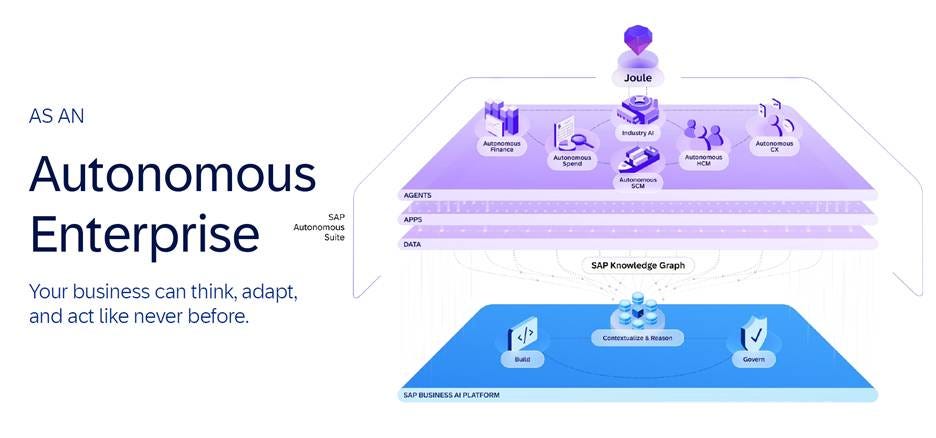
SAP’s vision is to make its software less visible by embedding execution capabilities into intelligent agents that operate seamlessly across the entire suite. This shift means users will interact less with static workflows and more with systems that can decide, recommend, escalate, and act autonomously. Furthermore, this strategy is expected to lead to a shift in SAP’s financial model, moving towards consumption-based and outcome-oriented pricing rather than solely relying on seat licenses.
The author concludes that this strategy is likely to succeed. While acknowledging the efforts of competitors and startups, the deep industry knowledge, customer investment, and established presence of SAP remain critical assets. The new AI strategy is poised to reinvent and invigorate SAP’s growth trajectory by leveraging its core strengths within the evolving landscape of enterprise artificial intelligence. The company’s commitment to this AI-centric future, coupled with its robust technological advancements, positions it as a significant player in the ongoing transformation of enterprise software.







