The return to traditional office environments, following a prolonged period of widespread remote work, is inadvertently contributing to a significant increase in sedentary behaviour among UK workers. New data and analysis suggest that the very spaces designed for collaboration and productivity may be actively hindering the physical well-being of employees, leading to prolonged periods of sitting and a decline in mental health. This trend raises critical questions about the future of workplace design and its impact on employee health, productivity, and overall quality of life.
The Growing Epidemic of Sedentary Work
Recent research paints a stark picture of the modern office worker’s daily routine. According to the British Medical Bulletin, a substantial portion of UK office workers spend up to three-quarters of their day seated. More precise figures from Scientific Reports indicate that between 68% and 82% of the working day is spent in a seated position, the highest proportion of any occupational group. This level of inactivity is concerning, especially when contrasted with working from home.
A comprehensive survey of 2,015 UK desk workers, conducted by AJ Products, revealed a surprising disparity: office-based workers are less likely to take regular breaks than those who work entirely from home. Despite the emphasis on workplace integration and the often larger physical footprint of an office compared to a home setup, only 41.4% of office workers reported taking at least one break per hour. In contrast, 44.9% of remote workers reported adhering to this frequency. This suggests that the office environment itself may be inadvertently promoting a more static work style.
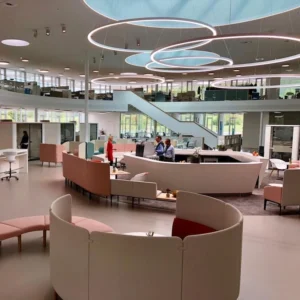
The physical layout of most contemporary offices is a significant contributing factor. Typically, these spaces are designed with rows of desks facing computer screens, and formal meeting rooms are often situated away from the main work areas. This arrangement minimises the need for movement throughout the day. Furthermore, the ONS reports that the most common mode of commuting for UK workers is by car. For many, the journey from the car park to their desk represents the extent of their physical activity for the day, followed by prolonged periods of sitting. The office environment, in its current iteration, offers few intrinsic prompts for regular movement, and the pressures of workload often discourage voluntary breaks.
The detrimental effects of prolonged sitting on mental health are also becoming increasingly evident. The 2024 ASICS Global State of Mind study highlighted that two hours of uninterrupted desk time led to a measurable decline in mental well-being. When this period extended to four continuous hours, it was associated with an 18% increase in stress levels. Given that most UK office workers likely exceed these thresholds on a typical day, the implications for workforce mental health are profound. The data indicates a workforce whose behavioural patterns are largely dictated by the existing structures and expectations of conventional workplaces, which are often prioritised for headcount and space efficiency over employee well-being.
Unpacking the Reasons for Reduced Movement in Offices
The ingrained habits of office workers are deeply influenced by the fundamental dynamics of office life. Workplace culture often plays the most significant role. In many traditional offices, being physically present at one’s desk is still equated with productivity. Taking a break, particularly in open-plan environments where absence is readily noticeable, can carry an unspoken cost. Remote workers, on the other hand, are typically judged on their output rather than their physical presence, making the act of taking a break a more natural and less fraught behaviour.
The issue is further compounded by longer working hours. Office-based employees consistently report logging more hours than their home-based counterparts, leaving less time and mental energy for physical activity. Convenience also acts as a barrier to movement. When all necessary resources are within arm’s reach, and meals can be ordered directly to the desk, there is little inherent physical impetus to prompt an individual to stand up and move.
Identifying the Demographics Most Affected
The survey data provides granular insights into the roots of these ingrained sedentary habits. Workers aged between 25 and 34 are the least likely of any age group to take hourly breaks, with only 31.6% reporting this practice. This demographic is precisely the one that many workplaces are currently striving to attract, investing heavily in collaboration zones, modern amenities, and flexible layouts. While the physical environment may be evolving, the ingrained movement habits within this generation are not yet showing a corresponding shift.
By profession, travel agents emerged as the group most likely to take regular breaks, with 66.7% reporting this behaviour. This can be attributed to the inherent rhythm of their customer-facing, task-based roles, which naturally build in interruptions that are absent in the average screen-based, open-plan office environment.
What Works: Designing for Movement and Well-being
The most effective interventions to combat sedentary behaviour are those that are integrated into the physical environment, rather than relying solely on individual choice. A significant study by the National Institute for Health Research (NIHR) involving 756 office workers demonstrated that providing sit-stand desks reduced sitting time by over an hour per day compared to a control group. This highlights the direct impact of environmental design on behaviour.
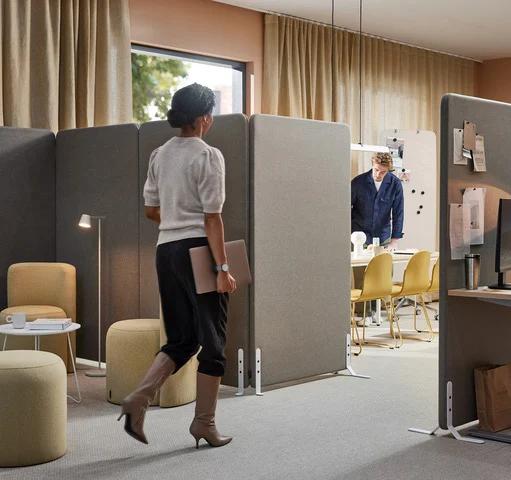
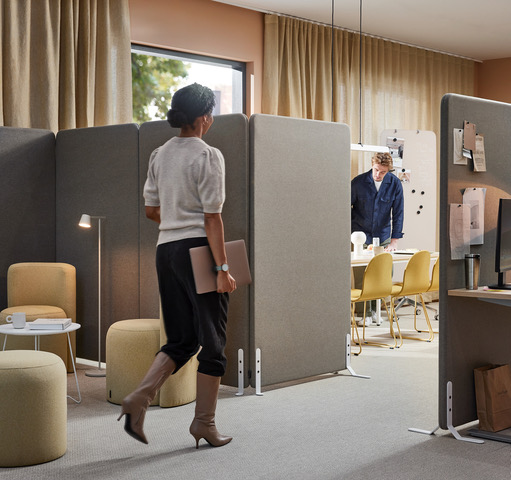
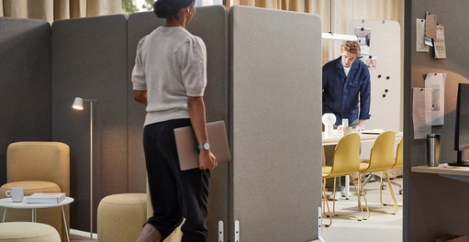
Beyond individual workstations, broader architectural and spatial planning can significantly influence movement. Floor plans that strategically place shared facilities, such as kitchens or printing stations, away from individual workstations encourage employees to walk further. Designing staircases that are aesthetically appealing and conveniently located can make them a genuine alternative to lifts. Furthermore, the incorporation of furniture that encourages posture changes throughout the day, such as varied seating options or standing desks, can reduce overall sitting time without requiring conscious effort from employees to move.
The overarching principle for improving workplace health is to ensure that movement is regularly dispersed throughout the day. While frequent desk breaks are a crucial component, they are just one element. Implementing these breaks is often straightforward and can yield substantial benefits for both mental health and overall efficacy.
Culture plays an equally vital role alongside the physical environment. In some progressive workplaces, the Scandinavian tradition of "fika" – a scheduled daily break where the entire team steps away from their desks together – is being adopted. When movement is collective and timetabled, it removes the reliance on individual willpower and fosters a shared commitment to well-being. This cultural shift can normalise breaks and encourage a more balanced approach to work.
The Imperative for Change in Workplace Design and Management
The ongoing debate surrounding office attendance has predominantly focused on productivity, collaboration, and culture. However, the mounting evidence regarding sedentary behaviour introduces a critical dimension that has received far less attention: the fundamental impact of the office environment, as currently designed and managed, on the health of its occupants.
Interventions aimed at reducing sedentary behaviour in the workplace have been shown to be cost-effective, delivering tangible health gains alongside measurable improvements in productivity, according to the NIHR survey. The scientific evidence supporting the benefits of movement and the risks of prolonged sitting is well-established. Yet, the design response across a significant portion of the UK’s workplace environments has yet to fully align with this evidence.
The implications of this disconnect are far-reaching. A workforce that is physically healthier is likely to be more engaged, less prone to absenteeism due to illness, and ultimately more productive. Addressing sedentary behaviour is not merely an HR initiative; it is a strategic imperative for businesses seeking to foster a sustainable and thriving work environment.
The challenge lies in shifting the paradigm from designing offices for mere occupancy and efficiency to creating spaces that actively promote well-being. This requires a multi-faceted approach, integrating ergonomic considerations, thoughtful spatial planning, and a culture that champions movement. As more data emerges, and the long-term health consequences of sedentary work become clearer, the pressure on businesses to re-evaluate their office spaces and work practices will undoubtedly intensify. The future of work hinges not only on where we work but, crucially, on how we design those spaces to support the holistic health of the people within them.
The author, Helen Beebe, is the Managing Director at AJ Products UK and an Ambassador for Happiness at Work. Her insights are drawn from extensive experience in workplace solutions and a deep commitment to fostering positive work environments. The research presented underscores the urgent need for a proactive and evidence-based approach to workplace design that prioritises the health and well-being of employees.