
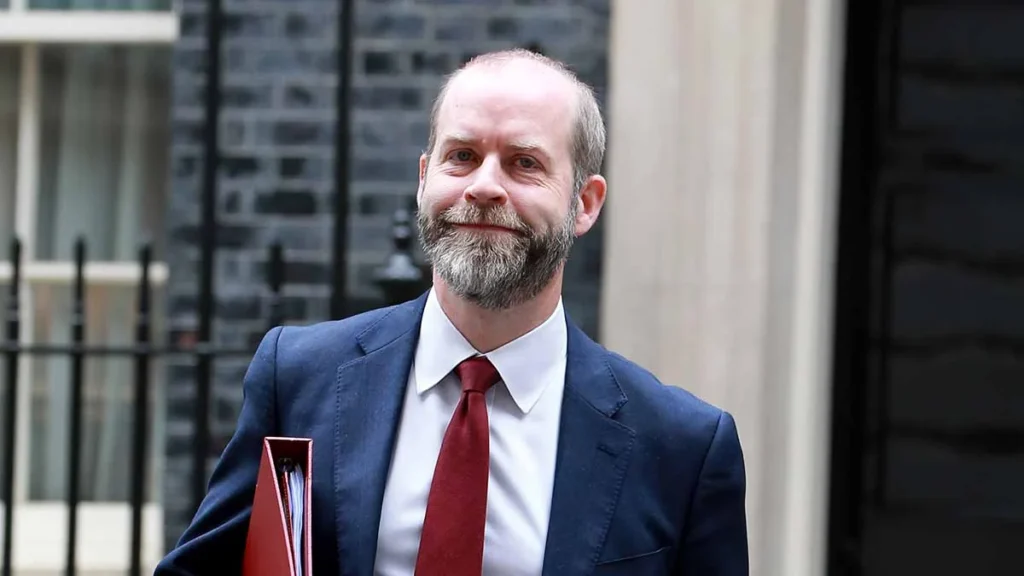
Following his arrival at 10 Downing Street yesterday, new Prime Minister Andy Burnham has officially announced his inaugural cabinet, marking a significant realignment of government priorities and personnel. The reshuffle features several high-profile movements, including the appointment of a new business secretary and a comprehensive restructuring of key economic departments, signaling a fresh strategic direction for the United Kingdom.
The Genesis of a New Administration
The formation of Andy Burnham’s government follows a period of notable political flux within the ruling party. The seeds of this transition were sown in late 2025, when the unexpected resignation of then-Health Secretary Wes Streeting from Sir Keir Starmer’s cabinet triggered a cascade of events that ultimately led to Starmer’s departure from leadership. Streeting’s resignation, reportedly over fundamental policy disagreements, particularly concerning the future direction of the National Health Service and broader economic strategy, created a vacuum of confidence that proved insurmountable for the incumbent prime minister. The subsequent leadership contest saw Andy Burnham emerge as the victor, promising a renewed focus on public services, regional development, and a pragmatic approach to the nation’s economic challenges. His mandate, forged through a vigorous internal campaign, now finds its first tangible expression in the composition of his top team.
Jonathan Reynolds Returns to Lead Expanded Economic Super-Department
At the forefront of Burnham’s new economic architecture is Jonathan Reynolds, who has been appointed as the Secretary of State for Business, Innovation, Science and Trade (BISIT). This marks a return to a familiar portfolio for Reynolds, who previously led the business department at the outset of Sir Keir Starmer’s government in 2024. His re-elevation to this critical role is intertwined with a substantial departmental overhaul. The former Department for Science, Innovation and Technology (DSIT) has been dissolved, its functions absorbed into the newly expanded BISIT. This strategic consolidation underscores the Burnham administration’s intent to foster greater synergy between business growth, technological advancement, scientific research, and international trade policy. Political analysts suggest this merger aims to streamline decision-making, ensuring that the UK’s industrial strategy is comprehensively integrated with its innovation agenda and global commercial ambitions. The creation of such a broad economic super-department is a bold move, reflecting a desire to create a more cohesive and impactful approach to national prosperity in a competitive global landscape. It signifies a potential shift from more siloed departmental responsibilities to a more integrated vision for economic growth, where scientific breakthroughs are directly linked to commercial opportunities and international market access.
The Dawn of a Dedicated AI Ministry
Supporting Reynolds in his ambitious remit will be Kanishka Narayan, who takes on the pioneering role of Minister of Artificial Intelligence (AI). This is a cabinet-attending position, highlighting the profound importance the new government places on this transformative technology. The creation of a dedicated AI minister signals the UK’s commitment to not only harnessing the economic potential of AI but also navigating its complex ethical and societal implications. The UK has consistently positioned itself as a leader in AI research and development, boasting a robust ecosystem of universities, start-ups, and established tech firms. However, the rapid pace of AI advancement necessitates dedicated governmental oversight to ensure responsible innovation, address concerns around job displacement, data privacy, and algorithmic bias, and maintain the nation’s competitive edge. Narayan’s appointment is thus a strategic declaration that AI will be a central pillar of the UK’s future industrial and technological policy, ensuring that the nation remains at the forefront of this global technological revolution.
Key Appointments Across the Cabinet
The reshuffle extends far beyond the economic departments, touching upon nearly every major Whitehall office:
-
Chancellor of the Exchequer: John Healey
Former Defence Secretary John Healey steps into the crucial role of Chancellor of the Exchequer, replacing Rachel Reeves. Healey’s move from a security-focused portfolio to the economic helm suggests a potential emphasis on fiscal prudence combined with strategic investment. His tenure at Defence, where he oversaw significant budgetary decisions, may inform a cautious yet pragmatic approach to the national finances amidst ongoing global economic uncertainties. Commentators will be scrutinizing his first fiscal statements for indications of the new government’s approach to taxation, spending, and the national debt. His appointment is seen by some as a move to bring a more experienced, grounded hand to the Treasury, contrasting with previous chancellors who might have been perceived as more politically ambitious. -
Home Secretary: Shabana Mahmood
Shabana Mahmood, who had been widely tipped by political pundits and media outlets as a strong contender for the Chancellorship, retains her position at the Home Office. Her continued presence in this demanding role suggests a desire for continuity and stability in the government’s approach to national security, policing, and immigration. Mahmood’s experience in the post will be invaluable as the new administration confronts ongoing challenges related to crime rates, border control, and counter-terrorism measures. Her decision to remain in this challenging department, rather than pursue the Treasury, could be interpreted as a commitment to seeing through significant reforms or tackling specific issues she has championed. -
Foreign Secretary: Ed Miliband
Ed Miliband transitions from his role as Secretary of State for Energy Security and Net Zero to become the new Foreign Secretary. Miliband brings considerable parliamentary experience and a strong international profile to the Foreign Office. His previous focus on climate change and renewable energy may inform a foreign policy that prioritizes global cooperation on environmental issues, energy security, and sustainable development. This move places a prominent figure with a clear vision for Britain’s role in addressing global challenges at the heart of the UK’s diplomatic efforts, potentially signaling a more activist and values-driven foreign policy.
-
Health Secretary: Yvette Cooper
Yvette Cooper takes on the demanding portfolio of Health Secretary. A seasoned politician with a strong track record, Cooper’s appointment signals a renewed focus on addressing the myriad challenges facing the National Health Service (NHS), including waiting lists, workforce shortages, and funding pressures. Her extensive experience across various government departments positions her well to tackle the complex systemic issues within the healthcare sector. Her appointment is likely to be welcomed by healthcare professionals seeking stability and experienced leadership in a department often subject to intense public scrutiny. -
Defence Secretary: Wes Streeting
In a notable return to government, Wes Streeting, whose resignation as Health Secretary precipitated the leadership change, is appointed as Defence Secretary. Streeting’s return to the cabinet, particularly in a senior portfolio like Defence, is a powerful political statement. It indicates a reconciliation within the party and Burnham’s desire to unite different factions. His previous experience in opposition and as a front-bench minister will be critical as the UK navigates complex geopolitical challenges, including ongoing conflicts, cybersecurity threats, and the evolving nature of international alliances. His appointment might also suggest a renewed vigour in defence policy, given his previous willingness to challenge established norms. -
Housing Secretary: Angela Rayner
Another significant returner is Angela Rayner, who steps back into government as Housing Secretary. Rayner had resigned from her post as Deputy Prime Minister and other cabinet roles in September 2025, amidst an earlier period of political turbulence. Her return to the cabinet, particularly to a department tasked with tackling the pressing national housing crisis, underscores the new administration’s commitment to addressing this critical social and economic issue. Her appointment is likely to be seen as an effort to bring a strong, vocal advocate for ordinary working people into a key domestic policy area. -
Minister for Women and Equalities: Bridget Phillipson
Bridget Phillipson retains her role as Minister for Women and Equalities, indicating continuity in the government’s commitment to these vital areas. However, she relinquishes her previous role as Education Secretary. This allows her to focus exclusively on championing equality and diversity, a portfolio that has gained increasing prominence in recent years. -
Education Secretary: Lucy Powell
Lucy Powell steps into the role of Education Secretary, taking over from Bridget Phillipson. Powell will be tasked with steering the UK’s education system through ongoing reforms and addressing challenges related to school standards, teacher recruitment, and vocational training. Her appointment signals a fresh perspective at the helm of a department crucial for the nation’s long-term prosperity and social mobility. -
Work and Pensions Secretary: Pat McFadden
Pat McFadden retains his position as Work and Pensions Secretary, providing a degree of stability and continuity in a department responsible for welfare policy, employment support, and pensions. His continued presence suggests that the new government aims for an orderly transition in these critical areas, building upon existing frameworks while potentially introducing targeted reforms.
Strategic Implications and Policy Direction
The composition of Andy Burnham’s new cabinet, and particularly the restructuring of the economic departments, offers a clear glimpse into the strategic priorities of his nascent administration. The consolidation of business, innovation, science, and trade into a single, expansive department signals a holistic approach to economic growth. This move is designed to foster greater collaboration between the realms of research, technological development, commercialization, and international market access, all under one unified leadership. The UK, post-Brexit, faces ongoing challenges in defining its global economic identity, and this departmental structure suggests a concerted effort to enhance competitiveness through innovation and strategic trade partnerships.
The creation of a dedicated Minister for Artificial Intelligence further reinforces the government’s forward-looking agenda. It acknowledges AI not merely as a technological trend but as a fundamental driver of future economic growth and societal change. This dedicated focus aims to ensure that the UK remains a global leader in AI development while simultaneously establishing robust regulatory frameworks to manage its ethical implications.
John Healey’s appointment as Chancellor, alongside the retention of Shabana Mahmood at the Home Office, points to a blend of fresh impetus and experienced stability in key domestic portfolios. The return of figures like Wes Streeting and Angela Rayner, who had previously stepped away from front-line government roles, underscores Prime Minister Burnham’s efforts to unite the party and harness a broad spectrum of talent. This blend of new and returning faces suggests an administration keen to project both dynamism and depth of experience.
Outlook for the Burnham Government
The initial reception to the new cabinet will be closely watched by political commentators, industry leaders, and the general public alike. The challenges facing the new government are formidable, encompassing a complex economic landscape, pressures on public services, and an evolving international security environment. The early days of the Burnham administration will be critical in establishing its authority, articulating its policy agenda, and demonstrating its capacity to deliver on its promises.
This comprehensive reshuffle, coming on the heels of a significant leadership transition, represents a pivotal moment in British politics. It sets the stage for a new chapter, with a reshaped government apparatus and a clear intention to tackle the nation’s challenges with renewed vigour and a distinct strategic vision. The full list of ministerial appointments, providing further details on the junior ministerial ranks, can be found on the official government website. The coming months will reveal how effectively this newly constituted team translates its strategic vision into tangible policy outcomes for the United Kingdom.








