
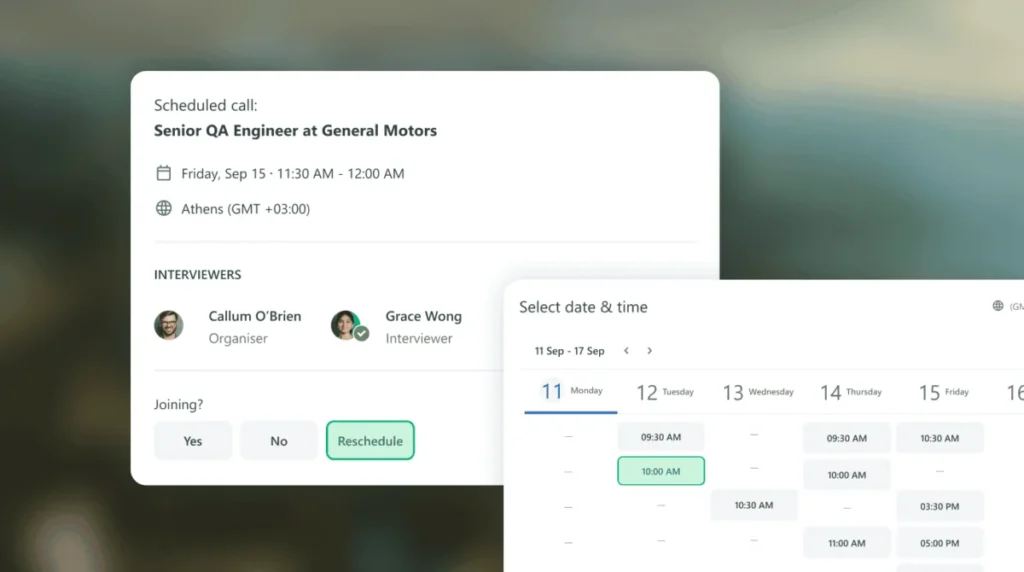
The landscape of talent acquisition is undergoing a profound transformation, with leading HR technology providers continually innovating to meet the demands of a candidate-driven market. A significant advancement in this evolution is the introduction of sophisticated self-rescheduling functionalities, designed to eliminate the long-standing friction points in the interview scheduling process. This development, spearheaded by insights from thousands of hiring teams and candidates, aims to streamline logistics, improve candidate perception, and ultimately accelerate time-to-fill for organizations globally.
The Persistent Challenge of Interview Logistics: A Pre-Digital Era Hangover
For many hiring managers and recruiters, the scenario is all too familiar: A meticulously planned interview invitation is extended to a promising candidate, carefully aligning with the availability of multiple team members. Yet, hours before the scheduled interaction, an email arrives – "I’m so sorry, but something has come up. Can we reschedule?" What often ensues is a cumbersome, multi-step administrative dance involving numerous emails, calendar cross-checks, internal coordination, and often, days of delay before a new time is confirmed. This not only consumes valuable recruiter time but also risks eroding the candidate’s initial positive impression of the company, potentially questioning its image as a modern, people-first organization.
Historically, interview scheduling has been a manual, labor-intensive process, prone to errors and inefficiencies. Recruiters often act as intermediaries, juggling multiple calendars, time zones, and communication channels. This administrative burden is not merely an inconvenience; it represents a significant bottleneck in the hiring pipeline. Data from industry analysis suggests a surprising statistic: on average, only 50% of initial interview requests actually translate into booked meetings. This means that if a company invites 40 candidates from a pool of 200 applications, only about 20 of those interviews will successfully be added to the calendar. The remaining half of these critical opportunities are lost before the conversation even has a chance to begin, representing a considerable waste of resources and a potential loss of top talent.
The root cause of this attrition often lies in rigid scheduling workflows. When a candidate needs to reschedule, the traditional solution frequently involves the recruiter generating an entirely new scheduling link, effectively restarting the entire process. This antiquated approach disregards the candidate’s evolving needs and the dynamic nature of personal and professional commitments. The cumulative impact is substantial: candidates experience unnecessary friction at a critical juncture in their job search, recruiters divert precious time to logistical coordination, and a significant number of promising interviews never materialize, leading to extended time-to-hire and increased recruitment costs.
Shifting Paradigms: The Rise of Candidate-Centric Hiring
The modern talent market is distinctly candidate-driven. Factors such as the "Great Resignation" or "Great Reshuffle," the widespread adoption of remote work, and an increased emphasis on work-life balance have empowered candidates with more choices and higher expectations. In this environment, a company’s hiring process is often the first tangible interaction a candidate has with its culture and values. Consequently, a clunky, disrespectful, or overly bureaucratic scheduling process can severely damage employer brand and deter top talent.
Extensive research across various industries consistently highlights a central theme: the most effective candidate experiences are built upon principles of respect, transparency, and autonomy. When candidates are empowered to manage their own schedules, similar to how they would for any other professional meeting, they feel valued and trusted. Conversely, being forced into rigid, one-way communication flows can make candidates feel like they are merely being "processed" rather than engaged with as potential partners. This perception directly impacts their willingness to proceed with the application, their enthusiasm for the role, and ultimately, their likelihood of accepting an offer. A positive candidate experience is no longer a mere nicety; it is a strategic imperative that directly influences recruitment success, employer branding, and long-term organizational growth.
The Core Innovation: Empowering Candidates with Self-Rescheduling
Addressing these critical pain points, leading HR technology platforms have unveiled a suite of advanced scheduling improvements, with candidate self-rescheduling as the headline feature. This innovation fundamentally alters the dynamic of interview coordination, placing control and flexibility directly into the hands of the candidate.
The new functionality allows candidates to reschedule their interviews with a single click. This eliminates the tedious email threads, the anxiety of waiting for a response, and the concern of inconveniencing hiring teams. Instead, candidates can seamlessly choose a new time from the exact same pool of available slots initially provided. This immediate resolution fosters a sense of empowerment and respect, aligning the hiring process with the professional standards candidates expect in their daily lives.
Crucially, this self-service model is designed with robust guardrails to protect both the candidate experience and team efficiency. These integrated safeguards ensure that flexibility does not come at the expense of organizational control or operational disruption:
- Configurable Rescheduling Windows: Hiring teams can set parameters, such as requiring a minimum notice period (e.g., 24 or 48 hours) before an interview can be rescheduled, preventing last-minute changes that disrupt interviewer schedules.
- Maximum Reschedule Attempts: To prevent excessive or serial rescheduling, limits can be set on how many times a candidate can self-reschedule for a particular interview stage.
- Automated Interviewer Notifications: Any candidate reschedule automatically triggers immediate notifications to all relevant interviewers, ensuring their calendars are updated in real-time and preventing miscommunication.
- Dynamic Availability Updates: The system continuously syncs with interviewers’ calendars (Google Calendar, Microsoft Outlook), ensuring that only genuinely available slots are presented to candidates, preventing double-bookings.
- Recruiter Override Capabilities: While candidates gain autonomy, recruiters retain the ability to manually intervene, adjust, or cancel schedules if exceptional circumstances arise, maintaining ultimate oversight.
- Time Zone Intelligence: The system automatically detects and displays interview times in the candidate’s local time zone, eliminating confusion and errors caused by manual conversions.
Beyond Rescheduling: A Suite of Enhancements for Holistic Efficiency
While candidate self-rescheduling is a pivotal advancement, these platform updates extend far beyond a single feature. Based on extensive feedback from diverse hiring teams, a comprehensive suite of additional improvements has been implemented to address seven other significant pain points, contributing to a more seamless and efficient recruitment workflow:
- Automated Interviewer Calendar Synchronization: Enhancements ensure real-time, bidirectional synchronization with internal calendar systems (Google Calendar, Outlook), drastically reducing manual calendar adjustments and the risk of scheduling conflicts for interviewers. This means once an interview is booked or rescheduled, all involved parties’ calendars are instantly updated.
- Intelligent Time Zone Management: The system now automatically detects and displays interview times in the candidate’s local time zone, eliminating confusion and errors caused by manual conversions, especially critical for remote and international hiring.
- Configurable Buffer Time Settings: Hiring teams can now set custom buffer periods between interviews, preventing back-to-back scheduling that can lead to interviewer fatigue, delays, and a rushed candidate experience. This ensures interviewers have adequate time for preparation and debriefing.
- Streamlined Interview Panel Selection: The process for selecting and managing multiple interviewers for complex panel interviews has been simplified. Recruiters can easily group interviewers, define specific roles, and manage their collective availability, significantly reducing coordination efforts.
- Integrated Video Conferencing Link Generation: Interview invitations now automatically generate and embed secure video conferencing links (e.g., Zoom, Microsoft Teams, Google Meet), removing a common manual step for recruiters and ensuring candidates have all necessary access details upfront.
- Customizable Interview Agenda and Prep Material Attachments: Recruiters can now easily attach pre-defined interview agendas, company information, job descriptions, or preparatory materials directly to interview invites. This ensures candidates are well-prepared, fostering a more productive conversation.
- Real-time Interview Status Dashboards for Recruiters: A centralized, dynamic dashboard provides recruiters with an at-a-glance overview of all interview statuses, including confirmed, pending, rescheduled, and canceled appointments. This transparency allows for proactive management and reduces the need for manual tracking.
- Automated and Customizable Reminder Sequences: The platform now offers highly customizable email and SMS reminder sequences for both candidates and interviewers, significantly improving show rates and ensuring all parties are well-informed as the interview approaches.
Implications Across the Hiring Ecosystem
These integrated improvements are not merely about convenience; they fundamentally recalibrate the power dynamic in recruiting, yielding measurable benefits across the entire hiring ecosystem.
For Candidates: The shift means being treated with the respect and professionalism they deserve. They gain autonomy over their schedules, can communicate changes clearly and efficiently, and experience companies as flexible, modern, and respectful from their very first interaction. This positive initial impression can significantly influence their perception of the company’s culture and their likelihood of accepting a job offer.
For Hiring Teams: The administrative overhead associated with interview scheduling is dramatically reduced. Recruiters are freed from the time-consuming "email ping-pong," manual calendar updates, and the frustrating task of chasing down why a promising candidate might have "ghosted" an interview. This reclaimed time can be redirected towards more strategic, high-value activities such as proactive sourcing, deeper candidate engagement, and building stronger talent pipelines.
For Hiring Metrics and Business Impact: The benefits are tangible and measurable. These improvements lead to:
- Faster Time-to-Fill: Reduced scheduling delays mean candidates move through the pipeline more quickly, accelerating the hiring process.
- Higher Show Rates: Candidates empowered to manage their schedules are more likely to attend interviews, reducing no-shows and wasted interviewer time.
- Improved Candidate Satisfaction Scores: A seamless and respectful experience directly boosts candidate satisfaction, enhancing the employer brand and leading to higher offer acceptance rates.
- Reduced Cost Per Hire: Efficiencies gained through automation and reduced administrative burden contribute to lower operational costs in recruitment.
- Enhanced Employer Brand and Reputation: Companies that offer a superior candidate experience are more attractive to top talent, bolstering their competitive advantage in the talent market.
The Strategic Imperative: Why Flexibility Matters Now More Than Ever
The traditional recruiting model, where companies largely dictated the "when and how" of interviews, expected candidates to bend their schedules to fit organizational demands. However, the modern talent market has fundamentally shifted. The best candidates possess numerous options and are actively evaluating companies as much as companies are evaluating them. Every single interaction, from the initial application acknowledgment to the final interview, shapes their perception of a company’s culture and operational efficiency.
When candidates are granted the autonomy to manage their interview schedules, it sends an unmistakable message: their time is respected, they are trusted to act professionally, and people are valued and treated well from the very first engagement. This ethos transcends mere operational efficiency; it is a core tenet of modern business. In an era where talent scarcity is a constant challenge, attracting and retaining top performers hinges on delivering exceptional experiences at every touchpoint. Companies that fail to adapt risk being perceived as outdated, inflexible, and out of touch with contemporary professional expectations.
Implementation and Accessibility
These advanced self-rescheduling features are now available to all customers utilizing Google or Microsoft Calendar integrations, ensuring broad accessibility across various organizational tech stacks. A key advantage of this rollout is that it requires no disruptive changes to existing workflows. Current scheduling links remain fully active, allowing hiring teams to adopt and integrate the new functionality at their own pace, ensuring a smooth transition without interrupting ongoing recruitment efforts. This iterative approach underscores a commitment to continuous improvement, recognizing that even small changes in critical areas like scheduling can yield profoundly meaningful differences.
Thoughtful hiring technology should serve as an enabler, removing obstacles rather than creating them. When the scheduling process operates smoothly and intuitively, hiring teams can redirect their focus from tedious coordination tasks to engaging in more meaningful conversations with the right candidates, ultimately driving superior hiring outcomes.
Ready to empower candidates and streamline your hiring process? Explore the new self-rescheduling features and discover how they can seamlessly integrate into your existing recruitment workflow, transforming your approach to talent acquisition.






