
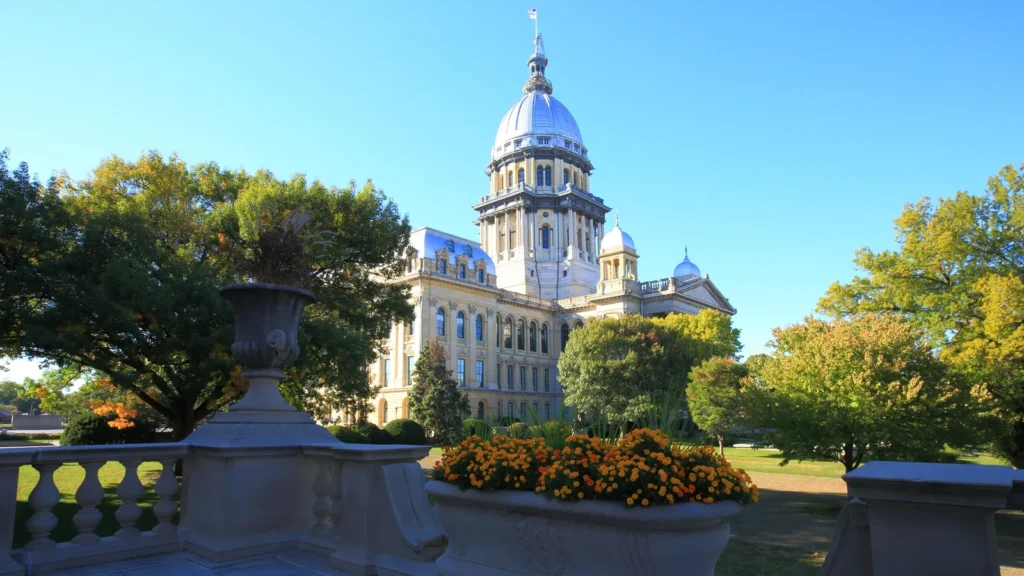
The state of Illinois is on the cusp of codifying protections against disparate impact discrimination, a move that would align it with a growing number of states actively countering a 2025 federal executive order seeking to curtail the theory’s enforcement. This legislative action, should it receive gubernatorial approval, is not merely a local policy decision but a significant development in an ongoing national debate over the scope of civil rights law, particularly in employment, and the delicate balance between federal and state authority. The bill, approved by the Illinois legislature earlier this week, specifically bans disparate impact discrimination, placing the state alongside others like New Jersey that have recently reinforced their own statutes in response to the contentious federal directive.
Understanding Disparate Impact: A Core Principle of Civil Rights Law
To fully grasp the significance of Illinois’ legislative efforts, it is crucial to understand the concept of "disparate impact" within the framework of civil rights law. Disparate impact refers to practices, policies, or rules that are neutral on their face but have a disproportionately negative effect on a protected group (such as race, color, religion, sex, or national origin) and cannot be justified by business necessity. It differs fundamentally from "disparate treatment," which involves intentional discrimination against individuals based on their protected characteristics.
The legal foundation for disparate impact was firmly established by the U.S. Supreme Court in the landmark 1971 case, Griggs v. Duke Power Co. In this pivotal decision, the Court ruled that Title VII of the Civil Rights Act of 1964 prohibits not only overt discrimination but also practices that are fair in form but discriminatory in operation. The case involved a company that required employees to have a high school diploma and pass intelligence tests for certain jobs, neither of which was directly related to job performance. These requirements disproportionately disqualified African American applicants, leading the Court to conclude that if such practices could not be shown to be related to job performance, they were unlawful. This ruling enshrined disparate impact as a critical tool for combating systemic discrimination, acknowledging that even seemingly neutral policies can perpetuate historical biases and create barriers to equal opportunity. Over the decades, the principle has been applied across various civil rights contexts, including housing, lending, and education, underscoring its broad importance in American jurisprudence.
The Trump Administration’s Challenge: The 2025 Executive Order
The legal landscape surrounding disparate impact was dramatically altered in 2025 when then-President Donald Trump issued an executive order directing federal agencies, including the U.S. Equal Employment Opportunity Commission (EEOC) and the Department of Justice (DOJ), to cease using the disparate impact theory in their enforcement efforts. The order signaled a significant departure from decades of established civil rights enforcement policy, reflecting a philosophical stance that viewed disparate impact as a form of "reverse discrimination" or an overreach of federal regulatory power. Proponents of the executive order often argued that focusing on disparate impact led to quotas or preferred outcomes rather than ensuring true equality of opportunity, and that it penalized employers for outcomes rather than intent.
The directive, however, was met with immediate and widespread condemnation from legal scholars, civil rights advocates, and former government officials. An individual serving as an EEOC administrative judge at the time publicly declared the order "highly illegal," asserting that it directly contradicted established statutory law and Supreme Court precedent. Similarly, a coalition of former officials from the Department of Labor (DOL) and the EEOC issued a strong public statement urging employers to ignore the executive order. They emphatically reminded the business community that Title VII explicitly outlaws unjustified disparate impact and that the Supreme Court had repeatedly upheld its validity. Their message was clear: "Employers should not expect that they will have a free pass on disparate impact liability simply because the President has instructed federal agencies not to pursue enforcement of the law." This immediate backlash highlighted the deep divisions within the legal and political spheres regarding the interpretation and application of civil rights protections.
Adding to the complexity, management-side attorneys, while often representing employer interests, also cautioned their clients about the limitations of the executive order. They warned that while federal enforcement might be curtailed, the order did not eliminate the underlying legal theory of disparate impact. Consequently, employers remained vulnerable to private litigation brought by individuals or groups alleging discrimination under Title VII. These attorneys advised businesses to continue reviewing their employment practices for potential disparate impact issues and, crucially, to pay close attention to relevant state laws, many of which had their own disparate impact prohibitions. This advisory underscored the reality that employment law compliance often operates on multiple levels, with state regulations frequently supplementing or even surpassing federal standards.
States Step Up: Illinois and New Jersey Codify Protections
In the wake of the federal executive order, a number of states, recognizing the potential gap in federal enforcement and the continued importance of disparate impact protections, moved to solidify their own statutes. Several states already had such bans on their books, but the 2025 federal directive spurred others to act, with New Jersey and now Illinois taking prominent steps to codify or reinforce their commitment to combating disparate impact discrimination.
New Jersey was among the first to act decisively after the federal order, introducing and passing legislation that explicitly prohibited disparate impact discrimination. The state’s new regulations provided guidance for businesses, emphasizing the continued legal obligation to avoid practices that disproportionately harm protected groups, irrespective of federal enforcement priorities. This move by New Jersey served as a clear signal that state governments were prepared to fill any perceived void left by federal agencies, reaffirming their dedication to civil rights. The motivation behind these state-level actions is multifaceted. Firstly, it reflects a strong commitment by many state legislatures to uphold and expand civil rights protections, often viewing the federal executive order as a regression. Secondly, it provides clarity and certainty for employees within their borders, assuring them that avenues for redress against systemic discrimination remain open. Thirdly, states may also see this as an assertion of their sovereign authority to legislate on matters of public welfare, particularly when federal policy shifts in a direction they disagree with.
Illinois’ recent legislative approval of a bill banning disparate impact discrimination is the latest and arguably most significant development in this state-level response. The bill, which now awaits the governor’s signature, reflects a bipartisan or at least broadly supported consensus within the state legislature that such protections are essential. While specific details of the Illinois bill would need to be reviewed for its full scope, its passage signifies Illinois’ intent to actively protect its residents from practices that could inadvertently perpetuate discrimination. For employers operating in Illinois, this means that even if federal agencies like the EEOC are restricted in pursuing disparate impact claims, the state’s own enforcement bodies and private litigants will still have a clear legal basis to do so. This creates a dual compliance challenge for businesses, requiring them to navigate potentially divergent federal and state legal frameworks.

Common Practices Under Scrutiny: From Physical Tests to AI
Disparate impact concerns have historically focused on employment requirements that, while seemingly neutral, disproportionately exclude certain groups. Classic examples include physical strength tests, which often disproportionately affect women who, on average, possess different physical attributes than men. If a strength test is not directly and demonstrably related to the essential functions of a job, requiring it could be deemed discriminatory under disparate impact theory. Similarly, criminal background checks, while seemingly benign as a measure of an applicant’s trustworthiness, have been a frequent subject of disparate impact challenges. Given historical and ongoing disparities in the criminal justice system, such checks often disproportionately exclude minority applicants, even for offenses unrelated to the job’s responsibilities or after a significant passage of time. The legal standard here typically requires employers to demonstrate a business necessity for the check and to consider the nature and gravity of the offense, the time since the conviction, and the nature of the job held or sought.
However, the rapid advancement of technology is introducing entirely new frontiers for disparate impact concerns. Emerging artificial intelligence (AI) technologies, particularly those used in automated decision-making for hiring, promotions, and performance evaluations, present a complex challenge. AI algorithms learn from vast datasets, and if these datasets reflect existing societal biases, the AI system can inadvertently perpetuate or even amplify those biases. For instance, an AI tool designed to screen resumes might learn to favor candidates from certain demographics or educational backgrounds that have historically been overrepresented in a particular field, thereby discriminating against equally qualified candidates from underrepresented groups. The guidance issued in New Jersey regarding its new disparate impact regulations explicitly highlighted AI as a significant area of concern, underscoring the proactive approach states are taking to address these novel challenges. Employers adopting AI-powered HR tools are now facing increasing pressure to audit these systems for bias and ensure their outputs do not lead to disparate impact, adding a layer of technological due diligence to traditional compliance efforts.
The Looming Battle Over Federal Preemption
Perhaps the most far-reaching implication of Illinois’ and New Jersey’s actions is the stage they set for a potential showdown over federal preemption. President Trump’s 2025 executive order not only directed federal agencies to abandon disparate impact enforcement but also explicitly instructed the attorney general to determine whether state laws codifying the theory are preempted by federal law or possess constitutional "infirmities." Furthermore, it directed the attorney general to assess whether federal action should be taken against these states. This clause in the executive order transformed what might have been a policy disagreement into a direct challenge to states’ legislative authority.
Federal preemption is a legal doctrine rooted in the Supremacy Clause of the U.S. Constitution, which holds that federal laws can supersede state laws. There are different forms of preemption, including express preemption (where a federal law explicitly states it preempts state law), implied preemption (where federal law is so pervasive that it leaves no room for state regulation), and conflict preemption (where state law directly conflicts with federal law, making it impossible to comply with both). The argument for federal preemption in this context would likely hinge on the idea that Title VII, as a comprehensive federal civil rights statute, implicitly or explicitly sets the boundaries for anti-discrimination law, and that state laws expanding beyond federal enforcement priorities create a conflict.
However, legal experts widely argue against the preemption of state disparate impact laws. They point to Title VII itself, which generally allows states to enact laws that offer greater protections than federal law, so long as they do not directly contradict federal mandates. Historically, federal civil rights laws have often served as a floor, not a ceiling, for protections. The Supreme Court’s consistent upholding of disparate impact under Title VII further complicates any federal argument that state codifications are "unconstitutional" or "infirm." Moreover, the executive order itself is not a statute passed by Congress; it is a presidential directive. While executive orders carry legal weight for federal agencies, their ability to unilaterally invalidate state laws or interpretations of federal statutes is highly debatable and would likely face significant judicial scrutiny.

If Illinois’ governor signs the disparate impact bill, it will join New Jersey and other states in creating a legal and political flashpoint. The federal government, under a future administration that aligns with the 2025 EO’s philosophy, could potentially initiate legal challenges against these states, arguing preemption or constitutional issues. Such litigation would undoubtedly be complex, lengthy, and would have profound implications for the balance of power between federal and state governments, as well as the future of civil rights enforcement across the nation.
Implications for Employers and Civil Rights
The evolving landscape of disparate impact law presents a complex and often contradictory environment for employers. On one hand, the federal executive order of 2025 aimed to reduce regulatory burdens by discouraging federal agencies from pursuing disparate impact claims. On the other hand, the actions of states like Illinois and New Jersey mean that employers cannot simply disregard the theory. They must continue to audit their employment practices—from hiring to promotions to terminations—to ensure they do not inadvertently create a disparate impact on protected groups, regardless of federal enforcement priorities. The potential for private litigation remains a significant deterrent against discriminatory practices, as individuals and civil rights organizations can still bring lawsuits under state and federal statutes.
For civil rights advocates, the state-level efforts are a crucial defense against what they perceive as an attempt to weaken fundamental protections. These state laws provide an essential safety net, ensuring that systemic discrimination can still be challenged and remedied, even if federal agencies are instructed to look the other way. They reinforce the idea that equal opportunity is a core value that should not be subject to shifting political tides.
The role of federal agencies like the EEOC and DOJ under different administrations will also be critical. A future federal administration could reverse the 2025 executive order, restoring disparate impact to its full enforcement capacity at the federal level. This constant flux underscores the need for employers to maintain robust compliance programs that are adaptable and sensitive to the nuances of state and federal law. It also highlights the ongoing tension between different interpretations of equality—equality of opportunity versus equality of outcome—which continues to shape employment law and civil rights policy.
Conclusion: An Evolving Landscape of Employment Law
The legislative movement in Illinois to ban disparate impact discrimination is more than just a local news item; it is a microcosm of a larger national debate concerning civil rights, federalism, and the future of fair employment practices. By codifying these protections, Illinois is asserting its commitment to safeguarding its residents against systemic bias, even as federal policy has sought to narrow the scope of such enforcement. This action, alongside similar efforts in states like New Jersey, creates a dynamic and potentially litigious environment where state and federal authorities may clash over legal interpretation and jurisdiction. For businesses, the message is clear: the responsibility to ensure equitable employment practices remains paramount, demanding vigilance in reviewing all policies, from traditional screening methods to cutting-edge AI tools, against the backdrop of an ever-evolving legal landscape. The stage is indeed set for a significant legal and political contest over who defines and enforces the boundaries of civil rights in America.






