The landscape of enterprise artificial intelligence is undergoing a profound transformation, moving beyond the paradigm of static systems and applications. At the forefront of this evolution are AI Agents and Superagents, which are no longer merely tools but dynamic entities capable of learning, growing, and essentially becoming extensions of the company itself. This shift, detailed in frameworks like the HR 2030 architecture, signifies a departure from traditional software, where AI agents for functions like recruitment, training, or employee service delivery gain an increasingly nuanced understanding of a company’s specific operations and unique characteristics over time. This development carries immense implications for how businesses leverage their most valuable, often unwritten, assets: their tacit knowledge, historical experiences, and proprietary practices.
For years, businesses have recognized that their competitive advantage lies not just in tangible assets but in the implicit understanding of policies, cultural norms, risk management protocols, and the overarching "way we do business." These are the elements that differentiate one organization from another, often existing as deeply ingrained organizational DNA rather than explicit documentation. The advent of AI that can internalize and operate based on this nuanced knowledge represents a significant leap forward.
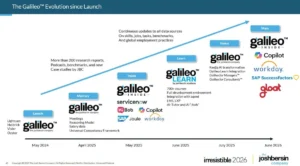
A prime example of this emerging capability was showcased through a collaboration between Josh Bersin’s Galileo intelligence and Microsoft. By embedding Galileo’s intelligence into Microsoft Copilot, the system was able to ingest and retrain itself on the company’s intellectual property. Early testing by the Microsoft HR team yielded results described as "astoundingly more useful, detailed, and trusted," primarily due to the AI’s ability to cite knowledgeable sources for all inquiries. This integration effectively transformed Microsoft Copilot into a sophisticated HR business partner and consultant, capable of providing informed guidance rooted in the organization’s own accumulated wisdom.
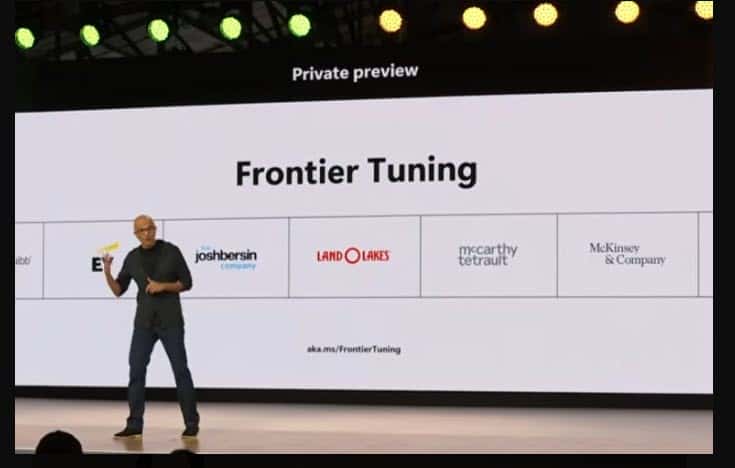
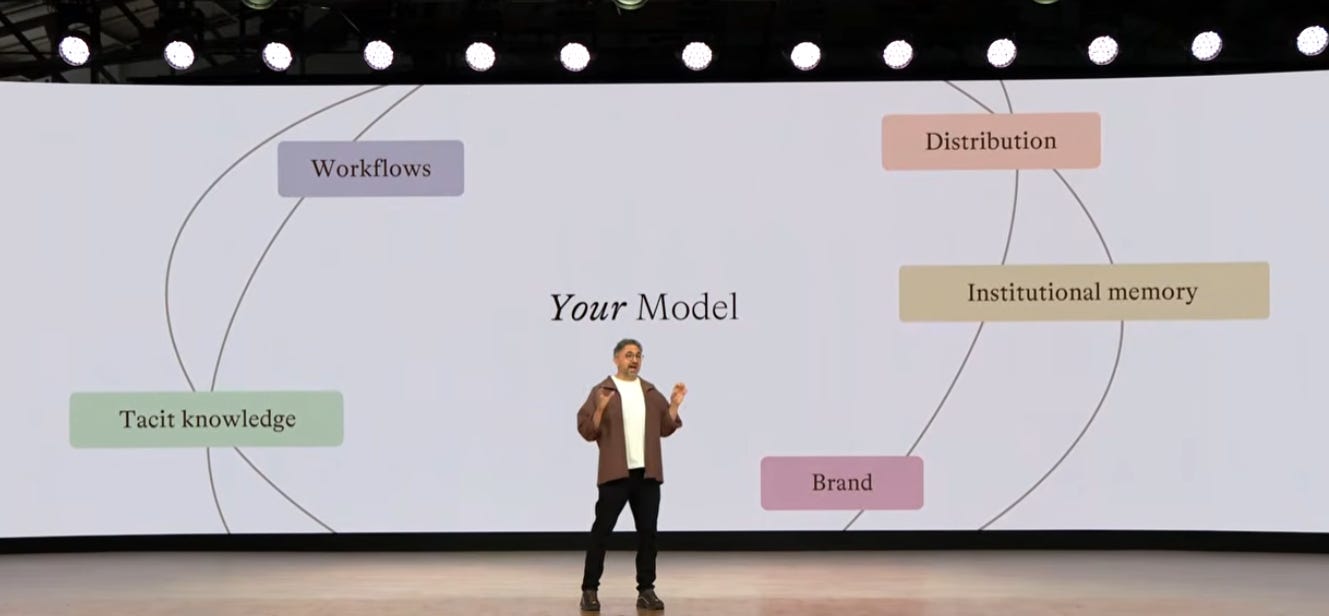
Microsoft is now actively productizing this capability, enabling organizations to "fine-tune" their Copilots. This allows IT and HR departments to directly input their specific policies, hiring guides, compensation practices, onboarding procedures, and any other relevant organizational data. This process "institutionalizes" this proprietary knowledge, embedding it directly into the AI system and ensuring that the AI operates with an intimate understanding of the company’s unique operational framework.
Frontier Tuning: Beyond Retrieval-Augmented Generation
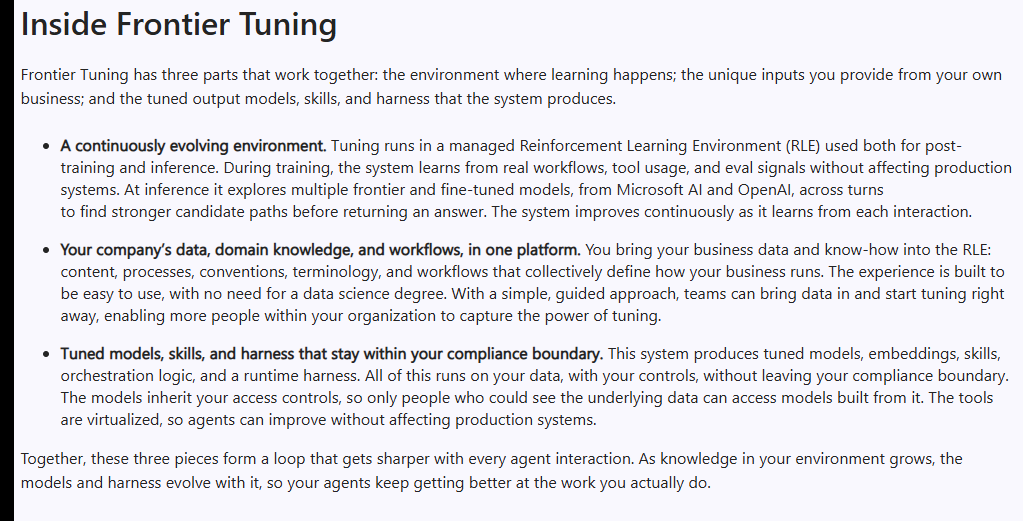
A key differentiator of Microsoft’s approach, particularly through its "Frontier Tuning" system, is its ability to move beyond traditional Retrieval-Augmented Generation (RAG) implementations. While RAG systems excel at retrieving relevant information from a knowledge base, they do not fundamentally "train" the underlying model in the same way. Frontier Tuning, on the other hand, introduces a learning mechanism that allows the AI agent to improve autonomously.
Microsoft refers to this as the "Reinforcement Learning Environment." This feature enables the AI to learn from real-world feedback provided by users, continuously updating and refining its performance. This self-improvement loop mirrors human learning processes, where experience and feedback lead to enhanced understanding and decision-making.
The potential of this technology was powerfully demonstrated at the Microsoft Build 2024 conference in San Francisco. Attendees were given a glimpse into how this advanced AI could be integrated, not only with existing intelligence platforms like Galileo but also with a company’s own internal operational blueprints. The demonstration highlighted the ability to embed proprietary company practices directly into the AI, creating a truly bespoke enterprise intelligence solution.
Satya Nadella, Microsoft’s CEO, has articulated a vision where the true value of an AI model lies in its uniqueness and customization to a specific company, rather than its broad dissemination. This perspective aligns with the strategic advantage of creating AI that is deeply embedded with an organization’s intellectual property and operational nuances. The emphasis is on empowering IT and HR teams to meticulously tune, optimize, and personalize these AI systems for maximum impact within their respective enterprises.
The "Harness" Layer: A Foundation for Diverse AI Models
Microsoft Copilot’s new "harness" layer plays a crucial role in this ecosystem. This architectural component allows Copilot to host a variety of AI models, including those from OpenAI, Anthropic, Microsoft’s own developing models, and importantly, custom fine-tuned models developed by individual organizations. This flexibility opens up possibilities for specialized AI applications within large enterprises. For instance, Research and Development teams could leverage their own fine-tuned models, trained on confidential internal data, to accelerate innovation without compromising intellectual property.
Reinforcement Learning: Enabling Self-Improving AI Agents
The core of Microsoft’s "Frontier Tuning" innovation lies in its adoption of autonomous reinforcement learning. This allows AI agents to continuously enhance their capabilities over time, much like human professionals learn and adapt. The "Agent Lightning" project overview from Microsoft Research details the technical underpinnings of this capability, which enables users and administrators to activate reinforcement learning to gather feedback on the utility of AI actions. This feedback loop is critical for the model’s self-training process.
A compelling real-world example of this technology in action was provided by Microsoft’s internal crisis management agent. While initially effective, the complexities introduced by geopolitical events like the war in Ukraine and subsequent conflicts presented new challenges, such as employees facing communication blackouts or requiring urgent relocation. By utilizing the reinforcement learning feature, this agent was able to update itself with new policies and protocols necessary to address these evolving crisis scenarios, demonstrating its adaptive learning capacity.
Beyond reinforcement learning, Microsoft Copilot offers other avenues for customization. The Microsoft Graph Connector, for example, allows Copilot to access and utilize data from various Microsoft 365 applications, including SharePoint, PowerPoint, Word, Outlook, and Workday data. While these integrations provide broad data access, they are not as deeply integrated into the agent’s core learning process as reinforcement learning, limiting the application of continuous, autonomous self-improvement.
Microsoft’s Strategic Leap: Developing Proprietary AI Models
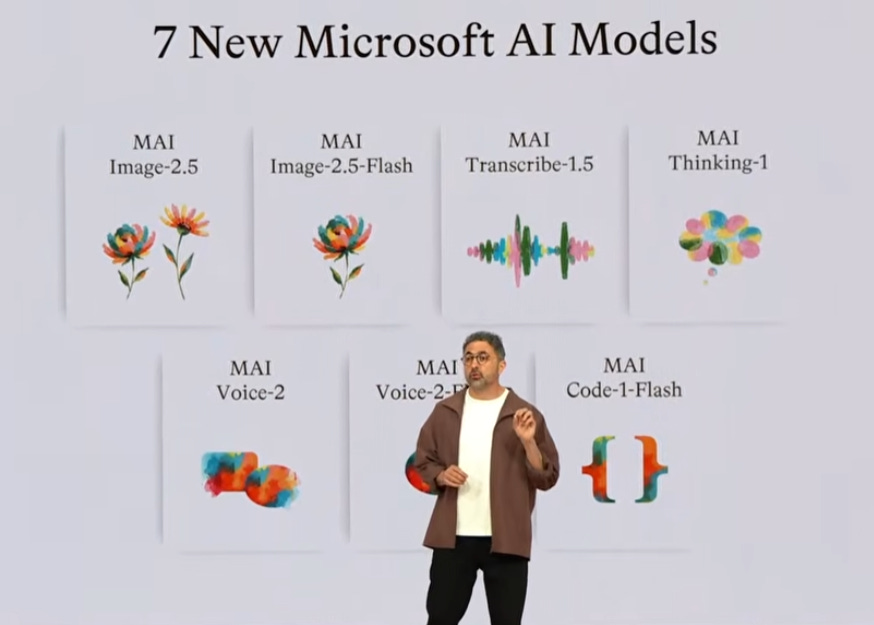
Adding another significant dimension to Microsoft’s AI strategy is the announcement of seven new AI models, spearheaded by Mustafa Suleyman. These models are specifically optimized for various enterprise use cases, signaling a strategic move to compete directly with leading AI providers like Anthropic and OpenAI. This development is partly driven by a desire to reduce reliance on third-party models, which incur significant licensing costs. Suleyman indicated that the objective is to "reduce and ultimately eliminate that cost" associated with using models from partners like Anthropic.
These new Microsoft-developed models are designed for efficiency and are characterized by their clean, licensed data sources, avoiding the ethical and legal complexities associated with models trained on broadly scraped internet content. For business leaders, this offers a more transparent and potentially more compliant foundation for AI deployment.
A crucial distinction highlighted is the data privacy aspect. Unlike some current models where user input can be used for future training (unless specifically opted out), Microsoft’s approach aims to ensure that intellectual property shared with these new models remains proprietary to the organization. This is particularly vital for companies concerned about inadvertently leaking sensitive data. As Suleyman noted, if a user doesn’t "uncheck" a learning box, "everything you do in Claude is available to Anthropic to be sold to others." Microsoft’s strategy seeks to provide a secure environment where sensitive company data can be utilized without such risks.
Frontier Models for Industry-Specific Applications
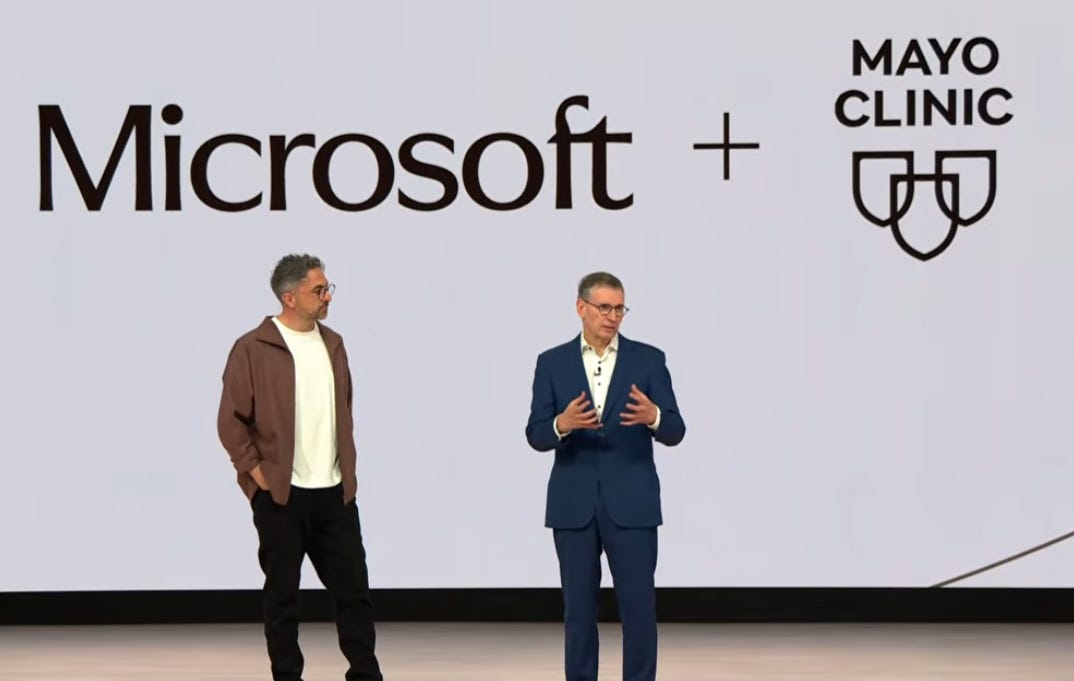
The implications of this strategic direction are far-reaching, with organizations already exploring its potential. Mayo Clinic, a renowned healthcare institution, is collaborating with Microsoft to develop a "New Frontier Model for Healthcare." This specialized model is intended to provide clinicians with deep insights into effective clinical practices, mirroring the approach taken in HR and management by documenting and codifying world-class best practices.
In the agricultural sector, Land-O-Lakes has been a pilot user of Microsoft’s new reasoning model, MAI-Thinking-1, for automating tasks within its butter formulation processes. By fine-tuning a copy of the model with thousands of internal documents, Teams messages, and Outlook emails, the company achieved remarkable results. According to Microsoft senior product manager Tanaya Yadav, this customized version of MAI-Thinking-1 demonstrated superior accuracy and was ten times more cost-efficient than OpenAI’s GPT-4.5, underscoring the significant advantages of tailored AI solutions.
For organizations that are heavily invested in the Microsoft ecosystem, this development offers a compelling path forward for enterprise AI adoption. The combination of robust platform capabilities, advanced fine-tuning features, and a growing suite of proprietary AI models positions Microsoft as a significant player in the enterprise AI market.
Analysis and Future Implications
Microsoft’s strategic pivot towards "Frontier Tuning" and the development of its own AI models represents a significant step in democratizing advanced AI capabilities for enterprises. The ability for companies to imbue AI agents with their unique intellectual property and operational nuances, coupled with the capacity for autonomous learning, promises to unlock new levels of efficiency, innovation, and competitive advantage.
The move away from a reliance on third-party models also addresses concerns about cost, data privacy, and intellectual property protection, which are paramount for businesses operating in sensitive sectors. By offering a secure and customizable AI "harness," Microsoft is enabling organizations to build AI solutions that are not only powerful but also intrinsically aligned with their specific business objectives and ethical considerations.
The long-term implications of this strategy are substantial. As more enterprises adopt fine-tuning and reinforcement learning for their AI agents, we can expect to see a proliferation of highly specialized, self-improving AI systems that act as extensions of organizational knowledge and capabilities. This evolution signals a future where AI is not just a tool but an integral, adaptive component of enterprise operations, driving efficiency and innovation in unprecedented ways. The sustained investment and leadership in this area suggest that Microsoft’s approach to enterprise AI has the potential for significant, long-lasting impact.