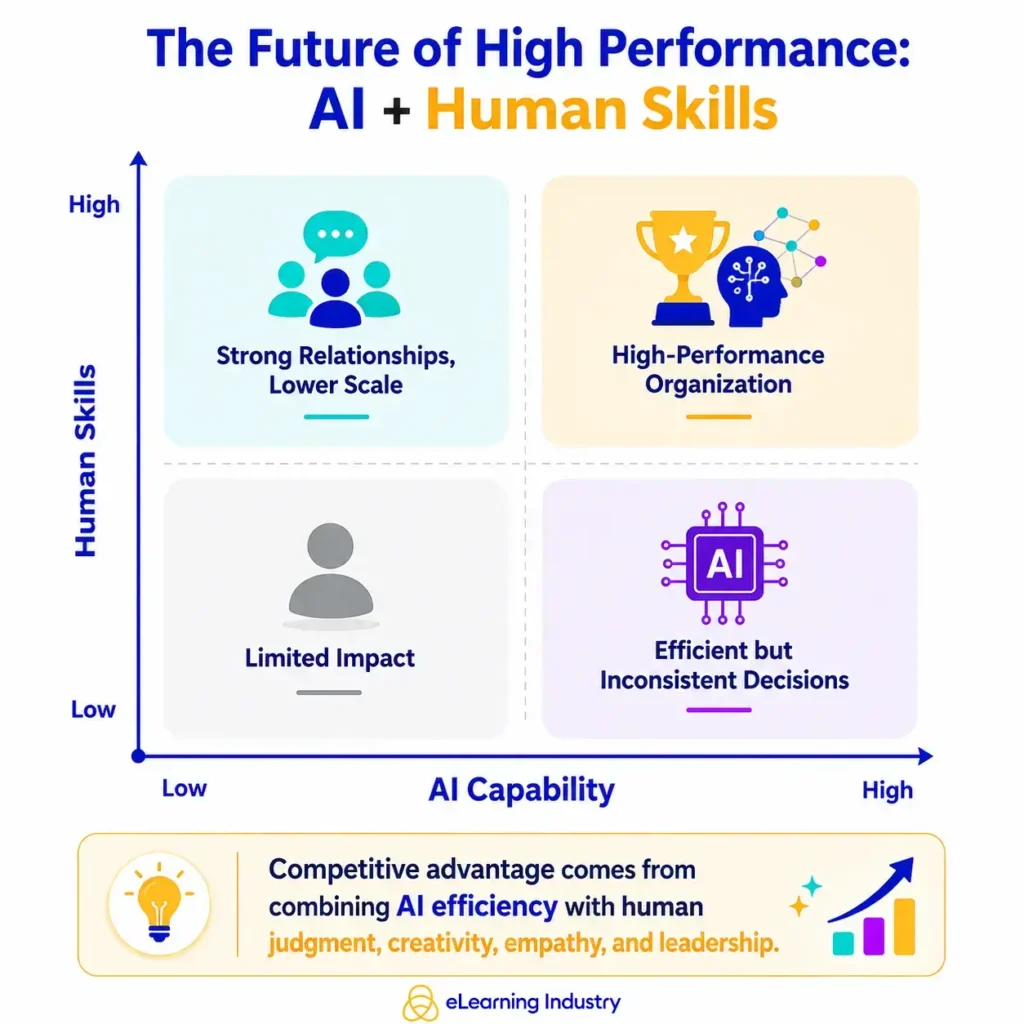
As artificial intelligence continues its rapid integration into the global workforce, a fundamental shift is occurring in how organizations define value, performance, and professional success. While the previous decade focused heavily on the acquisition of technical and digital competencies, the emergence of sophisticated generative AI tools has inverted the traditional hierarchy of workplace skills. Today, "human skills"—the cognitive, emotional, and social abilities that facilitate communication, collaboration, and complex problem-solving—have emerged as the primary drivers of long-term organizational resilience and individual career longevity.
The current transition represents a departure from the "Information Age," where the ability to process and organize data was paramount, to a new era where judgment, empathy, and ethical reasoning are the scarcest and most valuable resources. As AI automates routine cognitive tasks, the "performance gap" in modern enterprises is no longer found in technical execution but in the nuances of human interaction and leadership.
The Evolution of Workplace Competency: A Chronological Shift
To understand the current emphasis on human skills, it is necessary to examine the trajectory of workplace requirements over the last century.
During the Industrial Revolution, the primary value of a worker was physical labor and adherence to standardized processes. By the mid-20th century, the rise of the bureaucratic corporation shifted focus toward management and specialized technical knowledge. The late 20th and early 21st centuries ushered in the Digital Revolution, placing a premium on coding, data analysis, and software proficiency.
However, the timeline took a sharp turn with the 2022-2023 surge in Large Language Models (LLMs) and automated analytical tools.
- 2010–2020: The "Hard Skills Era," where STEM (Science, Technology, Engineering, and Mathematics) dominated recruitment strategies.
- 2021–2022: The "Hybrid Transition," as the global pandemic forced a sudden reliance on emotional intelligence and digital empathy to maintain remote team cohesion.
- 2023–Present: The "Human-Centric Era," where technical skills are increasingly viewed as "perishable" due to the rapid pace of software obsolescence, while human skills are recognized as "durable" assets that appreciate over time.
Supporting Data: The Economic Case for Human Skills
Recent labor market analyses underscore this shift. According to the World Economic Forum’s Future of Jobs Report 2023, analytical thinking and creative thinking remain the most important skills for workers in 2023, but "soft" skills like resilience, flexibility, and agility; motivation and self-awareness; and curiosity and lifelong learning are among the top ten skills growing in importance.
Furthermore, a study by LinkedIn revealed that "communication" has consistently ranked as the number one most in-demand skill across nearly every industry. Research from Deloitte suggests that "soft skill-intensive occupations" will account for two-thirds of all jobs by 2030, and that hiring for these roles can increase productivity by up to 12%.
The data suggests a clear trend: as the cost of technical labor decreases through automation, the premium on human-led decision-making increases. Organizations are realizing that while technical skills can get an applicant through the door, human skills are what determine whether that individual can lead a team through a crisis or navigate the ethical complexities of AI implementation.
The Decalogue of Modern Professionalism: 10 Essential Human Skills
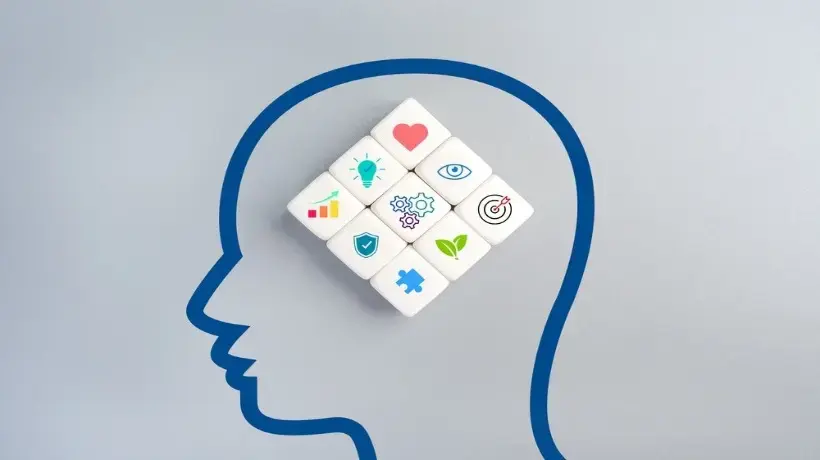
To navigate this new landscape, professionals are being encouraged to cultivate a specific set of "durable" skills. These are not merely personality traits but measurable competencies that can be developed through intentional practice.
1. Advanced Communication
In a world of automated emails and AI-generated reports, the ability to listen actively, ask incisive questions, and tailor complex messages for diverse audiences is a competitive advantage. Effective communication serves as the connective tissue in hybrid and decentralized work environments.
2. Emotional Intelligence (EQ)
Emotional intelligence involves the capacity to recognize, understand, and manage one’s own emotions while influencing the emotions of others. In the workplace, high EQ manifests as self-awareness and empathy, which are essential for building trust—a commodity that AI cannot manufacture.
3. Critical Thinking and Ethical Judgment
While AI can analyze vast datasets to provide suggestions, it lacks the context to understand the ethical implications of those suggestions. Human professionals are required to question data sources, identify biases, and make nuanced decisions in "gray areas" where there is no clear right or wrong answer.
4. Collaboration and Interdisciplinary Teamwork
Modern problems are too complex for any one individual or department to solve. Success now depends on the ability to share knowledge across silos, respect diverse perspectives, and foster an environment of psychological safety where innovation can thrive.
5. Adaptability and Resilience
The pace of technological change requires a "permanent beta" mindset. Adaptable employees do not just survive change; they leverage it to find new efficiencies. Resilience allows professionals to recover from the inevitable setbacks associated with rapid digital transformation.
6. Leadership and Social Influence
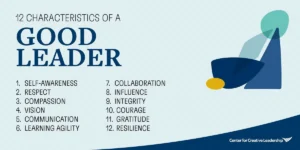
Leadership is no longer defined by a title but by the ability to inspire and mobilize others. In an AI-augmented workplace, leaders must articulate a vision that gives meaning to work, ensuring that employees feel valued as more than just "operators" of technology.
7. Creativity and Synthesis
AI is excellent at "recombinant" creativity—taking existing ideas and shuffling them. True human creativity involves synthesis: the ability to connect seemingly unrelated concepts to create something genuinely novel.
8. Conflict Resolution
Disagreements are a natural byproduct of diverse, high-performing teams. The human ability to navigate these tensions through negotiation and empathy prevents organizational friction from turning into toxic dysfunction.
9. Self-Management and Personal Agency
With the rise of remote work and autonomous roles, the ability to manage one’s time, energy, and focus without constant supervision is vital. This includes the discipline to prioritize high-value deep work over the "shallow work" of responding to notifications.
10. Learning Agility
The most important skill of the 21st century is the ability to learn, unlearn, and relearn. A growth mindset ensures that a professional’s value remains high even as specific technical tools change.
Human Skills in Leadership: From Authority to Influence
The evolution of these skills is most visible in the executive suite. The traditional "command and control" model of leadership is failing in the face of AI. Modern leadership is shifting toward a coaching model.
"The organizations that will succeed in the AI era won’t just have the best technology," says Christopher Pappas, CEO and founder of eLearning Industry. "They will have people who can think critically, adapt quickly, and build trust. While AI can increase productivity, it is human skills that drive leadership, innovation, and long-term success."
Today’s leaders must balance business objectives with employee well-being. They are expected to be storytellers who can humanize data and coaches who can empower their teams to solve problems independently. Failure in modern management is rarely attributed to a lack of technical knowledge; instead, it is almost always a failure of communication, empathy, or conflict resolution.
Practical Applications and Real-World Scenarios
The importance of these skills is best illustrated under pressure. For instance, in a hybrid work environment, a manager might notice a dip in a team member’s performance. An AI tool might flag the productivity drop and suggest a warning. A human-skilled leader, however, would use empathy and active listening to discover that the employee is struggling with burnout or home-life challenges, allowing for a supportive intervention that retains a valuable asset rather than discarding them.
Similarly, during large-scale organizational changes—such as a merger or a pivot to new technology—the technical roadmap is only half the battle. The human element requires negotiation, transparency, and the ability to manage the collective anxiety of a workforce. These are human-exclusive tasks that determine the ultimate ROI of any technical initiative.
Strategic Implementation: How Organizations Are Responding
Forward-thinking organizations are moving beyond traditional classroom-style training to develop these competencies. The focus is shifting toward "behavior-based training" and "scenario-based learning."
- Simulation and Role-Play: Employees practice difficult conversations—such as delivering performance feedback or resolving a peer conflict—in a controlled environment.
- Managerial Coaching: Senior leaders are being trained to act as mentors, reinforcing human-centric behaviors through daily interactions.
- Peer-to-Peer Learning: Companies are creating "communities of practice" where employees can share experiences and strategies for navigating complex social dynamics at work.
- Continuous Feedback Loops: Rather than annual reviews, organizations are implementing real-time feedback systems that reward collaborative behaviors and emotional intelligence just as much as technical output.
Broader Implications and Future Outlook
The rise of human skills represents a profound re-humanization of the workplace. For decades, there was a fear that humans would have to become more like machines to stay relevant. The reality has proven to be the opposite: to stay relevant, humans must become more human.
As AI takes over the "how" of work—the processes, the data crunching, and the routine content creation—humans are left to focus on the "why." This shift has the potential to make work more meaningful, focusing on connection, purpose, and creative expression.
In the long term, the competitive edge of nations and corporations will be determined by their "human capital" in the truest sense of the word. Those who invest in the cognitive and emotional development of their people will find themselves better equipped to handle the ethical, social, and economic challenges of an automated future. The goal is not to compete with AI, but to achieve a symbiotic relationship where human judgment and empathy guide the immense power of machine intelligence.