Eightfold AI has officially unveiled its AI-powered Candidate Agent, a significant advancement designed to integrate seamlessly with its existing AI Interview agent. This launch is not only a strategic move for Eightfold as it targets the highly competitive and high-volume hiring market, but it also signifies a broader industry shift towards Multi-Agent AI solutions within the Human Resources technology landscape, a trend anticipated and detailed in the "HR 2030" vision.
The Rise of Intelligent Candidate Engagement
The newly introduced AI Candidate Agent is engineered to manage and respond to a wide spectrum of candidate inquiries. These can range from general questions about a specific job opening to detailed queries about the company, compensation, working hours, required qualifications, flexibility policies, and employee benefits. This sophisticated agent aims to streamline and expedite the candidate inquiry process, fostering a more positive and robust relationship between employers and potential hires.
This development echoes a decade-long evolution of chatbot technology in recruitment. While basic chatbots have been present for some time, the current generation, powered by advanced AI, can engage in direct, in-depth conversations with candidates. This capability significantly accelerates and simplifies the job application journey for job seekers, providing them with crucial information about opportunities while simultaneously alleviating the burden on employers facing a deluge of applications often generated by automated job application tools.
The AI Candidate Agent is built to scale, capable of handling thousands of candidate inquiries across thousands of job openings simultaneously. It operates across multiple platforms, including mobile devices, web browsers, Slack, and other communication channels. This widespread accessibility is particularly advantageous for organizations engaged in high-volume hiring, making it more efficient to qualify, inform, and source suitable candidates.
Beyond the Initial Interaction: A Holistic Agent Ecosystem
While the Candidate Agent addresses the crucial initial touchpoint, its integration within a broader ecosystem of AI agents is where its true potential lies. As outlined in the "HR 2030" framework, a comprehensive talent acquisition strategy will eventually require up to 24 distinct agent workflows. Eightfold’s approach envisions a seamless flow where the Candidate Agent can direct an applicant to an Eightfold-powered career site, guide them through the application process, and subsequently connect them with the company’s AI Interviewer. All data generated during this process is stored within Eightfold’s Applicant Tracking System (ATS), providing a rich, centralized repository for future talent management initiatives.
Industry Landscape and Competitive Advancements
Eightfold, a recognized pioneer in talent intelligence, is now extending its reach into this burgeoning multi-agent AI space. However, this functionality is not exclusive to Eightfold. A competitive landscape is rapidly emerging, with vendors such as Paradox (in partnership with Workday), Maki People, Phenom, SmartRecruiters, and UKG offering similar agentic solutions. The effectiveness of these tools hinges on their ability to integrate and collaborate, forming a cohesive multi-agent system, and the depth of industry knowledge and experience the vendors bring to the table.
Leading vendors have carved out distinct niches. Paradox, for instance, has established a strong presence in high-volume frontline hiring, serving prominent clients like Chipotle and McDonald’s. Maki People focuses on providing sophisticated assessment capabilities integrated with their recruiting agents, as seen with clients like H&M and Delta Airlines. UKG offers a dynamic, real-time hiring solution by automatically triggering job requisitions based on demand from its workforce management platform, particularly beneficial for frontline workers.
The Critical Role of Data Architecture
The efficacy of any AI agent is intrinsically linked to its access to comprehensive and relevant data. Deploying these advanced tools, especially in a multi-vendor environment, necessitates careful consideration of an organization’s HR 2030 data architecture. A robust infrastructure is required to store and manage the policies and candidate data collected. A candidate interacting with an agent might be a former employee, a past applicant, or even an internal contender. Therefore, a strategic architectural approach is essential to leverage this data effectively across various use cases.
Eightfold has further empowered organizations by introducing "Talent Forge," a suite of tools designed to facilitate the creation of custom AI agents. While vendor-provided agents offer significant functionality, the ability to extend and tailor them to specific organizational needs is becoming increasingly vital. The 20+ agent workflows identified in the HR 2030 framework are merely the starting point. Future applications could include agents capable of pre-screening candidates based on linguistic proficiency or educational background, or specialized agents for internal applicants during downsizing events. The potential business use cases for agentic HR solutions are vast, with estimates suggesting over 200 distinct applications.
The Exploding Frontline Worker Market
The market for frontline worker solutions is experiencing explosive growth as companies prioritize optimizing this critical segment of their workforce. Research on "The Five Types Of Frontline Workers" highlights the need for tailored hiring and management programs. Eightfold’s entry into this space with its AI-powered tools is strategically positioned for success with both its existing and new clientele.
A recurring theme in the detailed study of AI-powered recruiting is the imperative to "rethink your talent acquisition process." Organizations like ISS Facility Services and Fontainebleau Las Vegas, which employ AI to manage hiring at scale, emphasize the crucial collaboration between HR and IT departments to view the entire process holistically.
Transformative Impact on Recruitment Metrics and Roles
The scalability and dynamic nature of these multi-agent AI solutions are fundamentally altering recruitment. Companies adopting these technologies are reporting dramatic improvements:
- Reduced Time-to-Hire: From an average of two weeks to as little as three days.
- Elimination of Manual Roles: Hundreds of call center positions dedicated to interview scheduling are becoming obsolete.
- Increased Quality of Hire: Enhanced candidate assessment leads to better long-term performance.
H&M, for example, observed a 30% improvement in retention rates in many of its locations by leveraging agentic recruiting for in-depth assessments at an unprecedented scale.
Beyond HR Savings: The Broader ROI of Agentic Recruitment
The return on investment (ROI) for these tools extends far beyond mere cost savings within the HR department. Chipotle’s public endorsement of its Paradox implementation on CNBC underscores its value as one of the company’s most impactful AI projects. Faster and higher-quality hiring directly translates to increased sales and accelerated expansion initiatives. In the high-volume hiring sector, these systems are proving to be truly revolutionary.
Globally, over a million employers manage frontline workforces across diverse sectors such as distribution, hospitality, retail, transportation, and healthcare. Currently, fewer than 5% of these employers utilize agentic recruitment tools. This indicates a massive, largely untapped market with significant growth potential as multi-agent solutions mature.
Recommendations for Navigating the Evolving Landscape
Organizations are encouraged to explore the capabilities offered by Eightfold and other leading vendors in the agentic recruitment space. For a comprehensive understanding of how these advancements fit into the future of HR, consulting the "HR 2030" blueprint is recommended.
The convergence of AI and talent acquisition represents one of the most mature and proven applications of artificial intelligence. As the industry anticipates the upcoming fall conference season, the continued innovation and introduction of products like Eightfold’s Candidate Agent signal an exciting trajectory for the future of recruitment.
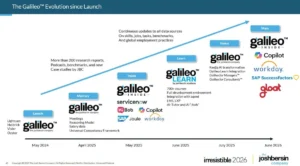
For those seeking to delve deeper into the intricacies of talent acquisition transformation, resources such as "The Talent Acquisition Revolution: How AI is Transforming Recruiting" and interviews with industry leaders like Ashutosh Garg, Co-Founder & CEO of Eightfold.ai, offer invaluable insights. Furthermore, understanding the foundational elements of the HR 2030 vision, as presented by The Josh Bersin Institute and Galileo, is crucial for strategic planning in this dynamic environment.