Chicago-based mid-sized law firm Gould and Ratner has fundamentally transformed its talent acquisition strategy, leveraging the Workable applicant tracking system (ATS) to navigate the intricate landscape of legal recruiting. This strategic adoption has enabled the firm to streamline operations, enhance candidate experience, and facilitate robust multi-city expansion, all while maintaining a lean, one-person talent acquisition department. The results include a recovery of five administrative hours per week, successful tracking and hiring of candidates after more than a year in the pipeline, and seamless scaling of its Denver office from one to seven employees without additional recruiting infrastructure.
Gould and Ratner: A Profile in Strategic Growth
Headquartered in Chicago, Gould and Ratner is a distinguished mid-sized law firm with approximately 115 employees, including a core of roughly 60 attorneys. The firm boasts diverse practice areas, spanning real estate, corporate law, litigation, and various specialized fields. Its commitment to growth and client service led to a significant expansion approximately 18 months ago, with the establishment and rapid scaling of a new office in Denver, Colorado. This satellite office quickly grew from a single employee to seven, underscoring the firm’s dynamic trajectory and increasing demand for specialized legal talent.
Overseeing every facet of talent acquisition for this expanding enterprise across both Chicago and Denver is Dan Minjock, the firm’s Director of Talent Acquisition. Operating as a department of one, Minjock is responsible for managing roughly 20 hires annually, with the vast majority of these positions being highly specialized attorney roles. This unique operational structure, combining significant hiring volume with a solo recruiter, necessitates an exceptionally efficient and robust talent acquisition framework.
The Unique Imperatives of Legal Recruitment
Attorney hiring stands apart from general corporate recruitment, characterized by an extended timeline, a heightened demand for precision, and a multi-layered evaluation process. More than 75% of Gould and Ratner’s annual hires are for attorney roles, primarily associates, but occasionally encompassing partners. These positions demand a very specific caliber of professional, often requiring expertise in a niche area of practice, and a precise alignment with a candidate’s career stage. The confluence of these factors means that identifying the right individual can be a protracted process, frequently extending well beyond a year.
Before the implementation of Workable, the management of these long-running, complex searches presented a substantial operational challenge for Gould and Ratner. The absence of a purpose-built system meant that documenting every interaction, meticulously preserving interview notes across multiple rounds, and effectively surfacing promising candidates from previous searches was a largely manual and often precarious endeavor. In a scenario where a promising attorney might be encountered but not immediately available or suitable, the risk of losing track of such a valuable prospect was high. For a solo recruiter like Minjock, simultaneously managing numerous active searches—each potentially involving up to five interview rounds spread across three separate days—the margin for error or disorganization was effectively zero. This operational fragility underscored an urgent need for a more structured, systematic approach to talent acquisition.
Workable’s Strategic Integration and Immediate Impact
Dan Minjock joined Gould and Ratner two years ago, coinciding with the firm’s strategic decision to adopt Workable as its primary applicant tracking system. From the outset, Minjock recognized the critical need for a system capable of handling the inherent complexities of legal recruiting without imposing an undue burden on the firm’s senior attorneys, who would be integral to the hiring process. His vision was to implement a platform that could provide robust organizational capabilities while maintaining an intuitive user experience for all stakeholders.
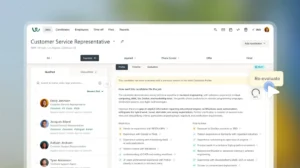
Workable proved to be the ideal solution, delivering on both of Minjock’s core requirements. The platform’s visual pipeline feature provided the essential organizational backbone necessary for managing long-horizon searches, allowing for clear tracking of candidate progress. The seamless integration with LinkedIn Recruiter significantly reduced manual administrative tasks, freeing up valuable time. Crucially, Workable’s intuitive interface transformed what could have been a substantial obstacle—the adoption by busy practice chairs—into a non-issue, facilitating smooth collaboration across the firm.
Transformative Impact: A Deep Dive into Key Metrics and Operational Shifts
The implementation of Workable has heralded a series of profound operational shifts and quantifiable benefits across Gould and Ratner’s talent acquisition function, impacting everything from candidate pipeline longevity to stakeholder engagement and multi-city expansion.
1. Enhanced Candidate Pipeline Longevity and Strategic Hiring:
Legal recruiting is as much about patience as it is about process. Identifying a candidate with highly specialized skills, such as for an environmental law role, often means encountering the right person at a potentially inopportune time—they might be unavailable for another year, or simply not yet ready for a career move. Workable has revolutionized Gould and Ratner’s ability to maintain these long-term relationships. The system meticulously documents every interaction, allowing the firm to keep promising candidates within its active pipeline and re-engage when timing aligns.
Minjock cites a compelling example where a candidate, meticulously tracked within Workable for over a year, was ultimately hired. This crucial hire was only made possible due to the firm’s ability to maintain organized, detailed notes and interaction histories throughout the extended courtship period. "We don’t ever wanna miss a great person," Minjock emphasized, "And I think Workable makes sure that we don’t." This same robust documentation capability facilitated another successful scenario: a candidate initially considered for one open search was seamlessly moved to a new role when a different opportunity proved a better fit, with that candidate now progressing to the finalist stage. The system ensures that no exceptional attorney candidate is ever lost due to disorganization, safeguarding the firm’s investment in talent scouting. The profound benefit here lies in capturing institutional memory, preventing the need to restart searches and significantly reducing time-to-hire for niche roles. As Minjock pithily stated, "There’s no way the lawyers could remember what they interviewed the guy about a year ago if we didn’t document it."
2. Streamlined Stakeholder Adoption and Collaboration:
Each of Gould and Ratner’s practice areas is led by a practice chair—a senior attorney with significant investment and insight into who joins their team. In a demanding professional services environment, getting these senior attorneys to consistently engage with a new recruiting platform is often a significant hurdle, requiring an interface that is genuinely intuitive and demands virtually no learning curve.
Workable has achieved remarkable success on this front, with all four practice chairs actively using the platform. They independently review candidate profiles, submit evaluations, and track pipeline stages without friction or complaint. The visual organization of Workable’s process flow, featuring clearly defined stages for first-round, second-round, and subsequent interviews, provides every collaborator with the necessary visibility and context. This high level of independent engagement from senior attorneys is a testament to the platform’s user-friendliness and its ability to integrate seamlessly into busy professional workflows. Minjock’s summary of the adoption experience perfectly encapsulates this achievement: "So easy a lawyer can do it." This level of collaborative engagement is crucial for reducing recruitment bottlenecks and ensuring that hiring decisions are well-informed and aligned with practice group needs.
3. Facilitating Seamless Multi-City Expansion:
When Gould and Ratner embarked on opening its Denver office, the rapid scaling of the team presented a potential logistical nightmare for talent acquisition. However, Workable ensured that Minjock’s recruiting infrastructure did not require any corresponding scaling. Within the platform, initiating a role in a new market is a straightforward process of specifying the location—whether Chicago-only, Denver-only, or both. Workable then manages the downstream complexities, including the generation of separate LinkedIn job posts for each market, a requirement dictated by LinkedIn’s platform structure.
What could have easily become a significant operational challenge, requiring additional tools, increased headcount, or extensive process overhauls, instead became a routine administrative task. The Denver expansion was seamlessly absorbed into existing workflows, demonstrating Workable’s robust scalability and its capacity to support the firm’s strategic growth initiatives without disruption. This capability is particularly vital for mid-sized firms looking to expand geographically without incurring prohibitive overhead costs in their HR functions.
4. Significant Administrative Time Recovery and Enhanced Candidate Engagement:
For a solo recruiter like Dan Minjock, tasked with filling hard-to-find legal roles, time spent on manual administrative tasks directly detracts from critical candidate engagement. Workable’s LinkedIn Recruiter integration stands out as one of Minjock’s most valued features, consistently performing without exception. This integration, combined with the platform’s ability to simultaneously post jobs to multiple boards, is estimated to recover approximately five hours per week that would otherwise be consumed by administrative overhead.
This recovered time is not merely a productivity gain; it represents a strategic reallocation of resources. Instead of managing spreadsheets and manually cross-posting job descriptions, Minjock can now dedicate these hours to high-touch candidate relationships, proactive sourcing, and in-depth communication—activities that are paramount in attracting and securing top legal talent. The shift allows for a more personalized and effective recruitment approach, directly impacting the quality and fit of new hires.
5. Fortifying Employer Brand and Ensuring Compliance:
Beyond operational efficiencies, Workable’s comprehensive documentation record has provided meaningful protection in various contexts, including compliance. On several occasions, outside agencies have attempted to claim placement fees for candidates who were already actively within Gould and Ratner’s recruitment pipeline. Thanks to Workable’s detailed interaction history, the firm has been able to definitively demonstrate prior relationships and interactions, negating these unwarranted claims. This "paper trail" requires no extra effort to maintain; it is simply an inherent byproduct of using the platform as intended, offering passive yet powerful legal and financial safeguards.
On the candidate experience front, Workable’s automated rejection emails have generated an unexpectedly positive response. Candidates routinely express gratitude to the firm for keeping them informed, even when their applications are not progressing. This level of professional communication significantly enhances the firm’s employer brand. Furthermore, the Workable-built careers page goes live within seconds of a role being published, presenting a polished, professional, and user-friendly experience that reinforces the firm’s reputable image from the very first touchpoint with potential applicants. This cohesive and professional digital presence is crucial in a competitive talent market where candidate perceptions are heavily influenced by their application experience.
Broader Implications and Strategic Value
For a firm of Gould and Ratner’s size and operational complexity, Workable transcends the definition of a mere productivity tool; it serves as the fundamental operational bedrock that makes a highly effective, one-person recruiting function viable. The ability for a single talent acquisition professional to efficiently manage every hire across two distinct cities, multiple specialized practice areas, and searches that can extend well beyond a year is a testament to the platform’s power. This level of efficiency and scalability is only achievable with a platform that meticulously keeps every candidate organized, every stakeholder aligned, and every promising relationship within immediate reach.
In an increasingly competitive legal talent market, mid-sized firms like Gould and Ratner often compete with larger counterparts boasting extensive in-house recruiting teams. By strategically deploying advanced ATS technology, Gould and Ratner effectively levels the playing field, gaining a significant competitive edge in attracting and retaining top-tier legal talent. The investment in Workable is not just about cost savings or efficiency; it is about strategic enablement, allowing the firm to pursue ambitious growth plans and maintain a high standard of legal expertise.
The Director of Talent Acquisition, Dan Minjock, encapsulates the overall sentiment regarding Workable’s impact: "For the relative low investment of what it costs, it’s very high value for us." This statement underscores the profound return on investment and the indispensable role Workable now plays in Gould and Ratner’s ongoing success and strategic evolution in the dynamic legal industry. The platform has become an integral component of the firm’s infrastructure, ensuring that its talent acquisition capabilities are as sophisticated and forward-thinking as its legal practice.