The rapid advancement and widespread adoption of artificial intelligence (AI) tools are poised to fundamentally alter the economic landscape, with a controversial yet logical premise emerging: the price of these transformative technologies is set to skyrocket, initiating a period of significant disruption for businesses across all sectors. This escalating cost is not an abstract prediction but a direct consequence of the immense capital investment required to power the AI revolution, coupled with the burgeoning demand and the economic imperatives of the companies driving its development.
The Unprecedented Investment in AI Infrastructure
The foundation of modern AI, particularly large language models and generative AI, rests upon massive, sophisticated data centers. The financial commitment to building and maintaining this infrastructure has already surpassed historical benchmarks. Inflation-adjusted spending on data centers has, in recent years, eclipsed the cumulative cost of constructing the entire 47,000-mile U.S. highway network over four decades, a figure estimated at $670 billion.
Examining the investment trends of the past twelve months reveals a staggering scale of expenditure. The four major hyperscale cloud providers – Amazon (AWS), Alphabet (Google Cloud), Microsoft Azure, and Meta (Facebook) – collectively invested an estimated $370 billion to $410 billion in 2025, depending on accounting methodologies. Projections indicate this figure could escalate to approximately $650 billion in 2026, according to estimates cited by Reuters and derived from Bridgewater’s analysis.
When the investment landscape broadens to include emerging players in AI infrastructure, such as Oracle, CoreWeave, and Elon Musk’s xAI and SpaceX ventures, the annual outlay for AI data center construction alone approaches $500 billion in recent annualized investment. This figure is anticipated to surge towards $700 billion to $750 billion or more by 2026, representing a significant portion of global capital expenditure. While multi-year commitments and contracts for capacity add to the overall market size, the focus here is on the actual spent capital and the immediate build-out.

Further compounding these figures is the substantial investment from hardware and semiconductor manufacturers critical to the AI ecosystem. Companies like Nvidia, TSMC, Micron, Intel, SK Hynix, and Seagate are collectively channeling an additional $200 billion to $300 billion annually into research, development, and manufacturing. This brings the projected total annual run-rate spending on AI infrastructure and hardware to nearly $1 trillion by 2026.
Looking further ahead, the projections become even more dramatic. Gartner, a leading research and advisory firm, forecasts that global spending on AI will reach an astonishing $6.3 trillion by 2030, underscoring the sustained and escalating economic significance of this technology.
The Pressure to Monetize: Pricing Power and the "SaaS-pocalypse"
The economic rationale behind this impending price surge is multi-faceted. Many of the leading AI developers, including prominent companies like Anthropic and OpenAI, are either already public or facing increasing pressure to demonstrate profitability to investors. As these entities prepare for or navigate public markets, they are compelled to showcase positive gross margins. Anthropic, for instance, is reported to be close to achieving this milestone.
This financial imperative directly translates into pricing strategies. To meet investor expectations and secure sustainable revenue streams, these companies are likely to increase the prices of their AI tools and services. This trend is not confined to AI startups. Established software giants, often referred to as "SaaS-pocalypse" companies – including SAP, Workday, Oracle, Salesforce, and Adobe – are also under scrutiny from Wall Street to demonstrate robust revenue growth and profitability from their AI integrations. The expectation is that these legacy software providers will also leverage AI to justify higher subscription fees and service costs.
Evidence of this shift is already emerging. In recent client discussions, several Chief Information Officers (CIOs) and Chief Human Resource Officers (CHROs) have voiced concerns about the escalating costs associated with AI tools, specifically mentioning the high price of Claude code generation. This has prompted some organizations to explore alternative, more cost-effective solutions, including outsourcing AI development and engineering tasks to regions with lower labor costs, such as India.
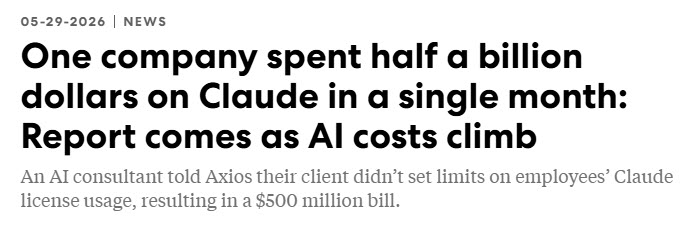
The Information reported that Anthropic has already begun to flex its pricing power. The company has transitioned its enterprise customers to a usage-based pricing model for its Claude products, moving away from flat-fee structures. This means businesses with employees who are heavy users of Anthropic’s AI coding and other productivity tools are likely to face significantly higher bills. Anthropic’s adoption of a new version of a "tokenizer" technology for its latest AI models is also cited as a potential contributor to these increased customer costs. Despite these rising expenses, many technology firms and large Anthropic customers indicate a willingness to absorb these costs, driven by the perceived value in boosting productivity among software engineers and sales teams through AI-driven task automation.
Eric Johnson, CIO at PagerDuty, a company that assists software engineers in managing technical outages, articulated this sentiment. He stated his company is "bracing for volatile costs" as its 1,200 employees begin utilizing Anthropic’s AI tools to accelerate software development and other critical functions. Johnson admitted he is "preparing himself to be surprised" by the upcoming bills, acknowledging that as a relatively new technology, there are still "open questions" surrounding its true cost and return on investment.
The Emerging Price War: Performance vs. Cost
Adding a new dynamic to this escalating cost environment, Google recently announced the Gemini 3.5 Flash. This new model is reportedly ten times less expensive than Opus 4.7, signaling the official commencement of a price-performance battle in the AI market. This development suggests that while the underlying infrastructure costs remain high, providers are beginning to compete on efficiency and affordability, offering tiered solutions to cater to different budget and performance needs. This could offer some respite to businesses concerned about the sheer cost of cutting-edge AI.
Quantifying the Price Increase: A Trillion-Dollar Revenue Imperative
The magnitude of the required revenue to justify these investments is staggering. To achieve a 15% compound annual return on investment, assuming a conservative five-year depreciation cycle for AI infrastructure, companies need to generate nearly $1 trillion in annual "new revenue." This figure is likely to be even higher, considering the profit margins targeted by AI developers.
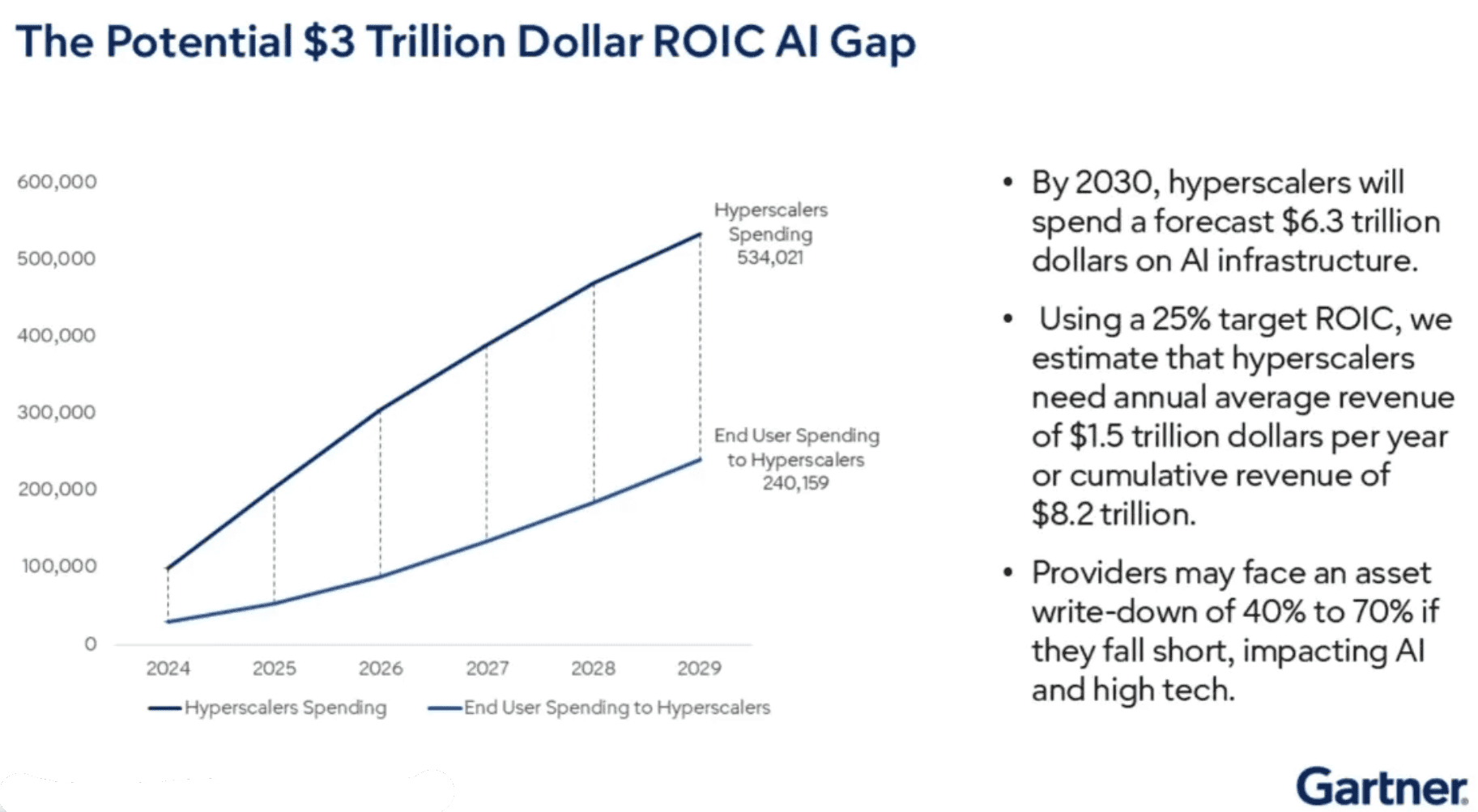
This substantial revenue must be sourced from various channels. While some revenue will undoubtedly come from consumer-facing applications and advertising, the primary burden will likely fall on businesses. Current global internet advertising spending stands at approximately $750 billion. Even a significant doubling of this figure to incorporate more AI-generated or AI-driven advertisements would only partially offset the investment.
On the enterprise side, global spending on software currently hovers around $1.2 trillion, according to Gartner. For the AI investment to be recouped, this figure would need to effectively double. This implies that businesses may face paying twice as much for enterprise software, or significantly more for AI-powered services integrated into their existing workflows.
Beyond consumer and enterprise markets, significant revenue streams are anticipated from government spending, particularly in military applications, and from emerging sectors such as bio-research, energy research, and other scientific endeavors that leverage AI for complex problem-solving.
The notion that "computing always gets cheaper," akin to Moore’s Law, is unlikely to hold true in the immediate future for AI. While individual hardware components may see incremental price reductions, the overall cost of AI, driven by the immense scale of infrastructure and development, points towards a sustained period of elevated pricing. This contrasts with the historical trend of personal computing costs. For example, the original IBM PC, launched in 1981 for $1,565 (without a hard disk), would cost approximately $5,700 in today’s inflation-adjusted dollars. Modern PCs, while often priced around $3,000, are significantly more powerful and integrated with numerous functionalities, including smartphone connectivity. This suggests that while the cost of computing has not dramatically decreased in real terms over 45 years, the AI revolution represents a different magnitude of investment and, consequently, a different pricing trajectory.
Implications for Businesses and the Economy
The escalating cost of AI presents a critical juncture for businesses. The expectation that AI will primarily lead to cost savings by replacing human labor is being challenged by the reality of its own significant operational expenses. Unless AI delivers substantial, previously unseen benefits in productivity, health, or other critical areas, businesses will likely find themselves paying more for technology, not less.

Companies like Nvidia, Oracle, Microsoft, and Workday are not simply looking to replace existing revenue streams with AI; they are actively pursuing growth. Similarly, Google, Meta, SpaceX, Amazon, and Apple are focused on expanding their market share and revenue through AI. Jensen Huang, CEO of Nvidia, has explicitly stated, "AI compute is revenue," underscoring a strategic shift away from traditional seat-based licensing models towards a consumption-based or value-driven pricing structure for AI capabilities.
This economic reality suggests a potential bifurcation in the market. Organizations that can effectively leverage AI to drive significant productivity gains and innovation may be able to absorb the increased costs and realize a positive return on investment. However, smaller businesses or those with less mature digital strategies may struggle to justify the expenditure, potentially widening the gap between AI leaders and laggards.
The broader economic implications are profound. If AI primarily leads to higher operational costs without a commensurate increase in overall economic output or societal benefit, it could contribute to inflationary pressures. Businesses will need to carefully evaluate their AI adoption strategies, focusing on demonstrable value and return on investment. The coming years will likely see intense scrutiny of AI pricing models and a strategic re-evaluation by businesses of how they integrate and pay for these powerful, yet increasingly expensive, technologies. The era of freely accessible, low-cost AI tools may be drawing to a close, ushering in a new phase characterized by strategic investment and calculated expenditure.