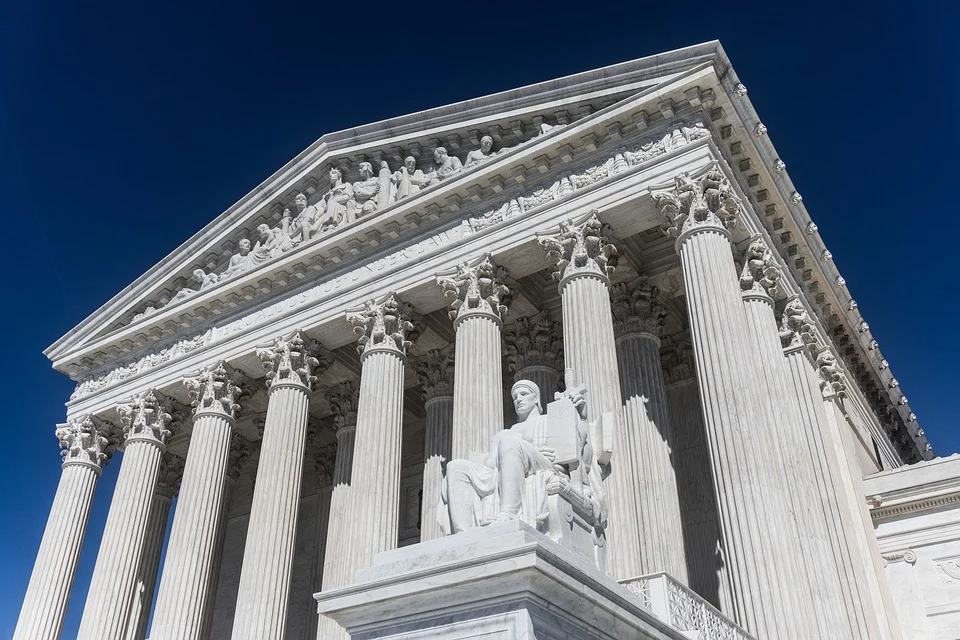
The United States Supreme Court issued a surprising procedural turn on June 5, 2025, by dismissing the writ of certiorari in the closely watched case of Laboratory Corporation of America Holdings v. Davis. The decision, rendered in a brief per curiam order, effectively declines to answer a fundamental question regarding the certification of class action lawsuits under Federal Rule of Civil Procedure 23: whether a class seeking monetary damages can be certified if it includes members who have suffered no actual injury. This dismissal, categorized as "improvidently granted," leaves a significant circuit split intact and creates ongoing uncertainty for employers and large-scale service providers facing massive class-action liabilities in federal courts.
The case, Laboratory Corporation of America Holdings v. Davis, No. 24-304, had been viewed by legal scholars and corporate defense attorneys as a potential landmark that would harmonize standing requirements across the federal judiciary. By passing on the opportunity to rule, the Supreme Court has allowed the status quo to remain, particularly in the Ninth Circuit, where the requirements for class certification remain more favorable to plaintiffs than in other jurisdictions.
The Genesis of the Dispute: Labcorp’s Digital Transition
The litigation began following Laboratory Corporation of America’s (Labcorp) implementation of on-site, self-service, touchscreen kiosks at its patient service centers across the country. These kiosks were designed to streamline the check-in process, allowing patients to register for appointments and provide necessary information without waiting for a front-desk receptionist. However, the technology presented a barrier for patients who are blind or visually impaired, as the touchscreen interfaces lacked the tactile feedback or integrated screen-reading technology necessary for independent use.
To mitigate these accessibility issues, Labcorp maintained a policy of having staff available at the front desk to assist patients or perform manual check-ins using the same backend technology. Despite these accommodations, plaintiffs Luke Davis and Julian Vargas, both of whom are legally blind, filed a class-action lawsuit. They alleged that the kiosks violated Title III of the Americans with Disabilities Act (ADA) and the California Unruh Civil Rights Act.
The Unruh Act is particularly significant in this context because it automatically considers any violation of the federal ADA to be a violation of California state law. Crucially, the Unruh Act provides for statutory damages—a minimum of $4,000 per offense—regardless of whether the plaintiff can prove specific economic harm. This creates a high-stakes environment for defendants, as even minor technical non-compliance can escalate into hundreds of millions of dollars in potential liability when applied to a large class of individuals.
The Legal Conflict: Rule 23 vs. Article III Standing
The core of Labcorp’s defense centered on the composition of the plaintiff class. The district court had certified a class that potentially included over 100,000 blind individuals in California. Labcorp argued that many of these individuals had never visited a service center, or if they had, they preferred using the front desk and thus were never "injured" by the presence of the kiosks.
Under Federal Rule of Civil Procedure 23(b)(3), a class action for damages can only be maintained if "questions of law or fact common to class members predominate over any questions affecting only individual members." Labcorp contended that if a significant portion of the class suffered no injury, the court would have to conduct thousands of individualized inquiries to separate the injured from the uninjured, thereby defeating the "predominance" requirement.
Furthermore, the case touched upon the constitutional requirement of Article III standing. In the 2021 Supreme Court decision TransUnion LLC v. Ramirez, the Court held that "every class member must have Article III standing in order to recover individual damages." However, the TransUnion decision left open the question of whether this standing must be proven at the class certification stage or only at the final judgment stage. The Ninth Circuit’s affirmation of the class in Davis suggested that the presence of uninjured members does not necessarily bar certification, a stance that conflicts with stricter interpretations in other federal circuits.
Chronology of the Litigation
The timeline of Labcorp v. Davis illustrates the long road to the Supreme Court and the suddenness of its conclusion:
- 2022: Luke Davis and Julian Vargas file the initial complaint in California, seeking statutory damages for a class of blind individuals.
- 2023: The U.S. District Court for the Northern District of California grants class certification. Labcorp immediately seeks an interlocutory appeal, arguing the class is overbroad and includes uninjured members.
- Late 2023: The Ninth Circuit Court of Appeals affirms the district court’s certification order, maintaining that the common legal question of kiosk accessibility predominated over individual injury assessments.
- Early 2024: Labcorp petitions the Supreme Court for a writ of certiorari, highlighting a deepening circuit split on the Rule 23(b)(3) predominance standard.
- Late 2024: The Supreme Court grants the petition, setting the stage for a definitive ruling on "uninjured class members."
- June 5, 2025: The Supreme Court dismisses the case as "improvidently granted," returning the matter to the lower courts without a ruling on the merits.
The Kavanaugh Dissent: A Warning of Economic Consequences
While the majority of the Court opted for silence, Justice Brett Kavanaugh penned a sharp dissent, expressing frustration with the dismissal. He argued that the Court should have addressed the "straightforward" application of Rule 23.
Justice Kavanaugh emphasized that common questions cannot predominate when a class is "overinflated with uninjured members." He pointed out the staggering math of the case: with a class of 100,000 members and a statutory penalty of $4,000 per person, Labcorp was facing a potential $400 million to $500 million judgment.
"The Ninth Circuit’s approach generates serious and real-world consequences," Kavanaugh wrote. He argued that allowing such classes to proceed forces defendants into "blackmail settlements," where companies settle meritless or overblown claims simply to avoid the "prohibitive risk of a catastrophic judgment." Kavanaugh further noted that these costs are rarely borne by the companies alone; they are passed on to consumers through higher prices, to workers through lower wages, and to retirees through diminished investment returns.
Supporting Data: The Rising Tide of ADA Class Actions
The Labcorp case is not an isolated incident but part of a broader trend in federal litigation. According to data tracking ADA Title III filings, federal lawsuits related to accessibility have hit all-time highs in recent years.
- Volume of Filings: Between 2018 and 2024, ADA Title III filings consistently exceeded 10,000 cases annually.
- Geographic Concentration: California and New York remain the primary hubs for these lawsuits. In California, the marriage of the ADA with the Unruh Act’s statutory damages makes the state a "magnet" for class-action litigation.
- Settlement Pressure: Industry reports suggest that over 90% of certified class actions settle before trial. The primary driver for these settlements is the "all-or-nothing" risk associated with Rule 23(b)(3) classes that include thousands of members.
By failing to clarify the rules for certification, the Supreme Court has effectively allowed these trends to continue unabated in the Ninth Circuit, which covers much of the Western United States.
Broader Implications for Employers and Corporate Defendants
The dismissal of Labcorp v. Davis is a setback for the defense bar, but it provides a roadmap for future challenges. Employers and corporations should consider the following strategic implications:
1. Increased Focus on Individualized Proof
Until the Supreme Court provides a definitive ruling, defendants must aggressively use discovery to highlight the differences between class members. If a defendant can demonstrate that determining "injury" requires a mini-trial for every class member, they have a stronger argument that common issues do not predominate.
2. The Persistence of the Circuit Split
The legal landscape remains fragmented. In some circuits, a class containing more than a de minimis number of uninjured members cannot be certified. In the Ninth Circuit, the threshold remains much higher. Companies operating nationally must navigate these conflicting standards, often facing different levels of risk for the exact same corporate policies depending on where they are sued.
3. Potential Legislative Remedies
With the judicial branch failing to act, there may be renewed calls for legislative reform. Groups such as the Chamber of Commerce have long advocated for amendments to Rule 23 or the ADA to require a showing of actual, concrete injury before statutory damages can be triggered in a class setting.
Conclusion: A Postponed Reckoning
The Supreme Court’s decision to dismiss Laboratory Corporation of America Holdings v. Davis represents a "wait-and-see" approach that leaves one of the most contentious issues in class-action law unresolved. While the dismissal is a tactical victory for the plaintiffs in this specific case, the forceful nature of Justice Kavanaugh’s dissent suggests that the Court’s conservative wing remains eager to limit the scope of Rule 23.
For now, the "uninjured member" remains a potent tool for plaintiffs’ attorneys in the Ninth Circuit, while employers must continue to brace for high-stakes litigation where the threat of massive statutory damages often outweighs the merits of the individual claims. The legal community now looks toward the next potential test case to emerge from the lower courts to finally settle the tension between class action efficiency and the constitutional requirement of standing.