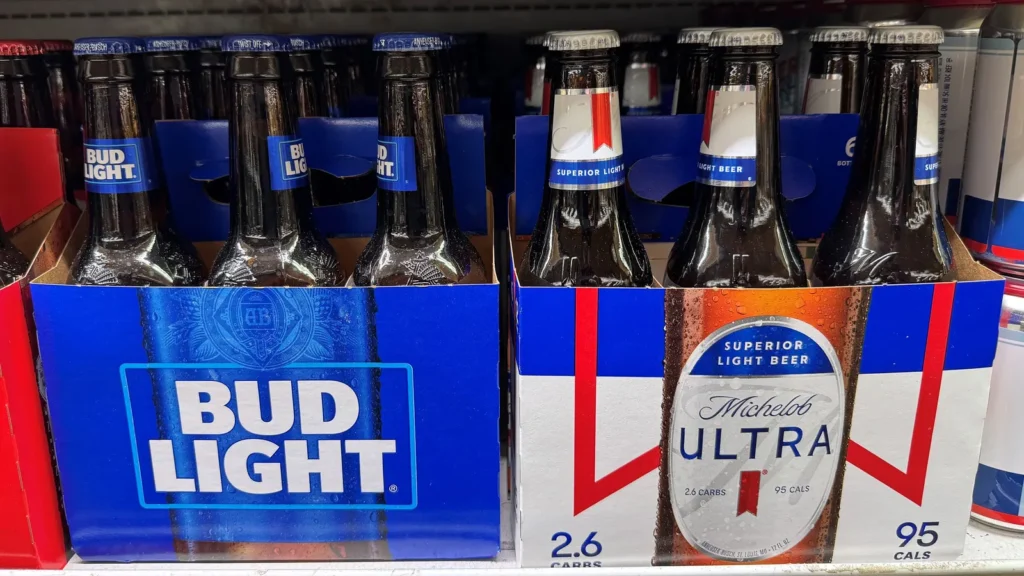
The 4th U.S. Circuit Court of Appeals has delivered a significant victory to Anheuser-Busch, overturning a lower court’s decision to certify a class action lawsuit brought by a group of its workers seeking compensation for alleged unpaid pre- and post-shift activities. In a ruling issued on June 22, 2026, the appellate court determined that the proposed class lacked the necessary commonality and predominance of shared legal and factual questions, citing substantial differences in the tasks performed by prospective class members, their individual behaviors regarding work equipment, and the shifting legal landscape governing overtime wages. This decision underscores the formidable challenges plaintiffs face in consolidating diverse employee experiences into a single, cohesive class action, particularly in complex wage-and-hour disputes involving nuanced interpretations of compensable work time.
Background of the Dispute: Allegations of Unpaid Time
The lawsuit against Anheuser-Busch stemmed from allegations by brewery workers that they were not properly compensated for time spent on various activities before and after their official shifts. These activities typically included "donning and doffing" personal protective equipment (PPE), such as steel-toed boots and bump caps, walking to and from workstations, and adhering to specific company protocols, including those related to COVID-19. Such claims are common in industries requiring specialized gear or extensive facility navigation, often falling under the purview of federal and state wage laws designed to ensure fair compensation for all work-related duties.
The core of the plaintiffs’ argument was that these activities were integral and indispensable to their jobs and should therefore be compensated as working time. They sought to certify a class of current and former employees, arguing that the company’s policies and practices uniformly subjected them to these uncompensated tasks. The initial district court had sided with the workers, granting class certification, a decision that Anheuser-Busch promptly appealed, setting the stage for the 4th Circuit’s review.
The Legal Framework: Hurdles to Class Certification
Class action lawsuits, while powerful tools for collective redress, are subject to stringent requirements under Rule 23 of the Federal Rules of Civil Procedure. To achieve certification, plaintiffs must satisfy four prerequisites: numerosity (the class is so numerous that joinder of all members is impracticable), commonality (there are questions of law or fact common to the class), typicality (the claims or defenses of the representative parties are typical of the claims or defenses of the class), and adequacy of representation (the representative parties will fairly and adequately protect the interests of the class).
Beyond these, for a class seeking monetary damages, plaintiffs must also demonstrate that common questions of law or fact "predominate" over any questions affecting only individual members, and that a class action is "superior" to other available methods for fairly and efficiently adjudicating the controversy. The "predominance" requirement often proves to be the most significant hurdle in wage-and-hour cases, particularly those involving nuanced activities like "donning and doffing." Courts must ascertain whether the resolution of common legal and factual issues will advance the litigation for the entire class, or if individual inquiries into each member’s circumstances would overshadow the collective aspects.
The 4th Circuit’s Decisive Rationale: Lack of Commonality and Predominance
The 4th Circuit’s panel meticulously dissected the district court’s reasoning, concluding that it had abused its discretion by failing to adequately consider critical factual distinctions among the putative class members. The appellate court identified several key areas where individual circumstances predominated, undermining the premise of a unified class:
-
Varied PPE Donning and Doffing Practices: The court found compelling evidence that not all employees wore the same type of PPE, nor did they all don and doff their equipment at the brewery. For instance, some employees consistently put on their steel-toed boots or bump caps at home before commuting to work. The panel critically questioned whether "putting on your work boots instead of your personal sneakers before leaving the house is a compensable work activity," emphasizing that determining compensability in such scenarios necessitates an individualized inquiry into each employee’s behavior and the specific nature of their equipment. This variability in practice directly challenged the notion of a common, uniformly uncompensated activity across the class.
-
Evolving Legal Standards: The Virginia Overtime Wage Act (VOWA): A crucial element in the court’s decision was the evolution of the Virginia Overtime Wage Act (VOWA), which the plaintiffs had cited as a primary cause of action. In 2022, VOWA underwent significant amendments, aligning its provisions more closely with the federal Fair Labor Standards Act (FLSA). Specifically, the amended VOWA clarified that employees are generally not entitled to compensation for certain non-integral pre-shift activities, mirroring the FLSA’s "Portal-to-Portal Act" which exempts preliminary and postliminary activities from compensable time unless they are "integral and indispensable" to the principal work activity.
The 4th Circuit highlighted that this legislative change created a significant legal chasm within the proposed class. Some putative class members would be subject to the pre-2022 VOWA standard, others to the post-2022 standard, and a third group would fall under both, depending on their employment tenure relative to the amendment date. This fragmented legal landscape meant that a single legal standard could not be applied uniformly across the entire class, making individual legal analyses unavoidable and thus defeating the predominance requirement.
-
Shifting COVID-19 Protocols: Adding another layer of complexity, the court noted that the COVID-19 pandemic introduced temporary workplace protocols that affected employees differently and for varying durations. The panel pointed out that these specific COVID-related requirements ceased in February 2022. Consequently, a "whole swath of class members" would never have been subject to these protocols, while others were only for a limited period. The transient and variable nature of these mandates further underscored the individualized experiences within the proposed class, making it difficult to demonstrate common injury or common legal questions arising from these protocols.
These distinctions, taken together, led the 4th Circuit to conclude that individualized inquiries into each employee’s specific tasks, timing of PPE donning, and the legal standards applicable to their particular employment period would overwhelm any common questions. The court’s ruling reinforces the principle that class certification is not appropriate where the resolution of a case hinges on a multitude of fact-specific investigations into each class member’s situation.
Chronology of Key Events and Legislative Shifts
- Pre-2022: Initial period of employment under the original Virginia Overtime Wage Act (VOWA) and various company policies regarding pre- and post-shift activities.
- February 2022: Cessation of specific COVID-19 workplace protocols at Anheuser-Busch, impacting a portion of the proposed class.
- 2022 (Specific Date Varies): Virginia Overtime Wage Act (VOWA) is amended to more closely align with the federal Fair Labor Standards Act (FLSA), particularly regarding compensability of pre- and post-shift activities. This legislative change introduces different legal standards for different periods of employment.
- October 2025: A class of current and former Target warehouse workers in New Jersey agrees to a $4.6 million settlement for similar state law claims regarding uncompensated walking time for security screenings. (This occurred "Last October" relative to the article’s publication date of June 2026).
- June 22, 2026: The 4th U.S. Circuit Court of Appeals issues its ruling, decertifying the class action against Anheuser-Busch.
Broader Implications for "Donning and Doffing" Cases and Employers
The 4th Circuit’s decision is expected to have significant ramifications for future wage-and-hour class actions, particularly those involving "donning and doffing" claims or allegations of uncompensated pre- and post-shift activities. It serves as a stark reminder that employers and their legal counsel can successfully challenge class certification by demonstrating the highly individualized nature of employee experiences and the impact of evolving legal and operational standards.
For employers, this ruling highlights the critical importance of:
- Detailed Record-Keeping: Meticulous records of employee tasks, start/end times, and any required PPE or protocols can be crucial in defending against class actions.
- Clear Policies: Explicitly defining compensable work time, especially regarding preparatory and concluding activities, can mitigate ambiguity.
- Compliance Monitoring: Regularly reviewing internal policies against federal and state wage laws, and adapting to legislative changes like the VOWA amendment, is essential.
- Understanding Employee Practices: Employers need to be aware of how employees actually perform tasks, including when and where they don PPE, as these practical realities can be decisive in litigation.
Conversely, for employees and their advocates, the ruling emphasizes the increased difficulty in achieving class certification when worker experiences are demonstrably varied. It suggests that future "donning and doffing" cases may need to be more narrowly defined or pursued through individual claims, which can be more resource-intensive. The decision could also encourage plaintiffs’ attorneys to focus on cases where employee activities and legal standards are more uniformly applicable across a proposed class.

Expert Legal Commentary and Reactions
While Anheuser-Busch has not yet released an official statement regarding the specific details of the appeal, legal experts familiar with labor and employment law anticipate that the company will welcome this decision as a validation of its compliance efforts and an affirmation of the principle that generalized allegations are insufficient for class certification. "This ruling sends a clear message that courts are scrutinizing the ‘predominance’ requirement more rigorously," commented Dr. Eleanor Vance, a labor law professor at the University of Virginia School of Law. "It’s not enough to simply claim similar harms; plaintiffs must demonstrate that the legal and factual questions are truly common and outweigh individual differences."
Attorneys representing the workers, while likely disappointed, are expected to evaluate their options, which could include seeking a rehearing en banc by the full 4th Circuit, appealing to the U.S. Supreme Court, or pursuing individual claims or smaller, more narrowly defined class actions. "We believe these workers are owed fair compensation for their time," stated a source close to the plaintiffs’ legal team, speaking anonymously pending official announcements. "While this specific class certification was denied, the underlying issues of unpaid wages for essential work activities remain pertinent, and we will continue to explore all avenues to ensure justice for these employees."
A Comparative Look: The Target Settlement
The Anheuser-Busch case stands in contrast to other significant wage-and-hour settlements, such as the $4.6 million agreement reached in October 2025 with a class of current and former Target warehouse workers in New Jersey. In that case, workers alleged they were not paid for the considerable time spent walking long distances to and from their workstations to undergo mandatory pre- and post-shift security screenings. While Target denied the allegations, a court preliminarily approved the settlement.
The key distinction likely lies in the nature of the uncompensated activity and the consistency of the experience. Security screenings and the associated walking time might present a more uniform, mandatory, and measurable activity across a class, compared to the highly individualized donning of PPE at home versus at the workplace, or the varying impact of evolving state laws and temporary health protocols. The Target settlement, therefore, illustrates that while challenging, class actions remain a viable mechanism for wage claims when the "commonality" and "predominance" criteria are more clearly met.
Conclusion: A Precedent for Precision in Class Actions
The 4th Circuit’s ruling in the Anheuser-Busch case serves as a crucial precedent, reinforcing the high bar for class certification in wage-and-hour litigation. It underscores the judiciary’s increasing demand for precision and a robust showing that common questions genuinely dominate over individual inquiries, particularly when faced with varied employee behaviors, shifting legislative landscapes, and transient workplace protocols. This decision will undoubtedly influence how employers structure their compensation policies and how plaintiffs’ attorneys strategize their class action lawsuits in the years to come, emphasizing the need for meticulous detail and a clear demonstration of collective experience in the pursuit of justice.