Databricks, a recognized leader at the forefront of enterprise AI innovation, recently concluded its highly anticipated annual AI Summit, a four-day intellectual gathering held from June 15 to 18. This pivotal event served as a comprehensive platform, presenting a wealth of insights and strategic directives for industry professionals grappling with the rapidly evolving landscape of artificial intelligence. Drawing an impressive roster of visionaries and technical experts, the summit featured prominent speakers such as NVIDIA’s senior solution architect James Maki and OpenAI’s president and co-founder, Greg Brockman, whose contributions underscored the collaborative and transformative nature of current AI development. For talent acquisition (TA) and human resources (HR) specialists, staying abreast of the dynamic demands of the AI workspace and, by extension, its profound impact on Diversity, Equity, and Inclusion (DEI) initiatives, is not merely advantageous but critically imperative. The summit’s deliberations offered a crucial lens through which to examine the immediate and long-term implications of AI on employment practices and the fundamental principles of DEI.
The Symbiotic Relationship Between Data and AI: A Summit Overview
The Databricks Data+AI Summit, true to its nomenclature, meticulously explored the inextricable link between data and artificial intelligence. Discussions consistently reinforced the understanding that robust, well-governed data forms the foundational bedrock upon which quality AI systems are constructed. This fundamental principle extends directly to how organizations can and should approach DEI decisions, ensuring that AI-driven insights are equitable and representative. The summit delved into critical updates concerning data governance, advanced retrieval mechanisms, and innovative use cases, all of which hold immense potential to significantly bolster existing DEI hiring workflows. Over the course of the four days, attendees navigated a meticulously curated agenda featuring over 800 sessions, with a particular focus on enterprise-level applications and strategic imperatives. The recurring themes and shared concerns among speakers consistently highlighted the long-term effects of AI on DEI standards in hiring, urging a proactive and informed approach from all stakeholders.
Key Enterprise Sessions and Their Transformative Implications for HR and DEI
The summit’s agenda was replete with sessions designed to unpack the practical applications and strategic considerations of AI within the enterprise. Several key sessions stood out for their direct relevance to talent acquisition and DEI:
Session #1: AI Search: High-Quality Retrieval Made Easy
This deep dive into the technical functionalities of Databricks’ AI search capabilities showcased the streamlined ease of its search and retrieval systems. Engineering Lead Ankit Vij and Software Engineer Sanjit Jhala elucidated how this renewed infrastructure could revolutionize data management.
- Implications for TA and DEI: The simplification of core AI engineering infrastructure has profound implications for TA teams. Historically, managing complex talent database pipelines and maintaining candidate-facing career portals has been a significant challenge, particularly for teams lacking specialized technical skills. This advanced AI search capability enables recruiters to enhance transparency in their processes and navigate intricate local hiring guidelines with unprecedented ease, powered by agentic AI. By ensuring that talent searches are more precise and less prone to human error or unconscious bias, it directly supports the identification of diverse candidate pools and promotes equitable access to opportunities.
Session #2: Accelerating the Speed to Value of Analytics with Databricks AI/BI & Agents
Chris Krysinski, Manager of Data Analytics at Addepar, presented Databricks’ practical roadmap for embedding analytics directly within a system through "metrics as code." This approach promises more consistent and efficient workflows.
- Implications for TA and DEI: The emphasis on native AI/BI agents underscores the viability and benefits of centralizing metrics as code within TA systems. This crucial development bridges the chasm between fragmented static reporting and real-time AI feedback. By leveraging these advancements, hiring teams can fulfill DEI standards through a unified source of truth, gaining immediate insights into their diversity metrics, candidate pipelines, and outreach effectiveness. This ensures agile talent outreach that directly aligns with and meets ambitious hiring goals, such as diversity planning and recruitment headcount, fostering data-driven decision-making for equitable outcomes.
Session #3: AI Will Go Wrong and the Blueprint to Get It Right
Lexy Kassan, Lead Data & AI Strategist, and Maria Zervou, Chief AI Officer – EMEA, both from Databricks, led a compelling simulation of an "AI-gone-wrong scenario." They meticulously outlined how decision-makers can correct or preempt common human errors through proper guardrails and robust governance, offering a trusted organizational blueprint for optimizing crisis response.
- Implications for TA and DEI: This session directly confronted "the elephant in the AI room," attributing many technological failures not to the solutions themselves, but to organizational decisions and a lack of structured governance. This concern is acutely relevant to AI’s role in hiring campaigns and candidate management. The speakers stressed that there is no "plug-and-play" AI recruitment solution that universally satisfies every aspect of talent acquisition. Human-led decisions remain indispensable for hiring the right people. Therefore, it is critical for TA teams to maintain uncompromised accountability as "AI arbitrators," establishing internal auditing systems to ensure compliance, mitigate bias, and uphold ethical hiring practices.
Session #4: Anthropic + Adidas + Databricks: Unlocking 400 Hours of Productivity Weekly with Conversational AI
An engaging case study presented by Hosea Kidane of Anthropic and Vikalp Yadav of Adidas demonstrated how the sportswear giant leveraged Claude’s conversational AI functions in marketing and CRM reports, efficiently streamlining insight-to-action workflows.
- Implications for TA and DEI: This session offered a compelling glimpse into the future of recruiter-to-data interactions, where non-technical hiring teams can navigate complex talent databases using natural language alone. Such intuitive AI architectures could significantly empower TA teams in their DEI missions, transforming raw job market insights from ATS platforms into actionable, data-driven strategies. The true power of natural language in TA transcends mere speed; it democratizes equity in hiring pipelines. By removing complex coding requirements as a barrier, conversational AI offers unprecedented accessibility to maximize DEI outreach. TA teams can make swifter, more informed judgment calls by directly querying their AI systems on critical DEI-related questions, such as "Why are underrepresented candidates dropping off from the hiring process?" or "How can the company objectively discover qualified talent based on core skills?" This fosters a more inclusive and efficient talent discovery process.
Session #5: Beyond Simple Q&A: Building an Agent Orchestrator for Enterprise Analytics
Max Marcussen, AI Engineer at Databricks, and Suresh Kaudi, AI Data Leader at the World Bank, outlined recurring issues with handling multi-agent Q&A systems. Kaudi demonstrated how to implement orchestrator architecture, simplifying multi-step queries by routing natural-language questions to specialized AI agents.
- Implications for TA and DEI: Marcussen and Kaudi addressed the critical scaling problem in AI systems, a challenge TA teams frequently encounter when linking frontend Q&A bots (e.g., Paradox’s Olivia, which qualifies candidates on career sites) to other areas of talent management. Applying a solid, unified orchestrator architecture creates an all-in-one recruiter agent solution capable of querying ATS data while aligning with internal hiring and compensation policies. This system guides DEI practices among TA agents by eliminating the need to switch between disparate programs, streamlining the coordination of hiring initiatives, and ensuring consistent application of DEI standards across the entire talent lifecycle.
Session #6: Where AI Governance Is Headed: Best Practices for Unifying Data, Models and Agents
Shayan Mohanty, Chief Data & AI Officer at Thoughtworks, and David Nasi, Director of Product Management, AI and Agentic Platform at Databricks, explored how companies increasingly rely on multi-agent systems requiring dynamic agent tools. They stressed the paramount importance of a data-centric approach to AI governance as more companies scale agentic workflows, from core data management to leveraging diverse BI tools for real-time monitoring and risk mitigation.
- Implications for TA and DEI: A unified approach to TA systems, grounded in robust AI governance, would empower organizations to seamlessly connect internal talent management tools with various external APIs. This capability allows TA leaders to expedite talent workflow automation, significantly optimizing DEI visibility and compliance. By ensuring that all data, models, and agents operate under a cohesive governance framework, organizations can proactively identify and mitigate potential biases, ensuring that AI-driven decisions consistently align with their diversity and inclusion objectives.
Session #7: Secure, Portable, Collaborative: Multi-Harness Agent Teams with Omnigent
Kasey Uhlenhuth, Director of Product, and Elise Gonzales, Staff Product Manager, both at Databricks, presented insights on evolving from siloed AI models to collaborative fleets via the Omnigent solution. They introduced various frameworks for transitioning to Omnigent from fragmented and data-limiting systems.
- Implications for TA and DEI: Omnigent holds the potential to empower TA teams to orchestrate complex multi-agent recruiting pipelines, thereby significantly improving DEI outcomes. Employers and recruiters can efficiently manage inclusive hiring budgets by securing sensitive candidate data within protective sandbox environments. Omnigent’s enhanced control layer is crucial for preventing AI agents from accessing and executing harmful or costly actions that might result from system hallucinations, ensuring data integrity and ethical handling of candidate information, particularly for underrepresented groups. This robust security and collaboration framework supports equitable and compliant hiring at scale.
Overarching Trends Shaping the Future of AI in HR
Beyond individual sessions, several trending topics emerged as central to the summit’s discourse, reflecting shared priorities and concerns with long-term implications for DEI standards in hiring:
Merging Data Stacks: The End of Silos
Modern AI solutions are driving an increased demand for diverse features and functions, necessitating a fundamental shift towards fully managed and transactional architectures. The consensus among experts was clear: TA teams must break free from legacy databases and seek solutions that consolidate reliable operational records while minimizing overhead fees. Resolving the "silo problem" is paramount for maximizing workforce engagement and maintaining a sharp DEI focus. Industry reports indicate that companies integrating their data stacks see up to a 25% improvement in data accuracy and a 30% reduction in operational costs, directly translating to more effective and equitable talent strategies.
Unlocking Insights with Natural Language: Democratizing Data Access
As highlighted by numerous Databricks speakers, natural language processing (NLP) and conversational AI have emerged as linchpins in the evolving AI narrative. This advancement grants TA experts unprecedented control, significantly reducing their reliance on specialized data engineering expertise. AI-supported recruitment and job description (JD) repository solutions, such as Ongig, have already demonstrated the ease with which such tools integrate with existing ATS systems via simple short codes. The future promises even greater accessibility and intuitive interaction, allowing HR professionals to extract complex insights and drive DEI initiatives without deep technical proficiency. This democratization of data access is critical for fostering inclusive hiring practices across all organizational levels.
The Rising (And Overwhelming) Cost of AI: Strategic Budget Management
While AI continues its rapid development across organizational processes like recruitment and employee communications, the increased demands in data management, security/compliance, and training can lead to substantial budget spikes. These costs stem from:
- High computational power: Training and running sophisticated AI models require significant energy and hardware investments.
- Data storage and processing: Managing vast datasets for AI training incurs substantial storage and processing costs.
- Specialized talent: The scarcity of AI engineers and data scientists drives up compensation demands.
- Regulatory compliance: Adhering to evolving AI ethics and data privacy regulations adds layers of complexity and cost.
- Infrastructure maintenance: Ensuring the robustness and scalability of AI systems requires ongoing investment.
Speakers at the Databricks Summit recommended central control layer solutions, such as Unity AI Gateway, which provide reliable budget management by replacing post-event alerts with hard spend capping. This proactive approach allows TA teams to maintain DEI engagement and recruitment efforts without sudden financial shocks from an increasingly complex automated landscape, ensuring sustainable investment in equitable hiring technologies.
The Liabilities of Manual (Non-AI) DEI Practices in 2026
While early iterations of AI in inclusive hiring carried risks of biased training data, technology has advanced considerably. Ethical AI frameworks and robust validation processes now allow TA teams to expedite skills-based hiring with significantly fewer concerns. Initiatives like IBM’s Diversity in Faces project exemplify this progress, expanding inclusive facial recognition technologies to incorporate a wider range of demographic data, thereby making machine learning more inclusive and leading to more sophisticated and equitable hiring tools. Companies that overlook AI in their DEI practices risk missing monumental opportunities to consistently hire diverse talent at scale with accurate and comprehensive datasets.
The Cost of Ignoring Predictive Analytics
The job market exhibits perpetual volatility. However, AI’s predictive analytics functions as an invaluable tool, enabling hiring teams to retain DEI practices while navigating these inevitable market fluctuations. Akin to sensors in a factory’s machinery, AI’s data-driven predictions immediately flag systemic problems in job seeker sentiment or employee engagement before they escalate. A digital recruitment dashboard further streamlines this process, offering a visual monitoring and benchmarking interface that cost-effectively derives insights into HR metrics such as headcount, cost-to-hire, and time-to-fill. Studies consistently show that companies applying predictive analytics report up to 30% higher retention rates and significantly faster time-to-hire, often reducing it by 75%. Closing the door on AI in this domain risks a barrage of DEI issues that could have been mitigated with timely intervention. AI provides real-time assessments across performance metrics, compensation, workplace dynamics, engagement scores, and communication data, empowering TA teams to optimize candidate discovery with peace of mind and proactive adjustments to DEI strategies.
The Administrative Burden on Employee Onboarding
Impactful DEI in the future of work hinges on providing every new talent with a fair and effective onboarding experience. AI achieves this through personalized onboarding. With AI supporting TA teams, administrative burdens related to onboarding are drastically reduced. AI systems optimize the candidate experience with automated interview scheduling, smart documentation and compliance (including DEI standards), and virtual engagement (often via agentic AI like HR Cloud’s Onboard). These automated solutions not only cater to individual candidate availability and career priorities but also offer progress tracking and prompt alerts, streamlining hiring pipelines and ensuring a consistent, equitable experience for all.
Overlooking Competitive Compensations
Compensation transparency is a fundamental workforce driver and critical for managing organizational DEI standards. Omitting AI in the compensation and benefits narrative is akin to leaving DEI commitments to chance. AI provides organizations with historical and trending market data to analyze pay gaps among talent from underrepresented groups, ensuring fair and competitive offers. Conversely, manual account management can lead to costly TA oversights, resulting in the loss of top talent to more AI-savvy competitors. A recent study by Mercer revealed that AI and automation could replace more than half (52%) of a rewards team’s workload. Furthermore, another Mercer report indicated that 89% of HR leaders plan to leverage AI in evaluating shifting market values for different skillsets, a strategic move poised to significantly boost DEI initiatives by ensuring equitable and competitive compensation structures.
Preparing For The Next AI Wave: A Strategic Imperative
The AI economy has fundamentally reshaped the landscape of hiring. Notable trends include a discernible slowdown in hiring for fresh graduates in entry-level positions, as AI automates routine tasks. According to IBM, AI has consistently reduced time-to-hire by automating screening and administrative tasks. AI automation provides companies with functionalities for faster follow-up communications and LLM-generated evaluation notes that structure comprehensive summaries of candidate interviews. A F1000Research survey involving 423 HR professionals revealed several critical shifts:
- 72% anticipate AI will significantly impact their recruitment processes within the next three years.
- 65% believe AI will enhance the fairness and objectivity of hiring decisions.
- 58% are actively investing in AI-powered recruitment tools to gain a competitive edge.
- 49% reported a positive impact of AI on their diversity hiring metrics.
These statistics underscore a clear trend: the integration of AI is not a future possibility but a present reality, with demonstrable benefits for efficiency and equity in hiring.
Reinforcing Your DEI Hiring Process with AI in 2026
AI has developed increasingly accessible solutions benefiting both TA teams and candidates. However, a Harvard Business Review study involving 120 TA leaders highlighted a rising concern: candidates manipulating AI to ace traditional hiring signals, such as resume structures and remote interviews managed by AI chatbots. Candidates who successfully deceive a hiring system with generative AI may not possess the genuine qualities required for their roles, leading to poor hiring quality and disruptive consequences, especially for enterprises managing a large volume of hires.
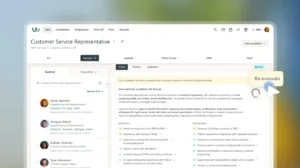
To effectively overcome these issues and maintain robust DEI standards, organizations can leverage advanced AI tools like Ongig’s Text Analyzer by:
- Eliminating inherent job description biases: The Text Analyzer identifies and removes biased language, ensuring job descriptions are inclusive and appeal to a broader, more diverse talent pool. This direct intervention at the initial touchpoint significantly enhances DEI.
- Promoting skills-based hiring: By focusing on core skills and competencies rather than traditional, often biased, proxies, the tool helps objectively match candidates to roles, ensuring merit-based selection. This reduces the influence of unconscious bias and expands opportunities for underrepresented groups.
- Ensuring compliance with DEI regulations: The analyzer helps maintain adherence to evolving DEI regulations and internal policies, mitigating legal risks and fostering an equitable hiring environment. This proactive compliance is critical in a rapidly changing regulatory landscape.
Ongig’s Text Analyzer stands as a game-changing platform, utilizing AI to empower teams to discover the most qualified talent by systematically eliminating inherent biases within job descriptions. As AI continues to redefine candidate engagement and the broader talent landscape, maintaining data-backed, inclusive, and objective hiring standards remains the primary driver of TA success and organizational resilience. Request a demo with Ongig to learn how you can boost existing practices with data-backed automation and lead the charge in equitable AI-driven talent acquisition.