The global luxury hospitality giant, Belmond, has successfully transformed its intricate talent acquisition landscape by implementing Workable’s Applicant Tracking System (ATS), moving from a fragmented, manual process to a unified, data-driven operational model. This strategic shift, initiated in 2017, addresses the unique challenges of managing recruitment across a diverse portfolio of iconic hotels, lodges, river cruises, and safari properties spanning multiple continents, reinforcing Belmond’s commitment to "slow luxury" through exceptional people. The integration has yielded significant improvements in process efficiency, global visibility, compliance, and candidate experience, positioning human resources as a strategic enabler of the brand’s distinguished service delivery.
Belmond’s Unique Identity and the Intricacies of Decentralized Operations
Belmond stands as a paragon of luxury hospitality, renowned for its curated, unhurried experiences that set it apart in a competitive market. Its portfolio is not merely a collection of properties but a tapestry of unique destinations, each embodying local culture and offering bespoke service. This ethos is reflected in Belmond’s operational structure: a deliberately decentralized business model where central leadership establishes strategic vision and standards, but the delivery of guest experiences—and critically, the hiring that underpins them—occurs at the property level. This structure, while fostering local authenticity and agility, historically presented substantial challenges for centralized human resource management.
The company’s scale further amplifies these complexities. Belmond maintains a substantial global workforce, typically employing between 5,500 and 6,000 permanent staff, with numbers swelling to approximately 8,000 during peak seasons, particularly in regions like Southern Europe. These roles encompass the full spectrum of hospitality operations, from guest services and rooms division to food and beverage and specialized safari or cruise staff, each requiring specific skill sets and cultural alignment. Managing recruitment for such a diverse and geographically dispersed workforce, without a cohesive technological backbone, proved to be an increasingly unsustainable endeavor.
The Pre-2017 Landscape: A Manual Burden on HR Generalists
Before the advent of Workable in 2017, Belmond’s talent acquisition strategy was, by contemporary standards, remarkably rudimentary. The entire hiring process was managed through a large, shared email inbox. This central inbox was then subdivided into property-specific folders, requiring HR managers at each individual location to manually navigate an unstructured, high-volume stream of applications. The daily routine involved sifting through countless emails, sorting candidates, manually responding to inquiries, and tracking progress for every open role—a colossal administrative burden.
This manual, email-based system imposed significant operational strain on property-level HR teams. Unlike larger corporations with dedicated recruitment specialists, Belmond’s property HR managers typically hold 360-degree responsibilities, encompassing the full employee lifecycle from recruitment and onboarding to employee relations, compensation, and benefits. Recruitment was merely one component of a broad and demanding mandate. A system that demanded such extensive manual oversight of every candidate interaction was not merely inefficient; it was fundamentally unsustainable at Belmond’s global scale and growth trajectory. Industry benchmarks suggest that companies without an ATS can spend upwards of 20-30% more time on manual recruitment tasks compared to those leveraging automated solutions, directly impacting productivity and resource allocation.
The structural challenges extended beyond day-to-day workflow inefficiencies. The profoundly decentralized and untracked nature of hiring meant that Belmond’s central leadership lacked any coherent global picture of its talent acquisition efforts. Key strategic questions—such as which recruitment strategies were yielding results, which regions or roles faced persistent hiring difficulties, or where additional support was most critically needed—could not be answered with confidence or real-time data. This absence of global visibility hindered strategic workforce planning and proactive intervention, impacting everything from staffing levels during peak season to long-term talent pipeline development.
A Belmond spokesperson, reflecting on the pre-Workable era, candidly stated, "Prior to 2017, it was one very large email inbox. If you were an HR manager at one of our properties, you would have a designated inbox with all of the submissions for all of your jobs. It was difficult." This sentiment underscores the profound operational difficulties faced by those on the front lines of recruitment.
The Strategic Imperative: Identifying Key Requirements for a Modern ATS
Recognizing the escalating need for a more robust and scalable solution, Belmond embarked on a search for an applicant tracking system that could meet its specific and nuanced requirements. The ideal system had to reconcile several seemingly contradictory demands inherent in Belmond’s operational model:
- Ease of Use for HR Generalists: The system needed to be intuitive and user-friendly for property teams that are geographically dispersed, organizationally autonomous, and primarily HR generalists, not specialized recruiters. Any solution that required extensive training or deep recruiting expertise would fail to achieve widespread adoption.
- Flexibility and Customization: Each Belmond property operates within its own unique community, cultural context, and local candidate market. A rigid, "one-size-fits-all" system would undermine the localized hiring approaches that are integral to Belmond’s brand identity and success. The platform needed to centralize data and processes without homogenizing the distinct recruitment strategies vital to each property.
- Global Visibility and Reporting: Central leadership required a comprehensive, real-time overview of talent acquisition activities across the entire portfolio to enable data-driven decision-making and strategic resource allocation.
- Compliance and Data Protection: Operating across a multitude of international jurisdictions, Belmond needed a system capable of supporting compliance with diverse regional data protection regulations (like GDPR) and local employment laws.
- Enhanced Candidate Experience: In the competitive luxury hospitality market, the candidate experience is an extension of the brand itself. The system needed to facilitate consistent, professional, and engaging interactions at every stage of the recruitment process.
Workable emerged as the preferred solution, successfully demonstrating its ability to meet these complex requirements. Its platform offered the right balance of centralized control and localized flexibility, allowing HR managers to operate efficiently without extensive recruiting expertise while empowering properties to retain their tailored hiring approaches.
Workable’s Implementation: A Chronology of Transformation
The implementation of Workable, commencing in 2017, marked a pivotal moment in Belmond’s human resources evolution. The transition was phased, ensuring minimal disruption while progressively bringing all properties onto a unified system. This strategic rollout focused on change management and user adoption, critical for a decentralized organization.
-
Unifying Global Talent Acquisition for Unprecedented Visibility:
The most immediate and impactful change was the establishment of a single source of truth for talent acquisition across the entire Belmond organization. With every property operating within the same ATS, Belmond gained, for the first time, genuine global visibility into its talent pipeline. This extended beyond regional clusters to encompass the full portfolio, from Italian villas to African safari lodges. This unprecedented insight fundamentally altered how the central HR team operated. Instead of relying on anecdotal updates or fragmented reports from property HR managers, leadership could now access real-time data on hiring activity, pipeline status, and role duration across every location. This shift from reactive, qualitative assessments to proactive, quantitative analysis has been transformative, allowing for more informed strategic planning. -
Streamlining Process Efficiency and Elevating Candidate Experience:
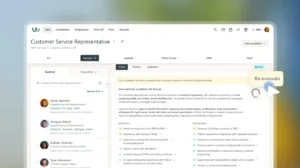
For Belmond’s HR generalists, Workable provided much-needed relief from administrative burdens. Given their broad responsibilities, any recruiting tool needed to reduce friction, not add to it. Workable’s intuitive pipeline management features and automated candidate communications did precisely that. Property teams could now configure their recruitment pipelines and email templates to reflect their preferred candidate engagement strategies, then rely on the system to handle the operational follow-through. Automated invitations for interviews, status updates, and next-step communications no longer required constant manual intervention at every stage. This automation liberated HR teams to focus more on strategic HR initiatives and direct human interaction, rather than administrative tasks. The consistent and professional communication facilitated by the system also significantly elevated the candidate experience, a crucial aspect for a luxury brand. Industry data suggests that a positive candidate experience can increase application rates and improve brand perception, directly impacting the quality of hires.As one property HR manager noted, "We get very positive reports from our properties that the efficiency Workable supports them with in terms of processing candidates and inviting them for interviews has really helped improve their day to day."
-
Empowering Data-Driven Decision Making and Strategic Support:
Access to comprehensive data emerged as one of the most consequential changes. Workable’s robust reporting and analytics tools enable the central team to track critical metrics such as hiring volume, pipeline health, and role tenure across diverse regions. This granular insight empowers leadership to identify bottlenecks, anticipate challenges, and allocate support precisely where it is most needed. For example, if a specific role in a particular market has remained open for an unusually long period, the central team can proactively identify the issue and intervene with targeted support, such as additional recruitment resources or revised strategies. Similarly, if a property is experiencing an unexpected surge in candidate applications, this visibility allows for timely assistance. This data-driven approach fosters a proactive partnership between the central HR function and property teams, a level of strategic collaboration that was simply unattainable before Workable. -
Balancing Centralization with Local Nuance Through Customization:
Belmond’s decentralized model is not an inefficiency; it is a deliberate reflection of the brand’s commitment to locally rooted, property-specific hospitality. A central system that attempted to impose a rigid, standardized approach would fundamentally work against this ethos. Workable’s strength lies in its ability to strike this delicate balance. The system allows each property to configure its own pipeline stages, customize candidate communications, and adapt workflows to suit local requirements and preferences. This flexibility ensures global consistency in the platform’s core functionality while preserving local autonomy in practice, driving high adoption rates and sustained usage across the diverse portfolio. This capability is vital for Belmond, as it allows each property to maintain its unique identity while benefiting from a unified technological infrastructure. -
Navigating Global Compliance and Data Protection with a Responsive Partner:
Operating in diverse international markets, including Brazil, Italy, Botswana, and beyond, means Belmond regularly encounters a complex web of region-specific data protection requirements (e.g., Brazil’s LGPD, Europe’s GDPR) and varied employment regulations. Navigating these compliance challenges through an ATS requires not just a sophisticated platform but also a responsive and knowledgeable partner. The Workable account management and technical support teams have consistently engaged with Belmond on these evolving challenges. This collaborative approach has led to the integration of specific policy features into the system as needs arise, effectively building compliance directly into the ATS. This proactive partnership significantly reduces legal and operational risk across Belmond’s global markets, ensuring adherence to the highest standards of data integrity and ethical employment practices."The support we get has always been really positive, and we’ve achieved some really good results," affirmed a Belmond representative. "Workable comes along on the journey with us."
Broader Business Impact and Strategic Implications
Since the implementation of Workable, Belmond has transitioned from a fragmented, inbox-based hiring system to a sophisticated, globally connected recruitment operation. The profound change is not merely operational; it has fostered a fundamentally different and more strategic relationship between the central HR function and the properties it supports.
Property teams now operate with greater confidence in their recruitment tools, possessing more control over their localized processes, and experiencing a significant reduction in administrative burden. This allows them to dedicate more time to value-added activities, such as direct engagement with candidates and employee development. Concurrently, the central HR team, for the first time, possesses the comprehensive data and insights necessary to truly understand and act upon talent acquisition trends and challenges across the entire business. This elevates HR from a purely administrative function to a strategic business partner, capable of influencing critical decisions related to workforce planning and talent management.
In the highly competitive luxury hospitality sector, where every detail contributes to the guest experience, having a hiring process that reflects Belmond’s exacting standards is not a minor operational tweak; it is a strategic imperative. By attracting and retaining top talent more efficiently and effectively, Belmond reinforces its brand promise of unparalleled "slow luxury." This enhanced capability not only streamlines current operations but also positions Belmond strategically for future growth, enabling it to scale its workforce effectively while maintaining its distinctive service quality across new ventures and expanding existing properties. The partnership with Workable underscores Belmond’s commitment to leveraging technology to optimize human capital, ensuring that its exceptional guest experiences are built upon a foundation of equally exceptional talent.