The contemporary business arena is characterized by an unprecedented confluence of complexity, rapid change, and frequent crises. This volatile environment demands exceptional agility, not only from individual leaders but from entire organizations. While the ability to react swiftly can help entities navigate immediate challenges, it is insufficient for long-term prosperity and sustained competitive differentiation. In this landscape, merely keeping pace is a recipe for obsolescence. Organizations must instead focus on what truly sets them apart, a pursuit that necessitates a deep understanding of the specific behaviors and mindsets required of their leaders. This endeavor is compounded by present and future ambiguity, making it challenging to draw a clear demarcation between the leadership practices that guide decision-making and action, and the broader strategic objectives of the organization.
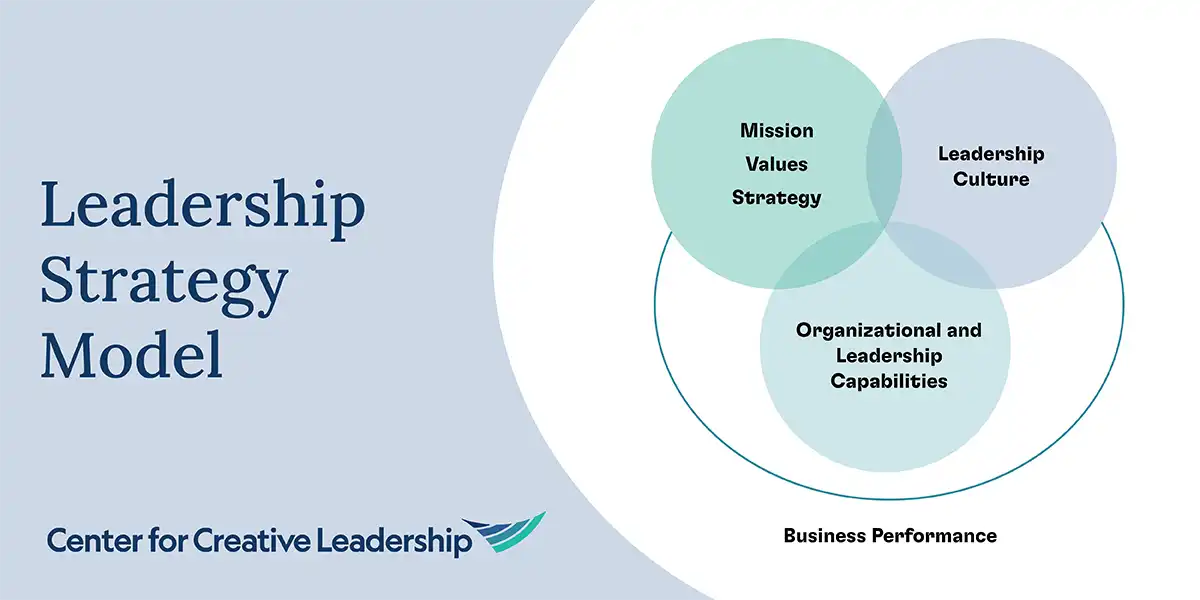
To address this critical disconnect, a refined approach is needed to link the daily practices of leaders directly to enduring organizational success. Decades of research and practical experience have culminated in the development of a robust Leadership Strategy Model. This model posits that organizational capabilities serve as the crucial nexus, bridging the gap between an organization’s overarching strategy and the leadership behaviors essential for its realization. At its core, this framework is built upon five interconnected elements, with organizational capabilities acting as the vital conduit for cultivating impactful leadership.
The Strategic Spine and the Role of Leadership Culture
The foundational pillars of any organization’s strategic direction are its mission, values, and overarching strategy. These elements collectively form the strategic spine, providing the essential direction and purpose. Equally significant is the concept of leadership culture – the shared beliefs, norms, and expectations that collectively shape how leadership is enacted and recognized on a daily basis. This culture dictates not only how leaders operate but also what behaviors are implicitly or explicitly encouraged and rewarded.
From this strategic and cultural bedrock, organizational capabilities emerge as the distinctive identity of a business. These are the collective strengths and competencies that enable an organization to compete effectively in its chosen markets. Crucially, leadership capabilities then empower leaders to build, nurture, and enhance these very organizational capabilities. When these elements are in harmony, strategy is transformed into tangible action, driving performance and differentiation.
A common pitfall observed in many organizations is the direct leap from business strategy to individual leader behaviors, bypassing a critical intermediate step: defining what the organization needs to be collectively excellent at. This is where organizational capabilities play an indispensable role. They act as the essential bridge, ensuring that the subsequent focus on specific leadership behaviors is grounded in a clear understanding of the organization’s unique strengths and strategic imperatives. By first clarifying these collective capabilities, organizations can ensure that leadership development efforts are more purposeful, precise, and aligned with strategic goals.
Defining Organizational Capabilities: What They Are and Why They Matter
Organizational capabilities are the embodiment of what an organization collectively knows and does. They encompass both its inherent strengths and areas requiring development. These capabilities serve as powerful indicators of the customer segments an organization is best positioned to serve and the strategies it is most likely to execute successfully. They are not abstract concepts but are manifested in observable leadership behaviors that can be tracked and measured. The existence of these capabilities is intrinsically linked to the people within the organization who bring the requisite combination of skills, knowledge, and attributes to their work, making it impossible to divorce collective organizational strengths from individual leader contributions.
The consequence of expecting strategy to materialize solely through individual behaviors, without first identifying the necessary collective capabilities, is a significant operational gap. Leaders are deprived of the necessary context to prioritize the most impactful behaviors, and the organization lacks the coherence required for effective execution. Conversely, when organizational capabilities are clearly defined and understood, they create a powerful synergy between the business and human systems. This alignment ensures that operations function in sync, generating value in ways that are difficult for competitors to replicate.

The concept of organizational capabilities is not novel. Business strategists in the 1990s began shifting the focus from purely external market analysis to a deeper examination of internal organizational strengths. This paradigm shift compelled leaders to make deliberate choices about where to allocate resources and invest for maximum impact. This thinking has continued to evolve, particularly in response to the necessity for organizations to adapt their capabilities in an era of perpetual disruption.
For decades, organizational leadership practices have leveraged a research-based framework of organizational capabilities to guide clients through large-scale change and transformation initiatives. This work has been informed by a foundational understanding of leadership as a social process and the significant influence of leadership culture in demonstrating and reinforcing these capabilities. Extensive studies of executive teams over more than 20 years have identified a core set of capabilities that consistently play a role in successful organizational transformations.
More recently, this research has been revisited and updated to account for the profound influences of technological advancements, globalization, and other dynamic forces shaping the business landscape. Further detail has been added to the behavioral components of these capabilities to refine understanding and strengthen the connection to specific leadership capabilities.
A Research-Based Framework of Organizational Capabilities
This comprehensive research has identified a set of 11 core organizational capabilities, each intrinsically linked to an organization’s strategic and cultural identity and clearly defined by observable actions. These capabilities are:
- Driving for Results: The ability to set ambitious goals and achieve them consistently, often exceeding expectations.
- Fostering Innovation: The capacity to generate new ideas, embrace experimentation, and bring novel solutions to market.
- Customer Centricity: A deep understanding of customer needs and a commitment to delivering exceptional value and experience.
- Leading Transformation: The skill to guide organizations through significant change, adapting to new realities and emerging opportunities.
- Building Talent: The proficiency in attracting, developing, and retaining high-potential individuals, fostering a culture of continuous learning.
- Driving Productivity: The expertise in optimizing processes, leveraging resources efficiently, and maximizing output.
- Managing Risk: The competence to identify, assess, and mitigate potential threats, ensuring organizational resilience.
- Strategic Thinking: The ability to anticipate future trends, develop long-term plans, and make informed strategic choices.
- Collaboration and Inclusion: The commitment to fostering teamwork, leveraging diverse perspectives, and creating an equitable environment.
- Ethical Conduct and Compliance: Upholding the highest standards of integrity, transparency, and adherence to regulations.
- Operational Excellence: The pursuit of superior performance in day-to-day operations, ensuring quality and efficiency.
While all these capabilities contribute to a high-performing organization, the critical challenge lies in identifying a focused subset, typically between three and four, that will become the organization’s primary areas of excellence. This chosen set of capabilities articulates a clear narrative of how the organization positions itself to address strategic challenges and what unique approaches it employs to achieve success.
Consider, for instance, a services company aiming to become an AI-driven organization, integrating AI into its core processes and client offerings. If this organization already possesses strengths in "Fostering Innovation" and "Driving Productivity," its executive team might decide to further enhance these capabilities. This could involve emphasizing specific behaviors such as rapidly developing and launching new AI-powered products and services, and continually optimizing the organization’s structure and workflows to accommodate AI integration. Simultaneously, recognizing the transformative nature of this initiative, the team might determine the necessity of building a "Leading Transformation" capability, while potentially reframing their focus on "Determining Performance" to align with new AI-driven metrics.
The process of narrowing down to the most critical three to four organizational capabilities is far more than a simple consensus-building exercise. It demands rigorous consideration of multiple factors, including which capabilities warrant significant investment and what constitutes acceptable performance levels for the remaining capabilities.
A greater degree of alignment among the executive team and other key stakeholders regarding these essential capabilities leads to a clearer and smoother path for their establishment and sustained development. For decades, organizations have been guided through this process using a well-established methodology that fosters direction, alignment, and commitment. This, in turn, paves the way for translating organizational capabilities into both individual and collective leadership behaviors that bring them to life.
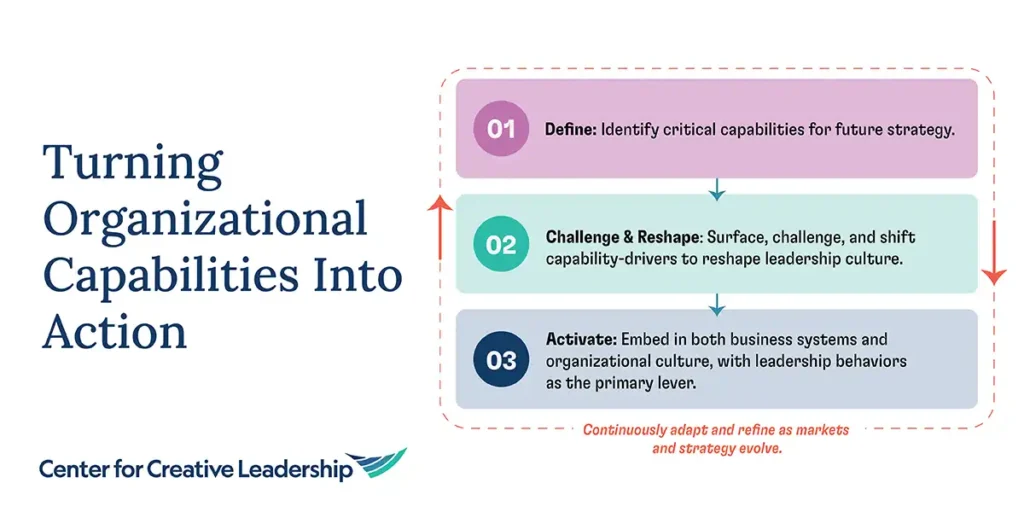
A Three-Phase Approach for Executive Teams to Translate Capabilities into Action
The transition from defining organizational capabilities to embedding them into actionable leadership practices is a structured, multi-stage process. This three-phase approach, designed for executive teams, emphasizes both forward-looking vision and internal introspection, forming the bedrock of effective implementation.
Phase 1: Assessment and Vision Setting
This initial phase involves a thorough evaluation of the current organizational capabilities. It includes understanding existing strengths, identifying gaps relative to strategic objectives, and benchmarking against industry best practices. Executive teams engage in deep reflection to articulate a compelling future vision that clearly defines the desired organizational capabilities required to achieve strategic goals in the evolving market landscape. This phase often involves comprehensive diagnostic tools, stakeholder interviews, and market analysis to build a clear picture of the current state and the desired future state.
Phase 2: Capability Prioritization and Development Planning
Once the desired capabilities are defined, the executive team must prioritize them. This involves a rigorous assessment of which capabilities will yield the greatest strategic impact and competitive advantage. Following prioritization, detailed development plans are crafted. These plans outline the specific actions, resources, and timelines required to build and strengthen the chosen organizational capabilities. This phase also involves identifying the key leadership behaviors that will drive these capabilities and developing strategies for embedding them into the organizational culture and leadership development programs.
Phase 3: Implementation, Integration, and Continuous Improvement
The final phase focuses on the active implementation and integration of the prioritized organizational capabilities into the daily fabric of the organization. This involves aligning leadership development initiatives, performance management systems, and organizational processes to support the desired capabilities. Crucially, this phase incorporates mechanisms for ongoing monitoring, feedback, and continuous improvement. As the business environment evolves, so too must the organization’s capabilities and the leadership behaviors that support them. This iterative approach ensures sustained relevance and adaptability.
Translating Strategy into Tangible Leadership Practice
As organizations envision their future and the role of their leaders within it, organizational capabilities emerge as a critical bridging mechanism. By concentrating efforts on defining and cultivating the organization’s differentiating strengths, organizational capabilities strategically position the enterprise for success and provide clarity on the specific leadership behaviors required to excel.
The future will inevitably bring change, and with it, shifts in strategy and the evolving demands placed upon leaders for execution. However, when an organization harmonizes its mission, values, strategy, and leadership culture around a focused set of core capabilities, it not only strengthens its execution in the present but also significantly enhances its capacity to adapt and thrive in the future. This alignment ensures that every component of the Leadership Strategy Model, and every individual within the organization, remains on a clear and purposeful path toward sustained success.
Ready to Take the Next Step?
Identifying the organizational capabilities that transform an organization’s strategy into a distinct competitive identity, and cultivating the leadership culture to sustain them, is a consequential undertaking for any executive team. This process requires expert guidance to navigate the complexities of definition, alignment, and activation. Partnering with experienced consultants can provide the structured approach and deep expertise necessary to ensure that these critical capabilities are not only identified but effectively integrated into the organizational DNA.
Organizations that invest in defining and developing their unique organizational capabilities are better equipped to navigate uncertainty, seize emerging opportunities, and build a resilient, high-performing enterprise. This strategic focus on building distinctive strengths, supported by aligned leadership practices, is the hallmark of organizations that not only survive but thrive in today’s dynamic global economy.