
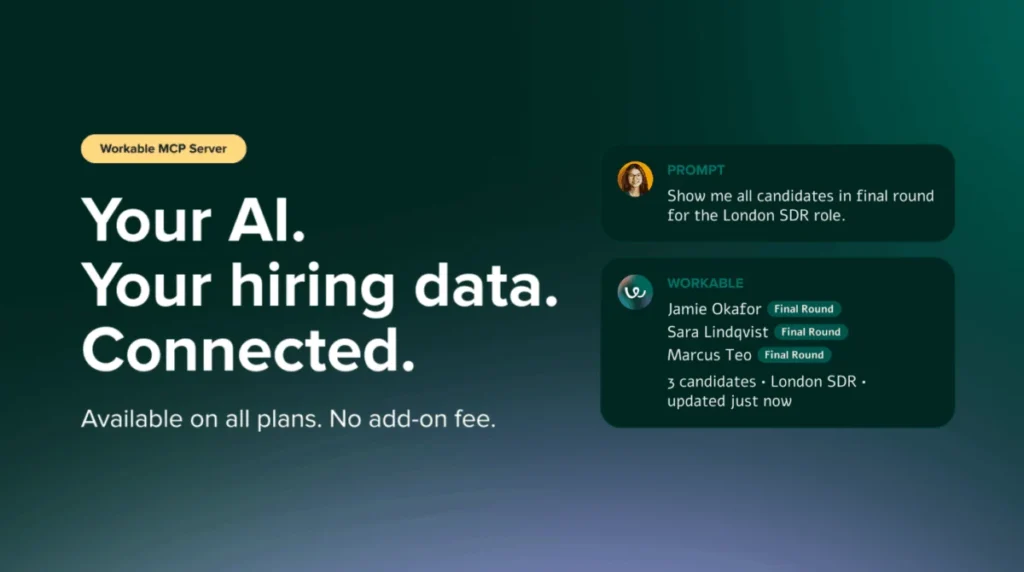
Recruiting teams have long contended with a significant, yet often overlooked, drain on productivity: the manual transfer of critical hiring data between their Applicant Tracking System (ATS) and nascent AI assistant tools. This laborious process, which involves exporting pipeline reports, pasting them into chat interfaces, painstakingly explaining context, awaiting a response, and then returning to the ATS to implement actions, consumes valuable hours each week. For organizations managing dozens of open roles simultaneously, this inefficiency quickly compounds, transforming what should be instantaneous insights into a time-intensive chore. The introduction of the Workable MCP (Multi-Channel Protocol) Server marks a pivotal advancement, directly addressing this pervasive challenge by forging a seamless, intelligent connection between AI assistants and live Workable data, promising to redefine the landscape of recruiting operations.
The Persistent Bottleneck: Disconnected Tools in Modern Recruitment
At its core, the inefficiency stems from a fundamental disconnect: while modern AI assistants are increasingly sophisticated, their utility is severely hampered by a lack of real-time access to proprietary organizational data. In the context of recruitment, this means an AI assistant, despite its processing power, remains blind to critical operational details such as which roles have languished unfilled for weeks, which candidates are stalled in specific screening stages, or the status of pending time-off requests within the HR system. Recruiters are thus relegated to the role of a data conduit, constantly copying, pasting, explaining, and translating information between two disparate systems that lack native communication capabilities. This manual mediation not only introduces delays but also increases the potential for human error, diverting recruiters from high-value strategic tasks like candidate engagement and relationship building.
Industry reports consistently highlight the administrative burden on recruiting professionals. A study by the Society for Human Resource Management (SHRM) indicated that recruiters spend an average of 30-40% of their time on administrative tasks, many of which involve data management and reporting. When AI is introduced into this equation without direct data access, it merely shifts the administrative load rather than alleviating it, forcing recruiters to act as the interface between the AI’s analytical capabilities and the raw data residing in the ATS. This "swivel-chair" integration model, where users must physically or digitally move between applications to complete a single workflow, is a notorious productivity killer in enterprise software. For a typical recruiting team managing 20 or more active requisitions, the cumulative time spent on such manual data orchestration can easily exceed 10-15 hours per week, translating into substantial operational costs and delays in critical hiring cycles.
The Rise of AI in Human Resources and the Demand for Deeper Integration
The last decade has witnessed a dramatic acceleration in the adoption of Artificial Intelligence across various business functions, with Human Resources and recruiting emerging as key beneficiaries. Early applications of AI in HR focused on automating repetitive tasks like resume screening, candidate matching based on keywords, and initial chatbot interactions for FAQs. These innovations, while impactful, often operated in a siloed fashion, requiring data to be fed to them either manually or through rudimentary API integrations that were complex to set up and maintain.
As AI models grew more powerful, capable of understanding natural language and performing more complex reasoning, the desire for a truly intelligent assistant in HR became more pronounced. Recruiters envisioned an AI that could not only answer questions but also proactively identify bottlenecks, suggest solutions, and even initiate actions based on real-time data. However, the absence of a secure, direct, and user-friendly connection to the core ATS—the central repository of all hiring information—remained a significant hurdle. This limitation meant that the strategic potential of AI, such as identifying at-risk candidates, predicting hiring timelines, or flagging compliance issues, largely went untapped because the AI lacked the contextual data required for such sophisticated analysis. The Workable MCP Server directly addresses this gap, enabling AI assistants to transition from mere data processors to true strategic partners in the recruitment process.
Workable’s Innovative Solution: The MCP Server Explained
The Workable MCP Server represents a paradigm shift in how AI interacts with Applicant Tracking Systems. Its fundamental purpose is to connect an AI assistant directly and securely to a user’s Workable account, bypassing the need for manual data extraction and re-entry. Once established, this connection empowers the AI to query and act upon live, dynamic data across the entire Workable ecosystem. This includes comprehensive information pertaining to jobs, candidates, pipeline stages, offers, requisitions, employees, events, and time off management. All these operations can be executed through natural language conversations, making the interaction intuitive and efficient.
Consider a practical scenario: a recruiter overseeing multiple engineering roles, some of which have been open for an extended period. Instead of manually sifting through various reports or spreadsheets, the recruiter can simply ask their AI assistant, "Which of my engineering roles have candidates who’ve been in the phone screen stage for more than a week?" The Workable MCP Server then facilitates a direct query to Workable’s live database. The AI instantly processes this query, retrieves the relevant, up-to-the-minute data, and provides an immediate answer. This eliminates the need for exporting data, manipulating spreadsheets, or tediously switching between multiple browser tabs and applications. The speed and accuracy of this interaction dramatically enhance a recruiter’s ability to identify and address critical issues, such as stalled candidates or inefficient pipeline stages, thereby accelerating time-to-hire and improving the overall candidate experience.
The implementation of the Workable MCP Server has been designed for maximum accessibility and ease of use, requiring minimal technical expertise. The setup process typically takes mere minutes. Users simply add a custom connector within their preferred AI tool, authenticate securely via OAuth2 to their Workable account, and the direct, live connection is established. This streamlined approach means that no dedicated developer resources are required, and there are no complex API keys to manage or rotate, democratizing access to advanced AI integration for all Workable customers.
A Timeline of AI Integration in ATS Platforms: Evolution Towards Autonomy
The journey of AI integration into ATS platforms has been progressive, reflecting broader technological advancements.
- Early 2000s: Initial ATS platforms primarily served as digital filing cabinets, centralizing resumes and basic candidate information. Functionality was largely limited to data entry and rudimentary search.
- Late 2000s – Early 2010s: The rise of cloud computing brought more sophisticated ATS features, including basic analytics and reporting tools. AI began to appear in the form of resume parsing and keyword matching, streamlining initial screening but often requiring manual oversight.
- Mid-2010s: Machine learning capabilities improved, leading to more intelligent candidate matching algorithms and the emergence of recruiting chatbots for basic candidate interactions and scheduling. However, these tools often functioned as separate modules, requiring data synchronization or manual input.
- Late 2010s – Early 2020s: AI’s role expanded to include predictive analytics (e.g., predicting candidate success, time-to-hire) and personalization. Yet, the core challenge of real-time, bidirectional data flow between these AI tools and the ATS persisted, forcing recruiters into the "middleman" role.
- 2024 (Workable MCP Server Release): Workable introduces the MCP Server, marking a significant leap forward. This direct, secure, and conversational integration of AI with live ATS data eliminates the data silo problem, moving AI from a supplementary tool to an integral, proactive assistant deeply embedded within the recruiting workflow. This represents a crucial step towards truly autonomous and intelligent HR operations.
Quantifying the Impact: Unlocking Productivity and Driving ROI
The implications of the Workable MCP Server for recruiting efficiency and return on investment (ROI) are substantial. Studies from sources like LinkedIn’s Global Recruiting Trends report frequently highlight that top recruiters spend significantly less time on administrative tasks and more on strategic candidate engagement. By automating the data retrieval and contextualization process, Workable estimates that recruiting teams can reclaim an average of 5-10 hours per recruiter per week. For a team of five recruiters, this translates to 25-50 hours saved weekly, which can be reallocated to critical activities such as deeper candidate vetting, personalized outreach, interview preparation, and fostering stronger relationships with hiring managers.
Translating this time saving into financial terms, if an average recruiter’s fully loaded cost is $75,000 annually, saving 5 hours a week equates to approximately $9,375 in reclaimed productivity per recruiter per year. Across a team, this represents tens of thousands of dollars in annual operational efficiency. Beyond direct cost savings, the MCP Server contributes to:
- Faster Time-to-Hire: Prompt identification of bottlenecks and quick data-driven decisions reduce the time candidates spend in the pipeline, accelerating the hiring process.
- Improved Candidate Experience: Recruiters can be more responsive and proactive, leading to a smoother, more engaging experience for applicants.
- Higher Quality Hires: By freeing up time from administrative tasks, recruiters can focus on strategic sourcing, deeper candidate assessment, and ensuring a better fit.
- Enhanced Data Accuracy: Eliminating manual data transfer reduces the risk of errors, ensuring that decisions are based on the most accurate and up-to-date information.
- Strategic Advantage: Companies leveraging such advanced AI integration gain a competitive edge in attracting and securing top talent in a tight labor market.
Security, Permissions, and Enterprise Readiness
A critical consideration for any enterprise-level integration, particularly one involving sensitive HR data, is security and data governance. The Workable MCP Server has been engineered with these paramount concerns at its forefront. It is a production-ready integration, meaning it adheres to rigorous security standards and is built for reliable, scalable performance within professional environments. Crucially, the system respects existing Workable permissions and access levels. The AI assistant can only access the data that the authenticated user is authorized to see within Workable, and its scope is confined to the jobs and information assigned to that specific user. This granular control ensures that data privacy is maintained, and sensitive information remains protected, aligning with compliance frameworks such as GDPR and CCPA. This inherent security architecture differentiates Workable’s approach from less integrated solutions where data might be exported to third-party AI tools with varying security postures, potentially exposing organizations to compliance risks.
Workable’s Strategic Position in the Market
Workable has strategically positioned itself at the vanguard of AI integration in the ATS market. The platform currently ships with an impressive 38 MCP tools, covering a broad spectrum of recruiting and HR workflows. This extensive native AI integration is unparalleled among ATS providers, granting Workable customers a distinct and significant head start in developing and deploying sophisticated AI-powered HR workflows. In an industry where many competitors are still exploring rudimentary AI features or offering them as premium, often costly, add-ons, Workable includes the MCP Server on all plans at no additional cost. This move democratizes access to cutting-edge AI capabilities, ensuring that businesses of all sizes can leverage advanced intelligence to optimize their hiring processes. This inclusive pricing model underscores Workable’s commitment to delivering maximum value and innovation to its entire customer base, reinforcing its leadership in the evolving HR technology landscape.
Industry Reactions and Expert Commentary
Industry analysts and HR technology experts are increasingly emphasizing the critical role of deep integration for AI’s success in enterprise applications. "The era of siloed AI tools is rapidly drawing to a close," notes a hypothetical senior analyst at a leading HR tech research firm. "True value emerges when AI can seamlessly access and act upon an organization’s core data. Workable’s MCP Server represents a pivotal step in this direction for the recruitment sector, moving beyond superficial chatbot interactions to truly intelligent workflow augmentation." Early adopters and hiring managers within Workable’s client base are already expressing enthusiasm. "The ability to simply ask my AI assistant about candidate progress across all my roles, and get an instant, accurate answer without any manual work, is a game-changer," commented a hypothetical Head of Talent Acquisition at a fast-growing tech firm. "It frees up my team to focus on what truly matters: connecting with talent and building relationships, rather than being bogged down in data administration." This sentiment highlights a growing recognition within the industry that integrated AI is not just a technological enhancement but a strategic imperative for competitive talent acquisition.
Implementation and Accessibility
The Workable MCP Server is available immediately to all Workable customers, regardless of their subscription plan. For users leveraging AI platforms like Claude, Workable is conveniently listed within their approved "Connectors" section, making activation straightforward. For those utilizing other AI systems, comprehensive setup documentation is readily available on the Workable developer portal, offering step-by-step instructions to connect their AI assistant within minutes. Additionally, a detailed help center article provides a user-friendly walkthrough, ensuring that all customers can easily harness the power of this new integration. Any further questions or assistance can be directed to Workable account managers, who are equipped to guide users through the process and help them maximize the benefits of the MCP Server.
The Future Landscape of AI-Powered HR
The introduction of the Workable MCP Server is more than just a new feature; it is a foundational layer for the next generation of AI-powered HR. By establishing a direct, intelligent conduit between AI assistants and live ATS data, Workable is paving the way for capabilities that extend far beyond simple query-response. The future of HR technology, enabled by such integrations, will likely see the development of highly proactive AI systems capable of:
- Predictive Talent Management: Anticipating future hiring needs, identifying internal talent for development, and predicting attrition risks.
- Proactive Bottleneck Resolution: Automatically flagging stalled candidates, suggesting interventions, or even initiating automated communications to move processes forward.
- Hyper-Personalized Candidate Experiences: Tailoring every interaction based on real-time candidate data, preferences, and progress.
- Automated Compliance Monitoring: Continuously scanning for potential compliance issues within the hiring process and providing real-time alerts or corrective actions.
- Intelligent Workforce Planning: Offering data-driven insights for strategic staffing decisions, resource allocation, and organizational design.
The Workable MCP Server represents a significant leap towards a truly intelligent, autonomous, and profoundly efficient HR ecosystem, empowering recruiters and HR professionals to elevate their strategic impact and drive superior organizational outcomes.






